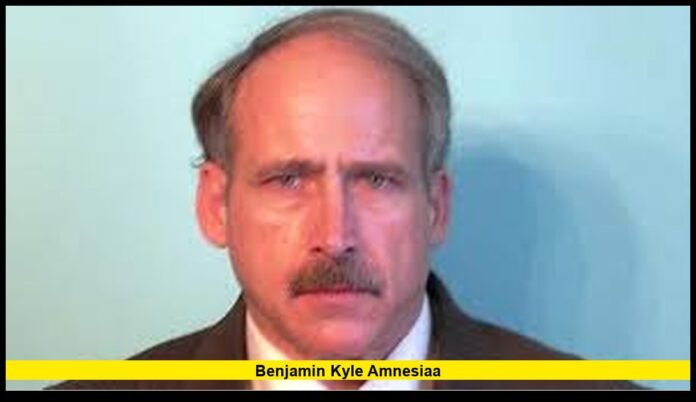

The strange and emotional story surrounding benjamin kyle amnesia has once again captured national attention after renewed media coverage brought fresh focus to one of the most puzzling identity mysteries in modern American history. More than twenty years after an unconscious man was discovered behind a Burger King in Georgia with no memory of his name or past, new conversations are emerging about the missing decades of his life and the unanswered questions that still remain today.
The case continues to fascinate people across the United States because it blends mystery, medical uncertainty, missing identity, and real human struggle into a story that still feels impossible to explain fully. Although the man once known only as Benjaman Kyle was eventually identified through DNA testing as William Burgess Powell, major parts of his life remain unclear, including what happened during the years before he appeared in Richmond Hill, Georgia, in 2004.
Interest in the case has surged again after a newly released documentary series revisited the investigation and explored details that continue to puzzle both researchers and the public. Online discussions, podcasts, and social media conversations have reignited debates about Powell’s memory loss and the decades he seemingly vanished from public life.
People who follow real-life mysteries and unsolved stories continue returning to this case because so many questions remain unanswered even after his identity was finally uncovered.
The Discovery That Shocked Georgia
The mystery began on August 31, 2004, when employees arriving at a Burger King restaurant in Richmond Hill discovered an unconscious man lying near the dumpster area behind the building.
The scene immediately raised concern.
The man was naked except for a small amount of clothing. He had severe sunburns, numerous ant bites, and visible signs that he had been exposed to harsh outdoor conditions for an extended period. Emergency responders transported him to a nearby hospital, where doctors quickly realized the situation was far more unusual than an ordinary medical emergency.
When the man regained consciousness, he could not identify himself.
He reportedly remembered almost nothing about his personal life. He did not know his name, birthplace, family members, or where he had lived before arriving in Georgia. Authorities checked fingerprints and searched missing persons databases but failed to find any match.
Hospital staff temporarily referred to him as “B.K. Doe” because he had been found behind Burger King. Eventually, he adopted the name Benjaman Kyle, using a spelling he believed felt familiar to him even though he could not explain why.
At the time, investigators hoped the mystery would be solved quickly. Instead, it evolved into one of America’s most widely recognized unidentified person cases.
Life Without an Identity
Without legal documents proving who he was, daily life became extremely difficult.
He struggled to obtain housing, employment, medical care, and government services. He often described feeling trapped inside a system that required paperwork and records he could not provide.
For years, he moved between shelters, temporary housing arrangements, and assistance programs while attempting to rebuild his life.
The case also revealed how difficult it can be for someone without official identity documents to function in modern society. Even basic tasks became major obstacles because nearly every institution required proof of identity.
Kyle’s emotional interviews during those years drew national sympathy. Many viewers felt compassion for a man who appeared intelligent and sincere but completely disconnected from his own history.
A Mystery That Captured America
As years passed, the case gained widespread media attention across television programs, newspapers, and online communities.
Viewers became fascinated by the strange details.
Kyle demonstrated strong knowledge of restaurant kitchens, food preparation systems, and technical work despite his inability to recall personal memories. He appeared educated and capable in conversations, yet he consistently claimed he could not remember the most basic facts about his own life.
That contradiction fueled public curiosity.
Amateur investigators and internet communities spent years trying to identify him. Volunteers compared his appearance to missing persons records and searched old photographs for possible matches.
Some believed he may have been a victim of violent crime or severe trauma. Others wondered whether psychological factors played a role in his disappearance from public life.
The mystery grew larger because no clear explanation emerged despite national attention.
Doctors and the Amnesia Diagnosis
Medical professionals eventually diagnosed Kyle with retrograde amnesia, a condition involving the loss of memories formed before a traumatic event or medical issue.
Retrograde amnesia can vary dramatically between patients.
Some people lose only specific memories while others experience far broader gaps involving family history, personal experiences, or identity. Certain individuals retain professional skills and general knowledge even when autobiographical memories disappear.
That medical reality became central to Kyle’s case.
He could discuss cooking equipment and work environments in detail, yet he repeatedly stated he could not remember his own childhood or family background. Supporters pointed to those medical explanations as evidence his memory loss was genuine.
At the same time, skeptics questioned whether amnesia alone fully explained the unusual circumstances surrounding his disappearance.
Those debates continue today.
The Breakthrough That Changed Everything
After more than a decade without answers, the mystery finally shifted dramatically in 2015.
Genealogists and DNA researchers successfully identified Benjaman Kyle as William Burgess Powell, originally from Lafayette, Indiana.
The breakthrough came through advanced genetic genealogy techniques that had become increasingly important in cold-case investigations. By analyzing DNA relationships and family connections, researchers traced Powell’s identity after years of dead ends.
The discovery shocked many followers of the case.
For the first time since 2004, investigators finally knew the real name of the man found behind the Burger King. Yet instead of ending the mystery, the identification opened a new set of questions.
Powell reportedly left Indiana decades earlier and had lost contact with relatives in the 1970s. Family members had not heard from him for years and believed he may have died.
Records later suggested Powell spent time living in Colorado during the late 1970s and early 1980s. After that period, however, the trail became increasingly unclear.
Investigators still do not fully understand what happened during the long period between the early 1980s and Powell’s appearance in Georgia in 2004.
The Missing Decades Continue to Puzzle Investigators
The unknown years between Powell’s disappearance and rediscovery remain one of the most intriguing parts of the story.
Researchers have attempted to reconstruct where he lived, worked, and traveled during those missing decades, but large gaps remain.
Some records indicate temporary employment during parts of the 1980s, yet many years still lack documented information. Investigators have struggled to determine whether Powell intentionally disconnected from his earlier life or whether other circumstances caused his disappearance from public records.
The uncertainty surrounding those missing years continues fueling intense public interest.
People remain fascinated by the idea that someone could seemingly vanish inside America for decades without leaving a stronger paper trail.
New Documentary Revives Public Interest
The release of a new documentary series in 2026 has brought fresh attention to the mystery.
The series revisits the investigation from the beginning and explores unanswered questions involving Powell’s life before and after his identification. Filmmakers spent years examining records, interviewing people connected to the case, and reviewing earlier investigations.
The project reportedly focuses heavily on the unexplained years between Powell’s departure from Indiana and his appearance in Georgia.
Viewers have responded strongly to the documentary’s emotional interviews and unresolved details.
Online discussions about the case have surged again as audiences debate competing theories surrounding Powell’s disappearance and memory loss.
The renewed attention has also introduced the story to a younger generation unfamiliar with the original investigation from the 2000s.
Public Debate Around the Case
The renewed interest has revived long-standing debates about what truly happened to Powell.
Some people strongly believe he experienced legitimate memory loss caused by trauma or psychological illness. Others continue questioning whether he intentionally concealed parts of his history.
Despite years of public speculation, no evidence has emerged publicly linking Powell to serious criminal activity connected to his disappearance.
That absence of clear answers keeps the mystery alive.
People remain divided over whether the case represents a tragic medical story, a psychological mystery, or something even more complicated.
How DNA Technology Changed Missing Person Cases
The Benjamin Kyle investigation also became historically important because it demonstrated the growing power of DNA genealogy.
When the case first began in 2004, the technology available to investigators was far more limited. Traditional fingerprint searches and missing persons databases failed to identify Powell for years.
Advances in genetic genealogy eventually changed everything.
The same types of DNA techniques later helped solve numerous cold cases and unidentified person investigations across the United States. Today, investigators increasingly rely on family DNA matching to uncover identities once considered impossible to solve.
Powell’s case became one of the earliest widely known examples showing how modern DNA tools could restore identity after decades of uncertainty.
The Emotional Impact of Losing a Past
One reason the story continues resonating with audiences is its emotional core.
The idea of waking up without knowledge of one’s own identity feels terrifying to many people. Family history, childhood memories, and personal relationships form the foundation of daily life.
For years, Powell reportedly lived without those connections.
He often described feelings of isolation and frustration while trying to understand who he was and where he belonged. Even after learning his real name, many emotional questions remained unresolved.
The mystery therefore became about more than simply identifying a missing person.
It became a story about memory, identity, loneliness, and survival.
Where William Burgess Powell Is Today
Recent reports connected to the documentary indicate Powell’s current location may not be publicly known.
That revelation surprised many longtime followers of the case.
After years spent searching for his identity, the man once known as Benjaman Kyle has once again become difficult to locate. Filmmakers associated with the recent project reportedly stated they no longer know where he currently lives.
That development has added yet another layer of mystery to an already extraordinary story.
Why the Story Still Fascinates America
Even after all these years, the public remains deeply interested in the case for several reasons.
The mystery contains elements rarely seen together in real life:
- A man discovered unconscious with no identity
- Severe memory loss
- Decades of unexplained missing time
- DNA technology solving part of the mystery
- Emotional struggles tied to identity and survival
- Lingering unanswered questions
Those factors continue making the story one of America’s most unforgettable identity mysteries.
The renewed media attention in 2026 ensures that conversations surrounding William Burgess Powell and the strange circumstances of his life will continue for years to come.
As more viewers revisit the case through documentaries and online discussions, many still hope additional details about Powell’s missing decades may eventually emerge.
Do you think the full truth behind William Burgess Powell’s lost years will ever be uncovered? Share your thoughts and follow the latest developments surrounding this unforgettable mystery.