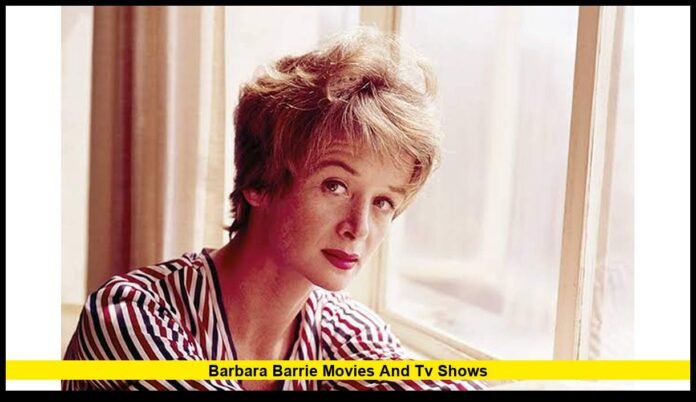

Barbara Barrie movies and tv shows showcase a remarkable career that spanned decades of American entertainment, from acclaimed independent films to popular television series and Broadway productions. The actress earned an Academy Award nomination for Breaking Away, gained recognition for her role in Barney Miller, and received a Tony Award nomination for her performance in the original Broadway production of Company. Her work demonstrated a rare ability to move between intimate dramatic roles, comedy, and live theater.
Born Barbara Ann Berman on May 23, 1931, in Chicago, Illinois, Barrie developed a reputation as a versatile performer. She appeared in films that explored family relationships, social prejudice, and the experiences of ordinary Americans. On television, she became familiar to audiences through recurring roles and guest appearances across several decades.
Barrie’s career also included significant stage work and writing. Her performances earned critical recognition, while her personal approach to acting helped her portray characters with warmth, emotional depth, and credibility.
Her filmography remains of interest to viewers discovering classic American cinema, fans revisiting television favorites, and audiences exploring the performers behind memorable Broadway productions. The following guide examines her best-known movies, television appearances, notable performances, and lasting contributions to the entertainment industry.
Barbara Barrie’s Early Life and the Start of Her Acting Career
Barbara Barrie was born Barbara Ann Berman on May 23, 1931, in Chicago, Illinois. She developed an interest in performing before building a professional career in theater, film, and television.
Before becoming widely recognized as an actress, Barrie studied journalism at the University of Texas at Austin. Her education gave her a broader foundation, but acting eventually became her principal profession.
She began working professionally during the 1950s. Early television offered opportunities for performers to appear in dramatic anthologies, crime stories, and live productions. Barrie gained experience in this environment before securing more prominent film and television roles.
Her early screen work included an uncredited appearance in the 1956 film Giant. The movie featured a large ensemble cast and became an important production in American cinema.
She later appeared in The Caretakers (1963), a drama centered on patients and staff at a mental health institution. Barrie’s role as Edna added to her growing list of film credits.
These early performances helped establish her as a dependable character actress. Rather than relying on one type of role, she developed a career built around believable characters in different settings.
One Potato, Two Potato: The Film That Earned International Recognition
One of the most important titles in Barrie’s filmography is One Potato, Two Potato, released in 1964.
<text color=”secondary” size=”sm”>Film details</text>
- Year: 1964
- Role: Julie Cullen Richards
- Genre: Social drama
- Recognition: Best Actress award at the Cannes Film Festival
The film follows a white woman who marries a Black man after the end of her previous marriage. Their relationship faces racial prejudice, particularly when questions arise about custody of her daughter from the earlier marriage.
Barrie played Julie Cullen Richards, the woman at the center of the story. Her performance conveyed the emotional pressures created by social discrimination and the conflict between private relationships and public attitudes.
The subject was particularly challenging for American cinema in the 1960s. The film explored interracial marriage and racial inequality at a time when those issues remained deeply contentious in the United States.
Barrie’s performance received international recognition. She won the Best Actress award at Cannes, an achievement that distinguished her early film career.
The movie remains one of her most significant performances because it combined a demanding dramatic role with a story addressing major social issues.
For viewers exploring Barbara Barrie’s movies, One Potato, Two Potato offers an important look at her early dramatic strengths and her ability to lead a feature film.
Breaking Away: Barbara Barrie’s Most Recognized Movie Role
Breaking Away, released in 1979, remains one of Barrie’s best-known films.
The coming-of-age drama follows four young men in Bloomington, Indiana, as they navigate the transition from adolescence to adulthood. Cycling, class differences, family relationships, and personal ambition shape the story.
Barrie played Evelyn Stohler, the mother of Dennis Christopher’s character, Dave Stohler. Evelyn supports her son while trying to understand his interests and his determination to pursue competitive cycling.
Her performance gave the film an important family perspective. While the young characters pursue independence, Evelyn represents the parental concern and affection that accompany their attempts to establish adult identities.
The movie received widespread critical recognition and earned multiple Academy Award nominations. Barrie received an Oscar nomination for Best Supporting Actress for her portrayal of Evelyn.
Her performance helped make the Stohler family feel authentic. She balanced humor with concern, portraying a mother who supports her child without always understanding his choices.
The film also became notable for its depiction of working-class life and the social divisions between local residents and university students.
For anyone beginning a search for Barbara Barrie’s most memorable movies, Breaking Away is an essential starting point.
The Bell Jar and Her Dramatic Film Work in 1979
Barrie appeared in another notable film in 1979: The Bell Jar, an adaptation of Sylvia Plath’s novel.
The story centers on Esther Greenwood, a young woman struggling with her mental health while trying to understand her future and identity. The film explores isolation, emotional distress, and the pressures surrounding expectations for women.
Barrie played Jay Cee, Esther’s demanding editor. The character represents the professional world Esther encounters as she begins exploring a career in publishing.
The role differs from Barrie’s performance in Breaking Away. Instead of portraying a supportive mother in a family-centered drama, she played a professional figure whose expectations challenge the young protagonist.
The film’s subject matter also placed it among the more serious dramatic projects of her career.
Although Breaking Away became the more widely recognized of her two 1979 releases, The Bell Jar demonstrates her willingness to take on varied characters.
These contrasting performances show why Barrie remained valuable as a character actress. She could move between family comedy, social drama, and more demanding psychological material without losing her natural screen presence.
Private Benjamin: A Successful Comedy Role
Barrie continued her film career with Private Benjamin, released in 1980.
The comedy stars Goldie Hawn as Judy Benjamin, a sheltered young woman who joins the U.S. Army after a personal crisis. Her expectations about military life quickly collide with its discipline and demands.
Barrie played Harriet Benjamin, Judy’s mother. Her role contributed to the film’s depiction of the family and social environment Judy leaves behind.
The movie used comedy to examine gender expectations, independence, and the challenges women faced in institutions traditionally dominated by men.
Hawn’s performance helped make the film a major comedy success, and the story later continued as a television series.
Barrie’s appearance demonstrated her ability to support a broad comic narrative while grounding the family relationships in recognizable behavior.
Her performance also reinforced a recurring feature of her career: she often played mothers and other family members who helped audiences understand the central character’s background.
Private Benjamin remains a useful choice for viewers interested in Barrie’s lighter screen work, particularly those who know her primarily from dramatic films.
Other Important Barbara Barrie Movies From the 1980s
Barrie remained active in film throughout the 1980s, appearing in productions that covered several genres.
Among her notable credits was Two of a Kind (1982), a romantic comedy starring John Travolta and Olivia Newton-John. The film combined romance, fantasy, and comedy in a story about two people whose lives intersect under unusual circumstances.
Barrie also appeared in The Execution (1985), a television film, and Real Men (1987), a comedy starring Jim Belushi and John Ritter.
In 1988, she appeared in End of the Line, a drama about railroad workers confronting the possible closure of their workplace. Barrie played Jean Haney, contributing to a story concerned with employment, community, and economic uncertainty.
Her other work during this period included The Passage (1988), which featured her in another supporting role.
These titles reveal how her career extended beyond a handful of celebrated performances. She worked in comedies, serious dramas, and television productions, often taking roles that helped establish the emotional context of a story.
Although not every film received the same level of attention as Breaking Away, the range of her credits reflects the steady demand for experienced character actors.
Hercules: Barbara Barrie’s Voice Acting Role
Barrie also contributed to animated entertainment. In Disney’s animated feature Hercules (1997), she voiced Alcmene, the mortal woman who raises Hercules.
The film reimagines Greek mythology through musical comedy and adventure. Its story follows Hercules as he discovers his identity and attempts to prove himself a hero.
Alcmene’s role is important to the family side of the story. She helps establish Hercules’ upbringing and his connection to the human world.
Voice acting requires a different approach from appearing on camera. Performers communicate emotion through vocal delivery, timing, and character interpretation rather than facial expressions and physical gestures.
Barrie’s experience in theater and screen acting suited this type of performance. Her voice work added another category to a career that already included live theater, film, and television.
She also appeared in Hercules: Zero to Hero, a related animated production that continued the character’s adventures.
These projects introduced her work to younger audiences who might not have known her from earlier dramas or sitcoms.
Judy Berlin: A Later Career Highlight
Barrie’s performance in Judy Berlin (1999) represents another important entry in her filmography.
The independent comedy-drama follows a group of people in a Long Island community during an unusual day marked by a solar eclipse. Their lives intersect as they confront loneliness, family tension, and uncertain ambitions.
Barrie played Sue Berlin, the mother of the title character. Her performance contributed to the film’s exploration of family relationships and the emotional distance that can exist between generations.
The film featured an ensemble cast and emphasized character development over large-scale action. Its intimate approach gave Barrie room to use the understated style that had become one of her strengths.
Her work earned an Independent Spirit Award nomination for Best Supporting Female.
The recognition reinforced her reputation as an actress capable of delivering nuanced performances in independent films.
For viewers interested in her later dramatic work, Judy Berlin provides a valuable contrast to the larger studio productions of the 1970s and 1980s.
Barbara Barrie’s Movies in the 2000s
Barrie continued appearing in films during the 2000s, taking roles in independent productions and ensemble dramas.
Her credits included Spent (2000), Second Best (2004), and Fathers and Sons (2005).
In Second Best, she played Dorothea. The film explores family relationships and personal complications, giving its supporting performers opportunities to develop the story’s emotional background.
She also appeared in Frame of Mind (2009), a crime drama in which she played Thelma. The film centers on a police officer who revisits a disturbing case connected to a past investigation.
Another credit from 2009 was The Six Wives of Henry Lefay, a comedy starring Tim Allen. Barrie played Mae in the story of a man’s family and former partners gathering after his disappearance.
These films illustrate the variety of projects she pursued later in her career. She continued to accept roles in productions that relied on ensemble casts and character-driven storytelling.
Her work during this period also demonstrated her continued presence in the industry well beyond the years of her greatest mainstream recognition.
Harvest and Twelve Thirty: Independent Films in 2010
Two notable independent films in Barrie’s later filmography are Harvest and Twelve Thirty, both released in 2010.
In Harvest, she played Yetta Monopoli. The film follows a family gathering that brings longstanding tensions and unresolved relationships to the surface.
Barrie’s role contributed to the film’s examination of family dynamics and the emotional complications that can emerge when relatives spend time together.
In Twelve Thirty, she played Eve. The drama explores relationships among people from different generations and the ways personal choices affect family life.
Both productions favored intimate character interactions rather than large-scale spectacle. This approach suited Barrie’s strengths as a performer.
Her ability to portray mature characters with individuality helped prevent supporting roles from becoming mere background details.
The films also reflect the importance of independent cinema in providing opportunities for established actors to take on distinctive parts.
Her Television Career: From Early Drama to Popular Sitcoms
Television played a major role in Barrie’s career long before she became widely known for Breaking Away.
During the 1950s and 1960s, American television featured dramatic anthology programs, crime series, westerns, and live theater productions. Actors often moved between different shows, playing a new character in each appearance.
Barrie worked in this environment and accumulated credits in a variety of programs.
Her early television appearances included Kraft Television Theatre, The U.S. Steel Hour, Naked City, Route 66, The Untouchables, and The Twilight Zone.
These series covered a wide range of stories. Some explored crime and law enforcement, while others focused on psychological suspense, social conflict, or science fiction.
Barrie’s appearances helped her develop the adaptability required for episodic television. Guest actors often had limited time to establish a character and make an impression.
Her early television work also connected her to the wider tradition of American character acting, in which performers moved regularly between theater, television, and film.
The Twilight Zone and Other Classic Television Appearances
The Twilight Zone remains one of the most recognizable series associated with classic American television. Its stories combined science fiction, fantasy, psychological suspense, and social commentary.
Barrie’s television credits include an appearance in the series, adding a genre production to her growing list of screen work.
She also appeared in programs such as The Fugitive, Rawhide, Ben Casey, Dr. Kildare, The Defenders, and The Alfred Hitchcock Hour.
These shows offered different types of dramatic roles. Westerns emphasized frontier conflicts, medical dramas explored professional and ethical dilemmas, and crime series often centered on investigations or courtroom disputes.
Working across these formats helped Barrie demonstrate her range. She could adapt to the tone and pacing of a production while maintaining a recognizable naturalism.
Her early television credits are especially valuable for viewers researching the development of her career. They show how she built experience through numerous appearances before taking on some of her best-known recurring roles.
Barney Miller: Her Best-Known Television Role
For many television viewers, Barrie’s most familiar role was Elizabeth Miller in the sitcom Barney Miller.
The ABC series premiered in 1975 and followed the detectives and staff working at a New York City police precinct. The show’s humor often came from workplace tensions, unusual cases, and the personalities of the officers.
Barrie played Elizabeth, the wife of Captain Barney Miller, portrayed by Hal Linden.
Her character provided a glimpse into Barney’s life outside the precinct. Elizabeth’s interactions with her husband added a family dimension to a comedy largely centered on the police station.
The show’s format later focused more heavily on the precinct itself, so Barrie’s appearances became less frequent after the first season.
Even so, Elizabeth remains one of the roles most closely associated with her television career.
Her performance balanced warmth with a dry sense of humor. She portrayed a character who understood her husband’s personality and could respond to him with affection and occasional skepticism.
For audiences looking through Barbara Barrie’s TV shows, Barney Miller is one of the most important titles to explore.
Breaking Away: The Television Series
The success of the film Breaking Away led to a television adaptation in 1980.
The series continued the story of young people navigating life in Bloomington, Indiana. It explored relationships, personal goals, and the transition from adolescence to adulthood.
Barrie returned to the role of Evelyn Stohler, allowing audiences to see her character again in a different format.
Reprising the role connected the television series to the original film. It also gave Barrie another opportunity to portray a mother whose concern for her family shaped her decisions.
Her work in the series earned an Emmy nomination in 1981.
Although the television adaptation did not achieve the same lasting cultural status as the film, it remains an important part of her screen career.
The series also demonstrates how Barrie could carry a character from a successful film into a longer narrative format.
Private Benjamin on Television
The 1980 film Private Benjamin inspired a television series that premiered in 1981.
The show continued the story of a woman adapting to military life, using the contrast between her expectations and the demands of service as a source of comedy.
Barrie reprised her role as Harriet Benjamin, maintaining the connection between the film and the television adaptation.
The series gave the story more time to explore military routines, friendships, and the challenges faced by its central character.
Her return to the role reflected a recurring feature of television during that period: successful films sometimes became series, allowing audiences to follow familiar characters beyond the original story.
Although Barrie’s best-known film work remained Breaking Away, her involvement in the Private Benjamin franchise adds an important dimension to her television filmography.
Suddenly Susan: A Later Television Favorite
Barrie gained another generation of television viewers through Suddenly Susan, an NBC sitcom that aired from 1996 to 2000.
The series starred Brooke Shields as Susan Keane, a woman who begins making independent decisions after leaving her fiancé at the altar. Her new life introduces her to workplace complications, friendships, and changing romantic relationships.
Barrie played Helen “Nana” Keane, Susan’s grandmother.
The role allowed Barrie to combine humor with the reassuring presence of an older family member. Helen could offer advice, challenge Susan’s assumptions, and bring a different perspective to the younger characters’ problems.
The sitcom introduced Barrie to viewers who may not have known her from the films of the 1970s or her earlier television appearances.
Her performance also demonstrated how well she adapted to the changing styles of American sitcoms. While Barney Miller relied on workplace ensemble comedy, Suddenly Susan used personal relationships and a contemporary professional setting.
For viewers interested in her later television work, the series is an essential entry.
Law & Order and Law & Order: Special Victims Unit
Barrie also appeared in two prominent entries in the Law & Order television franchise.
She received an Emmy nomination for her performance as Mrs. Bream in the original Law & Order in 1992. The series typically combined police investigations with courtroom proceedings, using cases to explore legal and ethical conflicts.
Barrie later appeared as Paula Haggerty in Law & Order: Special Victims Unit. That performance earned her another Emmy nomination in 2003.
The Special Victims Unit series focuses on detectives investigating sexual offenses and other sensitive crimes. Its stories often require guest performers to portray people dealing with difficult circumstances.
Barrie’s appearances demonstrated her ability to contribute to serious procedural drama after years of work in sitcoms and films.
These roles also show the range of television genres she covered. Her career included comedy, science fiction, westerns, police dramas, and stories centered on family relationships.
Barbara Barrie’s Television Roles in the 2000s and 2010s
Barrie continued making television appearances in the 2000s and 2010s.
Her later credits included Dead Like Me, Pushing Daisies, Army Wives, Nurse Jackie, and Enlightened.
In Dead Like Me, she played Phyllis in appearances connected to the show’s unusual premise about people who become grim reapers after death.
She appeared as Mamma Jacobs in Pushing Daisies, a fantasy comedy known for its distinctive visual style and unusual storytelling.
In Army Wives, she played Virginia, contributing to a series about military families and the challenges of life connected to military service.
Her role as Libby Sussman in Nurse Jackie added another credit to her work in a contemporary television drama. She also appeared as Carol in Enlightened, a series focused on personal change and workplace relationships.
These appearances were often brief, but they reflect her continued activity as an experienced character actress.
Rather than relying exclusively on the shows that had made her famous, Barrie remained involved in new productions and different kinds of television storytelling.
A Guide to Barbara Barrie’s Best-Known Screen Credits
The following table highlights selected movies and television shows from Barrie’s career.
| Title | Year | Role or credit |
|---|---|---|
| Giant | 1956 | Mary Lou Decker, uncredited |
| The Caretakers | 1963 | Edna |
| One Potato, Two Potato | 1964 | Julie Cullen Richards |
| Breaking Away | 1979 | Evelyn Stohler |
| The Bell Jar | 1979 | Jay Cee |
| Private Benjamin | 1980 | Harriet Benjamin |
| The Execution | 1985 | Sophie Langbein |
| End of the Line | 1988 | Jean Haney |
| Hercules | 1997 | Voice of Alcmene |
| Judy Berlin | 1999 | Sue Berlin |
| Second Best | 2004 | Dorothea |
| Fathers and Sons | 2005 | Ruth |
| Frame of Mind | 2009 | Thelma |
| Harvest | 2010 | Yetta Monopoli |
| Twelve Thirty | 2010 | Eve |
| Pushing Daisies | 2007 | Mamma Jacobs |
| Suddenly Susan | 1996–2000 | Helen “Nana” Keane |
| Barney Miller | 1975 onward | Elizabeth Miller |
| Law & Order | 1992 | Mrs. Bream |
| Law & Order: Special Victims Unit | 2003 | Paula Haggerty |
This is a selection of notable credits, not a complete list of every television appearance or film role.
Barbara Barrie’s Later Screen Work
Barrie’s later screen credits include Above All Things (2018), The Magnificent Meyersons, and Things Like This (2025).
In Above All Things, she played Maggie. The independent film added another dramatic role to a career that had already crossed several generations of American filmmaking.
The Magnificent Meyersons features an ensemble family story, a format well suited to Barrie’s experience with character-driven productions.
Her later work also includes Things Like This, in which she played Portia. The title appears among her more recent screen credits.
These projects demonstrate that her filmography continued to grow long after her major award nominations. Her later performances also reflect the continuing place of experienced actors in independent film.
Barrie’s career extended across changing production styles, from the studio films and network television of the mid-20th century to later independent projects.
Awards and Recognition Across Her Career
Barrie’s performances received recognition from several major entertainment institutions.
Her most prominent honors include:
- Cannes Film Festival: Best Actress for One Potato, Two Potato (1964).
- Academy Awards: Best Supporting Actress nomination for Breaking Away (1979).
- Tony Awards: Best Featured Actress in a Musical nomination for Company (1971).
- Primetime Emmy Awards: Nominations connected to Breaking Away, Law & Order, and Law & Order: Special Victims Unit.
- Independent Spirit Awards: Best Supporting Female nomination for Judy Berlin.
These honors reflect her work across different forms of performance. She earned recognition in film, television, and theater rather than concentrating on a single medium.
The awards also highlight the range of roles that defined her career. From social drama and coming-of-age stories to sitcoms and Broadway musicals, Barrie built a body of work that reached a wide audience.
Frequently Asked Questions About Barbara Barrie’s Movies and TV Shows
What is Barbara Barrie best known for?
Barrie is best known for playing Evelyn Stohler in Breaking Away, Elizabeth Miller in Barney Miller, and Helen “Nana” Keane in Suddenly Susan. She also earned recognition for One Potato, Two Potato and her Broadway work in Company.
What was Barbara Barrie’s most famous movie?
Breaking Away is among her most famous films. Her performance as Evelyn Stohler earned an Academy Award nomination for Best Supporting Actress.
Did Barbara Barrie win an award at Cannes?
Yes. She won the Best Actress award at the Cannes Film Festival for her performance in One Potato, Two Potato in 1964.
What role did Barbara Barrie play in Barney Miller?
She played Elizabeth Miller, the wife of Captain Barney Miller. Her character offered a glimpse into the captain’s personal and family life.
Was Barbara Barrie in Suddenly Susan?
Yes. She played Helen “Nana” Keane, Susan’s grandmother, in the NBC sitcom Suddenly Susan, which ran from 1996 to 2000.
Did Barbara Barrie appear in Law & Order?
Yes. She appeared in the original Law & Order as Mrs. Bream and later played Paula Haggerty in Law & Order: Special Victims Unit. Both performances earned Emmy nominations.
Did Barbara Barrie do voice acting?
Yes. She voiced Alcmene in Disney’s animated film Hercules (1997) and contributed to related animated material.
What was Barbara Barrie’s last movie?
Among her most recent listed screen credits is Things Like This (2025), in which she played Portia. Her filmography includes earlier later-career titles such as Above All Things and The Magnificent Meyersons.
Did Barbara Barrie perform on Broadway?
Yes. She played Sarah in the original Broadway production of Stephen Sondheim’s Company and received a Tony Award nomination. Her other stage credits included California Suite, The Prisoner of Second Avenue, and Fiddler on the Roof.
What kind of roles did Barbara Barrie usually play?
Barrie often portrayed mothers, grandmothers, and other mature characters, but her work was not limited to family roles. She also appeared in social dramas, crime stories, comedies, westerns, and fantasy productions.
When did Barbara Barrie die?
Reports published on October 29, 2026, state that Barrie died at age 95 on October 28, 2026, at her Manhattan home.
Barbara Barrie’s Lasting Contribution to Film and Television
Barbara Barrie’s filmography reflects the career of a performer who remained versatile across changing generations of American entertainment. Her work in One Potato, Two Potato demonstrated her dramatic ability, while Breaking Away established one of her most enduring screen roles.
On television, Barney Miller, Suddenly Susan, and her appearances in the Law & Order franchise introduced her to different audiences. Her animated work in Hercules and later independent films added further variety to her career.
Her performances often gave supporting characters a clear identity and emotional weight. That quality helped her contribute to stories across a broad range of genres.
Barbara Barrie earned recognition for her memorable performances across film and television, leaving behind a legacy that continues to interest fans. Readers seeking more information about her life can also explore this overview of Barbara Barrie’s cause of death and the circumstances surrounding her passing.
Which Barbara Barrie movie or television performance stands out most to you? Share your favorite role in the comments and stay tuned for more updates about her remarkable screen career.