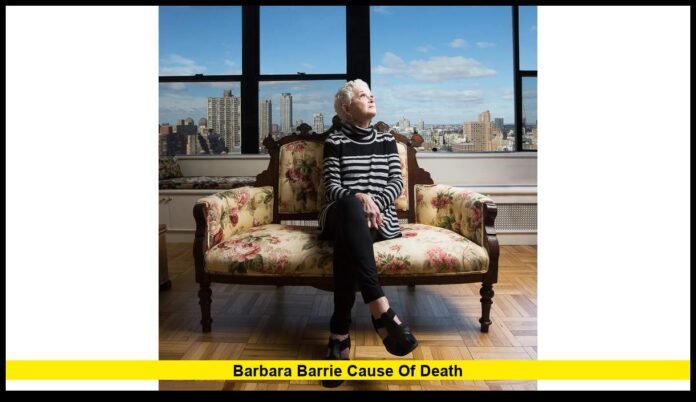

The Barbara Barrie cause of death has become a subject of public interest following the actress’s death at age 95 on October 28, 2026. Barrie died at her Manhattan home after receiving a terminal cancer diagnosis. Her daughter, Jane Harnick, confirmed that her mother’s death was medically assisted. The family has not publicly identified the specific type of cancer involved in her final illness.
Barrie spent more than six decades working in American film, television, and theater. Her performance in Breaking Away earned an Academy Award nomination, while her work in the original Broadway production of Company brought her a Tony Award nomination. She also became familiar to television audiences through roles in Barney Miller and Suddenly Susan.
Her death has drawn attention to both her final medical circumstances and her earlier experiences with serious illness. Barrie survived rectal cancer in the 1990s and later disclosed that she had idiopathic pulmonary fibrosis, a progressive lung disease. Neither earlier diagnosis has been confirmed as the direct cause of her death.
The circumstances reported by her family provide a clear starting point for understanding her passing. However, several medical details remain private, making it important to distinguish established information from assumptions about her health.
What Is Known About Barbara Barrie’s Cause of Death?
Barrie died on October 28, 2026, at her home in Manhattan, New York City. She was 95. Reports citing her daughter confirm that she had terminal cancer and that her death was medically assisted.
The available information establishes the broad circumstances of her passing, but it does not identify the exact cancer type. The family has not publicly disclosed further clinical details in the initial reports.
The confirmed details include:
- Age: 95 years old.
- Date of death: October 28, 2026.
- Location: Manhattan, New York City.
- Final illness: A terminal cancer diagnosis.
- Reported circumstances: Medical assistance in dying.
- Family confirmation: Her daughter, Jane Harnick.
These facts help answer the main question without overstating what is known.
A terminal diagnosis and a specific medical cause of death are not necessarily identical. A terminal diagnosis describes an illness expected to lead to death, while the immediate medical cause can involve additional clinical details.
In Barrie’s case, public reporting identifies a terminal cancer diagnosis and a medically assisted death. It does not provide enough information to name a particular cancer or establish every medical factor involved.
Why Her Final Cancer Diagnosis Remains Unspecified
Barrie’s terminal cancer diagnosis is central to the reports about her final days. Yet the initial accounts do not identify the affected organ, the stage of the disease, or the treatment she received.
Cancer is not a single disease. Different types develop in different tissues, follow different patterns, and respond to different treatments. Even when two diagnoses involve cancer, they may have no direct relationship.
Barrie’s earlier medical history includes rectal cancer, which she discussed publicly after receiving the diagnosis in 1994. That history has understandably drawn attention following reports of her terminal cancer diagnosis in 2026.
However, the available reporting does not confirm that her final cancer was rectal cancer or a recurrence of her earlier illness. Assigning a specific cancer type without confirmation would create an unsupported claim.
The same caution applies to statements about the stage of her illness, the length of time she had been diagnosed, and the treatments she may have considered. Those details have not been established in the initial public accounts.
The most reliable description remains that Barrie had terminal cancer before her death. Further medical information would be necessary to provide a more specific explanation.
Barbara Barrie’s First Cancer Diagnosis in 1994
Barrie faced a major health challenge in 1994 when doctors diagnosed her with rectal cancer. The illness required extensive treatment and changed aspects of her everyday life.
Her treatment included surgery, chemotherapy, and radiation. She also underwent a colostomy, a procedure that creates an opening in the abdomen to allow waste to pass into an external collection pouch.
Adjusting to life after a colostomy can involve significant practical and emotional challenges. Patients may need to adapt their routines, manage medical equipment, and address concerns about their bodies and relationships.
Barrie chose to speak openly about these experiences. At a time when discussions about colorectal cancer and colostomy care often carried considerable stigma, she used her public platform to explain what living with the condition could involve.
Her willingness to discuss a deeply personal health issue became an important part of her public life. She helped bring attention to the experience of surviving cancer and adjusting to treatment-related changes.
Her recovery from rectal cancer is an established part of her medical history. Nevertheless, it should remain separate from the final diagnosis reported in 2026 unless the family provides information confirming a connection.
How Barbara Barrie Turned Her Health Experience Into Advocacy
Barrie’s experience with colorectal cancer influenced her work as an author and advocate. She wrote about the challenges of treatment, the realities of life after surgery, and the need to reduce embarrassment surrounding colostomy care.
Her book Second Act: Life After Colostomy and Other Adventures, published in 1997, described aspects of her life following cancer treatment.
In 1999, she published Don’t Die of Embarrassment, continuing her efforts to encourage open conversations about colorectal cancer and life with a colostomy.
These books offered a personal perspective on subjects that patients may hesitate to discuss. Barrie described the experience from the standpoint of someone who had lived through treatment and its aftermath.
Her approach helped connect medical experiences with ordinary concerns about confidence, relationships, and everyday independence. Rather than presenting illness only through clinical terminology, she addressed how it could affect a person’s sense of self.
Her advocacy also helped explain why early detection and awareness matter. Colorectal cancer can involve symptoms that people may feel uncomfortable discussing, potentially delaying medical attention.
Barrie’s writing encouraged readers to approach these subjects with less shame. Her work remains a notable part of her legacy because it extended her influence beyond entertainment.
Although her books documented her earlier illness, they do not identify the cancer that preceded her death in 2026.
What Is Idiopathic Pulmonary Fibrosis?
Another important part of Barrie’s medical history emerged in 2014, when she disclosed that she had idiopathic pulmonary fibrosis, commonly called IPF.
IPF is a chronic disease that causes progressive scarring of lung tissue. As the scarring develops, the lungs become stiffer and less efficient at moving oxygen into the bloodstream.
People with IPF may experience shortness of breath, a persistent dry cough, and difficulty performing physical activities. The condition can progress over time, although its course varies between individuals.
The word idiopathic means that the cause is unknown. Doctors can assess lung function and other clinical evidence, but the precise origin of the disease is not established in every patient.
Barrie’s disclosure brought attention to a serious condition that is less familiar to many people than cancer or heart disease. It also added context to her public discussions of health and aging.
However, IPF should not automatically be described as the cause of her death. The reports about her passing identify terminal cancer and medically assisted death, but they do not establish that pulmonary fibrosis directly contributed to the outcome.
Without additional medical confirmation, any claim linking the lung disease to her final days would be speculative.
Understanding Medical Aid in Dying in Barbara Barrie’s Case
The reported circumstances of Barrie’s death have also focused attention on medical aid in dying.
Medical aid in dying generally refers to a legally regulated process available to eligible patients who meet specific requirements related to terminal illness and decision-making capacity. The applicable rules and procedures depend on the jurisdiction.
This concept is distinct from hospice care and palliative care. Palliative care aims to relieve symptoms and improve quality of life for people living with serious illnesses. Hospice care focuses on comfort near the end of life when curative treatment is no longer the primary goal.
Although these approaches may share an emphasis on comfort, they are not interchangeable. Receiving hospice or palliative care does not, by itself, mean that a person has chosen medical aid in dying.
In Barrie’s case, reports citing her daughter describe her death as medically assisted after she received a terminal cancer diagnosis. The initial accounts do not establish every detail of the clinical process.
The specific medication, the full medical circumstances, and any private discussions with healthcare professionals have not been disclosed in the information available publicly.
It is therefore important to describe the circumstances using the language supported by the reporting rather than assuming details that have not been confirmed.
Why Her Death Has Renewed Discussion About End-of-Life Choices
Barrie’s death has brought renewed attention to difficult questions surrounding terminal illness, personal autonomy, and end-of-life care.
People facing serious diagnoses may need to consider treatment options, likely outcomes, symptom management, and the effects of illness on their daily lives. Their decisions depend on individual circumstances, medical advice, and personal values.
Supporters of medical aid in dying often emphasize the importance of allowing eligible patients to make decisions about their own lives. Critics raise concerns about patient protection, informed consent, disability rights, and whether vulnerable people have adequate access to care.
These discussions involve legal and ethical questions that extend beyond any one individual.
However, public debate should not lead to assumptions about Barrie’s personal motivations. The reports about her death do not provide a complete account of her private reasoning or the conversations she may have had with her family and medical team.
Her daughter’s confirmation clarifies the reported circumstances, but it does not give the public access to every detail of Barrie’s experience.
Respectful reporting recognizes the importance of the information that has been shared while allowing private matters to remain private.
Barbara Barrie’s Family and Final Days
Barrie died at her Manhattan home on October 28, 2026. Her daughter, Jane Harnick, confirmed her death and the medically assisted circumstances described in public reporting.
Barrie was married to Jay Harnick, a director and producer, from 1964 until his death in 2007. They had two children, Jane and Aaron.
Reports identify three granddaughters among her surviving family members.
Her family has not publicly provided a detailed account of her final days. As a result, it would be inappropriate to construct a timeline of her last hours or describe private conversations that have not been reported.
The information released so far establishes that she had terminal cancer and died with medical assistance. Beyond those details, the circumstances remain personal to Barrie and her family.
Her passing represents the loss of a performer whose work reached audiences through several generations. It also brings renewed attention to her willingness to discuss difficult medical experiences.
For many people, her story includes both the actress who appeared on screen and the woman who spoke publicly about life after cancer treatment.
A Career That Spanned Film, Television, and Broadway
Barrie’s professional achievements extended well beyond the medical experiences that have attracted attention following her death.
Her performance in the 1979 film Breaking Away earned her an Academy Award nomination for Best Supporting Actress. She portrayed Evelyn Stohler, the mother of one of the young men at the center of the story.
The role brought her wider recognition among movie audiences and demonstrated her ability to portray believable family relationships with warmth and emotional depth.
Barrie also originated the role of Sarah in the original Broadway production of Stephen Sondheim’s musical Company. Her performance earned a Tony Award nomination for Best Featured Actress in a Musical.
Her film career included One Potato, Two Potato, for which she received the Best Actress award at the 1964 Cannes Film Festival. The film addressed an interracial marriage and the discrimination faced by the family at its center.
Television audiences later recognized Barrie for her work on Barney Miller, where she played Elizabeth, the wife of the title character. She also appeared in Suddenly Susan and numerous other television productions.
Her career demonstrated an ability to move between dramatic film roles, television comedy, and live theater. That range helped establish her as a versatile performer rather than an actress associated with a single role.
The Lasting Impact of Her Public Work on Cancer Awareness
Barrie’s openness about colorectal cancer gave her public life another dimension. Her writing addressed the physical and emotional realities that can follow a serious diagnosis.
Cancer treatment does not always end when surgery or other medical procedures finish. Many patients must adapt to lasting changes, attend follow-up appointments, and manage concerns about their health.
For people who undergo a colostomy, the adjustment can also involve learning new routines and dealing with concerns about privacy or social acceptance.
Barrie’s willingness to discuss these issues helped make them easier to acknowledge. Her personal account showed that patients could talk about their experiences without allowing embarrassment to define them.
Her advocacy did not replace medical advice, but it provided a relatable perspective for people confronting similar challenges.
That contribution remains distinct from the circumstances of her death. The final cancer diagnosis has not been identified more specifically in the initial reports, and her previous colorectal cancer should not be treated as the confirmed cause.
Timeline of Barbara Barrie’s Medical History
The following timeline summarizes the major events relevant to her health history and passing.
| Year | Event |
|---|---|
| 1994 | Barrie received a rectal cancer diagnosis and underwent treatment. |
| 1997 | She published Second Act: Life After Colostomy and Other Adventures. |
| 1999 | She published Don’t Die of Embarrassment, continuing her public discussion of cancer and colostomy care. |
| 2014 | She disclosed her diagnosis of idiopathic pulmonary fibrosis. |
| October 28, 2026 | She died at her Manhattan home at age 95 after a terminal cancer diagnosis. Her daughter confirmed the medically assisted circumstances. |
The timeline documents the medical milestones that have been publicly reported. It does not establish a direct relationship between her earlier conditions and her final illness.
Frequently Asked Questions About Barbara Barrie’s Death
What was Barbara Barrie’s cause of death?
Reports state that Barrie died through medical assistance after receiving a terminal cancer diagnosis. Her daughter, Jane Harnick, confirmed the circumstances. The specific type of cancer has not been identified in the initial public accounts.
When did Barbara Barrie die?
She died on October 28, 2026, at the age of 95.
Where did Barbara Barrie die?
Barrie died at her home in Manhattan, New York City.
What type of cancer did Barbara Barrie have before her death?
The specific cancer associated with her terminal diagnosis in 2026 has not been identified in the initial reports. She previously had rectal cancer in 1994, but a connection between the two diagnoses has not been confirmed.
Did Barbara Barrie survive cancer in the past?
Yes. Barrie underwent treatment for rectal cancer in 1994 and later discussed her recovery and life with a colostomy in her writing.
What was Barbara Barrie’s lung condition?
She disclosed idiopathic pulmonary fibrosis in 2014. The disease causes scarring of lung tissue and can progressively impair breathing. Public reports do not establish it as the direct cause of her death.
Was Barbara Barrie’s death medically assisted?
Yes. Reports citing her daughter describe her death as medically assisted after a terminal cancer diagnosis.
Who survived Barbara Barrie?
She is survived by her daughter, Jane Harnick, her son, Aaron Harnick, and three granddaughters. Her husband, Jay Harnick, died in 2007.
What was Barbara Barrie best known for?
She was best known for her Academy Award-nominated performance in Breaking Away, her role in Barney Miller, and her work in the original Broadway production of Company.
Did Barbara Barrie write books about her illness?
Yes. Her books Second Act: Life After Colostomy and Other Adventures and Don’t Die of Embarrassment addressed her experiences with colorectal cancer and life after a colostomy.
Is the exact medical cause of Barbara Barrie’s death known?
The publicly reported circumstances identify a terminal cancer diagnosis and a medically assisted death. The initial reports do not specify the cancer type or provide a complete clinical account.
Barbara Barrie’s life combined memorable performances with a willingness to discuss subjects many people found difficult to address. Her work on screen and stage, alongside her writing about serious illness, remains an important part of her legacy.
What do you remember most about Barbara Barrie’s career and contributions? Share your thoughts in the comments as further confirmed information becomes available.
While many readers want to understand the circumstances surrounding Barbara Barrie’s passing, her professional achievements remain an important part of her legacy. Discover more about her work and memorable screen appearances in our guide to Barbara Barrie’s movies and TV shows.