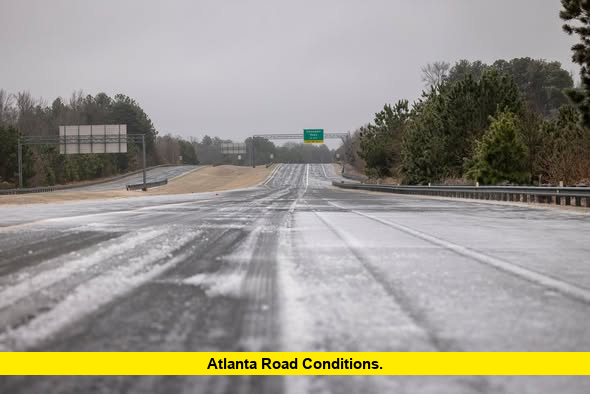

atlanta road conditions are a major concern today as freezing temperatures and lingering ice continue to impact travel across metro Atlanta and surrounding north Georgia communities. After a powerful winter system moved through the region, many roadways remain slick, especially during early morning and late-night hours when refreezing occurs. Commuters, commercial drivers, and emergency services are all navigating reduced speeds, intermittent closures, and hazardous patches of black ice that can form without warning.
The combination of freezing rain, sleet, and sharply dropping temperatures has created uneven driving conditions. While some main arteries have been treated and partially cleared, numerous secondary roads, neighborhood streets, and elevated surfaces still pose serious risks. Bridges, overpasses, and shaded corridors are especially vulnerable to hidden ice.
If you must travel, plan carefully and allow extra time. Conditions can change quickly, even within short distances.
Take a moment to check current traffic advisories before heading out and adjust your plans if conditions appear unsafe.
Widespread Ice and Refreezing Across the Metro Area
Overnight temperatures have remained below freezing in many parts of the region, allowing moisture on road surfaces to refreeze into thin sheets of ice. This has created dangerous black ice on highways, ramps, and city streets. Even where pavement looks dry, traction can be extremely limited.
Major interstates such as I-75, I-85, I-20, and I-285 have seen ongoing slowdowns due to slick lanes and minor crashes. Treated lanes may be passable, but shoulders and exit ramps often remain icy. In suburban and outlying areas, untreated routes are still partially coated, making them difficult for standard passenger vehicles to navigate safely.
Morning commuters have reported reduced visibility from blowing frost, along with frozen windshields and stiff steering caused by cold temperatures. Traffic flow is slower than usual, and emergency crews continue to respond to slide-offs and stalled vehicles.
City Streets and Secondary Roads Remain High Risk
While main highways receive priority treatment, many residential and secondary roads are slower to improve. These routes often receive less salt or brine and can stay icy for extended periods. Hills, curves, and intersections on local streets are particularly dangerous.
Drivers in northern suburbs and elevated neighborhoods are encountering compacted ice that has hardened overnight. In shaded areas, sunlight has little effect on melting, allowing slick spots to persist well into the afternoon. Parking lots, service roads, and school zones are also affected, creating challenges for both motorists and pedestrians.
Bridge and Overpass Hazards
Bridges and overpasses cool faster than ground-level roads, making them the first to freeze and the last to thaw. Many accidents during winter weather occur in these locations due to sudden loss of traction.
Approach ramps, flyovers, and connector bridges along the Perimeter and downtown interchanges are especially vulnerable. Drivers are urged to reduce speed before reaching these structures and avoid sudden braking or lane changes.
Impact on Commuters and Commercial Traffic
Delivery services, rideshare drivers, and freight operators are adjusting routes and schedules to account for slower travel and temporary closures. Some companies have delayed early-morning operations to allow for safer conditions.
Public transportation has also experienced schedule adjustments as buses and support vehicles navigate slick surfaces. Reduced traction affects stopping distances, leading to longer travel times and occasional service gaps.
Employers across the metro area have encouraged flexible start times and remote work where possible to reduce congestion and minimize accident risk during peak icy periods.
Road Treatment and Ongoing Operations
Transportation crews have been actively applying salt and anti-icing materials to major corridors, bridges, and high-traffic intersections. Plows and spreaders remain in operation, focusing on routes with heavy commuter and emergency traffic.
Despite these efforts, refreezing remains a challenge. As temperatures drop overnight, previously wet pavement can quickly become slick again, even after daytime melting. This cycle is expected to continue until temperatures remain above freezing for an extended period.
Motorists should not assume that a road that was clear earlier in the day will remain safe later in the evening or early morning.
Driving Safely on Icy Roads
To reduce the risk of accidents during these conditions, drivers should follow several key safety practices:
- Slow down well below posted speed limits.
- Increase following distance to allow for longer stopping times.
- Avoid sudden acceleration, braking, or sharp turns.
- Use headlights in low visibility and during early morning frost.
- Be cautious on bridges, overpasses, and shaded road sections.
- Treat any intersection with malfunctioning signals as a four-way stop.
Keeping an emergency kit in your vehicle with blankets, water, snacks, and a fully charged phone can provide added security in case of delays or breakdowns.
Power Outages and Traffic Signal Issues
Ice accumulation on trees and power lines has led to scattered outages across parts of the metro area. When traffic signals lose power, intersections can become congested and confusing, increasing the risk of collisions.
Drivers approaching dark or flashing signals should come to a complete stop and proceed only when safe, yielding to cross traffic as required. Extra patience and awareness are critical in these areas.
What to Expect Over the Next Day
Cold air remains in place, and nighttime temperatures are expected to stay low enough for continued refreezing. Daytime sunshine may help melt surface ice on well-traveled roads, but shaded and elevated areas will likely stay slick longer.
Until temperatures consistently rise above freezing, motorists should expect variable driving conditions, with safe pavement in one area and dangerous ice just a few blocks away.
Staying informed and adjusting travel times can significantly reduce risk.
Staying Prepared
Preparation is the best defense against winter road hazards. Before driving:
- Clear all ice and snow from your windshield, mirrors, and roof.
- Check tire pressure, as cold temperatures can reduce it.
- Ensure windshield washer fluid is rated for freezing conditions.
- Keep fuel levels above half a tank in case of unexpected delays.
For those who can delay travel, waiting until mid-day when temperatures are slightly higher may offer safer conditions.
The situation on area roadways remains fluid, and caution is essential for anyone heading out. With patience, preparation, and careful driving, risks can be reduced until temperatures stabilize and surfaces fully clear.
Share your experience with today’s atlanta road conditions in the comments and stay alert for updates as weather and travel conditions evolve.