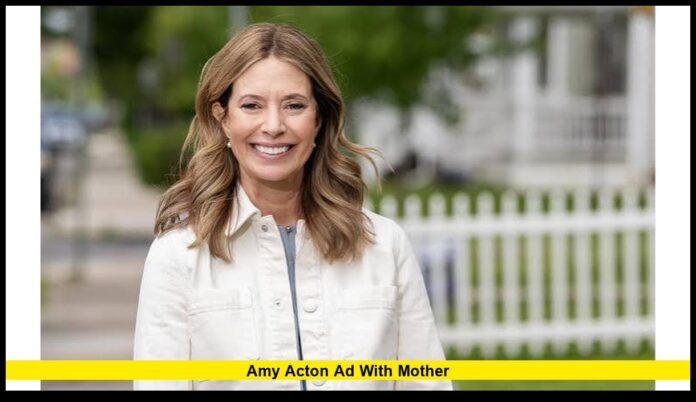

The Amy Acton ad with mother has become a major controversy in Ohio’s 2026 gubernatorial election, drawing criticism from Democrats and Republicans after Republican candidate Vivek Ramaswamy acknowledged that his campaign produced the video. The advertisement features Donna Arthur, the estranged mother of Democratic nominee Dr. Amy Acton, questioning her daughter’s account of her childhood and urging voters not to elect her governor. As of October 22, 2026, Ramaswamy’s campaign plans to spend $4 million promoting the advertisement, while Acton has condemned its release and her brother, Philip Stearns, has publicly defended her account of their childhood.
The dispute has moved beyond an ordinary campaign disagreement. It involves allegations of childhood sexual abuse, a decades-long family estrangement, questions about political advertising, and competing arguments over what voters should consider when choosing Ohio’s next governor. Vice President JD Vance has defended Ramaswamy’s decision to run the advertisement, even as prominent figures from both parties have criticized its approach.
What Is the Amy Acton Ad With Mother?
The advertisement is a roughly 60-second political video featuring Donna Arthur, who criticizes her daughter and disputes aspects of the childhood history Acton has described publicly.
Arthur portrays Acton as dishonest and encourages Ohio voters to reject her candidacy. The video focuses on Acton’s personal credibility rather than presenting a conventional comparison of the candidates’ economic proposals, health care policies, education plans, or approaches to state government.
The advertisement began circulating on social media around October 19, initially without clearly identifying the campaign responsible for producing it. Its origins became a major issue as the video spread and attracted attention from political commentators, journalists, and voters.
Ramaswamy’s campaign acknowledged responsibility on October 20 and announced a $4 million effort to distribute the advertisement through television and online platforms.
The announcement transformed the video from an initially unattributed social media controversy into an identifiable part of the Republican candidate’s election strategy.
The campaign has defended its decision by arguing that voters should hear Arthur’s account. Acton and her supporters have countered that the video exploits a painful family history and uses childhood trauma to damage a political opponent.
Those competing positions have made the advertisement one of the most contentious developments in Ohio’s gubernatorial campaign during the final weeks before Election Day.
Who Is Donna Arthur, Amy Acton’s Mother?
Donna Arthur is the biological mother of Amy Acton. Their relationship has been estranged since Acton was a child, following events involving Arthur’s husband, Cledith Arthur.
Acton has said she experienced sexual abuse by her stepfather when she was young. Her account also describes serious instability at home, including periods of homelessness.
According to accounts from Acton and her brother, the children were removed from their mother’s custody after the stepfather faced criminal charges related to the alleged abuse. Acton has said she has not seen her mother since the late 1970s.
The advertisement brings this long-standing family separation into the center of the governor’s race. Arthur challenges her daughter’s account and questions her character, while Acton maintains that the experiences she has described are real.
The disagreement is particularly sensitive because the video features a close family member whose relationship with the candidate broke down decades ago.
Arthur’s statements are allegations made in a political advertisement. They do not, by themselves, establish that Acton’s account of her childhood is false.
Likewise, readers should distinguish statements from the campaign, accounts from family members, and information documented in historical records. Treating every claim in a political video as an established fact would obscure important differences between allegation, personal testimony, and independently corroborated evidence.
Why Amy Acton’s Childhood Is at the Center of the Dispute
Acton has spoken publicly about the difficulties she experienced growing up in Ohio. Her account includes sexual abuse by her stepfather and periods when her family did not have stable housing.
These experiences have formed part of her personal story, although her gubernatorial campaign has also focused on her professional background and plans for Ohio.
The dispute over her childhood intensified when the advertisement presented Arthur’s opposing account. The video encourages viewers to question Acton’s credibility without resolving the underlying historical disagreement.
Records described in reporting on the controversy show that Cledith Arthur faced criminal charges in 1978 related to the alleged rape of his 12-year-old stepdaughter. He pleaded not guilty, was indicted by a grand jury, and later failed to appear for a court hearing. He subsequently remained a fugitive and never stood trial on those charges. He died in 2004.
These details provide important context. The case did not result in a criminal trial establishing guilt, so it would be inaccurate to describe the allegations as a conviction. At the same time, the absence of a trial does not prove that Acton’s account was fabricated.
Acton and her brother have continued to support her account of the abuse they say they experienced. Stearns has described his sister as enduring particularly severe treatment while attempting to protect him.
The advertisement does not settle the dispute between the family members. Instead, it asks voters to assess their competing statements in the highly charged environment of an election campaign.
Vivek Ramaswamy’s Campaign Confirms Responsibility
Ramaswamy’s campaign initially faced questions about who created the video after it appeared online without a clear sponsor identification.
The campaign subsequently confirmed that it produced the advertisement. It also announced plans to spend $4 million promoting the video during the closing weeks of the gubernatorial contest.
That commitment signals a substantial effort to put the advertisement before Ohio voters. The planned distribution includes television and online advertising, giving the campaign multiple ways to reach audiences.
Ramaswamy has defended the campaign’s broader criticism of Acton’s credibility. His team has argued that voters should consider information it believes raises questions about the Democratic nominee.
The campaign’s position has not prevented widespread criticism. Some Republican figures have argued that featuring an estranged parent in an attack advertisement is inappropriate, particularly when the dispute involves allegations of childhood sexual abuse.
The controversy has also drawn attention to the advertisement’s initial circulation without a clear disclosure. Political advertising rules require appropriate sponsor identification in relevant formats, including television broadcasts. The circumstances surrounding the first online version raised separate questions about transparency and attribution.
Once Ramaswamy’s campaign acknowledged producing the video, its responsibility for the message became clear. The debate then shifted toward whether the advertisement was appropriate and how voters might interpret its claims.
Amy Acton Condemns the Advertisement
Acton has strongly criticized Ramaswamy for using her mother in a political attack. She has described the decision as exploitative and objected to the way the advertisement presents her childhood experiences.
Her response emphasizes that the events she has discussed were deeply traumatic and should not become a tool for attacking her candidacy.
Acton has also argued that the controversy reflects the personal nature of Ramaswamy’s campaign tactics. Rather than accepting the advertisement as a routine political criticism, she has challenged the decision to bring her family history into the election.
Her position does not mean that candidates should be exempt from questions about their character or public statements. Instead, the dispute raises a more specific issue: whether a candidate’s estranged parent should be used to challenge accounts of childhood abuse in a campaign advertisement.
Acton previously served as director of the Ohio Department of Health. Her background in medicine and public health has been a central part of her political identity.
The gubernatorial contest also concerns issues affecting Ohio residents, including economic conditions, health care, education, and the future direction of state government. The advertisement has diverted substantial attention toward a personal dispute during the final campaign stretch.
Acton’s response seeks to defend her account while challenging the judgment behind the advertisement’s release.
Philip Stearns Defends His Sister’s Account
Philip Stearns, Acton’s brother, has become a prominent voice in the response to the advertisement. He has publicly defended his sister’s account of their childhood and criticized the decision to use their family history in a political campaign.
Stearns has described the abuse he experienced as a child and said Acton endured particularly severe treatment. In his account, she tried to protect him during the difficult circumstances they faced at home.
His statements provide another perspective on the family history disputed in the advertisement. Rather than relying only on Acton’s description of events, voters have also heard from a sibling who says he experienced the same environment.
On October 20, Acton’s campaign released a response advertisement titled “Abuse,” featuring Stearns discussing their childhood. He condemned the decision to turn their experiences into a political talking point and criticized Ramaswamy’s judgment.
The response directly challenges the message presented by Arthur. While the original video asks voters to distrust Acton, the campaign’s response asks them to consider her brother’s testimony and the circumstances surrounding the family’s separation.
Stearns’s participation has become an important part of the controversy because it highlights the competing accounts from people who have personal knowledge of the family’s history.
However, neither campaign advertisement replaces a careful examination of the available evidence. Viewers should evaluate the statements made in both videos while recognizing the distinction between personal testimony and findings established through legal proceedings.
JD Vance Defends Ramaswamy’s Decision
Vice President JD Vance publicly defended Ramaswamy after the advertisement generated criticism. His comments added another national political figure to the dispute.
Vance argued that Republicans should not allow criticism of the advertisement to overshadow their broader disagreements with Democrats. He also defended Ramaswamy’s willingness to use the video against his opponent.
His intervention was significant because the controversy had already drawn criticism from within Republican circles. Instead of distancing himself from the advertisement, Vance challenged Republicans who objected to it.
The vice president’s position contrasts with the response from other prominent political figures. Some Republicans have criticized the advertisement’s use of a family dispute, while others have defended the campaign’s right to present Arthur’s account.
This division illustrates that the controversy does not fit neatly into a simple partisan disagreement. Republicans have disagreed among themselves about the advertisement’s appropriateness, while Democrats have condemned it as an attack on Acton’s personal history.
Vance’s defense has also placed additional attention on the candidates’ closing campaign strategies. The debate now involves not only Ramaswamy and Acton but also influential figures who have weighed in on how the controversy should be understood.
The political disagreement remains separate from the factual question of what happened during Acton’s childhood. Public support for a candidate does not independently establish the truth or falsity of the allegations in the video.
Why Republicans and Democrats Have Criticized the Ad
The reaction to the advertisement has been notable because criticism has come from both sides of the political divide.
Democrats have condemned the video as an attack that exploits Acton’s childhood experiences. Some Republicans have also questioned whether using an estranged parent to challenge a candidate’s account of sexual abuse is an appropriate campaign tactic.
The criticism reflects several distinct concerns.
The treatment of childhood abuse: Critics argue that allegations involving sexual abuse deserve careful consideration rather than being reduced to a political message designed to damage a candidate.
The use of family estrangement: Arthur and Acton have been separated for decades. Critics say that relationship history matters when evaluating the context of the mother’s statements.
The question of political judgment: Candidates routinely challenge one another’s records, but the decision to focus on a family trauma raises different ethical questions.
Transparency in political advertising: The video initially circulated without clearly identifying its sponsor, prompting questions about how voters could determine who was responsible for the message.
The effect on the campaign: The controversy has attracted attention that might otherwise have focused on policy proposals and the candidates’ qualifications for office.
Criticism does not automatically establish that the advertisement is unlawful or that every statement it contains is false. Those questions require separate evidence and, where relevant, legal analysis.
However, the reaction shows how a campaign tactic can generate consequences beyond its intended political message. An advertisement designed to raise doubts about one candidate can also lead voters to question the judgment of the campaign that produced it.
The Role of Political Advertising in Ohio’s Governor Election
Political advertising plays a major role in modern elections. Campaigns use television commercials, online videos, social media posts, and other forms of communication to introduce candidates, explain policies, and criticize opponents.
The Amy Acton controversy highlights the risks of personal attacks that focus on allegations involving family members.
Campaigns have a legitimate interest in questioning an opponent’s public statements. Voters also have a legitimate interest in receiving accurate information about candidates. Yet those interests do not eliminate the need to distinguish substantiated information from allegations and competing personal accounts.
The advertisement’s initial lack of clear attribution also demonstrates why transparency matters. Voters should be able to identify the campaign responsible for a political message and understand who is attempting to influence their decisions.
Ramaswamy’s campaign has since acknowledged producing the video and announced its promotional spending. That confirmation clarifies who is behind the advertisement, even though disagreements about its content remain unresolved.
The controversy may also encourage voters to look more closely at how campaigns present evidence. A dramatic personal allegation can attract attention, but emotional impact alone does not determine whether a claim is accurate.
For journalists, voters, and campaign officials, the challenge is to examine the claims carefully without allowing the intensity of the political debate to replace factual scrutiny.
How the Advertisement Fits Into the 2026 Ohio Governor’s Race
The dispute emerged shortly before the November 3, 2026, general election. That timing gives the controversy particular importance because both campaigns are working to reach voters before Election Day.
Acton is the Democratic nominee, while Ramaswamy is the Republican nominee. Their contest has become one of the closely watched state-level races of the election cycle.
The $4 million promotional commitment gives the advertisement a substantial role in Ramaswamy’s campaign communications. The planned spending indicates that the campaign intends to distribute the video widely, although the final electoral effect remains uncertain.
Some voters may consider Arthur’s statements relevant to their evaluation of Acton. Others may reject the advertisement because they believe it crosses a personal boundary. Still others may focus on the broader dispute while continuing to assess both candidates’ policy positions.
The advertisement alone cannot establish how the election will turn out. Reliable conclusions about voter reaction require evidence such as polling, campaign data, and ultimately election results.
The controversy may influence the questions candidates face at campaign events and interviews. It may also affect the amount of attention devoted to issues such as public health, taxes, education, jobs, and state spending.
Nevertheless, the gubernatorial race encompasses far more than one advertisement. Ohio voters will ultimately choose between candidates based on their overall assessments of leadership, policy, experience, and trust.
What Viewers Should Know Before Sharing the Video
People searching for the advertisement may encounter the original video, excerpts, commentary, and campaign responses. These materials do not necessarily provide the same context.
A short clip may omit information about the family’s history or leave out statements that explain how the dispute developed. Social media posts may also present allegations as established facts without distinguishing between the two.
Readers should consider several questions when evaluating material about the controversy:
- Who produced the video, and who paid to distribute it?
- What does the advertisement actually claim?
- Which statements come directly from Arthur, Acton, or Stearns?
- What information can historical records establish independently?
- Does a post distinguish allegations from verified findings?
- Has a campaign response added relevant context?
These questions are useful because the controversy involves deeply personal allegations that have become part of a political contest.
The criminal case involving Acton’s stepfather is relevant background, but it must be described accurately. He faced charges and was indicted, but he did not stand trial on those charges. A responsible account should not describe the allegations as a conviction.
Similarly, Arthur’s criticism does not establish that Acton lied about her childhood. The advertisement presents one side of a longstanding family dispute, while Acton and Stearns have offered accounts that contradict it.
Careful reporting requires preserving those distinctions rather than treating the most forceful political message as the definitive account.
What Happens Next in the Amy Acton Controversy?
The next developments will depend on the campaigns’ decisions, the distribution of the advertisement, and any additional public statements from the people involved.
Ramaswamy’s campaign has committed $4 million to promoting the video. That spending plan places the advertisement among the campaign’s major communications efforts in the final stretch before the election.
Acton’s campaign has responded with criticism of the video and a separate advertisement featuring her brother. The competing messages are likely to remain part of the public discussion as the election approaches.
The controversy has also generated debate about campaign ethics, political transparency, and the treatment of survivors of abuse. Those issues extend beyond the immediate contest because they concern the standards voters expect from candidates seeking public office.
No reliable conclusion about the advertisement’s ultimate political impact can be drawn from the backlash alone. Its effect will depend on how voters interpret the competing accounts and how they weigh the controversy against the candidates’ records and proposals.
As of October 22, 2026, the principal developments are established: Ramaswamy’s campaign produced the advertisement, announced a $4 million promotional effort, and faced criticism from across the political spectrum. Acton has condemned the video, while Stearns has publicly supported her account of their childhood.
The central family dispute remains painful and contested. The advertisement has brought it into the election campaign, but it does not resolve the underlying disagreement.
Frequently Asked Questions
What is the Amy Acton ad with mother controversy about?
The controversy concerns a political advertisement featuring Donna Arthur, Amy Acton’s estranged mother. Arthur criticizes her daughter’s honesty, disputes aspects of her childhood account, and urges voters not to elect her governor of Ohio.
Who created the advertisement featuring Amy Acton’s mother?
Vivek Ramaswamy’s campaign acknowledged producing the advertisement on October 20, 2026. The campaign also announced a $4 million effort to promote it.
Why has Donna Arthur been estranged from Amy Acton?
Acton has said she became estranged from her mother after experiencing abuse by her stepfather as a child. The children were removed from their mother’s custody following criminal charges against the stepfather.
What happened in the criminal case involving Acton’s stepfather?
Cledith Arthur faced charges related to the alleged rape of his 12-year-old stepdaughter in 1978 and was indicted by a grand jury. He pleaded not guilty, failed to appear for a court hearing, and never stood trial on those charges. He later died in 2004.
How did Amy Acton respond to the advertisement?
Acton condemned the video and criticized Ramaswamy for using her estranged mother in a political attack. She has defended her account of her childhood and objected to turning her experiences into campaign material.
What did Philip Stearns say about the controversy?
Stearns defended his sister’s account and described the abuse he says they experienced as children. He also appeared in Acton’s campaign response advertisement, titled “Abuse.”
Why did JD Vance defend Ramaswamy?
Vance argued that Republicans should not focus their criticism on the advertisement while overlooking their broader political disagreements with Democrats. His defense added to the national attention surrounding the dispute.
How much money will Ramaswamy’s campaign spend promoting the ad?
The campaign announced a $4 million effort to promote the advertisement through television and online distribution.
Does the advertisement prove that Acton lied about her childhood?
No. The advertisement presents Arthur’s allegations, but it does not independently establish that Acton’s account is false. The historical record and the statements of those involved must be evaluated separately.
When is the Ohio governor election?
Ohio’s general election is scheduled for November 3, 2026. Acton and Ramaswamy are the Democratic and Republican gubernatorial nominees, respectively.
What is the latest development in the controversy?
As of October 22, 2026, Ramaswamy’s campaign has acknowledged producing the advertisement and announced $4 million in promotional spending. The video has drawn bipartisan criticism, and Acton’s campaign has released a response featuring her brother.
The Amy Acton controversy continues to raise important questions about political campaigning, personal history, and public accountability. Share your thoughts in the comments and follow the latest verified developments in Ohio’s governor race.