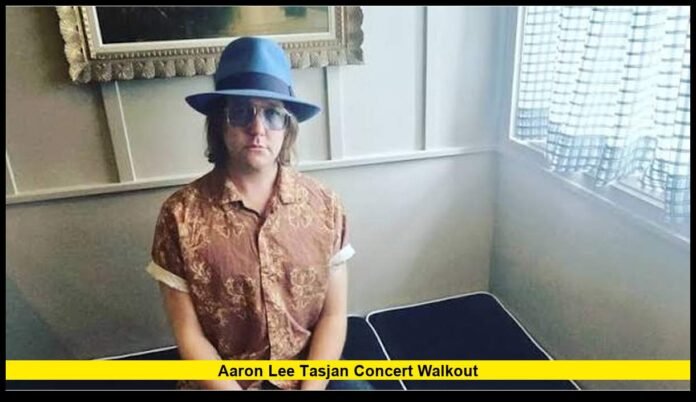

Aaron Lee Tasjan concert walkout became one of the most talked-about stories in the Americana music community after several concertgoers left a live performance in Galveston, Texas, during one of the singer-songwriter’s politically themed songs. The moment quickly gained national attention as Aaron Lee Tasjan responded publicly, defending the role of artists in addressing difficult subjects while making it clear that audience members also have the freedom to disagree. The discussion has since expanded into a broader conversation about artistic expression, live performances, and how musicians connect with audiences across the United States.
What Happened During the Galveston Performance?
The incident occurred during Aaron Lee Tasjan’s concert at 1859 St. Joseph’s Church in Galveston, Texas. The Nashville-based singer-songwriter was performing for fans as part of his 2026 tour when he introduced one of the songs from his recent catalog.
As Tasjan performed “I Love America Better Than You,” several audience members decided to leave before the song ended. Tasjan later shared that approximately eight people walked out during the performance after reacting negatively to the song’s political themes.
Rather than allowing the moment to pass quietly, the artist addressed it afterward in a public statement. His comments soon spread across social media, drawing attention from music fans, commentators, and people interested in the relationship between entertainment and political expression.
Although concert walkouts occasionally happen during live events, this one stood out because of the thoughtful response from the performer and the wider discussion that followed.
Why Did Some Audience Members Leave?
The walkout centered on the content of “I Love America Better Than You,” a song from Tasjan’s 2024 album Stellar Evolution.
The lyrics reference several topics that continue to generate public debate across the United States, including immigration, American identity, LGBTQ+ rights, the January 6 Capitol attack, and former President Barack Obama.
While many fans listened through the entire performance, a small group chose to exit the venue during the song.
Tasjan later explained that the departures appeared connected to the message presented in the lyrics. The exact reasons behind each person’s decision have not been publicly confirmed, but the timing made the connection clear from the artist’s perspective.
The incident quickly became a topic of conversation because it highlighted how different audiences respond to politically themed music in a live setting.
Aaron Lee Tasjan Shares His Perspective
Following the performance, Aaron Lee Tasjan did not criticize the people who walked out.
Instead, he emphasized that every audience member has the right to decide whether they wish to continue listening.
At the same time, he defended the importance of artists creating music that reflects their beliefs and observations about the world around them.
Tasjan explained that he does not believe musicians exist solely to entertain audiences. In his view, songs can also encourage reflection, challenge assumptions, and open conversations about issues affecting society.
His response remained respectful throughout, avoiding personal attacks while reaffirming his commitment to honest songwriting.
That balanced approach became one of the biggest reasons the story attracted attention beyond the Americana music community.
Understanding the Song at the Center of the Discussion
“I Love America Better Than You” has generated conversation since its release because of its direct references to contemporary political and cultural issues.
Rather than presenting a simple patriotic anthem or a partisan statement, the song explores different perspectives on what it means to love America.
Tasjan has described the song as an examination of the country’s strengths, struggles, and contradictions.
The lyrics touch on subjects that many Americans hold strong opinions about, making it understandable that audiences may react differently during live performances.
For supporters, the song represents honest artistic expression.
For critics, the political content may feel out of place during a concert.
Those differing viewpoints became visible during the Galveston performance.
Read More – Morgan Wallen Big House Concerts Bring Country Music’s Biggest Weekend to Ann Arbor
A Career Built on Honest Songwriting
Aaron Lee Tasjan has spent years building a reputation as one of Americana music’s most respected singer-songwriters.
Originally from Ohio and now based in Nashville, he has developed a style that blends Americana, country, rock, folk, and indie influences.
His songwriting often focuses on personal experiences while also exploring broader themes about American life.
Throughout his career, Tasjan has earned praise from critics and fellow musicians for thoughtful lyrics and memorable performances.
His work has reached audiences through albums, national television appearances, major music festivals, and extensive touring across the United States and internationally.
His recognition also includes a Grammy nomination for Best American Roots Song, further establishing his reputation within the Americana genre.
How Social Media Amplified the Story
The concert itself took place before a live audience in Texas, but the discussion grew much larger after Tasjan publicly reflected on what happened.
His comments circulated across several social media platforms, where fans and critics shared their own opinions.
Some applauded the singer for remaining committed to his artistic vision despite the audience reaction.
Others argued that concerts should provide an escape from political debates rather than revisit them.
Many observers focused less on politics and more on the principle that both artists and audiences should have the freedom to express themselves.
As a result, the conversation moved beyond one performance and became part of a wider discussion about live entertainment in today’s cultural climate.
The Role of Politics in Live Music
Music has long served as a platform for discussing current events and social issues.
Across many genres, artists have written songs about war, civil rights, economic challenges, elections, patriotism, and personal freedom.
Americana and country music are no exception.
Many influential performers throughout history have addressed controversial subjects through their songwriting.
Tasjan’s work fits within that tradition.
Whether listeners agree with his perspective or not, the Galveston performance demonstrated that songs addressing current issues continue to inspire strong reactions from audiences.
Audience Freedom Is Also Part of Live Performances
One reason this story resonated with so many people is that it highlighted two different forms of free expression happening at the same time.
The performer exercised his freedom by singing material that reflects his beliefs.
The audience members exercised theirs by choosing not to remain for the performance.
Neither action prevented the other.
Instead, both became part of a live event where individuals responded according to their own convictions.
Tasjan acknowledged that reality in his public remarks, making it clear he respected the decision of those who chose to leave even while standing behind his music.
That response helped keep the discussion focused on ideas rather than personal conflict.
Why the Story Reached a National Audience
Several factors combined to make the Galveston concert a national story.
First, the walkout occurred during a song addressing political topics that remain widely debated across America.
Second, Tasjan responded thoughtfully instead of fueling further controversy.
Third, social media allowed the incident to spread quickly beyond fans who attended the concert.
Finally, the discussion arrived during a period when many Americans continue debating the role of politics in entertainment, sports, television, and music.
Those factors transformed what might have remained a local concert moment into a widely discussed national conversation.
Fan Reactions Remain Divided
The response from music fans has reflected the diversity of opinions found across the country.
Some listeners praised Tasjan for refusing to alter his artistic message simply because it generated disagreement.
Others felt political material should remain separate from live concerts where audiences gather primarily for entertainment.
A third group viewed the situation differently.
Many observers noted that the evening demonstrated how both performers and audiences can exercise their rights peacefully without preventing one another from expressing different viewpoints.
That perspective has become one of the most common themes surrounding the story.
The Importance of Live Performances
Unlike studio recordings, concerts create direct interaction between musicians and audiences.
Every performance is unique because listeners respond in real time.
Some songs inspire standing ovations.
Others encourage fans to sing along.
Occasionally, certain performances provoke disagreement or emotional reactions.
That unpredictability is part of what makes live music memorable.
The Galveston concert reminded many fans that live performances remain places where authentic moments unfold naturally, sometimes leading to conversations that continue long after the final song ends.
Aaron Lee Tasjan Continues His Tour
Despite the attention surrounding the walkout, Aaron Lee Tasjan continues his touring schedule.
The incident has not resulted in any announced changes to his planned performances, and there has been no indication that he intends to remove “I Love America Better Than You” from future setlists.
Instead, the artist appears committed to continuing the same honest approach that has defined much of his career.
For longtime fans, that consistency reflects the qualities that first attracted them to his music.
For newer listeners discovering his work because of the recent headlines, the incident has introduced them to an artist unafraid to present songs that invite discussion.
Why This Concert Moment Continues to Matter
The Aaron Lee Tasjan concert walkout became more than a brief headline because it touched on larger questions about creativity, audience expectations, and freedom of expression.
While only a small number of concertgoers left the performance, the discussion that followed reached far beyond the venue in Galveston.
Tasjan’s response emphasized respect for differing opinions while defending the role of music as more than simple entertainment.
That combination of conviction and respect has kept the conversation active among music fans and cultural commentators.
As his 2026 tour continues, the Galveston performance will likely remain one of the defining moments of this chapter in his career, illustrating how a single song can spark meaningful conversations far beyond the stage.
The Aaron Lee Tasjan concert walkout continues to generate discussion about music, artistic freedom, and audience choice. Share your thoughts and stay connected for more updates on the stories shaping today’s music world.