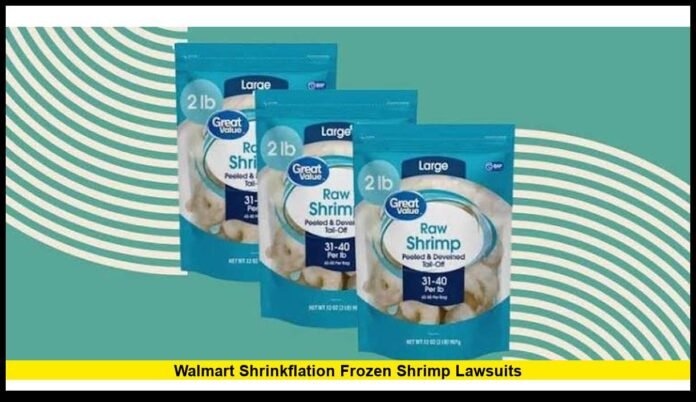

The walmart shrinkflation frozen shrimp lawsuit has put food labeling and seafood package weights under scrutiny in the United States. The proposed class-action case alleges that Walmart’s Great Value frozen shrimp products may include the weight of a protective ice coating in the net weight displayed on their packaging, potentially leaving customers with less actual shrimp than they expect when making a purchase. The allegations raise questions about pricing transparency, federal food-labeling requirements, and the responsibilities retailers have when selling packaged seafood.
The dispute reportedly centers on a claim that some packages could contain up to 11% less shrimp than their advertised weight once thawed and drained. That figure remains an allegation rather than a court-established finding. Walmart has not been found liable, and the lawsuit must proceed through the legal system before any final conclusions can be reached.
For consumers, the case is significant because net weight directly affects how much food they receive for their money. It also highlights the difference between legitimate ice glazing, which protects frozen seafood, and the separate question of whether a product’s labeled weight accurately reflects its contents.
Key Points Summary
╔════════════════════════════════════════════════════════════════════╗
║ – Walmart faces a proposed class-action lawsuit over Great Value ║
║ frozen shrimp packaging and alleged net-weight discrepancies. ║
║ – The complaint reportedly challenges the inclusion of protective ║
║ ice glaze in the stated weight of frozen shrimp products. ║
║ – Some packages allegedly contain up to 11% less shrimp than ║
║ their labeled weight after thawing and draining. ║
║ – The case reportedly was filed in Cook County, Illinois, in ║
║ October 2026 and remains subject to the legal process. ║
║ – No confirmed settlement, approved compensation program, or ║
║ court finding of Walmart’s liability has been established. ║
╚════════════════════════════════════════════════════════════════════╝
What Is the Walmart Frozen Shrimp Lawsuit About?
The dispute involves Great Value, Walmart’s private-label grocery brand, and allegations about how the net weight of certain frozen shrimp products is represented to customers.
Frozen shrimp is often covered with a thin layer of ice during processing and storage. This coating, commonly called ice glaze, helps protect the seafood from freezer burn, moisture loss, and deterioration in quality. Its presence is not unusual, and ice glazing is not inherently unlawful.
The central allegation is that the declared net weight on certain packages may include the protective ice rather than accurately representing the weight of the shrimp itself.
If the allegation is proven, consumers could have paid for a stated quantity of seafood while receiving a smaller quantity after the coating is removed. That potential discrepancy is the foundation of the consumer-protection concerns raised in the case.
The plaintiff reportedly seeks legal remedies on behalf of consumers who purchased the affected products. Such remedies could include monetary damages, restitution, or changes to the challenged labeling practices, depending on the claims, evidence, and decisions made during litigation.
However, filing a proposed class action does not mean a court has accepted every allegation. The plaintiff must establish the relevant facts and legal grounds, while Walmart has the opportunity to contest the claims.
Why Ice Glaze Matters When Buying Frozen Shrimp
Ice glazing serves a practical purpose in the seafood industry. During freezing and storage, a protective layer of ice helps limit exposure to air and reduces moisture loss. Without appropriate protection, frozen shrimp can develop freezer burn and experience changes in texture and quality.
The issue is not simply whether a bag contains ice. Instead, the question is whether the product’s declared net weight accurately represents the food being sold.
For shoppers, this distinction can be difficult to evaluate by looking at a sealed package. Frozen shrimp may appear heavily coated, and the amount of ice can vary depending on processing methods and storage conditions. The packaging may not make the weight of the seafood separate from the coating immediately obvious.
Accurate net-weight labeling helps consumers compare products fairly. A customer choosing between two brands should be able to evaluate the quantity of seafood in each package without having to guess how much of the stated weight consists of ice.
If a product’s declared weight does not comply with applicable requirements, the issue can extend beyond one purchase. It may affect the price consumers effectively pay per pound and undermine confidence in packaged food labels.
What Does the Alleged 11% Shortfall Mean for Consumers?
The reported allegation that some packages may contain up to 11% less shrimp than their labeled weight has attracted attention because even a relatively small difference can matter when consumers shop regularly.
Consider a hypothetical package labeled as containing 16 ounces of shrimp. If the actual shrimp weight were 11% below that amount, the seafood would weigh approximately 14.24 ounces after the relevant coating was excluded.
For a package labeled as 32 ounces, an equivalent shortfall would mean approximately 28.48 ounces of shrimp.
These calculations illustrate the potential effect of an 11% discrepancy. They are not verified measurements of Walmart products and should not be interpreted as proof that any particular package is underweight.
The financial consequences depend on the product’s price and the size of the discrepancy. When shoppers pay for a stated quantity but receive less usable seafood, their effective cost per ounce increases.
For households that buy frozen shrimp for weeknight meals, family gatherings, meal preparation, or special occasions, that difference may affect both grocery budgets and meal planning.
The important question for the court is whether the alleged discrepancy occurred, whether the labeling violated applicable law, and whether the plaintiff and other proposed class members suffered a legally recognizable injury.
Is This Really a Shrinkflation Case?
The term shrinkflation generally describes a situation in which a company reduces the quantity or size of a product while maintaining its price or making the increase in unit cost less noticeable.
The frozen shrimp dispute raises a related concern, but the allegations involve the accuracy of the declared net weight rather than necessarily proving that Walmart reduced package sizes over time.
This distinction is important.
In a typical shrinkflation example, a shopper might find that a familiar package has become smaller while its shelf price remains unchanged. In a net-weight dispute, the concern is that the package may not contain the stated amount of food in the first place.
Both situations can leave consumers paying more for each ounce of product than they anticipated. However, the evidence needed to demonstrate each practice can differ.
The walmart shrinkflation frozen shrimp lawsuit therefore raises a broader question about how consumers can trust the quantities printed on packaged foods, especially products in which ice, water, or other protective materials may affect the overall weight.
The case should not be taken as proof of a deliberate shrinkflation strategy. Establishing intent, a labeling violation, or a compensable loss would require evidence and legal analysis.
What Federal Food-Labeling Rules Say
Net-weight declarations are an important part of packaged-food labeling in the United States. Consumers rely on them to understand the quantity of food they are purchasing and to compare prices across different brands.
Federal requirements generally distinguish the net quantity of food from the weight of packaging and other materials that should not be counted as the product itself. FDA guidance for frozen seafood addresses the need to exclude protective ice glaze when determining the net weight of the seafood.
These principles help ensure that shoppers are not misled by a package’s overall frozen weight when the quantity of actual seafood is what matters.
The rules do not prohibit a seafood processor from using an ice coating. Instead, the concern is whether the declared quantity accurately reflects the product under the applicable measurement and labeling standards.
Regulators may use controlled testing methods to evaluate whether packaged seafood meets its declared net weight. Such assessments are more reliable than simply judging a product by appearance because the amount of ice, thawing conditions, and handling can influence informal measurements.
A finding that an individual product is underweight would also need to be distinguished from a determination about an entire product line or retailer. Evidence involving one supplier, package, or product cannot automatically establish that every similar product has the same problem.
What Is Known About the Lawsuit’s Legal Status?
The proposed case has been reported under the name Baptist v. Walmart Inc. and was reportedly filed in the Circuit Court of Cook County, Illinois, on October 8, 2026.
The complaint challenges the alleged treatment of ice glaze in the stated net weight of Great Value frozen shrimp. It reportedly seeks remedies for the plaintiff and other consumers who may qualify under the proposed class definition.
As of the latest available reporting, the case has not resulted in a confirmed settlement or a final determination that Walmart violated the law.
Several important legal steps may still be necessary.
First, Walmart must have an opportunity to respond to the claims through the applicable court process. The parties may dispute the facts, the interpretation of labeling requirements, the alleged financial harm, or other aspects of the case.
Second, the plaintiff may seek to have the lawsuit certified as a class action. Class certification determines whether the case can proceed on behalf of a defined group of consumers rather than solely on behalf of the named plaintiff.
Third, the court may consider evidence and legal arguments addressing the merits of the allegations. Depending on the case’s progress, the parties could pursue motions, settlement discussions, or further litigation.
These steps do not follow a guaranteed timetable. Some proposed class actions settle, others are dismissed in whole or in part, and some proceed through extensive litigation.
Readers should therefore avoid treating the filing date or the allegations in the complaint as evidence that compensation is already available.
Has Walmart Responded to the Allegations?
Initial reporting indicated that a Walmart spokesperson said the company had not yet been served with the lawsuit at the time of the reported response. The company also reportedly pointed to policies intended to help ensure that suppliers provide products with accurate labels.
That reported response does not amount to an admission of wrongdoing. It also does not resolve whether the particular products identified in the complaint complied with all applicable net-weight requirements.
A complete assessment will depend on the parties’ formal positions and the evidence presented as the case develops.
For consumers, it is useful to distinguish between a company’s general labeling policies and the facts of a specific dispute. Policies may describe the controls a retailer expects suppliers to follow, but the court would need to consider the relevant evidence before determining whether a violation occurred.
No conclusion about liability should be drawn solely from the existence of the lawsuit or from an initial public statement.
Can Customers Receive Compensation?
Consumers who purchased Great Value frozen shrimp may wonder whether they can recover money if the allegations are eventually proven.
At present, there is no confirmed settlement payment, court-approved claims process, or official compensation deadline established by the reported proceedings.
A potential recovery would depend on how the litigation develops. If the case is dismissed, there may be no settlement or payment. If a settlement is reached, it could include eligibility restrictions and require court approval. If the plaintiff prevails through litigation, any remedy would depend on the court’s findings and applicable law.
Consumers concerned about their purchases can take practical steps while waiting for reliable updates:
- Keep receipts or other purchase records when available.
- Retain the original package and its product information if a specific weight concern arises.
- Record the package size, purchase date, and retailer location where possible.
- Review official court notices if a settlement or class-certification decision is announced.
- Be cautious about websites claiming to offer guaranteed payments before an official program exists.
Keeping a receipt or package does not automatically make someone eligible for a future recovery. It can, however, help document a purchase if additional information becomes necessary.
Consumers should also be careful with requests for personal information or upfront fees from unofficial claims websites. A legitimate settlement process should provide clear information about the responsible administrator, eligibility requirements, and applicable deadlines.
How Shoppers Can Evaluate Frozen Seafood Purchases
The allegations offer an opportunity for consumers to pay closer attention to product labels without assuming that all frozen seafood is improperly packaged.
Start by reviewing the declared net weight and comparing the price per pound or ounce across products. Unit pricing can help identify which option offers the best value, provided the products are being compared on a consistent basis.
Check the packaging for damage and follow the storage and preparation instructions. A package’s appearance alone cannot reliably establish whether its declared weight is accurate.
If the amount of shrimp seems unusually low after preparation, save the packaging and purchase documentation. Consumers can contact the retailer to ask about a product concern or report suspected labeling problems to the appropriate consumer-protection or food-regulatory authority.
Home measurements may help document a concern, but they do not necessarily prove a violation. Official net-weight testing follows specific procedures, and conclusions should account for the product’s condition and the applicable measurement requirements.
Most importantly, shoppers should not assume that every Great Value package is underweight or that all frozen shrimp products sold by Walmart are covered by this case.
What Happens Next?
The future of the lawsuit will depend on the court process, the parties’ arguments, and the evidence supporting or challenging the alleged net-weight discrepancies.
A major development would be a ruling on class certification, because it would clarify whether the case can proceed on behalf of a defined group of purchasers. A formal response from Walmart, additional court filings, or a settlement proposal could also provide further information.
Even if the case proceeds as a class action, certification would not automatically mean the allegations have been proven. The underlying claims would still need to be resolved through an appropriate legal process.
For now, consumers should look for verified developments rather than rely on speculation about possible payout amounts or deadlines.
The broader issue extends beyond one grocery brand. Accurate package weights are essential to fair pricing, informed purchasing decisions, and consumer confidence. The outcome may help clarify how the relevant labeling requirements apply to the products at issue, but it would not automatically establish wrongdoing by other seafood retailers or manufacturers.
Frequently Asked Questions
What is the main allegation in the Walmart frozen shrimp lawsuit?
The complaint alleges that certain Great Value frozen shrimp packages may include protective ice glaze in the stated net weight, potentially misrepresenting the amount of seafood consumers receive.
How much less shrimp is allegedly in some packages?
The reported complaint cites a potential shortfall of up to 11%. That figure remains an allegation and is not a confirmed measurement for every package.
Has Walmart been found guilty of misleading customers?
No. The reported lawsuit has not established Walmart’s liability. The allegations must be evaluated through the legal process.
Is there an official settlement?
No confirmed settlement or approved compensation program has been announced in the latest available reporting.
Can everyone who bought Great Value shrimp participate?
Not necessarily. Eligibility would depend on the final class definition, any court orders, and the terms of a possible future settlement or judgment.
Is ice glazing itself illegal?
No. Ice glazing is commonly used to protect frozen seafood. The legal concern is whether the declared net weight accurately represents the seafood under applicable requirements.
What should shoppers do while the case is pending?
Consumers can preserve receipts and packaging, document specific concerns, and watch for official court notices. They should not assume a claim form or payment deadline exists.
Final Takeaway
The proposed Walmart frozen shrimp lawsuit puts the accuracy of packaged seafood weights at the center of a consumer-protection dispute. The allegation that some products may contain less shrimp than their labels indicate has raised understandable questions about value, transparency, and retailer accountability. Nevertheless, the claims remain unresolved, and there is no confirmed settlement or compensation program at this stage.
As the legal proceedings continue, the most important developments will be those that clarify the evidence, the proposed class, and whether the challenged labeling practices violated applicable law.
Have you noticed differences in the amount of seafood inside frozen shrimp packages? Share your thoughts in the comments and follow future updates for the latest developments.