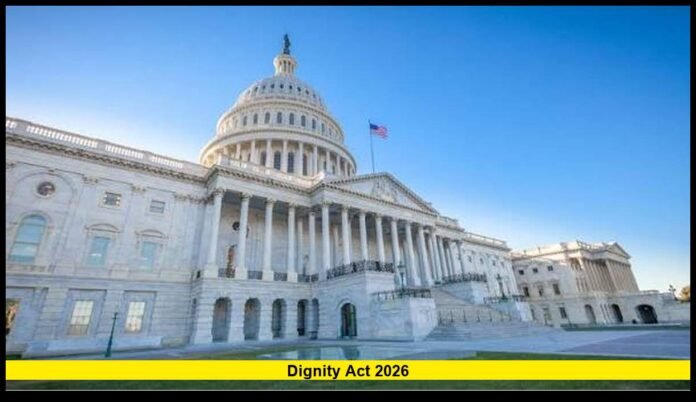

The Dignity Act 2026 is drawing renewed attention among immigrants, families, employers, and immigration advocates across the United States as lawmakers continue discussing changes to the country’s immigration system. The legislation, officially known as the DIGNIDAD (Dignity) Act, proposes a combination of border security measures, immigration enforcement reforms, employment verification requirements, and potential protections for certain undocumented immigrants who have lived in the United States for years.
Despite growing interest and bipartisan support among lawmakers, the Dignity Act has not become law. The latest version of the legislation is H.R. 4393, the DIGNIDAD (Dignity) Act of 2025, introduced in the House of Representatives on July 15, 2025. The bill remains part of the legislative process, meaning its proposed immigration programs and protections are not currently available to applicants.
The legislation has attracted attention because it attempts to address several major immigration issues at once. It would strengthen border enforcement while also creating a framework for certain undocumented immigrants to obtain protection from removal and potentially pursue longer-term legal status under specific conditions.
As immigration debates continue into 2026, many people are searching for information about the Dignity Act, who could qualify, whether applications are open, and whether the legislation could eventually provide a pathway toward permanent residency.
What Is the Dignity Act 2026?
The Dignity Act, formally called the Dignity for Immigrants while Guarding our Nation to Ignite and Deliver the American Dream Act, is a comprehensive immigration reform proposal designed to address border security, undocumented immigration, workforce needs, asylum processing, and immigration pathways.
The legislation is commonly referred to as the DIGNIDAD Act of 2025, although many people searching for information about its potential future implementation use the term Dignity Act 2026.
The bill was introduced by Representative María Elvira Salazar, a Republican from Florida, with bipartisan participation from lawmakers including Representative Veronica Escobar, a Democrat from Texas.
Rather than focusing exclusively on enforcement or legalization, the proposal attempts to combine different immigration policy objectives into one legislative package.
Its major components include:
- Border security improvements
- Additional resources for Border Patrol
- Changes to asylum processing
- Employment eligibility verification requirements
- Programs for certain undocumented immigrants
- Protection from removal for eligible participants
- Immigration pathways for qualifying individuals
- Reforms affecting family-based and employment-based immigration
- Changes to penalties and immigration enforcement procedures
The proposal represents a broad approach to immigration reform, but the final outcome would depend on congressional negotiations, committee consideration, House and Senate votes, and presidential approval.
Latest Dignity Act Update: Where Does the Bill Stand?
The most important update for people following the Dignity Act 2026 is that the legislation remains a proposal rather than an active immigration program.
H.R. 4393 was introduced in the House on July 15, 2025. The bill was subsequently referred to several congressional committees for consideration, including the House Judiciary Committee, Homeland Security Committee, Ways and Means Committee, Transportation and Infrastructure Committee, Education and Workforce Committee, Oversight and Government Reform Committee, and Armed Services Committee.
The legislation has not completed the congressional process required to become federal law.
Bipartisan support continues to grow
The Dignity Act has continued to receive attention from lawmakers across party lines. On November 16, 2026, Representative María Elvira Salazar announced that 16 additional lawmakers had joined the legislation, bringing the reported congressional support to 56 members.
The increase in cosponsors demonstrates continued interest in the proposal, although the number of supporters alone does not guarantee that the bill will receive a vote or become law.
A separate resolution seeks House consideration
Another legislative development involves H.Res. 1560, a House resolution introduced in September 2026 that seeks to establish the procedure for considering H.R. 4393 on the House floor.
The resolution is separate from the Dignity Act itself. It would address how the House could consider the immigration reform bill, including the debate and voting process.
However, the resolution also has to move through the legislative process. Its introduction does not mean that the Dignity Act has passed the House.
Readers can check the current congressional status of the legislation through the official government legislative records.
Who Introduced the Dignity Act?
The Dignity Act was introduced by Representative María Elvira Salazar of Florida on July 15, 2025.
The proposal received bipartisan participation from lawmakers representing different states and political backgrounds. Representative Veronica Escobar of Texas is among the lawmakers associated with the legislation.
The bipartisan structure is significant because immigration reform has historically been difficult to pass in Congress. Republican lawmakers have generally emphasized border security and enforcement, while Democratic lawmakers have often prioritized protections for immigrants, family unity, and pathways to legal status.
The Dignity Act attempts to bring some of these priorities together in a single legislative framework.
Its supporters argue that a comprehensive approach could address longstanding immigration challenges while strengthening border security and providing greater stability for certain immigrants already living and working in the United States.
What Would the Dignity Act Do?
The legislation contains several major policy areas that could affect immigrants, employers, border communities, and the federal government.
1. Create the Dignity Program for Eligible Undocumented Immigrants
One of the most widely discussed provisions is the proposed Dignity Program.
Under the legislation, certain undocumented immigrants could potentially receive protection from removal for a renewable period of seven years if they satisfy the program’s requirements.
The proposed program would not automatically provide legal status to every undocumented immigrant living in the United States.
Instead, eligibility would depend on specific conditions established by the legislation. Participants would be expected to meet employment or education requirements, pay restitution, and satisfy additional obligations.
The program is intended to provide a structured framework for certain individuals who have established lives in the United States while remaining outside the country’s formal immigration system.
However, because the legislation has not become law, the Dignity Program does not currently exist as an available federal immigration benefit.
2. Provide a Potential Pathway to Legal Permanent Residency for Certain Individuals
The bill also includes provisions addressing potential pathways to lawful permanent resident status for qualifying individuals.
Some provisions are connected to individuals who have participated in programs such as Deferred Action for Childhood Arrivals, commonly known as DACA.
The proposed legislation seeks to address the immigration circumstances of people who have lived in the United States for significant periods, including individuals who arrived as children and have established educational, professional, or family connections.
Eligibility would not be universal.
Applicants would need to meet the specific requirements contained in the legislation, and the final rules could depend on any amendments made during the legislative process.
It is important to distinguish between a proposed pathway and an existing immigration benefit. At present, the Dignity Act does not provide an active application route to a green card.
3. Strengthen Border Security
Border security is a central part of the legislation.
The proposal includes measures designed to improve border enforcement capabilities, increase resources for personnel, and strengthen operational capacity along the U.S. border.
The bill also addresses staffing and compensation issues involving U.S. Border Patrol agents.
Supporters argue that immigration reform should include meaningful enforcement provisions rather than focusing only on legal status for people already in the country.
The border security provisions are intended to make the legislation more comprehensive by addressing future immigration enforcement alongside proposed protections for certain undocumented immigrants.
4. Introduce Mandatory Employment Eligibility Verification
The Dignity Act also proposes a nationwide employment verification system modeled on the existing E-Verify framework.
Under the proposal, employers would be required to use an electronic system to verify whether employees are legally authorized to work in the United States.
This provision could affect businesses across numerous industries, including:
- Construction
- Agriculture
- Hospitality
- Restaurants
- Manufacturing
- Retail
- Transportation
- Healthcare
- Professional services
Employers would potentially face additional compliance responsibilities if the legislation were enacted.
The proposed system is intended to reduce unauthorized employment and strengthen the enforcement of existing workplace immigration rules.
However, the details of implementation, employer deadlines, enforcement procedures, and potential exemptions would depend on the final version of the legislation.
5. Reform Asylum Processing
The legislation also proposes changes to asylum processing and procedures involving people seeking protection at the U.S. border.
The bill includes provisions aimed at creating additional processing capacity and changing how certain asylum cases are handled.
The proposal addresses border processing facilities and procedures intended to manage asylum applications more efficiently.
Asylum policy remains one of the most controversial areas of U.S. immigration law. Any changes under the Dignity Act would likely affect federal agencies, border communities, immigration attorneys, asylum applicants, and advocacy organizations.
The legislation would need to be enacted before these proposed changes could become federal law.
6. Modify Immigration Penalties and Enforcement Procedures
The Dignity Act also includes provisions addressing penalties and immigration enforcement.
Among the proposed changes are increased maximum criminal penalties for certain individuals who attempt to reenter the United States after previously being removed or denied admission.
The bill also addresses procedures involving family relationships and immigration enforcement.
These provisions demonstrate that the legislation is not exclusively focused on creating immigration pathways. It also proposes stronger enforcement mechanisms and changes to existing immigration procedures.
Who Could Qualify for the Dignity Program?
Because the Dignity Act has not become law, there is no official application process or final eligibility determination system.
Nevertheless, the legislation’s proposed structure suggests that eligibility would depend on meeting specific statutory requirements.
Potential eligibility considerations under the proposal could include:
- Immigration history
- Length of time living in the United States
- Employment or education participation
- Compliance with program requirements
- Payment of required restitution
- Criminal history and other eligibility restrictions
- Additional conditions established by the legislation
The proposed program is not intended to provide automatic benefits to everyone who is currently undocumented.
Individuals would need to meet the requirements specified in the final legislation if it were enacted.
Long-term undocumented immigrants
The proposal is particularly relevant to people who have lived in the United States for extended periods and have developed substantial connections to their communities.
Many undocumented immigrants have spent years working, raising families, paying taxes, and contributing to local economies.
The Dignity Act seeks to address some of these circumstances through a structured program, although the exact eligibility rules would determine who could participate.
DACA recipients
The legislation also addresses immigration options for certain individuals connected to the Deferred Action for Childhood Arrivals program.
DACA recipients have different immigration circumstances from other undocumented immigrants, and the bill includes provisions intended to address some of those circumstances.
However, existing DACA protections and any potential benefits under the Dignity Act are separate matters.
No new Dignity Act benefit is currently available.
People with employment or education histories
The proposed Dignity Program includes employment or education-related requirements.
This means that eligible individuals would potentially need to demonstrate participation in qualifying activities and comply with the program’s conditions.
The exact documentation requirements would depend on the final law and regulations issued by federal agencies.
Would the Dignity Act Give Undocumented Immigrants a Green Card?
This is one of the most common questions surrounding the legislation.
The answer is that the Dignity Act proposes immigration protections and certain pathways to legal status, but it does not currently give anyone a green card.
The proposed Dignity Program is designed primarily around renewable protection from removal for eligible participants who satisfy the program’s conditions.
The legislation also contains provisions addressing potential pathways to lawful permanent residence for certain qualifying individuals.
However, the Dignity Program and a green card are not necessarily the same benefit.
Protection from removal would not automatically mean permanent residency, citizenship, or unrestricted immigration benefits.
Any potential green card pathway would be subject to the specific statutory requirements and application procedures established if the legislation became law.
Does the Dignity Act Include Citizenship?
The Dignity Act is not generally described as an automatic citizenship program.
Its proposed immigration provisions focus on protections, immigration status options, and potential routes toward legal permanent residence for qualifying groups.
Legal permanent residence and U.S. citizenship are separate stages of the immigration process.
A green card holder may potentially become eligible for naturalization after satisfying the applicable requirements under federal immigration law.
However, the Dignity Act does not currently provide automatic citizenship to undocumented immigrants, and no citizenship application can be filed under the proposal.
What Would the Dignity Act Mean for U.S. Employers?
The proposed employment verification requirements could have a major effect on American businesses.
If the legislation became law, employers could be required to use a nationwide electronic employment eligibility verification system.
Businesses would need to understand their obligations, establish compliance procedures, and potentially update hiring and recordkeeping practices.
Small businesses could face particular challenges because many have limited human resources staff and may need to invest in new compliance systems.
Industries that rely heavily on immigrant labor could also be affected by changes to workforce eligibility requirements.
The legislation’s employment provisions are intended to strengthen enforcement of workplace immigration laws while creating a framework for certain eligible immigrants to remain in the United States under defined conditions.
How Could the Dignity Act Affect Families?
Immigration status can affect families in numerous ways, including employment, travel, financial stability, housing, education, and access to certain legal protections.
For families with undocumented members, uncertainty about immigration enforcement can create significant challenges.
The Dignity Act’s proposed protections could potentially provide greater stability for qualifying individuals and families if the legislation were enacted.
However, the bill’s provisions would not necessarily cover every family member automatically.
Family eligibility would depend on the final legal language and any rules established by federal immigration agencies.
Families should not assume that a relative would automatically qualify simply because another family member might be eligible for a proposed program.
How Could the Dignity Act Affect States and Cities?
Although immigration policy is primarily handled at the federal level, the legislation could have implications for communities throughout the United States.
The potential effects could differ depending on the state’s workforce, immigrant population, local industries, and border-related challenges.
Florida
Florida is significant to the legislation because Representative María Elvira Salazar, one of its primary sponsors, represents the state.
The state’s agriculture, hospitality, construction, tourism, and service industries have substantial workforce needs.
Any changes involving employment verification, immigration protections, and border policy could be relevant to employers and immigrant communities across Florida.
Texas
Texas is one of the states most directly connected to border security and immigration policy.
The state also has large immigrant communities and major industries that depend on workers in construction, transportation, agriculture, hospitality, and manufacturing.
The proposed border security and asylum provisions could be particularly relevant to Texas communities.
California
California has large immigrant populations and significant industries that rely on immigrant workers.
Agriculture, construction, technology, hospitality, healthcare, and other sectors could potentially be affected by changes to immigration status and employment verification requirements.
New York
New York has immigrant communities across the state and a diverse economy that includes healthcare, hospitality, construction, transportation, retail, and professional services.
The proposed immigration protections could potentially affect eligible residents, while employment verification changes could create new compliance obligations for employers.
Other states
The potential effects would not be limited to border states or major immigrant destinations.
Employers across the country could face new employment verification responsibilities if a nationwide system were established.
Immigrants living in smaller cities, rural communities, and states with growing immigrant populations could also be affected by any new eligibility or enforcement rules.
How Is the Dignity Act Different From Other Immigration Proposals?
The Dignity Act is a comprehensive immigration proposal rather than a narrowly focused bill.
Some immigration legislation focuses primarily on border security. Other proposals concentrate on particular groups, such as individuals who arrived in the United States as children, agricultural workers, family members, or people seeking asylum.
The Dignity Act attempts to address several areas simultaneously.
Its approach combines:
- Border enforcement
- Immigration protections
- Employment verification
- Asylum processing
- Workforce-related immigration provisions
- Potential legal status pathways
- Enforcement penalties
- Family-related immigration considerations
This combination is one reason the legislation has attracted attention from lawmakers and immigration policy observers.
Supporters argue that a comprehensive package could create a broader framework for addressing immigration challenges.
Critics may disagree over whether the proposed protections, enforcement measures, eligibility rules, or workforce requirements are sufficient or appropriate.
As the legislation progresses, the details of any amendments or negotiations could significantly affect its final form.
Is the Dignity Act 2026 Currently Open for Applications?
No. Applications for the Dignity Act are not currently open.
The legislation has not become law, and the proposed Dignity Program is not an active federal immigration benefit.
There is currently no official Dignity Act application form, registration portal, filing deadline, or government application fee associated with an active program under H.R. 4393.
People should be cautious about websites, social media posts, or individuals claiming that they can register applicants for the Dignity Act.
Immigration-related misinformation can expose people to financial losses, identity theft, and fraudulent legal services.
Anyone claiming that they can guarantee a place in the Dignity Program or obtain approval before the legislation becomes law should be treated with caution.
For general immigration information, readers can use the official U.S. Citizenship and Immigration Services website.
What Documents Should People Keep Ready?
Although the Dignity Act is not currently available, people interested in potential future immigration programs may find it useful to maintain organized records of their immigration and personal history.
Depending on their circumstances, useful documents could include:
- Identity documents
- Passports and travel records
- Immigration notices and documents
- Employment records
- Tax records
- Education records
- Proof of residence
- Family records
- Court records, if applicable
- Previous immigration applications
- Records showing dates of entry or presence in the United States
These documents may be useful for different immigration processes, but keeping them does not guarantee eligibility for the Dignity Act.
Individuals with complicated immigration histories should consider consulting a qualified immigration attorney before taking action based on proposed legislation.
What Happens Next for the Dignity Act?
The legislation would need to progress through several stages before becoming law.
The next steps could include:
Committee consideration: The House committees assigned to the bill would need to consider its provisions and determine whether to advance it.
Potential amendments: Lawmakers could propose changes to the legislation during committee consideration or negotiations.
House consideration: The bill would need to receive approval from the House of Representatives.
Senate consideration: The Senate would need to consider and approve the legislation, potentially with changes.
Final congressional approval: If the House and Senate approve different versions, they would need to resolve those differences.
Presidential action: The final legislation would need to be presented to the president for signature or other constitutional action.
Only after completing the required legislative process could the proposal become law.
If enacted, federal agencies could then need to develop regulations, application procedures, eligibility guidance, forms, processing systems, and implementation timelines.
That means even if Congress passed the legislation, an application program might not necessarily become available immediately.
Where Can Readers Follow Official Dignity Act Updates?
People interested in the legislation should follow official government records rather than relying solely on social media posts or unofficial immigration websites.
The following four resources provide relevant information:
1. Congress.gov – H.R. 4393, DIGNIDAD (Dignity) Act of 2025 – Follow the bill’s legislative actions, sponsors, cosponsors, committee referrals, and future developments.
2. U.S. Government Publishing Office – Official H.R. 4393 Bill Text – Review the official text of the legislation as introduced.
3. Representative María Elvira Salazar – Dignity Act Congressional Support Update – Read the sponsor’s announcement about the reported increase in congressional support.
4. U.S. Citizenship and Immigration Services – Use the official federal immigration agency website for legitimate immigration information and updates about available programs.
What the Dignity Act 2026 Could Mean for Immigrants
The Dignity Act represents an attempt to address the complicated relationship between immigration enforcement, border security, workforce needs, and the millions of undocumented immigrants who have established lives in the United States.
Its proposed Dignity Program could potentially offer renewable protection from removal to certain qualifying individuals, while other provisions address pathways to legal permanent residence, border enforcement, employment verification, and asylum processing.
However, the difference between a proposed bill and an enacted immigration law is critical.
As of the latest update, the Dignity Act remains pending legislation. It has not created an active application process, and no one can currently apply for benefits under the proposed Dignity Program.
The coming months could bring further congressional discussions, procedural developments, amendments, or renewed efforts to advance the legislation. Whether the proposal ultimately receives a vote and becomes law remains uncertain.
Are you following the Dignity Act 2026, and do you believe Congress should move forward with a comprehensive immigration reform proposal? Share your thoughts and stay informed about the latest developments.