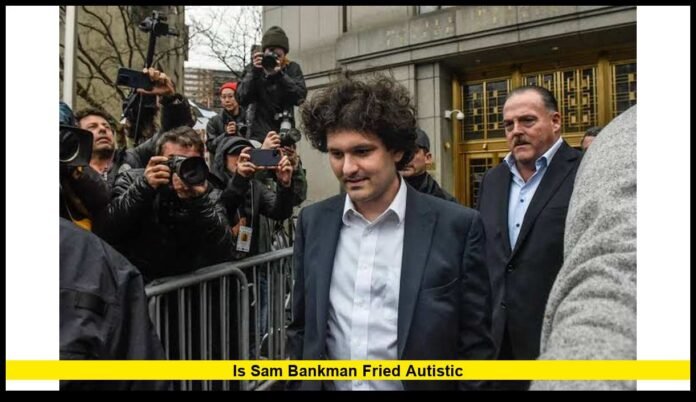

The question “Is Sam Bankman fried autistic” continues to attract online attention as people revisit the former FTX CEO’s public appearances, courtroom testimony, and legal proceedings. Publicly available court-related materials and statements from his defense team indicate that Sam Bankman-Fried has been identified as having autism spectrum disorder (ASD) and ADHD. His neurological conditions became part of the discussion surrounding his sentencing and legal defense, particularly when attorneys argued that his communication style and behavior could be misunderstood.
However, his diagnosis and his criminal case are two separate matters. Autism can affect communication, social interaction, sensory processing, and how individuals respond to unfamiliar or stressful environments. It does not automatically determine a person’s honesty, decision-making ability, criminal responsibility, or understanding of financial transactions.
Bankman-Fried’s case remains one of the most prominent cryptocurrency-related criminal prosecutions in the United States, making the discussion about his diagnosis especially sensitive. Understanding what is publicly documented, what his attorneys argued, and what the courts decided helps separate verified information from speculation.
What Is Known About Sam Bankman-Fried’s Diagnosis?
The public discussion of Bankman-Fried’s autism is based primarily on information presented by his attorneys rather than speculation from observers watching his interviews.
In his defense’s sentencing memorandum, lawyers described him as having neurological differences that influenced his communication and social interactions. The filing discussed characteristics such as inconsistent eye contact, difficulty with conventional emotional expression, and communication patterns that could lead others to misunderstand his intentions.
The defense also described his ADHD and argued that his conditions were relevant to the court’s assessment of his personal circumstances.
The information was presented as part of a sentencing argument seeking a more lenient punishment. While the defense filing provides public documentation of the diagnosis and the arguments surrounding it, it is important to remember that the filing represented the defense’s position.
The discussion is not evidence that autism caused his financial decisions or the conduct underlying his convictions.
Why His Autism Became Part of the FTX Criminal Case
The autism discussion became especially prominent during the sentencing phase of the FTX prosecution.
Bankman-Fried’s attorneys sought a significantly shorter prison term than the sentence eventually imposed. They argued that his personal circumstances, including autism and ADHD, should be considered alongside other factors.
The defense described him as a person whose social and communication characteristics could create difficulties in high-pressure environments. Attorneys also raised concerns about his vulnerability in a prison setting, arguing that difficulty interpreting social cues could expose him to risks involving other inmates or correctional officers.
These arguments were intended to help the court evaluate his circumstances and determine an appropriate sentence.
The judge ultimately imposed a lengthy prison term, emphasizing the seriousness of the fraud offenses and the evidence presented at trial. The sentencing outcome shows that although the defense raised autism as a mitigating consideration, it did not lead to the substantially reduced sentence his attorneys requested.
How Autism May Affect Communication
Autism spectrum disorder can influence communication in ways that are not immediately apparent to other people.
For some autistic individuals, social interactions may involve consciously processing information that others interpret automatically. This can include understanding indirect language, recognizing facial expressions, interpreting tone, or determining whether a person expects a brief answer or a detailed explanation.
Some autistic people prefer direct communication and precise wording. Others may find social expectations difficult to navigate, particularly when the environment is unfamiliar or stressful.
These characteristics can sometimes affect how a person is perceived.
For example, an individual who provides extensive explanations may be viewed as evasive by someone expecting a simple answer. A person who does not make frequent eye contact may be interpreted as uninterested or uncomfortable. Someone who has difficulty displaying conventional emotional expressions may appear detached even when experiencing strong feelings.
None of these behaviors independently establishes autism, dishonesty, guilt, or a lack of empathy.
Bankman-Fried’s attorneys argued that some of his communication characteristics should be understood in the context of his neurological condition rather than automatically interpreted negatively.
What Happened During His Courtroom Testimony?
Bankman-Fried’s testimony attracted attention because of the way he responded to questions.
Courtroom questioning is a highly structured form of communication. Attorneys often expect witnesses to answer directly, avoid unnecessary explanations, and respond to questions using specific terminology. Judges may intervene when testimony becomes lengthy or when a witness does not appear to answer the question being asked.
The defense and neurodiversity advocates later argued that some of Bankman-Fried’s communication patterns could have been interpreted unfairly.
His responses sometimes involved clarification, technical details, or distinctions that he appeared to consider important. Critics and prosecutors, however, evaluated his testimony within the context of the evidence and the questions posed during the trial.
The disagreement highlights an important issue in legal proceedings: communication style and credibility are not always the same thing.
A witness may speak differently because of a neurological condition, stress, personality, or other factors. At the same time, a court must evaluate testimony against the evidence and the legal standards applicable to the case.
Could Autism Have Influenced How the Jury Viewed Him?
This question became part of the broader debate surrounding Bankman-Fried’s appeal.
Neurodiversity advocates argued that autistic individuals can face disadvantages in courtroom environments because jurors and judges may rely on conventional expectations about eye contact, facial expressions, emotional reactions, and verbal communication.
Those expectations can influence how people perceive credibility, even though outward behavior is not a reliable universal measure of honesty.
In Bankman-Fried’s case, some advocates argued that his autism and ADHD could have affected how his testimony was received. They raised concerns about whether communication differences might have contributed to negative impressions during the trial.
However, those arguments did not result in the appellate court overturning his conviction.
The legal question was not simply whether Bankman-Fried was autistic. The court had to examine whether the trial proceedings violated legal standards and whether the errors claimed by the defense justified reversing the conviction.
That distinction is essential when discussing his case.
Understanding Autism Spectrum Disorder
Autism spectrum disorder is a developmental condition that affects how individuals experience and interact with the world. It can involve differences in social communication, behavior, sensory processing, routines, and information processing.
The term “spectrum” is used because autism does not affect everyone in the same way. People may have different characteristics, abilities, challenges, and support requirements.
Some autistic individuals may have difficulty understanding subtle social cues, while others may be highly comfortable in many social situations but experience challenges in specific environments. Some may have strong interests or prefer predictable routines, while others may not experience these characteristics in the same way.
Autism is not a disease that can be understood through a single set of symptoms. It is a neurodevelopmental condition, and an individual’s experience depends on a range of factors.
The Centers for Disease Control and Prevention provides general information about autism, including common characteristics and developmental considerations.
Does Autism Affect Intelligence?
No. Autism does not automatically indicate a particular level of intelligence.
Autistic individuals can have a wide range of intellectual abilities. Some may have intellectual disabilities, while others may have average or above-average intelligence. Many people have strengths in specific areas, including memory, pattern recognition, technical subjects, mathematics, writing, or detailed analysis.
Bankman-Fried’s background in mathematics, trading, finance, and cryptocurrency has often been discussed in connection with his professional career. However, his intellectual abilities and his autism diagnosis are separate characteristics.
A person can be highly capable in a professional or technical field and still experience challenges involving communication, sensory processing, social expectations, or emotional expression.
It is also important not to assume that autism provides an explanation for someone’s success, failure, decisions, or criminal conduct.
Does Autism Affect Emotional Expression?
Autism can influence how some individuals recognize, experience, communicate, and express emotions.
Some autistic people may have difficulty identifying emotions in themselves or others. Some may express feelings in ways that differ from conventional social expectations. Others may experience emotions intensely but struggle to communicate them using facial expressions, tone of voice, or body language that people commonly expect.
This can create misunderstandings.
A person may appear calm when feeling anxious, look emotionally detached when experiencing distress, or struggle to respond in a way that another person expects during a serious conversation.
However, autistic people are not inherently unemotional or lacking empathy. Emotional experiences vary considerably among individuals.
In Bankman-Fried’s case, his attorneys argued that communication and emotional-expression differences were relevant to how he was perceived during the legal proceedings.
Was Autism Used as a Defense Against the Fraud Charges?
Autism was discussed as part of his personal circumstances and sentencing arguments, but it was not the central defense against the criminal charges.
The prosecution’s case focused on financial transactions, company operations, customer funds, statements made to investors and customers, and evidence relating to FTX and Alameda Research.
Bankman-Fried’s attorneys challenged the government’s interpretation of the evidence and disputed aspects of the prosecution’s case. His neurological conditions were raised in arguments about sentencing and how he was perceived during the proceedings.
A diagnosis of autism does not automatically provide a legal defense to fraud. Courts generally evaluate criminal responsibility based on the applicable law, the evidence, and the defendant’s circumstances.
The jury convicted Bankman-Fried on seven counts, and the court imposed a 25-year prison sentence.
Sam Bankman-Fried’s FTX Conviction and Prison Sentence
The FTX collapse became one of the most significant cryptocurrency scandals in modern U.S. financial history.
Bankman-Fried was convicted in November 2023 on seven counts involving fraud and conspiracy. Prosecutors argued that customer funds were improperly used and that customers, investors, and lenders were misled.
The criminal case involved allegations concerning the relationship between FTX and Alameda Research, financial transactions, customer deposits, and representations made about the companies’ operations.
On March 28, 2024, Bankman-Fried was sentenced to 25 years in federal prison.
The sentence was accompanied by an $11 billion forfeiture order. His defense had argued for a substantially shorter sentence, partly citing his personal circumstances, including autism and ADHD.
The court nevertheless imposed a lengthy sentence after considering the criminal conduct and the evidence presented.
Latest Update on Sam Bankman-Fried’s Appeal
Bankman-Fried’s legal case has continued beyond his original sentencing.
In June 2026, the U.S. Court of Appeals for the Second Circuit upheld his conviction and sentence. The appellate ruling rejected the principal arguments raised in his appeal.
He subsequently filed a petition asking the U.S. Supreme Court to review the case.
As of the latest update, the Supreme Court has not announced that it will hear the appeal. The government’s response deadline has been extended to December 16, 2026.
The pending petition does not mean the conviction has been overturned. His conviction and 25-year sentence remain in effect unless a future court ruling changes them.
The Supreme Court could decline to hear the case, or it could decide to review specific legal questions raised in the petition. Until a decision is made, the outcome remains uncertain.
Why the Autism Question Continues to Attract Attention
The question of whether Bankman-Fried is autistic continues to attract attention because his neurological diagnosis intersects with a highly publicized criminal case.
The discussion involves several issues:
- How autistic individuals communicate under pressure
- Whether courtroom expectations can disadvantage neurodivergent defendants
- How jurors interpret eye contact and facial expressions
- Whether emotional expression affects perceptions of credibility
- How courts consider neurological conditions during sentencing
- The difference between personal circumstances and criminal responsibility
The subject also reflects a broader conversation about neurodiversity and fairness in the legal system.
Public figures are often judged through video clips, interviews, photographs, and brief statements. Those materials may provide an incomplete picture of a person’s communication style or neurological characteristics.
A responsible discussion should therefore focus on documented information rather than diagnosing people based on appearance or behavior.
What Readers Should Know About Autism and Criminal Cases
Bankman-Fried’s case illustrates why neurological diagnoses should be discussed carefully when criminal cases attract intense public attention.
Autism may affect communication, social interaction, and the way a person responds to pressure. Those differences can be relevant in court, particularly when a defendant must understand complex questions, respond quickly, or navigate unfamiliar social expectations.
At the same time, a diagnosis should not be treated as a substitute for evaluating evidence.
The legal system must consider the facts of a case, the applicable law, and any relevant individual circumstances. Autism can be a meaningful part of a person’s background without automatically determining legal responsibility or the outcome of a criminal proceeding.
For readers interested in the broader medical explanation, the CDC’s autism information explains the condition and its characteristics.
Frequently Asked Questions
Q1. Is Sam Bankman-Fried autistic?
Yes. Publicly available court-related documents and statements from people involved in his defense identify Sam Bankman-Fried as having autism spectrum disorder.
Q2. Does Sam Bankman-Fried also have ADHD?
Yes. ADHD was also identified in legal discussions involving his defense and sentencing.
Q3. Was his autism diagnosis officially confirmed in court documents?
His diagnosis was discussed in court-related filings and sentencing materials. These documents provide public evidence that his autism diagnosis was part of the legal record and defense arguments.
Q4. Did autism help Sam Bankman-Fried receive a shorter sentence?
His defense argued that his neurological conditions should be considered during sentencing. The judge considered personal circumstances as part of the proceedings but ultimately sentenced him to 25 years in prison.
Q5. Does autism mean Sam Bankman-Fried could not understand his actions?
No. Autism does not automatically mean someone lacks the ability to understand actions, consequences, or legal responsibilities. A diagnosis alone cannot establish whether a person understood or intended particular conduct.
Four Relevant Official Resources
- The U.S. Department of Justice sentencing announcement provides official information about Bankman-Fried’s sentence and the criminal case.
- The Second Circuit appellate decision explains the appeals court’s ruling upholding his conviction.
- The U.S. Supreme Court docket shows the current procedural status of his petition for review.
- The CDC’s autism information provides a general explanation of autism spectrum disorder.
Sam Bankman-Fried’s autism diagnosis is part of the public record, but it remains separate from the financial crimes for which he was convicted. As his legal proceedings continue, readers should follow verified court developments while avoiding assumptions about autism based solely on behavior or appearance.
What do you think about the role neurodiversity should play in the criminal justice system? Share your thoughts and stay tuned for the latest updates.