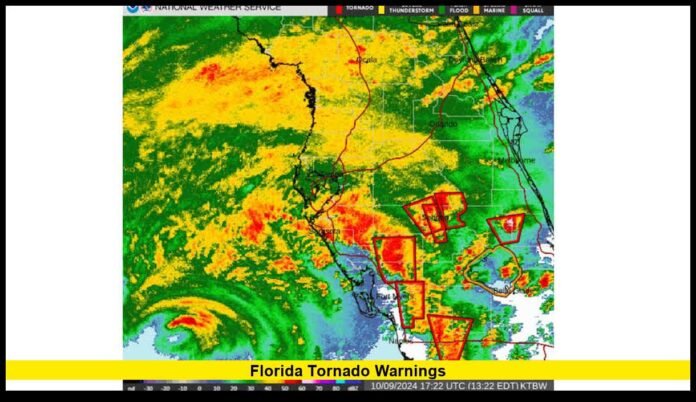

Florida Tornado warnings drew widespread attention after severe thunderstorms moved across South Florida on Saturday, November 21, bringing multiple tornado warnings, reports of tornado activity, damaging winds, fallen trees, and property damage. The most significant reports came from Palm Beach County, particularly the Boca Raton and Delray Beach areas, where a tornado was confirmed during the evening.
The severe weather prompted warnings across parts of South Florida and the Treasure Coast, including Miami-Dade, Broward, Palm Beach, Okeechobee, St. Lucie, and Indian River counties at different points during the day. Emergency alerts urged residents to seek shelter as storms moved through populated communities.
As of the latest available updates on Sunday, November 22, the tornado warnings issued during Saturday’s severe weather event have expired. However, residents should continue checking weather forecasts because Florida can experience additional severe thunderstorms, waterspouts, and tornado threats during active weather patterns.
The November 21 storms serve as an important reminder that tornadoes can develop quickly in Florida, including outside the state’s traditional peak severe-weather season.
Florida Tornado Warnings: Latest Update
The latest major tornado-related developments in Florida involved severe thunderstorms moving through South Florida on November 21.
The National Weather Service issued multiple tornado warnings as storms developed and moved through different areas. Some warnings were based on radar-indicated rotation, while a tornado in the Palm Beach County area was later reported as confirmed.
The most notable developments included:
- A confirmed tornado near Kings Point and the Delray Beach area.
- Tornado warnings affecting parts of Palm Beach County.
- Severe weather alerts covering areas of Miami-Dade and Broward counties.
- Additional tornado warnings involving areas near Fort Drum and parts of the Treasure Coast.
- Reports of tree damage, property damage, and power disruptions associated with the storms.
- Tornado watches that remained active into Saturday evening before expiring.
The warnings were issued to protect residents from potentially dangerous conditions, including flying debris, damaged roofs, falling trees, and destructive winds.
Confirmed Tornado Reported Near Delray Beach and Boca Raton
One of the most significant developments from Saturday’s severe weather was the confirmation of a tornado near Kings Point, close to Delray Beach, in Palm Beach County.
During the evening, the National Weather Service reported that a tornado was on the ground in the southeastern Palm Beach County area. The warning identified the tornado as observed, rather than relying exclusively on radar-indicated rotation.
Communities potentially affected by the warning included:
- Boca Raton
- Delray Beach
- Boynton Beach
- Highland Beach
- Ocean Ridge
- Lantana
- Hypoluxo
- Gulf Stream
- Manalapan
- South Palm Beach
The tornado warning instructed residents to take cover immediately, move to an interior room on the lowest floor of a sturdy building, and stay away from windows.
Reports of damage emerged from residential areas in and around western Delray Beach. Fallen trees and damage to homes were among the reported impacts as residents began assessing conditions after the storms.
Although a tornado was confirmed in the area, the complete damage assessment, tornado path, and final intensity classification may require additional investigation by weather officials.
Where Florida Tornado Warnings Were Issued
The November 21 severe weather affected several parts of Florida, with alerts issued at different times depending on storm movement and radar observations.
South Florida
Miami-Dade and Broward counties experienced severe thunderstorms and tornado-related alerts earlier in the day. Storms moving through the region prompted warnings as weather conditions became favorable for rotation.
Residents in the Miami metropolitan area were urged to monitor weather alerts closely, particularly when storms approached quickly.
Palm Beach County
Palm Beach County experienced some of the most significant tornado-related activity during the event.
Warnings covered areas around Boca Raton, Delray Beach, Boynton Beach, and nearby communities. A confirmed tornado was reported near Kings Point, while additional warnings were issued as storms continued moving through the county.
Okeechobee County
Storm activity near the Fort Drum area also prompted tornado warnings. Radar indicated rotation associated with thunderstorms, requiring emergency alerts for nearby communities.
St. Lucie and Indian River counties
The Treasure Coast also experienced severe weather activity. Tornado warnings were issued for portions of the region as thunderstorms moved northeastward.
The exact impact varied by location, and not every tornado warning resulted in a confirmed tornado touchdown.
Are Florida Tornado Warnings Still in Effect?
The tornado warnings associated with Saturday’s November 21 storm outbreak have expired.
The tornado watch covering portions of southeastern Florida and the Treasure Coast also expired Saturday evening. The storms responsible for the warnings moved through the affected areas, and the active tornado alerts were no longer in effect as the event ended.
However, weather conditions can change rapidly in Florida. Residents should not assume that the expiration of one warning means the entire state is free from severe weather risk.
For the latest active alerts, residents can check the official National Weather Service alert page:
Check the latest National Weather Service weather alerts
This page provides information about active tornado warnings, severe thunderstorm warnings, watches, flood alerts, and other weather-related advisories across the United States.
What Is the Difference Between a Tornado Watch and a Tornado Warning?
Understanding the difference between a watch and a warning is essential during severe weather events.
Tornado Watch
A tornado watch means weather conditions are favorable for tornadoes to develop.
A watch may cover several counties or a large geographical area. Residents should remain alert, monitor weather updates, prepare emergency supplies, and identify a safe shelter location.
A tornado watch does not mean a tornado has been confirmed in the area.
Tornado Warning
A tornado warning means a tornado has been detected, observed, or indicated by radar in a specific area, and people should take immediate protective action.
Warnings are generally more urgent and may cover smaller geographic areas than watches.
When a tornado warning is issued for your location, residents should immediately move to a safe shelter rather than waiting to see whether the storm becomes dangerous.
Why Florida Can Experience Tornadoes in November
Florida is commonly associated with hurricanes, tropical storms, thunderstorms, and lightning. However, tornadoes can occur throughout the year.
November is part of Florida’s cooler-season severe weather period, when changing weather systems, cold fronts, atmospheric instability, and moisture can contribute to thunderstorms.
The combination of warm, humid air and changing wind conditions can sometimes create an environment favorable for rotating thunderstorms.
Florida’s geography also contributes to storm development. Sea breezes from the Atlantic Ocean and Gulf of Mexico can interact with other weather boundaries, creating conditions that support thunderstorm development.
Some tornadoes in Florida are associated with:
- Severe thunderstorms moving through cold fronts
- Strong wind shear
- Sea-breeze interactions
- Tropical systems
- Waterspouts moving onto land
- Atmospheric instability
Tornadoes in Florida may be relatively brief, but they can still cause substantial damage, particularly when they move through populated communities.
How Tornadoes Can Develop During Florida Thunderstorms
Not every severe thunderstorm produces a tornado. However, thunderstorms can become dangerous when atmospheric conditions allow rotating air to develop.
Wind shear refers to changes in wind speed or direction at different heights in the atmosphere. When wind shear interacts with thunderstorms, it can help create rotation.
A rotating thunderstorm may produce a tornado if the rotation strengthens and extends toward the ground.
Florida residents should not rely solely on visual observations. Tornadoes may develop quickly, and some may be difficult to see because of heavy rain, darkness, or cloud cover.
A tornado warning issued by the National Weather Service should be treated seriously even if residents cannot see a funnel cloud.
What Residents Should Do During a Florida Tornado Warning
When a tornado warning is issued for your location, immediate action is important.
1. Move to the Lowest Floor
Go to the lowest floor of a sturdy building. A basement is generally preferable when available, but many Florida homes do not have basements.
If a basement is unavailable, move to an interior room away from exterior walls.
2. Stay Away From Windows
Windows can shatter during tornadoes, allowing glass and debris to enter the building.
Choose a small interior room, hallway, bathroom, or closet that provides as much protection as possible.
3. Protect Your Head and Neck
Use a mattress, thick blankets, pillows, or other available protective materials to shield yourself from debris.
A helmet can provide additional protection if one is readily available.
4. Avoid Mobile Homes
Mobile homes are particularly vulnerable to tornado damage, even when the tornado is relatively weak.
If you are in a mobile home when a tornado warning is issued, move to a nearby sturdy building or designated storm shelter immediately if it is safe to do so.
5. Do Not Stay in a Vehicle
Vehicles are not reliable tornado shelters.
If possible, move to a sturdy building. Avoid trying to outrun a tornado when traffic, visibility, or storm movement makes driving dangerous.
6. Keep Weather Alerts Available
A battery-powered weather radio, smartphone emergency alerts, and reliable local weather coverage can help residents receive warnings when storms move rapidly.
Florida Tornadoes Can Cause Damage Even Without a Long Tornado Path
Tornadoes do not need to remain on the ground for an extended period to cause dangerous damage.
Even a brief tornado can produce:
- Fallen trees
- Damaged roofs
- Broken windows
- Power outages
- Damaged vehicles
- Structural damage
- Flying debris
- Injuries
Severe thunderstorms can also produce damaging straight-line winds that cause similar damage.
This is why emergency officials may initially report storm-related damage without immediately determining whether the damage was caused by a tornado or powerful thunderstorm winds.
Weather officials may conduct additional surveys to determine the storm’s exact characteristics and whether a tornado occurred.
How Florida Residents Can Stay Updated on Future Tornado Warnings
Residents should rely on official weather sources for real-time information rather than social media posts or unverified weather maps.
National Weather Service Alerts
The National Weather Service provides official watches, warnings, and advisories for individual locations.
Storm Prediction Center
The Storm Prediction Center provides severe-weather outlooks, tornado watches, and information about broader severe-weather threats.
Residents can monitor the official severe-weather outlooks here:
Visit the Storm Prediction Center for severe-weather outlooks
The outlooks help residents understand whether thunderstorms, tornadoes, damaging winds, or hail may be possible in the coming hours or days.
NOAA Weather Radio
NOAA Weather Radio can provide emergency weather alerts around the clock. It can be especially useful when residents are sleeping, electricity is interrupted, or cellular service is unreliable.
Residents can learn more about the national weather radio system here:
Learn about NOAA Weather Radio
Ready.gov Tornado Preparedness
Emergency preparedness information can help households develop a shelter plan, prepare emergency supplies, and understand what to do before, during, and after a tornado.
Read the official tornado preparedness guide
What Should Residents Do After a Tornado or Severe Storm?
After a tornado warning expires, residents should remain cautious while assessing damage.
Storm-related hazards may continue even after the tornado or thunderstorm has passed.
Watch for Downed Power Lines
Never touch a fallen power line or anything that may be in contact with it. Treat every downed electrical line as energized and dangerous.
Avoid Damaged Buildings
Buildings with structural damage may be unsafe. Avoid entering damaged structures until emergency officials or qualified professionals determine that they are safe.
Check for Injuries
If someone is injured, contact emergency services when necessary. Avoid moving seriously injured individuals unless they face an immediate danger.
Be Careful With Debris
Broken glass, damaged trees, metal roofing, and other debris may create hazards around homes and streets.
Report Damage
Residents can report storm damage to local emergency officials and the National Weather Service when requested. Damage reports help meteorologists and emergency authorities assess the event.
Will More Florida Tornado Warnings Be Issued?
It is impossible to determine whether additional tornado warnings will be issued without monitoring current atmospheric conditions and official forecasts.
Florida remains vulnerable to severe thunderstorms throughout the year. The risk may increase when weather systems bring strong wind shear, unstable air, moisture, and other conditions favorable for severe thunderstorms.
The November 21 event demonstrates why residents should remain prepared even when severe weather is not expected to last throughout the day.
Future warnings may be issued if thunderstorms develop and meteorologists detect conditions capable of producing tornadoes.
Residents should monitor local forecasts, particularly in South Florida and the Treasure Coast, where recent storms brought tornado-related alerts and damage reports.
Frequently Asked Questions
Q1. Are there tornado warnings in Florida right now?
The tornado warnings associated with the November 21 severe weather event have expired. Residents should check the National Weather Service for any newly issued alerts because weather conditions can change.
Q2. Where was the tornado confirmed in Florida?
A tornado was confirmed near Kings Point in the Delray Beach area of Palm Beach County during Saturday evening’s severe weather.
Q3. Did Boca Raton receive a tornado warning?
Yes. Tornado warnings covered parts of southeastern Palm Beach County, including communities around Boca Raton, Delray Beach, and Boynton Beach.
Q4. Were tornado warnings issued in Miami?
Tornado-related alerts were issued for parts of Miami-Dade and Broward counties during the severe weather event.
Q5. Can Florida experience tornadoes in November?
Yes. Florida can experience tornadoes during November and other months of the year. Severe thunderstorms associated with weather fronts, atmospheric instability, and changing wind conditions can produce tornadoes.
Q6. What should I do if a tornado warning is issued?
Immediately move to a sturdy building’s lowest floor and seek shelter in an interior room away from windows. Protect your head and neck, and remain sheltered until the warning expires or emergency officials provide updated instructions.
Final Update
The November 21 severe weather event brought multiple tornado warnings to Florida, with the most significant confirmed tornado activity reported in Palm Beach County near Kings Point and Delray Beach. Reports of storm damage, fallen trees, and severe weather impacts highlighted the dangers associated with rapidly developing thunderstorms.
Although the warnings from this event have expired, Florida residents should continue monitoring weather conditions and maintain a plan for tornado emergencies. Severe storms can develop with limited warning, and having a safe shelter location, emergency supplies, and access to official alerts can make a critical difference.
Were you affected by Saturday’s severe weather in Florida? Share your experience and stay informed as new weather updates become available.