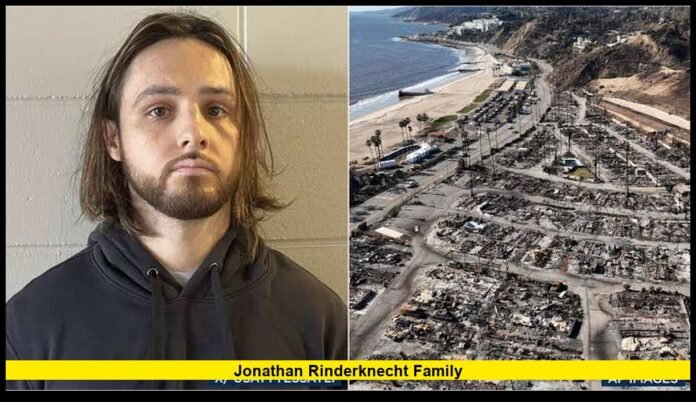

The Jonathan Rinderknecht family has received growing public attention following the federal conviction of Jonathan Rinderknecht in the case connected to the devastating Palisades Fire in Los Angeles. Readers have become interested in his parents, childhood, siblings, family history, and the relatives who appeared during court proceedings. Publicly reported information identifies his parents as Jennifer and Joel Rinderknecht and describes their background as involving missionary work and travel.
The federal case reached a significant milestone on November 20, 2026, when a jury found Rinderknecht guilty of two charges connected to the fire investigation. His father was present in court when the verdict was delivered. The conviction has renewed interest in the defendant’s personal background, although information about many family members remains limited.
The family’s public profile has largely developed through news coverage of the criminal proceedings. Unlike Jonathan, his relatives have not been the subjects of the federal charges. Their names and limited background information have appeared because of their relationship to him and their presence during the legal process.
The Family Background Behind the Public Attention
Jonathan Rinderknecht’s personal history has become a subject of interest as investigators, prosecutors, defense attorneys, and journalists have examined his life before the Palisades Fire investigation.
Reports about his background identify Jennifer and Joel Rinderknecht as his parents. They have reportedly had connections to missionary work and traveled to different locations over the years. The family’s history has also been associated with France and the United States.
These details provide a limited outline of Jonathan’s upbringing. They suggest that his childhood included periods of travel and connections to religious communities. However, public information does not establish a complete account of every place the family lived, the schools Jonathan attended, or all the relationships he maintained while growing up.
The available information is therefore best understood as a partial family history rather than a comprehensive biography. The criminal case has generated extensive reporting, but the relatives’ personal lives have not been examined in the same depth.
Jennifer Rinderknecht and Her Background
Jennifer Rinderknecht is identified in public reporting as Jonathan’s mother. Some reports have described her as originally from Florida, while other coverage has discussed the family’s missionary background.
Her name has appeared primarily in connection with Jonathan’s childhood and family history. She has not been a central figure in the criminal proceedings, and publicly available information about her personal life remains limited.
There is no comprehensive public biography detailing her education, career, daily activities, or personal relationships. Readers searching for information about her should distinguish between established background details and claims circulating online without reliable confirmation.
The limited public information does not mean her life has been entirely undocumented. It means that her personal history has not been the main subject of the reporting surrounding the Palisades Fire case.
Joel Rinderknecht’s Presence During the Court Proceedings
Jonathan’s father, Joel Rinderknecht, became more visible through his attendance at court proceedings and public comments following the first trial.
His presence in the courtroom was reported during the legal process, including when the jury announced its verdict in November 2026. The family’s attendance reflected their involvement in following the proceedings and supporting Jonathan through the court process.
The first trial ended in a mistrial after jurors could not reach a unanimous decision. Following that outcome, family members expressed disappointment and uncertainty about the case’s future.
Joel reportedly spoke publicly about the family’s belief in Jonathan’s innocence after the mistrial. Those comments reflected the family’s position at that stage of the legal process.
The second trial later resulted in a conviction. The new verdict marked a major change in the case’s status, but it did not erase the family’s earlier public statements or the history of the first proceeding.
The Missionary History Reported About the Family
A frequently reported aspect of Jonathan Rinderknecht’s childhood is the family’s connection to missionary work.
Reports have described Jennifer and Joel as having traveled across the United States through missionary activities. Their visits reportedly included religious communities and church-related connections in different locations.
People who knew the family have reportedly described encounters with them during their travels. These accounts have contributed to reporting about Jonathan’s childhood and the family’s movement between communities.
The missionary background offers a limited glimpse into the family’s life. It indicates that travel and religious connections were reportedly part of their history, but it does not establish the complete nature of their activities.
No comprehensive public timeline details every organization with which the parents were connected, every location they visited, or every year they spent traveling. Additional claims about the family’s religious activities should not be treated as confirmed unless reliable evidence supports them.
Connections to France and Florida
Public reporting has described the Rinderknecht family as having connections to both France and Florida.
Jennifer has reportedly been described as originally from Florida. Joel has been identified as a French citizen, and reports have also described the couple as living in France.
The family’s missionary travels reportedly took them to different locations throughout the United States. These details have contributed to interest in Jonathan’s background, particularly among readers trying to understand where he grew up and what his family’s life looked like before the criminal investigation.
The available information does not provide a complete residential timeline. It does not confirm every location where Jonathan lived or establish where all relatives currently reside.
Older reports about family residences should not automatically be treated as confirmation of present-day living arrangements. Current private-location information is not necessary to understand the publicly reported family background.
Information About His Siblings
Public coverage has also referenced Jonathan Rinderknecht’s siblings. Some reports described family members attending court during the first trial and discussing the emotional strain of the proceedings.
His sister, Leah Rinderknecht, reportedly spoke publicly after the first trial ended in a mistrial. Her remarks reflected the family’s disappointment and the uncertainty they faced while the criminal case remained unresolved.
The public record about Jonathan’s siblings is limited. Their personal careers, relationships, education, and private activities have not been comprehensively established in reliable reporting.
Their appearance in court or their comments about the case should not be interpreted as evidence of involvement in the alleged criminal conduct. The federal charges and conviction concern Jonathan Rinderknecht, not his siblings.
The relatives’ public appearances were connected to the legal proceedings and their relationship with the defendant. Their personal lives remain largely outside the scope of the case.
The Family’s Experience During the First Trial
The first federal trial became an important moment for the Rinderknecht family. Jurors were unable to reach a unanimous verdict, and the judge declared a mistrial in June 2026.
The jury reportedly split 10-2 in favor of acquittal. That outcome meant the prosecution did not obtain a conviction during the first proceeding, but it also did not result in a final acquittal.
The family expressed disappointment after the mistrial. Public comments described the emotional burden of the legal process and the belief that Jonathan had not been proven guilty.
The first trial was followed by uncertainty because prosecutors announced plans to pursue another proceeding. Jonathan remained in custody as the federal case continued.
For relatives, the mistrial meant that the legal questions surrounding the case were not resolved. The family had to continue following court proceedings while waiting for the next trial.
The Second Trial Changed the Case’s Direction
The federal retrial took place in November 2026. Prosecutors pursued two federal charges after revising the indictment.
The case focused on the initial Lachman Fire and the later Palisades Fire. Prosecutors presented evidence that they said connected Rinderknecht to the original blaze and supported their claim that it later reignited.
The defense challenged the government’s theory. Attorneys argued that investigators had not conclusively established how the initial fire started and raised an alternative explanation involving fireworks.
The second trial ended with a guilty verdict on November 20, 2026. The jury convicted Rinderknecht on both charges, following several days of testimony and deliberations.
The conviction became the latest major development in the case and renewed interest in his family background. His father was reportedly present when the verdict was announced.
The November 20, 2026, Conviction
The guilty verdict marked a significant change from the outcome of the first trial.
Rinderknecht had pleaded not guilty. During the retrial, prosecutors presented evidence including digital records, location information, investigative findings, and witness testimony. The defense disputed the government’s conclusions and challenged the evidence.
Jurors ultimately returned guilty verdicts on both federal charges. The decision followed the first trial’s deadlock and the prosecution’s decision to pursue another case.
The conviction does not change the fact that relatives were not charged in the proceedings. Family members who attended court or spoke publicly remained outside the criminal case.
Sentencing is scheduled for March 17, 2027. The court will determine the sentence after the conviction, while additional legal developments may occur as the case moves forward.
The Palisades Fire and the Wider Impact
The criminal case is connected to the January 2025 Palisades Fire, which caused catastrophic destruction across Los Angeles.
The initial Lachman Fire began on January 1, 2025. Investigators said it was initially suppressed but continued to smolder underground before reigniting on January 7 and developing into the Palisades Fire.
The larger wildfire killed 12 people and destroyed thousands of structures in the Pacific Palisades and Malibu areas. It caused widespread displacement and significant damage to homes, businesses, and communities.
The scale of the destruction made the investigation a major public issue. Authorities examined the initial fire, its cause, and the circumstances surrounding its later spread.
The federal prosecution eventually resulted in Rinderknecht’s conviction. The case has remained in the public spotlight because of the wildfire’s devastating consequences and the legal questions surrounding its origin.
Why Relatives Became Part of News Coverage
Family members often receive attention when a criminal case becomes nationally significant. Readers may search for parents, siblings, childhood background, and other personal details as they try to understand the defendant’s life.
The Rinderknecht family became visible through reports about missionary activities, international connections, courtroom appearances, and public comments after the first trial.
However, the relatives’ appearance in reporting does not make them defendants or establish any involvement in the alleged conduct. Their connection to Jonathan is the reason they have appeared in coverage.
Public interest should remain focused on confirmed information. Unsupported allegations about relatives can create confusion and unfairly affect people who are not part of the criminal proceedings.
The Difference Between Public Information and Private Details
The available reporting provides a limited outline of the family’s background. It identifies Jonathan’s parents, describes their reported missionary history, and mentions relatives who attended or discussed court proceedings.
It does not establish every aspect of their personal lives. Information about extended relatives, private relationships, careers, and current circumstances remains limited.
Online searches may produce claims that go beyond the confirmed record. Such information should not be presented as fact without reliable verification.
The family’s background can be discussed responsibly without identifying private details that have not been established. This distinction is particularly important when relatives are not public figures and have not been accused of wrongdoing.
Jonathan Rinderknecht’s Personal Relationships
Interest in Jonathan’s private life has also led to searches about his marital status, romantic relationships, and children.
Reliable public reporting has not established confirmed information about a spouse or children. Claims about these subjects should not be treated as factual unless credible reporting or official documentation confirms them.
The absence of confirmed information does not prove that a person has no relationships or family of their own. It simply means that those details have not been reliably documented in the public record.
The criminal case has focused on the fire investigation and the charges against Jonathan. His private relationships have not been central to the federal proceedings.
What the Public Record Currently Establishes
The publicly reported family background includes several key details:
- Jennifer and Joel Rinderknecht are identified as Jonathan’s parents.
- The parents reportedly had missionary connections.
- The family reportedly traveled across the United States.
- Jennifer has been described as originally from Florida.
- Joel has been identified as a French citizen.
- Reports have described the couple as living in France.
- Jonathan’s father attended court proceedings and was present when the November 2026 verdict was delivered.
- His siblings have been referenced in reporting about the family’s court appearances.
- His sister Leah reportedly discussed the family’s emotional response following the first trial.
- Verified public information about extended relatives, a spouse, or children remains limited.
These details provide a factual outline without attempting to fill gaps with assumptions.
The Family’s Current Public Profile
As of November 21, 2026, the Rinderknecht family’s public profile remains closely connected to Jonathan’s criminal case.
The November 20 conviction has renewed interest in his parents and relatives. His father’s presence at the verdict was among the family-related details reported following the jury’s decision.
The family has not released a comprehensive public account of its current circumstances. News coverage has primarily focused on the legal case, evidence, verdict, and upcoming sentencing.
The available information about their personal lives remains limited. Future legal developments may generate additional reporting, but there is no reason to assume that the family will become more publicly visible beyond the case.
The Next Stage of the Federal Case
The conviction moves the federal case toward sentencing. The scheduled sentencing date is March 17, 2027.
The court will determine the sentence following the guilty verdict. Additional legal filings or proceedings may take place before or after that date, depending on the defense’s decisions and the court’s schedule.
For the family, the case has moved from the uncertainty of the first trial to the consequences of the second trial’s conviction. Their earlier public statements reflected the mistrial outcome, while the November verdict has established a new legal result.
The relatives’ personal circumstances remain private, and no verified information establishes their plans following the conviction.
A Family Background Defined by Limited Public Information
The publicly available information about Jonathan Rinderknecht’s family describes a background involving missionary activities, travel, and connections to France and the United States. His parents, Jennifer and Joel Rinderknecht, have been identified in reporting, while his father’s courtroom presence and public comments brought additional attention to the family.
His siblings have also been referenced in coverage of the proceedings, but detailed information about their personal lives remains limited. There is no verified public evidence establishing that relatives participated in the alleged fire-setting activity.
The federal conviction has placed Jonathan’s case into a new phase. As sentencing approaches in March 2027, the legal proceedings will remain the central focus of public attention.
The family’s story is best understood through confirmed information about their background and public appearances, while recognizing that many personal details remain private and should not be filled with speculation.