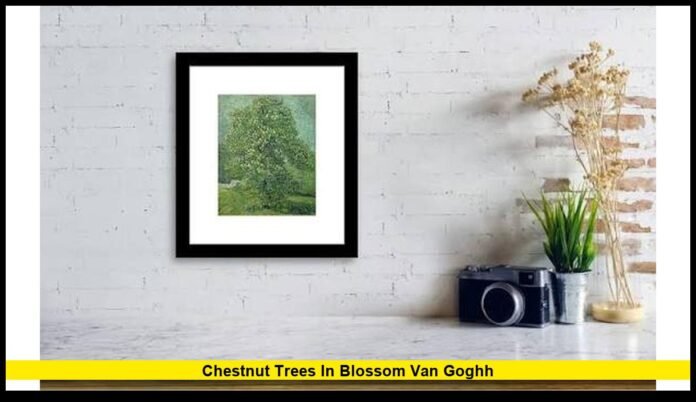

Vincent van Gogh’s chestnut trees in blossom van Gogh painting has made art-market history after selling for $190.4 million at a New York auction, placing the late artist’s work among the most valuable paintings ever sold publicly. The remarkable result brought renewed attention to a colorful landscape created in 1890, shortly before Van Gogh’s death, and highlighted the lasting appeal of his distinctive artistic vision.
The painting, titled Châtaigniers en fleurs, depicts flowering chestnut trees in the French village of Auvers-sur-Oise. Its sale became a major event for the international art market, with collectors competing for a rare work from the artist’s final period. Beyond its monetary value, the painting carries an unusual history involving private collections, a Nazi-era ownership dispute, and decades of limited public exposure.
The record-setting sale reflects both the extraordinary demand for Van Gogh’s art and the historical importance attached to this particular canvas.
A Landmark Sale for Van Gogh’s Art
The painting sold at Sotheby’s New York on November 18, 2026, for $190.4 million including fees. The final hammer price was $165 million, with additional charges bringing the total amount paid to the record figure.
The result surpassed Van Gogh’s previous auction record of approximately $117.2 million, established in 2022 when Orchard with Cypresses was sold. The new achievement places Châtaigniers en fleurs at the top of the artist’s auction-price history.
The bidding moved quickly, with the sale reportedly lasting only about three minutes. The painting was the centerpiece of the Legendary: The Blaquier-Arrieta Collection evening auction, which attracted attention from collectors around the world.
The result also reflected the rarity of major Van Gogh paintings entering the market. Works from his final period are especially sought after because they combine artistic importance, historical significance, and limited availability.
A Spring Landscape Painted in Auvers-sur-Oise
Van Gogh created the painting in May 1890, during his stay in Auvers-sur-Oise, a village north of Paris. He had recently left Saint-Rémy-de-Provence and moved to Auvers, where he spent the final months of his life.
The village provided him with a new environment filled with gardens, country roads, houses, fields, and flowering trees. He painted extensively during this period, producing landscapes and portraits at an extraordinary pace.
The chestnut tree painting captures a scene of springtime activity. Large trees covered with blossoms dominate the landscape, while figures moving through the area provide a human dimension to the composition.
The work was executed on canvas using oil paint and measures approximately 70 by 58 centimeters. Its compact size contrasts with the enormous attention it received during the auction.
What Makes the Painting Visually Distinctive
The artwork presents flowering trees against a vivid blue sky. The branches spread across the composition, creating a natural framework that draws attention toward the blossoms and surrounding village.
Van Gogh’s brushwork gives the trees a sense of energy. Rather than carefully smoothing the paint, he allowed individual strokes to remain visible. The foliage, branches, blossoms, and sky all have distinctive textures.
The flowers appear in clusters, while the leaves and branches create darker patterns across the canvas. The sky is painted with energetic strokes, adding movement to the background.
The painting also includes several people, among them women wearing colorful dresses and carrying parasols, along with a man wearing a straw hat. Their presence gives the landscape a sense of daily life and provides scale for the large trees.
The combination of natural elements and human activity makes the painting more than a simple botanical scene. It captures a moment in a village environment during the arrival of spring.
The Artist’s Final Creative Chapter
The painting belongs to a period of intense artistic activity for Van Gogh. After arriving in Auvers-sur-Oise in May 1890, he explored the surrounding countryside through repeated painting sessions, often working directly outdoors.
His final months were marked by a remarkable concentration of artistic output. Landscapes, gardens, portraits, fields, and village scenes became subjects for his work. His approach during this period was energetic, with strong colors and expressive marks reflecting the visual impressions of the environment.
The chestnut tree scene offers a glimpse into this creative period. The flowering branches, changing light, and lively surroundings provided Van Gogh with an opportunity to experiment with color and composition.
Van Gogh died on July 29, 1890. Paintings created during his final months have since become especially important to museums, collectors, and art historians because they reveal the direction his work was taking at the end of his life.
The Ownership Controversy That Nearly Interrupted the Sale
The auction attracted attention even before bidding began because of a historical ownership claim involving the descendants of Samuel and Hedwig Fischer, a German Jewish family.
Samuel Fischer, a prominent publisher, had acquired the painting in 1909. Following his death, the artwork remained connected to his family before being sold in 1936, during the period of Nazi persecution in Europe.
Descendants of the Fischer family argued that the circumstances surrounding the sale were connected to the persecution faced by Jewish families under Nazi rule. They raised concerns about whether the transaction was made under pressure rather than through a freely chosen commercial decision.
The issue became significant because artworks sold during the Nazi era have frequently been the subject of restitution claims and historical investigations.
The dispute was resolved shortly before the auction through an agreement involving the Blaquier-Arrieta family and the Fischer heirs. The settlement allowed the painting to proceed to sale, although the terms were not publicly disclosed.
The agreement acknowledged the painting’s complicated history and the suffering experienced by the Fischer family during the Holocaust.
A Painting That Had Remained Away From Public View
The chestnut tree painting had spent decades in private ownership and was rarely seen publicly. Its limited exposure contributed to the excitement surrounding its appearance at auction.
The Blaquier-Arrieta family acquired the artwork in 1975 and kept it within their collection for many years. Their collection included important works by European artists and became recognized as a significant private art holding.
When the Van Gogh was announced as the centerpiece of the auction, collectors and art enthusiasts were given a rare opportunity to see a major painting from the artist’s final period offered on the international market.
The rarity of the sale was one of the factors that helped generate intense interest. Major works by Van Gogh seldom become available, and paintings connected to his final months are particularly desirable.
Why the Record Price Matters to the Art Market
The $190.4 million result is more than a headline figure. It demonstrates the continued demand for exceptional works by major artists, particularly when the painting combines rarity, strong artistic credentials, and a compelling history.
Auction prices are influenced by several factors, including the artwork’s condition, provenance, artistic importance, rarity, previous ownership, and the number of interested buyers.
Van Gogh’s paintings have a special position in the art market because his work is internationally recognized. His name attracts museum audiences, collectors, researchers, and members of the public who may have little experience with the broader art market.
The chestnut tree painting also had the advantage of being a recognizable subject. Its flowering branches and springtime atmosphere provide visual appeal, while its connection to Van Gogh’s final months adds historical depth.
The auction result reflects the combined influence of these factors rather than price alone.
Van Gogh’s Enduring Appeal Among Art Lovers
Van Gogh’s influence extends far beyond auction rooms. His paintings continue to inspire artists, students, museums, collectors, and visitors who connect with the emotional quality of his work.
His landscapes often transform familiar subjects into vivid artistic experiences. Trees, flowers, skies, and fields are presented through expressive color and movement, making ordinary surroundings appear extraordinary.
The chestnut trees are an example of this approach. Their blossoms create a sense of freshness, while the bold brushwork gives the composition a dynamic character. The scene is recognizable, yet it carries the unmistakable personality of the artist.
The popularity of chestnut trees in blossom van Gogh also reflects the public’s interest in the artist’s nature paintings. Flowering trees are associated with renewal and seasonal beauty, while Van Gogh’s artistic treatment adds emotional intensity and historical significance.
A New Chapter for a Historic Painting
The record sale has given the artwork a new place in Van Gogh’s history. Its ownership may change, but the painting’s artistic and cultural significance is likely to remain a subject of discussion.
The auction has also renewed interest in the artist’s final period, the landscapes of Auvers-sur-Oise, and the complicated histories attached to artworks that moved through European collections during the twentieth century.
For the international art market, the sale was a major achievement. For Van Gogh admirers, it was an opportunity to revisit a painting that captures the beauty of spring through the eyes of one of the most influential artists in modern history.
The flowering chestnut trees remain the central attraction of the canvas, but the artwork’s story extends well beyond the landscape. It reflects artistic creativity, historical memory, private collecting, and the enduring power of a painting to attract attention across generations.