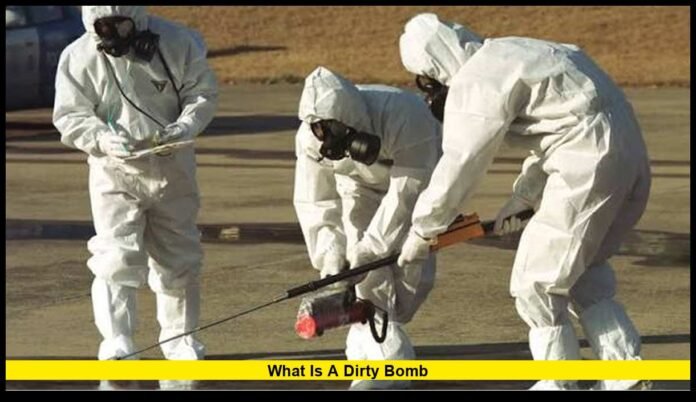

What is a Dirty Bomb, and why does this type of weapon receive attention from U.S. security agencies and emergency preparedness organizations? A dirty bomb is a radiological dispersal device that uses conventional explosives to scatter radioactive material into the surrounding environment. It does not create a nuclear explosion, but it can cause physical injuries, radioactive contamination, property damage, and significant disruption to affected communities.
The possibility of radioactive contamination makes dirty bombs a serious public safety concern. Unlike an ordinary explosive device, a radiological dispersal device introduces an additional hazard that may remain after the initial blast. Emergency personnel must consider not only injuries and structural damage but also the presence of radioactive particles on people, buildings, vehicles, and outdoor surfaces.
For Americans, understanding this threat involves knowing how radioactive contamination differs from radiation exposure, what health consequences may occur, and how to respond if authorities announce a radiological emergency. It is equally important to recognize that a dirty bomb is not equivalent to an atomic bomb. The two devices operate through entirely different processes and create different types of hazards.
Federal emergency preparedness guidance emphasizes practical protective actions, including getting inside a suitable building, remaining sheltered, and following official instructions. Understanding these recommendations can help individuals respond calmly and make informed decisions during an emergency.
What Is a Dirty Bomb? Understanding the Meaning
A dirty bomb is a type of explosive radiological dispersal device, commonly abbreviated as RDD. It combines a conventional explosive with radioactive material to distribute radioactive substances into the surrounding area.
The explosive creates a blast that can damage nearby property and injure people. At the same time, the radioactive material may spread into the environment, creating contamination that requires specialized detection and cleanup.
The term dirty bomb describes the contamination associated with the device rather than a nuclear explosion. It does not mean that the weapon contains a nuclear reactor or produces the same reaction as an atomic weapon.
Radioactive materials have legitimate applications in medicine, scientific research, industrial operations, and other regulated activities. A radiological dispersal device presents a danger because radioactive material can be released outside its intended controlled environment.
The consequences depend on the circumstances of an incident. Factors include the radioactive substance involved, the amount released, environmental conditions, the intensity of the explosion, and the level of exposure experienced by individuals.
A dirty bomb may therefore create different levels of danger in different locations. Emergency officials must use radiation monitoring and scientific assessments to determine the actual risks.
How Does a Dirty Bomb Work?
The basic concept behind a dirty bomb involves two separate hazards: a conventional explosion and the release of radioactive contamination.
Unlike nuclear weapons, these devices do not depend on nuclear fission or fusion to produce their explosive energy. Their blast comes from conventional explosives.
The explosion may distribute radioactive material into nearby surroundings. Depending on the circumstances, particles may settle on roads, buildings, vehicles, outdoor equipment, and other surfaces.
Some airborne particles may also move beyond the immediate location before settling.
This creates a situation in which emergency responders must address both the physical effects of the explosion and the possibility of radiation exposure.
The two principal hazards are:
- Explosive damage: The initial blast may cause injuries, fires, broken windows, structural damage, and other physical consequences.
- Radiological contamination: Radioactive substances may settle on people, objects, and environmental surfaces, creating additional health and cleanup concerns.
The radioactive contamination does not necessarily produce immediate symptoms. A person may appear physically healthy while still requiring assessment for possible exposure.
That is why radiation specialists use appropriate detection equipment rather than relying on visible signs to determine whether an area is contaminated.
Dirty Bomb vs. Nuclear Bomb: What Is the Difference?
One of the most common misunderstandings about dirty bombs involves their relationship to nuclear weapons.
Although both may involve radioactive material, they are not interchangeable. A dirty bomb cannot produce the enormous nuclear explosion associated with an atomic weapon.
A nuclear bomb releases energy through a nuclear reaction. Its destructive effects can include an intense blast, extreme heat, radiation, and widespread radioactive fallout.
A dirty bomb uses a conventional explosion to disperse radioactive material that already exists. Its primary radiological concern involves contamination rather than a nuclear detonation.
| Comparison | Dirty Bomb | Nuclear Bomb |
|---|---|---|
| Explosive mechanism | Conventional explosives | Nuclear reaction |
| Nuclear chain reaction | No | Yes |
| Main radiological concern | Dispersed radioactive material | Radiation and radioactive fallout |
| Initial physical danger | Conventional blast injuries | Massive blast and thermal effects |
| Environmental consequences | Contamination of affected locations | Potentially widespread destruction and fallout |
| Emergency response | Radiation assessment and decontamination | Large-scale nuclear emergency operations |
This difference matters when interpreting reports about radiological threats.
The term radioactive does not automatically indicate that a nuclear weapon has detonated. A radiological incident requires a response based on its actual characteristics rather than assumptions about nuclear warfare.
However, the absence of a nuclear explosion does not make a dirty bomb harmless. Conventional blast injuries and radioactive contamination can still create serious challenges for emergency services and affected communities.
Why Are Dirty Bombs Considered a Public Safety Threat?
Dirty bombs receive attention because their consequences can extend beyond the immediate physical damage caused by an explosion.
An ordinary explosion may leave a damaged location that emergency personnel can assess using conventional safety procedures. A radiological incident introduces additional questions about contamination, radiation exposure, medical evaluation, and environmental cleanup.
Several factors contribute to public safety concerns.
1. Immediate injuries
The conventional explosion can cause burns, cuts, injuries from flying debris, and other trauma. People near the incident may require emergency medical assistance.
These injuries remain an immediate priority, even when radioactive contamination is also suspected.
2. Environmental contamination
Radioactive particles may settle on buildings, streets, vehicles, and outdoor surfaces. Authorities may need to restrict access while specialists determine the contamination levels.
3. Medical concerns
People who may have inhaled or swallowed radioactive material could require additional medical evaluation. The health risks depend on the substance and the amount of exposure.
4. Disruption to public services
Emergency officials may temporarily restrict transportation, close public facilities, or establish controlled areas. These measures can affect schools, businesses, workplaces, and nearby residential communities.
5. Public anxiety
Radiation is difficult to identify without specialized equipment. Uncertainty about contamination can create fear among people who may not have experienced significant exposure.
Accurate communication is therefore essential. Authorities must explain what is known, which locations require precautions, and what people should do next.
What Radioactive Materials Mean for Dirty Bomb Risks
Radioactive materials release energy through radioactive decay. They are used in several regulated activities, including certain medical procedures, industrial applications, and scientific research.
Different radioactive substances have different properties. They can vary in the type of radiation they emit, their radioactive half-lives, and the health effects associated with exposure.
A radioactive half-life is the time required for half of the radioactive atoms in a sample to decay. It helps scientists understand how radioactive material changes over time.
However, half-life alone does not determine whether a substance presents a serious health risk. Other factors, including radiation type, exposure route, and total dose, also matter.
In a dirty bomb incident, emergency personnel would need to identify the radioactive material and evaluate the surrounding conditions.
The public should not attempt to identify radioactive substances by examining unknown objects or debris.
Only trained personnel with suitable equipment should assess potentially contaminated materials.
Radioactive Contamination vs. Radiation Exposure
Understanding the difference between radioactive contamination and radiation exposure is essential when discussing dirty bombs.
Although these terms are closely connected, they describe different situations.
Radioactive contamination occurs when radioactive material gets onto or inside a person, object, or location. For example, radioactive dust may settle on someone’s clothing, skin, hair, or personal belongings.
Radiation exposure occurs when a person receives radiation energy from a radioactive source. Exposure does not necessarily mean radioactive material has entered or attached itself to the body.
There are two primary forms of radioactive contamination.
External contamination
External contamination happens when radioactive substances remain on the outside of the body. Particles may settle on clothing, exposed skin, and hair.
Removing contaminated clothing and washing exposed skin can help reduce this type of contamination.
Internal contamination
Internal contamination happens when radioactive material enters the body. This may occur through inhalation, swallowing contaminated substances, or other routes of entry.
Internal contamination requires appropriate medical assessment because the radioactive material may continue exposing internal organs until the body removes it or medical treatment reduces the contamination.
These differences explain why emergency responders may recommend clothing removal, washing, radiation screening, and medical evaluation following a suspected radiological incident.
What Are the Health Effects of a Dirty Bomb?
The health consequences of a dirty bomb depend on the radiation dose, the radioactive material involved, and the circumstances of exposure.
Not everyone near an explosion will experience radiation-related illness. Some individuals may suffer physical injuries without receiving a significant radiation dose, while others may require additional medical assessment because of possible contamination.
Immediate physical injuries
The conventional explosion can cause injuries even when radioactive exposure is limited.
Potential injuries include:
- Cuts and wounds from broken glass or debris.
- Burns caused by heat or fires.
- Injuries from the force of the explosion.
- Hearing damage from intense noise.
- Trauma associated with structural damage.
Emergency medical teams would prioritize these injuries while also considering possible radiological contamination.
Short-term radiation effects
High radiation doses can cause acute health effects. Depending on the exposure, symptoms may include nausea, vomiting, diarrhea, and skin injuries.
However, these symptoms are not exclusive to radiation exposure. They can also occur because of other medical conditions, stress, or physical injuries.
Medical professionals must evaluate the circumstances and use appropriate tests to determine whether radiation exposure occurred.
Long-term health effects
Significant radiation exposure can increase the risk of developing certain cancers later in life.
The likelihood of long-term health effects depends on the amount of radiation received, the type of exposure, and individual circumstances.
Internal contamination may require additional medical monitoring. Doctors can determine whether specialized testing or treatment is appropriate.
It is important not to assume that everyone who was present in the surrounding area will develop cancer or another radiation-related illness.
Professional exposure assessments provide a more accurate understanding of individual health risks.
Can a Dirty Bomb Cause Radiation Sickness?
A dirty bomb can create radiation exposure, but immediate radiation sickness is not an inevitable outcome.
The severity of radiation-related illness depends on the amount of radiation absorbed by the body.
People who receive high doses of penetrating radiation over a short period may develop acute radiation syndrome. This condition can affect several organs and requires specialized medical care.
However, many people potentially affected by a dirty bomb may experience little or no radiation-related illness.
The initial explosion may present a much more immediate danger than radiation for people close to the blast.
Medical authorities would evaluate suspected exposure using information about the incident, radiation measurements, physical examinations, and appropriate laboratory testing.
People should seek medical assistance if they have injuries or believe they may have been exposed to radioactive material.
Can Radioactive Contamination Spread After an Explosion?
Yes. Radioactive contamination may remain on surfaces after the initial explosion has ended.
Radioactive particles can settle on roads, buildings, clothing, vehicles, and outdoor equipment. Some airborne particles may also travel before reaching the ground.
Contamination does not automatically spread throughout an entire city. Its distribution depends on the incident and environmental conditions.
Authorities may establish restricted areas while radiation specialists assess the affected locations.
Environmental monitoring can help determine whether contamination exists in nearby public spaces, residential properties, transportation facilities, or other locations.
The presence of radioactive material does not always mean that every person in the surrounding area faces an immediate health emergency.
Radiation measurements help officials distinguish between locations that require protective action and those that do not.
How Do Emergency Responders Handle a Dirty Bomb Incident?
A suspected dirty bomb incident would require a coordinated response involving local emergency services and specialized radiation personnel.
The first priority would be protecting people from immediate physical danger.
Firefighters, police officers, emergency medical teams, and hazardous-materials personnel may help secure the area, treat injuries, and prevent additional exposure.
The response may include several stages.
Initial emergency assessment
Emergency responders evaluate the explosion site, identify immediate dangers, and determine whether people need to leave the area or shelter inside nearby buildings.
They may also establish safety boundaries to prevent unnecessary access.
Radiation monitoring
Specialists use radiation detection equipment to determine whether radioactive contamination is present.
These measurements help identify locations that require additional assessment and protective measures.
Medical evaluation
People with injuries receive emergency treatment. Individuals who may have experienced radiation exposure can undergo additional screening and medical assessment.
Environmental testing
Authorities may examine affected buildings, streets, public facilities, and other surfaces to understand the distribution of radioactive contamination.
Decontamination and recovery
Professional teams determine which locations require cleaning and what measures are necessary before public access can resume.
The recovery period depends on the findings of environmental testing and the level of contamination.
What Should You Do During a Dirty Bomb Emergency?
Knowing how to respond to a radiological emergency can help reduce exposure and protect individuals and families.
The CDC promotes three essential instructions for radiation emergencies:
Get Inside. Stay Inside. Stay Tuned.
These recommendations provide a practical starting point when authorities announce a possible radiological incident.
1. Get inside immediately
If you are outdoors during a suspected dirty bomb incident, move into the nearest safe building.
A suitable building can provide protection from radioactive material outside.
Do not approach the explosion site to investigate what happened.
2. Stay inside
Remain indoors until emergency officials provide further instructions.
Close windows and exterior doors. If possible, turn off ventilation systems that bring outside air into the building.
If the building is damaged or unsafe, move to another suitable shelter when it is safe to do so.
3. Remove potentially contaminated clothing
If you were outdoors and believe radioactive dust may have settled on your clothes, carefully remove the outer layer.
Place the clothing inside a plastic bag if available and keep it away from other people and pets.
Removing outer clothing can eliminate up to 90% of radioactive material from the body, according to CDC guidance.
Avoid shaking clothing because this may release contaminated particles.
4. Wash exposed skin
Take a shower with soap and lukewarm water when possible.
Wash your hair with shampoo. Avoid using conditioner if radioactive contamination is suspected.
Do not scrub your skin aggressively because this could cause irritation or damage.
If showering is unavailable, gently wash exposed skin using soap and clean water.
5. Follow emergency announcements
Listen to local emergency alerts and official public safety announcements.
Authorities may provide instructions about sheltering, evacuation, medical assistance, and restricted areas.
Do not assume that an area is safe simply because the explosion has stopped.
6. Avoid unnecessary travel
Do not travel toward the affected location or attempt to collect family members from schools and workplaces without official guidance.
Schools, hospitals, and other public facilities may have procedures for sheltering people during radiological emergencies.
What If a Dirty Bomb Explodes While You Are Driving?
A vehicle provides less protection against radioactive contamination than a suitable building.
If a radiological emergency occurs while driving, close the vehicle’s windows and turn off the heating, air conditioning, and ventilation system.
Avoid driving toward the incident or through areas identified as potentially contaminated.
If you can safely reach a suitable building without approaching the affected location, move inside.
Once sheltered, listen to emergency broadcasts for further instructions.
People should not assume that remaining inside a vehicle indefinitely is the safest option. Authorities may direct drivers to nearby buildings or provide specific instructions depending on the situation.
Can Radioactive Material Be Removed From People and Buildings?
Yes. Radioactive contamination can often be reduced or removed through appropriate decontamination procedures.
The process depends on the radioactive substance, the affected surface, and the extent of contamination.
For individuals, removing potentially contaminated outer clothing is an important first step. Washing exposed skin and hair can further reduce external contamination.
For buildings and public areas, trained specialists may use approved cleaning procedures and radiation monitoring equipment.
Decontamination teams must also handle contaminated materials appropriately to prevent further exposure.
Not every affected object can automatically return to normal use after cleaning.
Authorities may require additional testing to establish whether radiation levels meet applicable safety requirements.
Some buildings or materials may require more extensive treatment, replacement, or continued monitoring.
The time required for recovery therefore depends on the actual contamination and the results of professional assessments.
Should You Take Potassium Iodide After a Dirty Bomb Explosion?
Potassium iodide, also known as KI, is a medication sometimes used during specific radiation emergencies. However, it does not protect the body against every radioactive substance.
KI works by helping prevent the thyroid gland from absorbing radioactive iodine. It does not protect against other radioactive materials, external contamination, or radiation exposure affecting other organs.
A dirty bomb may involve radioactive substances that do not contain radioactive iodine. Therefore, taking potassium iodide without an official recommendation may provide no benefit.
Public health authorities recommend using KI only when officials or qualified medical professionals specifically advise it.
Taking unnecessary doses can cause adverse effects, particularly among people with certain thyroid conditions or sensitivities.
For most people responding to a suspected dirty bomb incident, the immediate priorities remain finding suitable shelter, removing potentially contaminated clothing, washing exposed skin, and following emergency instructions.
Can Food and Drinking Water Become Radioactive?
Food and drinking water may become contaminated if radioactive particles settle on exposed surfaces.
For example, uncovered food, outdoor water containers, and agricultural products near an affected location may require additional safety assessments.
However, a dirty bomb does not automatically contaminate every food supply or drinking water system in a city.
Authorities may conduct testing to determine whether local water sources, grocery supplies, and agricultural areas are affected.
People can follow several general precautions during a radiological emergency:
- Avoid eating uncovered food that may have been exposed to radioactive dust.
- Keep packaged food protected from potential contamination.
- Avoid drinking from exposed containers near the incident until authorities provide guidance.
- Wash the outside of sealed food containers before opening them.
- Follow official instructions concerning local drinking water.
Food stored inside properly sealed packaging is generally protected from external radioactive dust.
People should also pay attention to public water advisories rather than assuming that all tap water is unsafe.
Which U.S. Agencies Handle Dirty Bomb Emergencies?
The United States has several federal organizations with responsibilities related to radiological safety, emergency preparedness, public health, and national security.
Their involvement depends on the nature of an incident and the assistance required by local authorities.
Federal Emergency Management Agency (FEMA)
FEMA supports national emergency management and helps coordinate disaster response when incidents require federal assistance.
Its responsibilities include supporting preparedness, emergency coordination, and recovery activities.
Department of Homeland Security (DHS)
DHS has responsibilities involving homeland security, radiological threat preparedness, and coordination with other government agencies.
Its scientific and technical programs support emergency responders dealing with complex security and safety situations.
Centers for Disease Control and Prevention (CDC)
The CDC provides public health recommendations concerning radiation emergencies.
Its guidance explains radiation exposure, contamination, health effects, decontamination, and protective actions for individuals and families.
Environmental Protection Agency (EPA)
The EPA has responsibilities involving environmental radiation protection and monitoring.
Its work helps support assessments of environmental contamination and public health protection.
Nuclear Regulatory Commission (NRC)
The NRC regulates civilian nuclear materials and facilities under its jurisdiction.
Its responsibilities include radiation safety requirements and oversight of regulated nuclear activities.
Department of Energy (DOE)
The DOE maintains specialized capabilities for responding to nuclear and radiological emergencies.
These capabilities can support government agencies during incidents involving radioactive materials.
Together, these organizations contribute to a coordinated response that addresses immediate safety, medical concerns, environmental protection, and recovery.
Latest Updates on Dirty Bomb Preparedness in the United States
Radiological emergency preparedness remains an important part of U.S. public safety planning.
Federal agencies continue to provide information about recognizing radiation hazards, protecting emergency personnel, and helping communities respond to radiological incidents.
One notable preparedness development was the Department of Homeland Security Science and Technology Directorate’s second edition of its Radiological Dispersal Device Immediate Response Guidance, released in 2025.
The guidance addresses the immediate response period following a suspected explosive radiological dispersal device incident. It provides recommendations intended to support emergency personnel and improve coordination during the early stages of an incident.
Preparedness planning focuses on several important areas:
- Recognizing and assessing possible radiological hazards.
- Protecting emergency personnel and members of the public.
- Coordinating medical and emergency response services.
- Communicating reliable safety information.
- Identifying radioactive contamination.
- Managing environmental assessment and recovery.
For ordinary residents, the most important message remains straightforward: follow instructions from local emergency management agencies and public health authorities.
The existence of federal preparedness programs should not be interpreted as confirmation of an active attack or an immediate nationwide threat.
Any announcement involving a specific incident should be evaluated through verified government and emergency management communications.
How Can American Families Prepare for a Radiation Emergency?
Families can improve their emergency readiness by understanding basic radiation safety procedures and maintaining a practical household emergency plan.
Preparing does not require specialized radiation equipment or complicated arrangements.
A basic emergency supply kit can include:
- Bottled drinking water.
- Nonperishable food.
- Flashlights and extra batteries.
- A battery-powered or hand-crank radio.
- A first-aid kit.
- Essential prescription medications.
- Personal hygiene supplies.
- Important emergency contact information.
- Phone chargers and backup power supplies.
Families should also identify suitable shelter locations in their homes, workplaces, and other frequently visited buildings.
A basement or an interior room away from exterior walls may provide better protection than an exposed outdoor location.
Parents should understand the emergency procedures followed by their children’s schools and childcare facilities.
During an actual radiation emergency, parents should not automatically leave a safe location to collect children. Schools may already have sheltering arrangements in place.
Pet owners should also include animals in their emergency plans. Pets should be brought indoors when safe, and potentially contaminated animals may require appropriate cleaning.
The most valuable preparation is knowing what to do before an emergency announcement occurs.
Frequently Asked Questions
1. What is a Dirty Bomb in simple terms?
A dirty bomb is a conventional explosive device that spreads radioactive material into the surrounding environment. It is also known as a radiological dispersal device. It does not produce a nuclear explosion.
2. Is a dirty bomb the same as an atomic bomb?
No. An atomic bomb releases energy through a nuclear reaction, while a dirty bomb uses conventional explosives to disperse radioactive material. Their mechanisms and destructive effects are fundamentally different.
3. Can a dirty bomb kill people?
Yes. The conventional explosion can cause fatal injuries, while significant radiation exposure may also create serious health consequences. The actual risk depends on the circumstances and exposure levels.
4. Can radiation from a dirty bomb travel outside the explosion area?
Yes. Radioactive particles may travel through the air before settling on surfaces. However, the distance and distribution depend on environmental conditions and the radioactive material involved.
5. Can you identify radioactive contamination without equipment?
No. Radioactive contamination cannot reliably be identified through sight, smell, taste, or touch. Trained professionals use specialized radiation detection equipment to assess affected locations.
Final Thoughts
Understanding what is a Dirty Bomb helps Americans distinguish between a radiological emergency and a nuclear attack. Although the two may involve radioactive material, their mechanisms, immediate dangers, and potential consequences are very different.
A dirty bomb combines conventional explosives with radioactive substances to create an explosion and distribute contamination. The resulting emergency may involve physical injuries, environmental hazards, medical concerns, property damage, and significant disruption to everyday activities.
The level of danger depends on the radioactive material, the extent of its release, and the exposure experienced by individuals. Professional radiation monitoring is necessary to establish contamination levels and determine appropriate safety measures.
For the public, knowing the correct response is particularly important. Getting inside, staying sheltered, removing potentially contaminated clothing, washing exposed skin, and following official instructions can help reduce unnecessary exposure.
U.S. emergency agencies also play an important role in identifying hazards, protecting communities, providing medical guidance, and coordinating environmental cleanup.
Accurate information and practical preparedness remain the best ways to understand this type of public safety threat without unnecessary fear.
Stay informed about radiation safety and national emergency preparedness, and share your thoughts in the comments as we continue covering important U.S. public safety developments.