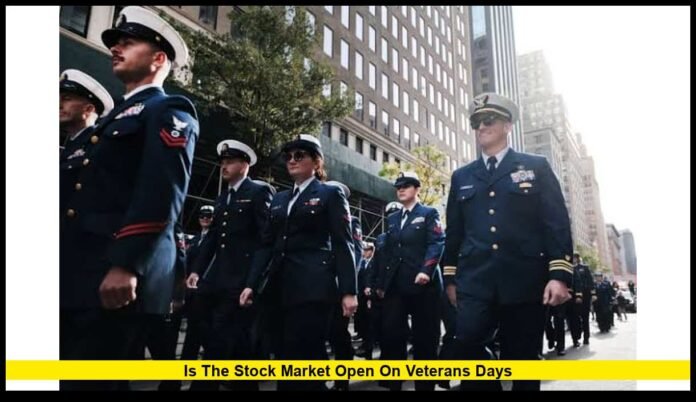

As Veterans Day approaches, investors may be wondering, is the stock market open on veterans day and whether they can trade their favorite stocks during the federal holiday. The answer is yes. The U.S. stock market is scheduled to operate normally on Wednesday, November 11, 2026, with both the New York Stock Exchange (NYSE) and Nasdaq maintaining their regular weekday trading sessions.
Although Veterans Day is recognized across the country as a federal holiday honoring military veterans, it does not require the major American stock exchanges to suspend operations. This means investors can continue monitoring market movements, purchasing shares, selling securities, and managing eligible investment orders throughout the regular trading day.
However, not every part of the financial system will follow the same schedule. Banks, government offices, and fixed-income markets may observe different holiday arrangements. Understanding these differences is particularly important for investors who have scheduled transactions or need access to funds during the holiday.
U.S. Stock Exchanges Maintain Normal Operations
The NYSE and Nasdaq are not scheduled to close for Veterans Day in 2026. Both exchanges maintain independent annual holiday calendars, and November 11 is not listed as a regular trading closure.
Consequently, investors should expect an ordinary Wednesday trading session rather than a shortened holiday schedule.
The decision to keep stock exchanges open also means that major market indexes, including the Dow Jones Industrial Average, S&P 500, and Nasdaq Composite, can continue reflecting changes in stock prices throughout the day.
For individual investors, this provides an opportunity to manage portfolios without waiting for the holiday to end.
Nevertheless, trading activity may differ from other Wednesdays depending on investor participation, economic developments, and broader financial market conditions.
Regular Trading Hours for November 11
The regular U.S. equity trading session will follow its established timetable on Veterans Day.
| Trading Session | Eastern Time |
|---|---|
| Premarket trading | Brokerage-dependent |
| Regular market opening | 9:30 a.m. |
| Regular market closing | 4:00 p.m. |
| After-hours trading | Brokerage-dependent |
The standard session lasts six hours and 30 minutes.
Investors who use extended-hours services should remember that premarket and after-hours trading are not available under identical conditions at every brokerage.
These sessions can also experience reduced liquidity, wider spreads, and more pronounced price movements. Limit orders may help investors establish acceptable execution prices, although they do not guarantee that a trade will be completed.
For most retail investors, the regular session remains the most straightforward period for accessing U.S. equity markets.
Veterans Day Creates Different Schedules Across Financial Markets
One of the biggest sources of confusion during federal holidays is the difference between equity trading and fixed-income trading.
While stock exchanges remain active, the U.S. bond market is scheduled to close on November 11. The holiday affects trading in various government securities, corporate bonds, municipal bonds, and other fixed-income instruments covered by the applicable holiday recommendations.
This difference matters for investors who hold diversified portfolios. Someone trading publicly listed shares may have access to the usual market session, while someone attempting to trade certain bonds may need to wait until the next available trading day.
Investors should also recognize that exchange operating hours do not determine every financial transaction’s processing time. Securities trading, bank transfers, and settlement services can follow different calendars.
Will Banks Close While Stocks Continue Trading?
Many banks observe Veterans Day by closing their physical branches. Nevertheless, operating arrangements vary among financial institutions, and some customer services may remain accessible.
Mobile banking, online account access, and ATM services may continue to function during the holiday. However, transactions requiring bank processing could experience delays.
For example, an investor planning to transfer money from a checking account into a brokerage account should confirm when the funds will become available for trading. An open stock market does not necessarily mean that every deposit or transfer will be processed immediately.
Customers should check their bank’s holiday schedule before arranging time-sensitive payments or investment transfers.
What Investors Should Know Before Placing Orders
Although trading will continue as usual, investors should review their financial plans before entering the market.
First, confirm the trading hours offered by the brokerage. Most platforms support regular-session trading, but extended-hours access and available order types can differ.
Second, consider the risks associated with market orders. A market order generally seeks immediate execution at the best available price, but the final price may differ from the last quoted price. Limit orders allow investors to specify a maximum purchase price or minimum selling price, although execution is not guaranteed.
Third, review upcoming economic announcements and company earnings. These events can influence stock prices regardless of whether a holiday is being observed elsewhere in the financial system.
For anyone checking is the stock market open on veterans day, the practical takeaway is straightforward: the exchanges will be operating, but investors should verify any separate banking, settlement, or brokerage requirements before making financial decisions.
When Will the Stock Market Close Again in 2026?
Thanksgiving will be the next full-day U.S. stock market holiday after Veterans Day. The NYSE and Nasdaq are scheduled to close on Thursday, November 26, 2026.
Trading will resume on Friday, November 27, but investors should prepare for a shortened session. Both exchanges are scheduled to close at 1:00 p.m. Eastern Time that day.
Christmas Eve will bring another early closing, with stock trading scheduled to end at 1:00 p.m. Eastern Time on Thursday, December 24. The exchanges will remain closed on Christmas Day, Friday, December 25.
These dates are useful for investors managing year-end portfolios, arranging trades, or planning transactions that depend on market availability.
Why Veterans Day Matters Beyond Trading Hours
Veterans Day honors Americans who served in the nation’s military. Communities mark the occasion through ceremonies, memorial events, and programs recognizing veterans and their families.
The financial industry’s holiday schedule reflects the fact that different institutions have different operating requirements. Federal offices may close, banks may adjust services, and bond trading may pause even when the nation’s major stock exchanges continue to function.
Investors who understand these distinctions can make better arrangements for their portfolios without confusing a federal holiday with a stock exchange closure.
Bottom Line: Stock Trading Continues on Veterans Day
The NYSE and Nasdaq are scheduled to remain open on Wednesday, November 11, 2026, with regular trading from 9:30 a.m. to 4:00 p.m. Eastern Time. The U.S. bond market, by contrast, will observe a holiday closure, and many banks will close their branches.
Investors should confirm brokerage policies, account funding arrangements, and upcoming market holidays before placing time-sensitive orders. Checking the relevant calendars can help prevent avoidable delays and make holiday-week financial planning easier.
Are you planning to trade stocks on Veterans Day? Share your thoughts in the comments and check back for updates on upcoming U.S. stock market holidays.