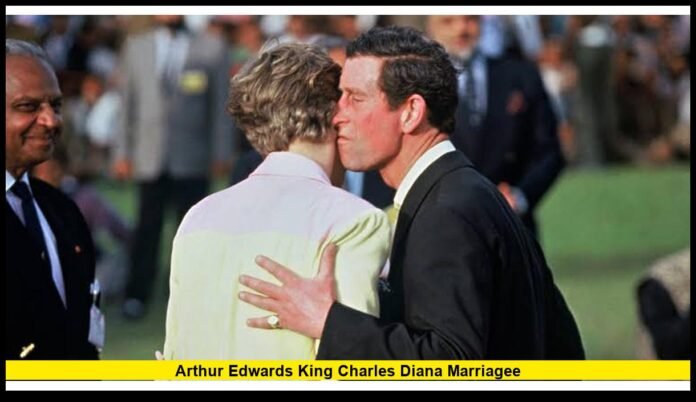

The Arthur Edwards King Charles Diana marriage story continues to fascinate royal followers because it offers a different perspective on one of the most talked-about relationships in modern British history. Arthur Edwards, the veteran royal photographer who spent decades documenting the British monarchy for The Sun, witnessed numerous important moments involving King Charles III and Princess Diana. From their glamorous public appearances to the uncomfortable encounters that attracted international attention, his photographs helped preserve a visual record of their complicated relationship.
Charles and Diana’s marriage initially appeared to represent a fairytale romance. Their spectacular wedding in 1981 attracted worldwide attention, and millions watched as the young couple began their life together as the future king and princess of Wales. However, the reality behind the royal image was considerably more complicated. Personal disagreements, conflicting expectations, intense media attention, and growing emotional distance eventually contributed to the breakdown of their relationship.
Edwards’ professional experiences provide an interesting perspective on the changes that took place over the years. Among the moments he has revisited is the famous encounter in Jaipur, India, in 1992, when a photograph captured Charles leaning toward Diana while she turned her head away. The image became one of the most recognizable visual representations of the difficulties surrounding their marriage.
His recollections, including stories about Charles’ attitude toward Diana following their separation, offer additional insight into the people behind the royal headlines.
Who Is Arthur Edwards and Why Is His Royal Photography Important?
Arthur Edwards is one of Britain’s best-known royal photographers. Through his long career with The Sun, he has covered major royal celebrations, overseas tours, official engagements, family occasions, and significant moments involving several generations of the British royal family.
His professional relationship with the monarchy developed over many decades. He photographed Queen Elizabeth II, Prince Philip, Charles, Diana, Prince William, Prince Harry, and other prominent members of the royal household.
Unlike photographers who cover the monarchy occasionally, Edwards had opportunities to observe royal personalities repeatedly. This gave him a broader understanding of how public appearances, personal interactions, and changing royal responsibilities developed over time.
His career also coincided with a period when royal photography became increasingly influential. Newspapers competed for exclusive pictures, and photographs of Diana frequently attracted extraordinary public interest.
Edwards’ memoir, Cup of Tea, Arthur? My Extraordinary 50 Years Photographing the Royal Family, revisits many of these experiences. The book provides personal recollections of his professional encounters and highlights important moments from five decades of royal coverage.
His observations about Charles and Diana are particularly interesting because he photographed them during both the optimistic early years of their marriage and the period when their relationship was visibly under pressure.
Although Edwards’ recollections are valuable historical accounts, they represent his experiences as a photographer rather than a complete explanation of everything that happened privately between the couple.
The Royal Wedding That Captivated the World
Charles and Diana married on July 29, 1981, at St Paul’s Cathedral in London. The wedding was one of the most widely watched royal occasions of the 20th century, attracting an enormous international television audience.
Diana Spencer was just 20 years old when she married Charles, who was 32 and heir to the British throne. Her wedding dress, the royal procession, and the celebrations quickly became defining images of the decade.
For many people, the marriage represented a modern royal fairytale. Diana appeared young, charming, and approachable, while Charles was expected to become the next monarch.
Their relationship also carried enormous institutional importance. The monarchy needed an heir, and the marriage was viewed as an opportunity to strengthen the royal family’s future.
The couple welcomed their first son, Prince William, in June 1982. Their second son, Prince Harry, was born in September 1984.
Despite the excitement surrounding their growing family, their relationship gradually encountered difficulties. The demands of royal life, differences in personality, and personal challenges created pressures that became increasingly difficult to manage.
Edwards photographed many of the couple’s public appearances during this period. His work captured the image of a young royal family that appeared successful and glamorous, even as questions about their relationship began attracting greater attention.
Arthur Edwards’ Recollection of the 1992 Jaipur Photograph
One of the most significant photographs associated with Charles and Diana’s marriage was taken during their official visit to India in February 1992.
During an engagement at the Rajasthan Polo Club in Jaipur, Charles leaned toward Diana in an apparent attempt to kiss her. Diana turned her head away, creating an uncomfortable moment that Edwards captured on camera.
The resulting photograph attracted considerable attention because it appeared to show a visible lack of affection between the royal couple.
At the time, their relationship was already facing growing public scrutiny. Reports about their personal difficulties had circulated for years, and observers were increasingly interested in whether the marriage was approaching a breaking point.
The Jaipur image became particularly important because it offered a visual moment that audiences could interpret without needing an official statement.
Edwards later reflected on the photograph and its significance. In his view, the encounter suggested that the relationship was experiencing serious problems.
The photograph has since become one of the most recognizable images connected with the breakdown of Charles and Diana’s marriage.
However, it is important to understand the limitations of interpreting a single photograph. A camera can record an expression or physical movement, but it cannot establish someone’s private emotions or explain the circumstances behind an interaction.
Its historical importance comes from the timing and context in which it was taken, rather than from the image alone.
Why Charles and Diana Appeared Increasingly Distant
Another subject Edwards has revisited concerns the amount of time Charles and Diana appeared to spend apart during official engagements.
Royal duties frequently required members of the family to attend several events in different locations. Senior royals often divided their schedules to reach more communities and fulfill a greater number of commitments.
During a conversation at a cocktail party in Madrid, Edwards recalled asking Diana about reports that she and Charles were leading increasingly separate lives.
According to his recollection, Diana responded with humor and explained that their busy schedules made it practical for them to attend different engagements.
Her explanation reflected the demands placed on the royal couple. Their responsibilities included charity visits, diplomatic appearances, international tours, and official ceremonies.
Nevertheless, their separate public schedules became increasingly noticeable to royal observers.
Edwards later connected these observations with the Jaipur photograph, which reinforced his impression that the relationship was experiencing difficulties.
The distinction between professional responsibilities and personal distance is important. Separate royal engagements were not necessarily evidence of marital problems, but they became part of a wider pattern that attracted public attention.
As more details about their relationship emerged, the earlier public appearances were frequently reconsidered.
What Arthur Edwards Revealed About Charles’ Attitude Toward Diana After Their Separation
One of the more interesting recollections associated with Edwards concerns Charles’ reported response to people who wanted to criticize Diana after their separation.
According to a story Edwards shared, a friend of Charles told him that the then-Prince of Wales had written to friends asking them not to speak badly about Diana.
The reported message suggested that Charles did not want people in his personal circle to criticize the mother of his children.
This recollection offers an additional dimension to the history of their relationship. Their separation generated considerable media coverage, and public discussions frequently focused on their disagreements.
Despite the breakdown of their marriage, Charles and Diana continued to share an important responsibility: raising their two sons.
William and Harry were still young when their parents separated. Maintaining family relationships and protecting the children from unnecessary hostility remained important considerations.
Edwards’ account presents Charles as someone who wanted his friends to exercise restraint when discussing Diana.
It also highlights a distinction between personal disagreements and the responsibilities that continue after a marriage ends.
The story should be understood as Edwards’ recollection of information shared with him rather than an independently established account of every private conversation Charles had with his friends.
December 1992: The Official Announcement That Changed the Royal Family
After years of speculation, Charles and Diana’s separation was officially announced in December 1992.
The announcement confirmed that their marriage was no longer functioning as a conventional partnership. However, it also made clear that they intended to continue fulfilling their responsibilities toward their sons and undertaking their respective royal duties.
The separation attracted international attention because the couple had once represented one of the monarchy’s most celebrated relationships.
Their difficulties also raised questions about royal traditions, public expectations, and the pressure placed on individuals expected to maintain a perfect public image.
For Edwards and other royal photographers, the announcement marked an important turning point.
The couple’s appearances were no longer viewed simply as opportunities to photograph a married royal family. Every interaction became part of a larger public discussion about their separation.
Their relationship continued to attract media coverage until their divorce was finalized in August 1996.
Diana retained the title Diana, Princess of Wales, although she no longer held the style Her Royal Highness.
How Princess Diana Built Her Own Public Identity
Following the separation, Diana continued developing her independent public role.
She became particularly well known for her humanitarian work, including efforts to support people living with HIV/AIDS, children facing difficult circumstances, and individuals affected by poverty and social exclusion.
Her involvement in the international campaign against landmines also attracted worldwide attention.
Diana’s approach to public engagement was often more informal than traditional royal appearances. She frequently interacted directly with people, listened to personal experiences, and used her international recognition to bring attention to important issues.
Her popularity remained exceptionally strong after the divorce.
For royal photographers, this period demonstrated that Diana’s influence extended beyond her position as Charles’ wife. She had established an independent public identity that continued to attract international interest.
Edwards’ photographs documented many stages of this transformation, from her early royal appearances to her later humanitarian engagements.
King Charles’ Life After the Marriage Ended
Charles continued his public responsibilities after the divorce and eventually married Camilla Parker Bowles on April 9, 2005.
Camilla became the Duchess of Cornwall and later Queen Camilla following Charles’ accession to the throne.
Charles’ interests in environmental protection, architecture, sustainable development, and community initiatives remained important parts of his public work.
On September 8, 2022, following the death of Queen Elizabeth II, Charles became King Charles III.
His accession represented a major transition for the British monarchy after his decades as heir to the throne.
The history of his marriage to Diana remains an important part of his public biography. Their relationship influenced public discussions about the monarchy and continues to attract attention from historians, journalists, and royal enthusiasts.
Edwards’ recollections provide an additional perspective on the period, particularly because he witnessed the couple’s changing public relationship over many years.
Princess Diana’s Death and Her Lasting Legacy
Princess Diana died on August 31, 1997, following a car crash in Paris.
Her death shocked the world and prompted an extraordinary response from the public. People gathered outside royal residences, left flowers, and expressed their grief across Britain and internationally.
The tragedy also generated renewed discussions about press intrusion, celebrity culture, and the responsibilities of photographers covering public figures.
For Edwards, who had spent years photographing Diana, her death marked the loss of one of the most recognizable individuals he had covered throughout his career.
Diana’s legacy has continued through her humanitarian work and the influence she had on public attitudes toward important social issues.
Her sons, Prince William and Prince Harry, have also spoken publicly about their mother and the impact of losing her at a young age.
Her life remains closely connected with the history of the modern monarchy, particularly because her marriage to Charles exposed the challenges that could exist behind the institution’s carefully managed public image.
Why Arthur Edwards’ Royal Memories Continue to Attract Attention
The continued interest in Edwards’ recollections reflects the public’s enduring fascination with Charles and Diana.
Their relationship was not simply a private marriage. It was a royal partnership watched by millions, photographed by international media, and discussed extensively throughout the world.
Edwards’ experiences are valuable because his photographs preserved moments that later became part of the historical record.
The Jaipur photograph, his recollections of separate royal engagements, and his account of Charles’ reported request that friends avoid criticizing Diana all contribute to the broader discussion.
His memoir also provides a look at how royal journalism changed during his career. Photography became an increasingly important part of how audiences understood the monarchy, particularly during the years when Diana was one of the world’s most photographed women.
The interest in the Arthur Edwards King Charles Diana marriage story therefore extends beyond one photograph or one journalist’s recollection. It reflects a continuing desire to understand how the royal couple’s relationship developed, why it ended, and how their experiences influenced the monarchy.
Ultimately, Edwards’ perspective is one part of a much larger historical picture. His photographs and personal memories help preserve important moments, while the accounts of Charles, Diana, their family, and other witnesses provide additional context.
Frequently Asked Questions
1. Who is Arthur Edwards in the British royal family?
Arthur Edwards is a British royal photographer who worked for The Sun for decades. He is known for photographing major royal events and documenting several generations of the British royal family.
2. What did Arthur Edwards say about Charles and Diana’s marriage?
Edwards has recalled moments that suggested growing tension between Charles and Diana, including their 1992 visit to India. He also discussed the couple’s increasingly separate public engagements and Charles’ reported request that friends avoid speaking negatively about Diana.
3. What happened in the famous Jaipur photograph?
During a February 1992 royal visit to India, Charles leaned toward Diana in an apparent attempt to kiss her. Diana turned her head away, and Edwards captured the interaction. The photograph subsequently became associated with the difficulties in their marriage.
4. When did Charles and Diana separate?
Charles and Diana officially announced their separation in December 1992. Their divorce was finalized in August 1996.
5. Did Charles and Diana have children?
Yes. They had two sons, Prince William, born in 1982, and Prince Harry, born in 1984.
6. What is Arthur Edwards’ memoir about?
His memoir, Cup of Tea, Arthur? My Extraordinary 50 Years Photographing the Royal Family, explores his long career photographing the British monarchy and recounts memorable professional experiences involving senior royals.
7. Did Arthur Edwards photograph Princess Diana after her divorce?
Edwards’ career included photographing Diana during different stages of her public life, including her years as Princess of Wales and her humanitarian activities. His photographs form part of the visual record of her public career.
8. Why is the Charles and Diana marriage still discussed?
Their relationship remains significant because it exposed the difficulties of balancing private life with royal expectations and intense media attention. Their separation also influenced public discussions about the monarchy, family responsibilities, and the treatment of public figures.
Final Thoughts
Arthur Edwards’ memories offer a fascinating look at the relationship between King Charles III and Princess Diana from the perspective of someone who documented their lives for decades. His recollections of the Jaipur photograph and the period surrounding their separation help explain why their marriage remains such an important subject in royal history. Although photographs cannot reveal every private detail, they preserve moments that help future generations understand the public story of the couple.
What is your opinion of Arthur Edwards’ recollections of Charles and Diana? Share your thoughts in the comments and follow the latest royal news for more historical insights and updates.