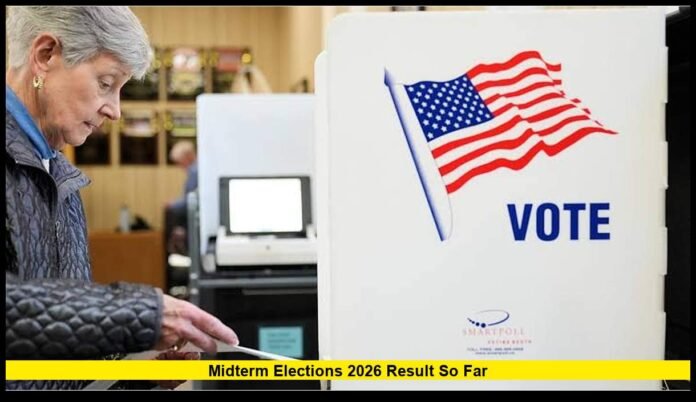

The midterm elections 2026 results so far reveal a dramatic shift in American politics, as Democrats have won control of both chambers of Congress in the November 3 elections. The victories mark a major setback for President Donald Trump and congressional Republicans, opening a new chapter in Washington as the administration approaches the second half of its term. With several races still awaiting final results, the election has already reshaped the political landscape and raised important questions about the future of federal policy.
Democrats entered Election Day seeking to regain congressional power and strengthen their ability to challenge the president’s agenda. Their success in competitive Senate contests and dozens of House districts delivered a decisive breakthrough. The party also recorded important victories in gubernatorial elections, extending its gains beyond Capitol Hill.
The outcome is significant not only because of the change in congressional leadership but also because voters expressed concerns about household expenses, economic conditions, government accountability, and the direction of national policy. As officials continue counting ballots, attention is turning toward the size of the Democratic majorities and the priorities lawmakers will pursue when the new Congress convenes in January.
Key Points Summary
╔════════════════════════════════════════════════════════════════════╗
║ – Democrats have secured projected control of both the U.S. House and Senate. ║
║ – Democrats gained at least seven Senate seats, including victories in traditionally Republican states. ║
║ – House Democrats have made substantial gains, with dozens of competitive races contributing to the shift in control. ║
║ – Economic concerns, rising living costs, and dissatisfaction with the administration influenced the political debate. ║
║ – Outstanding vote counts and certification procedures will determine the final margins in several contests. ║
╚════════════════════════════════════════════════════════════════════╝
Democrats Regain Control of the U.S. House of Representatives
The battle for the House of Representatives was one of the most consequential contests of the 2026 midterm elections. All 435 voting seats were on the ballot, giving Democrats an opportunity to challenge the Republican majority and influence the direction of federal lawmaking.
Early reported results showed Democrats with 228 seats to Republicans’ 139, with 367 races called in the results snapshot. The figures represent an evolving election-night count rather than the final certified composition of the chamber.
A majority generally requires 218 seats when all 435 voting seats are filled. By crossing that threshold in projected results, Democrats positioned themselves to take control of the House for the next Congress.
The change in leadership could have substantial consequences. The majority party determines committee leadership, controls much of the chamber’s legislative schedule, and has considerable influence over which bills receive consideration.
House Democrats are expected to focus on the cost of living, healthcare, federal spending, government oversight, and measures intended to address economic pressures facing American families. They will also have greater authority to organize investigations into the administration’s policies and decisions.
Republicans, meanwhile, will need to reorganize as the minority party. Although they will lose control of the chamber, Republican lawmakers will continue to participate in debates, negotiations, and committee work.
The final House seat count remains important. A narrow Democratic majority would require party leaders to maintain strong internal unity, while a larger majority could provide greater flexibility when members disagree over legislation.
Senate Election Results Deliver a Major Democratic Victory
The Senate results produced another significant change in Washington. Democrats won projected control of the chamber after flipping at least seven Republican-held seats, overcoming the Republican majority that existed before the election.
The latest reported breakdown showed 54 Democratic-aligned seats, including two independents who caucus with Democrats, compared with 44 Republican seats. Two Senate races remained uncalled in the reported snapshot.
The Senate has 100 seats, but only 35 were contested during the 2026 election cycle, including two special elections. The remaining senators continue serving the terms for which they were previously elected.
Democratic victories in Iowa, Kansas, Maine, North Carolina, Ohio, South Carolina, and Texas were central to the party’s gains. These results demonstrated that Republicans faced challenges extending beyond the traditional battleground states.
The loss of several Republican-held seats could affect the administration’s ability to move its agenda through Congress. The Senate considers legislation, confirms many presidential nominees, and plays a central role in approving federal judges.
Under Democratic leadership, the chamber is expected to adopt a different legislative schedule and conduct closer scrutiny of presidential appointments and executive branch activities.
However, control of the Senate does not guarantee that Democrats will pass every proposal they support. Senate procedures, individual lawmakers’ positions, and the need for bipartisan agreement on many measures will continue to shape the legislative process.
Major Senate Races That Changed the Political Balance
Several contests stood out because they helped determine which party would control the upper chamber.
Iowa
Democrat Josh Turek defeated Republican Ashley Hinson, delivering a major victory for his party in a state that supported Trump in the 2024 presidential election. The result demonstrated the difficulty Republicans faced in defending seats outside the usual competitive Senate battlegrounds.
Kansas
Democrat Adam Hamilton defeated Republican incumbent Roger Marshall. The outcome was particularly notable because Kansas has historically favored Republican candidates in statewide elections.
The victory added to the Democratic Senate gains and illustrated how the election environment extended into states where Republicans had traditionally enjoyed an advantage.
Maine
Democrat Troy Jackson defeated longtime Republican Senator Susan Collins. The race attracted national attention because Collins had been a prominent Republican figure and an established incumbent.
Her defeat represented one of the most consequential Republican losses of the election cycle.
North Carolina
Democrat Roy Cooper defeated Republican Michael Whatley in the open Senate contest. Cooper’s victory gave Democrats a significant pickup in a state that has frequently featured closely divided statewide elections.
The result also reinforced the importance of candidate experience and statewide political organization in competitive races.
Ohio
Democrat Sherrod Brown defeated Republican incumbent Jon Husted in a special election. Brown’s return to the Senate was an important Democratic gain in a state where Republicans have performed strongly in recent national elections.
The outcome could influence debates over industrial policy, manufacturing, healthcare, and the economic concerns of working families.
South Carolina and Texas
Democratic victories in South Carolina and Texas further strengthened the party’s Senate position. In Texas, James Talarico defeated Republican Ken Paxton, producing an especially notable result in a state that has long been a Republican stronghold in federal elections.
Taken together, these victories contributed to a broader Democratic breakthrough. Final vote totals and certification will determine the official margins, but the projected results already signal a substantial political realignment.
Why the 2026 Midterms Matter for President Donald Trump
Midterm elections often provide voters with an opportunity to evaluate the party occupying the White House. The 2026 results deliver a clear political challenge for Trump and congressional Republicans.
With Democrats controlling both chambers, the administration will face a more difficult environment for advancing legislation. Democratic leaders can determine which proposals receive attention, use committee hearings to investigate federal policies, and demand greater accountability from government agencies.
The shift could influence debates involving immigration enforcement, taxation, healthcare, tariffs, energy policy, and federal spending.
Congressional investigations may also become more prominent. House committees could examine administration decisions, while Senate committees may scrutinize nominations, government programs, and executive branch actions.
Nevertheless, Democrats will not have unlimited authority. The president retains executive powers and can veto legislation that reaches his desk. Overriding a presidential veto requires a two-thirds majority in both chambers, a threshold that is considerably higher than a simple majority.
Consequently, the new Congress may experience frequent confrontations over spending bills, policy priorities, and government oversight. Some negotiations could produce bipartisan agreements, while others may result in prolonged political disputes.
The extent of the change will depend on the final congressional margins and the willingness of lawmakers to negotiate across party lines.
Economic Concerns Played a Central Role in the Election
The economy was a major theme throughout the 2026 campaign. Many Americans have continued to focus on the affordability of housing, groceries, healthcare, transportation, insurance, and other everyday necessities.
Even when inflation slows, prices generally do not return to earlier levels. Households can therefore continue experiencing financial pressure despite improvements in some economic indicators.
Democrats emphasized affordability and questioned whether the administration’s economic policies were delivering sufficient relief. Republicans defended their approach to economic growth, trade, taxation, and national priorities.
Concerns about tariffs and the economic consequences of the war involving Iran also featured in the political debate. Questions about government accountability and corruption added to dissatisfaction among some voters.
These issues contributed to an environment in which congressional control became a referendum on more than individual candidates. Voters were also making judgments about the direction of the country and the performance of the federal government.
The election results do not establish that every voter acted for the same reason. Regional concerns, candidate quality, turnout, party loyalty, and local issues all influenced individual contests.
However, the scale of the Democratic gains suggests that Republicans faced a difficult national environment that extended beyond a small number of competitive districts.
Governor Elections Add Another Dimension to the Results
The congressional contests were only part of the 2026 midterm elections. Voters also participated in gubernatorial races across 36 states, making the election important for state government as well as Washington.
Democrats recorded important gubernatorial victories, including Keisha Lance Bottoms’ win in Georgia and Gina Hinojosa’s victory in Texas. These outcomes added to the significance of the party’s national gains.
Governors exercise considerable authority over state budgets, education, public safety, healthcare programs, transportation, and the implementation of state laws. A change in party control can therefore affect residents directly, even when federal legislation remains unchanged.
State-level victories can also strengthen a party’s political organization ahead of future national elections. Governors frequently become influential voices in policy debates and can help recruit candidates, build fundraising networks, and shape party messaging.
State legislative races and ballot initiatives also attracted attention. Voters considered proposals involving election administration, reproductive rights, taxation, and other issues, with outcomes varying by state.
Because different states follow different counting and certification schedules, some gubernatorial and ballot-measure results may take additional time to become official.
Why Some Election Results Remain Unofficial
Although the overall congressional outcome has become clearer, not every contest has reached the same stage of the election process.
News organizations may project a winner after evaluating vote totals, outstanding ballots, historical voting patterns, and other available information. A projection is not the same as official certification by election authorities.
Several factors can delay the final results.
Mail-in ballots: Election officials must process eligible ballots according to state law, including required verification procedures.
Provisional ballots: Some ballots require additional checks to determine whether they can legally be counted.
Close margins: Races decided by small differences may require additional counting or a recount under applicable state rules.
Outstanding precincts: Results may arrive at different times, especially in large jurisdictions or areas with complicated ballot-counting procedures.
Certification: State and local officials must complete canvassing and certification before results become final under the relevant rules.
These steps are standard parts of American elections. Delayed results alone do not indicate that an election was improperly conducted.
Readers following the latest counts should distinguish between preliminary totals, projected winners, recounts, and certified results. Understanding these differences helps prevent confusion as updated numbers become available.
What Happens When the New Congress Takes Office?
The new Congress is scheduled to begin its term in January 2027. Before that transition, election officials will continue completing the remaining counts and certification processes.
Democratic leaders will then organize their caucuses, determine committee assignments, select leadership teams, and develop legislative priorities.
Republicans will assess their losses and consider how to respond to the new balance of power. Their strategy may involve negotiations on selected issues, opposition to Democratic proposals, and efforts to rebuild their electoral position before the next national election.
Government funding will be one of the most immediate challenges. Lawmakers must address spending deadlines and determine whether they can reach agreements on appropriations and other fiscal measures.
Healthcare, immigration, taxation, and economic policy are also likely to generate significant debate.
The new congressional majority may pursue stronger oversight of the executive branch, but the effectiveness of that effort will depend on committee investigations, available evidence, and the willingness of members to prioritize particular issues.
For the administration, the election means that negotiations with Congress will become more complicated. Proposals that previously had a clearer path through a Republican-controlled legislature may face new obstacles.
How the Results Could Shape the 2028 Election
The 2026 midterms will also influence the political environment leading into the 2028 presidential election.
Both parties are likely to analyze voter turnout, changes in suburban and rural districts, candidate performance, and the issues that motivated voters. Democrats will need to demonstrate that their congressional victories can translate into effective governance, while Republicans will face pressure to address the reasons behind their losses.
The results may influence candidate recruitment, fundraising strategies, party leadership debates, and campaign messaging across the country.
However, the 2028 election remains a separate contest. Political conditions can change significantly over two years, and the performance of the new Congress will influence how voters assess both parties.
The midterms provide important evidence about the political mood of the country, but they do not determine the outcome of the next presidential election.
Conclusion: A New Political Era Begins in Washington
The 2026 midterm elections have produced a major shift in congressional power, with Democrats winning projected control of both the House and Senate. Their gains across competitive federal and state races represent a significant setback for Republicans and create a new set of challenges for the Trump administration.
The results will affect legislative negotiations, federal oversight, presidential nominations, and the political debate surrounding the economy and national policy. At the same time, outstanding counts and official certification remain important for establishing the final composition of Congress.
The months ahead will reveal whether Democratic leaders can turn their electoral gains into meaningful legislative action and whether Republicans can adapt to their new position in Washington.
For voters, the election marks the beginning of another consequential period in American politics, one in which congressional decisions could shape national policy and influence the next presidential campaign.
What do you think the Democratic victories will mean for the United States over the next two years? Share your opinion in the comments and follow the latest election developments as the final results are confirmed.