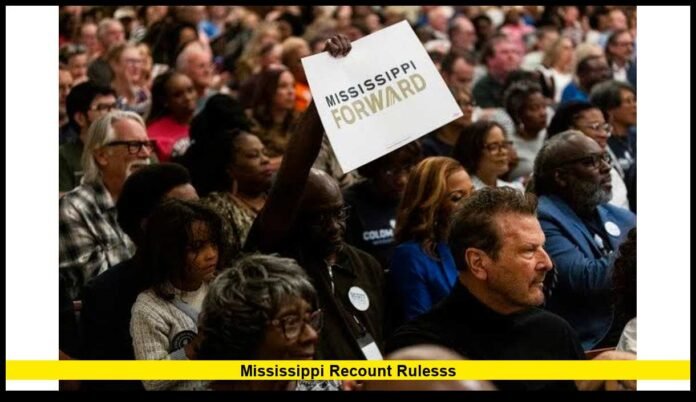

Mississippi recount rules establish how election results can be challenged when candidates question vote totals, identify possible counting errors, or believe irregularities affected an election outcome. Unlike states that automatically trigger recounts when candidates finish within a narrow margin, Mississippi generally relies on judicial election-contest procedures to resolve disputes. This distinction is important for the 2026 election cycle, particularly in closely contested races where candidates and voters want to understand whether the official outcome can be reconsidered.
Mississippi’s election laws distinguish between routine vote verification and a formal legal challenge. A candidate cannot automatically demand another count simply because the final difference is small. Instead, the person challenging an election must identify an applicable legal procedure, satisfy its requirements, and present a legally sufficient basis for the requested relief.
Mississippi Takes a Court-Based Approach to Election Disputes
Election recount procedures vary considerably across the United States. Some states establish automatic recount thresholds, while others allow candidates to request another count after paying a fee or meeting specific requirements.
Mississippi follows a different approach. It does not provide a general automatic recount system based on the percentage or number of votes separating candidates.
Instead, disputes involving election outcomes are addressed through the legal mechanisms established by state law. Courts can consider election contests and order appropriate relief when the legal requirements are satisfied.
This means that a candidate who loses by only a handful of votes does not automatically receive another count. The legal basis of the challenge matters more than the margin alone.
Why Close Election Results Do Not Guarantee a Recount
A closely decided election can attract considerable attention, especially when the winner and runner-up receive nearly identical vote totals. However, a small margin does not necessarily indicate that election officials made mistakes.
For example, imagine a Mississippi county election in which the leading candidate receives 10,025 votes and the second-place candidate receives 10,012 votes. The 13-vote difference could make the outcome politically significant, but it does not automatically activate a recount procedure.
A candidate who believes the result is incorrect must identify a legally recognized reason to challenge it.
Possible concerns could involve:
- Incorrectly tabulated ballots.
- Questions about whether particular votes were legally counted.
- Alleged violations of election procedures.
- Discrepancies in official election records.
- Claims involving voter eligibility.
- Other irregularities that may affect the legal validity of an election.
The importance of these issues depends on the evidence and the specific law governing the election.
Understanding the Legal Deadline for Election Challenges
Timing can be decisive when a candidate believes an election result is wrong. Under Mississippi Code Section 23-15-951, a person contesting the election of someone declared elected to a covered county office generally must file a petition within 20 days after the election.
The petition must identify the grounds for the challenge and be filed with the circuit clerk in the relevant county. The statute establishes a process for appointing a judge to hear the dispute and provides for a jury trial under its terms.
However, this deadline does not apply identically to every election-related matter. Contests involving Mississippi House or Senate seats and disputes over candidate qualifications have separate statutory provisions.
Candidates should determine the correct filing deadline immediately after identifying a potential legal issue. Waiting for additional public commentary or assuming that election officials will initiate a recount could jeopardize the ability to pursue a timely challenge.
Timing can be decisive when a candidate believes an election result is incorrect. Mississippi law establishes specific procedures and filing periods for challenging election outcomes, and missing the applicable deadline can prevent a candidate from pursuing legal relief.
Under Mississippi Code Section 23-15-951, a person contesting the election of someone declared elected to a covered county office generally must file a petition within 20 days after the election. The petition must be submitted to the circuit clerk in the relevant county and explain the legal grounds for challenging the result. The statute also provides for the appointment of a judge to hear the dispute and establishes procedures for resolving the contest.
Candidates should understand that filing an election challenge is different from simply asking election officials to recount ballots. A formal petition must satisfy the requirements established by state law. Depending on the allegations, the case may involve questions about ballot validity, vote tabulation, voter eligibility, or compliance with election procedures.
The 20-day deadline is not universal. Legislative election contests and certain political party primary disputes are governed by separate statutory provisions. Therefore, candidates must identify the correct legal category before calculating their filing deadline.
Another important consideration is evidence preservation. Anyone considering an election challenge should promptly secure relevant records, document suspected discrepancies, and identify witnesses who may have firsthand knowledge of the alleged problem.
Acting quickly is essential because an election challenge must satisfy both the applicable filing deadline and the legal requirements for the specific office being contested.
What Role Do Election Officials Play After Election Day?
Before an election result becomes final, election officials complete the required canvassing and certification procedures. These steps help establish the official totals and address discrepancies identified during the ordinary administrative process.
Mississippi law provides for the canvassing of election returns at the local level and the certification of results by the appropriate authorities.
Administrative verification is not the same as a formal recount. Reviewing records, reconciling ballot totals, and completing certification requirements are routine election responsibilities. They do not necessarily indicate that a candidate has filed a legal challenge.
Voters should also distinguish unofficial election-night figures from certified results. Preliminary totals can change as eligible ballots are processed and officials complete required checks.
How Evidence Can Influence a Contested Election
A successful election challenge requires more than speculation. The court must evaluate the allegations under the law governing the particular contest.
Records showing discrepancies in vote totals, documentation of alleged procedural violations, ballot-related evidence, and credible witness testimony may be relevant to a case.
The legal significance of the evidence depends on the circumstances. An isolated administrative error does not automatically establish that the declared winner is incorrect, while an allegation of unlawful voting must be supported by appropriate proof.
Anyone considering a challenge should preserve relevant documentation lawfully and seek qualified legal advice. The applicable statute determines which claims can be raised and what remedies may be available.
What Voters Should Watch During the 2026 Election Cycle
As Mississippi voters follow the 2026 elections, reports of a close race or a candidate questioning the outcome should be evaluated carefully.
A campaign announcement that it intends to challenge a result does not mean a court has authorized a recount. Similarly, a lawsuit does not guarantee that the original totals will be changed.
The practical effect of Mississippi recount rules is that election disputes must proceed through legally established channels rather than through a general recount request triggered by a narrow margin.
Voters should look for confirmation that a formal case has been filed, determine which election is involved, and distinguish allegations from judicial findings. They should also be cautious about claims that proposed legislation has changed the rules unless the measure has actually become effective law.
Conclusion
Mississippi provides legal mechanisms for challenging election results, but a close vote alone does not guarantee a recount. Candidates must identify the correct legal procedure, meet applicable deadlines, and support their claims with relevant evidence.
For voters following the 2026 elections, understanding the distinction between official certification, administrative verification, and a court-supervised election contest is essential. The governing statute and the facts of each dispute determine whether a recount or another form of legal relief may be available.