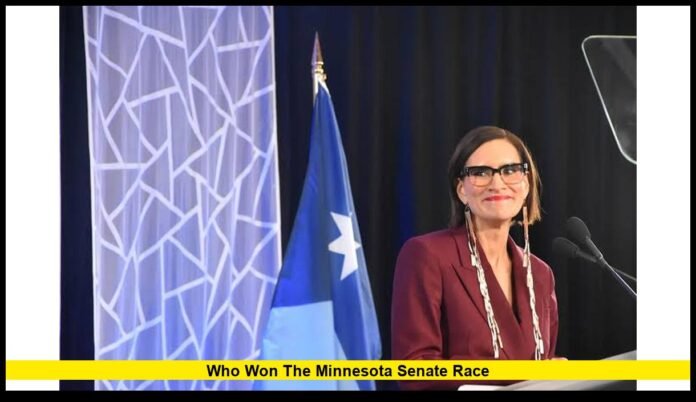

The answer to who won the Minnesota senate race in the 2026 U.S. Senate election is Peggy Flanagan, the Democratic-Farmer-Labor (DFL) candidate and Minnesota’s lieutenant governor. Flanagan defeated Republican challenger Michele Tafoya in the November 3 general election, according to major news organizations’ election projections. Her victory keeps Minnesota’s open U.S. Senate seat in Democratic hands following Senator Tina Smith’s decision not to seek reelection.
The contest attracted national attention because it featured two candidates with very different professional backgrounds, political priorities, and approaches to the state’s most pressing issues. Flanagan emphasized health care affordability, economic opportunity, and opposition to President Donald Trump’s policies, while Tafoya focused on government accountability, public safety, and concerns surrounding fraud in Minnesota’s social services programs.
Although news organizations have projected Flanagan as the winner, the reported election results remain unofficial until the state’s election certification process is completed.
Who Won the Minnesota Senate Race in 2026?
Peggy Flanagan won the 2026 Minnesota U.S. Senate race, defeating Republican Michele Tafoya in the contest to replace retiring Democratic Senator Tina Smith.
The general election took place on Tuesday, November 3, 2026. Flanagan entered the race as Minnesota’s sitting lieutenant governor and the DFL nominee. Tafoya, a former sports broadcaster known for her work covering professional football, represented the Republican Party.
With nearly all precincts reporting in early election results, Flanagan held a clear lead over Tafoya. The reported vote totals showed Flanagan receiving approximately 53.7% of the vote, compared with roughly 43.5% for Tafoya. Independent candidate Marisa Simonetti and Libertarian candidate Rebecca Whiting also appeared on the ballot.
The result represented a significant victory for Minnesota Democrats, who successfully defended a Senate seat that had been open following Smith’s retirement decision.
The victory also positioned Flanagan to move from Minnesota’s executive branch into the U.S. Senate, where she is expected to begin a six-year term in January 2027, following the completion of the election process.
Minnesota Senate Election Results: Vote Count and Percentages
The early reported results showed Flanagan with a substantial advantage over her principal Republican opponent.
| Candidate | Party | Approximate vote share |
|---|---|---|
| Peggy Flanagan | Democratic-Farmer-Labor | 53.7% |
| Michele Tafoya | Republican | 43.5% |
| Marisa Simonetti | Independent | 1.5% |
| Rebecca Whiting | Libertarian | 1.1% |
| Other write-in votes | Various | Less than 1% |
These figures reflect reported results from the election-night count and may change as additional ballots are processed and results are finalized. The percentages are rounded, so they may not total exactly 100%.
Flanagan’s lead of approximately 10 percentage points gave Democrats a clear advantage in the race. Her performance demonstrated that the DFL could retain the seat despite Republican efforts to make the contest competitive.
Important distinction: Election projections identify the candidate expected to win based on available results. Minnesota’s official statewide results are not final until the appropriate canvassing and certification procedures are completed.
Who Is Peggy Flanagan?
Peggy Flanagan is a Minnesota politician who served as the state’s lieutenant governor before winning the 2026 U.S. Senate election. A member of the Democratic-Farmer-Labor Party, she built her political career around public education, economic opportunity, health care, and issues affecting Native American communities.
Flanagan previously served in the Minnesota House of Representatives before becoming lieutenant governor in 2019. Her experience in state government gave her a statewide political profile and familiarity with the challenges facing Minnesota residents.
She is also an enrolled member of the White Earth Band of Ojibwe. Her background and advocacy have made Native American representation an important part of her public identity.
During the Senate campaign, Flanagan presented herself as a progressive candidate who wanted to expand access to affordable health care, address household expenses, and challenge the Trump administration’s policy priorities.
Her political platform appealed to voters who supported a more active government role in addressing health care costs and economic inequality.
Flanagan’s Main Campaign Priorities
Several issues featured prominently in her campaign.
- Health care affordability: Flanagan supported expanding access to health care, including advocating for Medicare for All.
- Household expenses: She emphasized the need to address rising costs affecting families and working people.
- Workers’ economic security: Her platform included support for policies intended to improve wages and financial stability.
- Federal immigration policy: She opposed the Trump administration’s immigration crackdown and made that disagreement a central campaign issue.
- Native American representation: Her background and experience brought additional attention to tribal communities and federal Indian policy.
Flanagan’s victory gives her an opportunity to advance these priorities in the Senate. However, campaign commitments do not automatically become federal law. Their implementation will depend on legislation, negotiations with other senators, committee decisions, and the political balance in Congress.
Who Is Michele Tafoya?
Michele Tafoya is a former sports broadcaster who became the Republican nominee in Minnesota’s 2026 U.S. Senate election.
Tafoya built her professional reputation through sports journalism, including reporting on major professional football broadcasts. Her public recognition and communication experience provided a foundation for her entry into electoral politics.
Unlike Flanagan, Tafoya entered the race without a comparable record of holding elected office. Her campaign sought to turn her outsider status into an advantage by presenting her as a candidate willing to challenge established political leadership.
Tafoya emphasized government accountability, fiscal responsibility, and concerns about fraud involving Minnesota’s public programs. She argued that voters should scrutinize the state’s leadership over oversight failures and the handling of public funds.
Her campaign also addressed national Republican priorities, although she sought to establish her own position on certain issues rather than simply align herself with every policy associated with President Trump.
Despite her visibility and campaign efforts, Tafoya was unable to overcome Flanagan’s lead in the reported election results.
The outcome means Republicans did not gain the Minnesota Senate seat they had targeted, while Tafoya’s first major campaign for elected office ended in defeat.
Why the Minnesota Senate Race Was Important
The 2026 Minnesota Senate election mattered for several reasons, including the open seat, the candidates’ contrasting policy positions, and the national implications of Senate control.
An Open Seat After Tina Smith’s Retirement
The race developed after Democratic Senator Tina Smith decided not to seek another term. Her decision created an opportunity for both parties to compete for a seat that had been held by Democrats.
Open-seat elections can produce different political dynamics from contests involving an incumbent. Neither Flanagan nor Tafoya had the advantage of running as the sitting U.S. senator, making candidate recognition, party support, fundraising, and campaign organization particularly important.
Flanagan’s statewide experience as lieutenant governor helped establish her credentials, while Tafoya sought to use her public profile and outsider message to attract voters.
Ultimately, Flanagan’s victory preserved Democratic control of the seat.
The Battle Over Affordability and Health Care
Economic pressures and health care costs were central themes in the campaign.
Flanagan argued for policies designed to make health care more accessible and reduce the financial pressures facing families. Her support for Medicare for All distinguished her as a progressive candidate.
Tafoya focused more heavily on government performance, accountability, and the management of public resources. Her campaign argued that concerns about fraud and oversight should influence voters’ decisions about who represents Minnesota in Washington.
The election gave voters a choice between these approaches to public policy. Flanagan’s projected victory indicates that she secured enough support to defeat Tafoya, although the result alone does not establish why individual voters made their choices.
National Implications for the U.S. Senate
Minnesota’s Senate seat was part of the broader 2026 midterm election, when voters across the country selected members of Congress and considered the balance of power in Washington.
A Senate seat can influence the passage of legislation, federal spending, judicial confirmations, and oversight of the executive branch. For that reason, competitive Senate elections frequently attract national political attention.
Flanagan’s win prevented Republicans from gaining the Minnesota seat. Its broader impact on Senate control depends on the outcomes of other races nationwide, not Minnesota’s results alone.
For Minnesota residents, the election also determined who would represent the state in the Senate for the next six-year term.
Minnesota’s Political Background and Democratic Strength
Minnesota has maintained a strong tradition of competitive elections, but Democratic candidates have held a notable advantage in recent U.S. Senate contests.
The state uses the Democratic-Farmer-Labor Party name for its Democratic Party organization. Although the DFL operates within the national Democratic Party, its name reflects Minnesota’s distinctive political history.
That background helped shape the 2026 campaign. Flanagan ran as the DFL candidate, drawing on her experience in state government and support from Democratic voters. Tafoya sought to broaden Republican appeal by emphasizing accountability and concerns about public administration.
The race also unfolded amid debate about state government oversight, social services, immigration enforcement, and the cost of living.
These issues created challenges for both candidates. Flanagan had to defend her political record and her association with Minnesota’s DFL leadership, while Tafoya needed to persuade voters that her campaign could translate public recognition into electoral support.
Flanagan’s projected win continued the state’s recent pattern of electing Democratic U.S. senators. Minnesota has not elected a Republican to the U.S. Senate since 2002, a historical trend that provided context for the 2026 contest.
Nevertheless, the result should be understood as the outcome of a particular election rather than a guarantee about Minnesota’s future political preferences.
What Happens After Peggy Flanagan’s Victory?
The next step is the completion of Minnesota’s election administration and certification process.
Election-night figures are initially unofficial. County election officials review and canvass their results, followed by the statewide process required to certify the election. The Minnesota State Canvassing Board is scheduled to meet on November 19, 2026, to certify statewide results.
The reported figures may change as outstanding ballots and administrative procedures are completed. Recounts may also be requested when the applicable legal requirements are met.
For that reason, it is important to distinguish between the projected winner and the final certified result. Major news organizations have projected Flanagan as the winner, but the official certification process remains a separate step.
Once the election result is certified and the new Congress convenes in January 2027, Flanagan is expected to take office as Minnesota’s next U.S. senator.
Her transition will involve moving from state-level executive responsibilities to the federal legislative branch. As a senator, she will participate in committee work, consider federal legislation, vote on national policy, and represent Minnesota’s interests in Washington.
Her performance in the role will depend on the issues she prioritizes, the legislation she supports, and her ability to work with other members of Congress.
Latest Update on the Minnesota Senate Race
The latest reported update is that Peggy Flanagan defeated Michele Tafoya in the 2026 Minnesota U.S. Senate election, according to election projections published after voting concluded on November 3.
Flanagan’s victory keeps the open Senate seat in Democratic hands after Tina Smith’s decision to retire. Tafoya’s campaign focused on government accountability and public-program oversight, but the Republican candidate finished behind Flanagan in the reported count.
The outcome is a major development for Minnesota politics because it determines the expected successor to Smith and establishes the state’s representation in the U.S. Senate for the upcoming term.
Readers following the election should keep the distinction between projected and certified results in mind. The official statewide count will be established through Minnesota’s election certification process, and final figures may differ slightly from early election-night totals.
Final Thoughts
For readers searching for who won the Minnesota senate race, the clear answer is Peggy Flanagan. The Democratic-Farmer-Labor candidate defeated Republican Michele Tafoya in the November 3, 2026, contest for Minnesota’s open U.S. Senate seat.
Flanagan’s projected victory preserves the seat for Democrats and sets the stage for her expected move from lieutenant governor to the U.S. Senate in January 2027. Her campaign emphasized health care affordability, economic concerns, and opposition to the Trump administration’s immigration policies, while Tafoya focused on accountability and government oversight.
The result also highlights the importance of open-seat contests in determining political representation and the balance of power in Congress. Although Flanagan has been projected as the winner, the state’s official certification process remains necessary to finalize the election results.
Share your thoughts on Peggy Flanagan’s victory in the comments, and stay updated for the latest Minnesota Senate election developments.