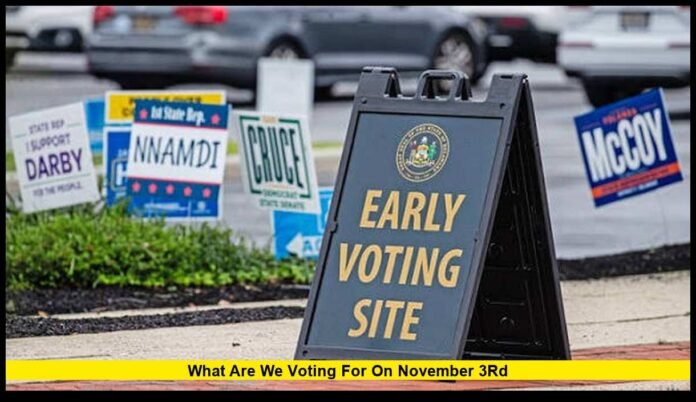

The question what are we voting for on November 3rd is especially important for American voters as the United States prepares for the 2026 midterm elections. Tuesday, November 3, 2026, is Election Day, when voters across the country will decide several important political contests that could influence the direction of Congress, state governments, and local communities.
Unlike a presidential election, the 2026 midterm elections will not determine who occupies the White House. Instead, voters will choose members of Congress, participate in gubernatorial and state legislative races, and decide various state and local ballot measures. The specific candidates and proposals will depend on where each voter lives.
These elections are significant because the results will help determine the balance of political power in Washington, D.C., and influence decisions involving the federal budget, taxes, immigration, healthcare, education, public safety, and other national priorities.
The 2026 Midterm Elections: Why November 3 Matters
The November 3 election is the nationwide general election held halfway through the four-year presidential term. It gives voters an opportunity to evaluate the performance of elected officials and choose representatives who will serve during the remainder of the current administration and beyond.
Midterm elections are different from presidential elections in several important ways. There is no presidential race on the 2026 general election ballot, but congressional seats, governorships, state legislative positions, and other offices are being contested.
The results can affect the federal government’s legislative priorities and the ability of the president to advance policies through Congress. They can also influence decisions made by governors and state lawmakers on issues that directly affect residents.
November 3 is therefore an important date for voters who want to influence government representation, public spending, state policies, and the future direction of their communities.
What Are We Voting for on November 3rd in Congress?
One of the biggest parts of the 2026 election is the selection of members of the U.S. Congress. Congress consists of two chambers: the House of Representatives and the Senate. Both play essential roles in making federal laws, approving government spending, and conducting oversight of the executive branch.
U.S. House of Representatives
All 435 voting seats in the U.S. House of Representatives are scheduled for election in 2026. House members serve two-year terms, which means every congressional district across the country has an opportunity to elect its representative.
House elections matter because representatives participate in decisions involving:
- Federal taxes, spending, and the national budget.
- Healthcare policy and federal benefit programs.
- Immigration legislation and border security.
- Education, infrastructure, and transportation funding.
- Oversight hearings and investigations involving federal agencies.
- Legislation affecting businesses, workers, families, and consumers.
Each district elects its own representative. The candidates appearing on a ballot depend on the district where the voter is registered.
The party that wins a majority of House seats will have a significant role in setting the chamber’s legislative agenda, determining committee leadership, and influencing which bills receive consideration.
U.S. Senate Elections
The Senate is the other major focus of the November 3 election. Unlike the House, the Senate does not elect all its members at once because senators serve six-year terms.
Approximately one-third of the Senate is normally up for election every two years. The 2026 election includes the regularly scheduled Senate contests and may also include special elections to fill vacancies.
Senators vote on federal legislation, approve treaties where applicable, confirm presidential nominations for federal positions and the judiciary, and participate in impeachment trials.
Control of the Senate can influence judicial confirmations, executive appointments, legislative negotiations, and the progress of major national policies.
Not every state will have a Senate race on its ballot. Whether voters can choose a U.S. senator depends on which Senate seats are scheduled for election in their state and whether a special election is taking place.
How the Election Could Change Political Control in Washington
A central issue in the 2026 midterm elections is whether either major political party will gain or lose control of the House or Senate.
Congressional majorities influence which proposals advance, how committees operate, and how lawmakers negotiate with the White House. A change in control can lead to different legislative priorities, more intensive oversight, or new obstacles to passing legislation.
However, winning a majority does not automatically guarantee that every proposal supported by that party will become law. Legislation must still move through the applicable congressional process, and some measures require support beyond a simple majority.
The election will also determine which lawmakers represent individual communities for the next stage of the congressional term. Voters can assess candidates based on their records, policy proposals, experience, and positions on local and national issues.
State Governor Elections and Other Executive Offices
The November 3 ballot is not limited to federal offices. Voters in many states will also choose governors and other statewide officials.
Governors play a major role in state government. They work with state legislatures, oversee executive agencies, develop budget proposals, and make decisions about implementing state laws.
Depending on the state, gubernatorial elections may place several policy questions at the center of public debate, including:
- Public education and school funding.
- Healthcare access and public health programs.
- State taxes and government spending.
- Housing affordability and economic development.
- Criminal justice and public safety.
- Transportation projects and infrastructure.
- Energy policy and environmental regulation.
The specific offices on the ballot differ from state to state. Some states hold elections for additional executive positions, such as attorney general, secretary of state, or state treasurer, while others use different election schedules for certain offices.
Voters should not assume that every state has a governor’s race on November 3. The official ballot for each state determines which positions are being contested.
State Legislature Elections Across the Country
State legislative races are another major component of the 2026 election. According to the National Conference of State Legislatures’ 2026 election overview, legislative contests are scheduled in 46 states, covering more than 6,100 state legislative seats.
These elections determine who will serve in state houses and senates, where lawmakers debate and pass laws governing a wide range of everyday matters.
State legislatures often have direct responsibility for decisions involving school funding, property taxes, state income taxes, election rules, transportation spending, criminal laws, and state-level healthcare policies.
They also play an important role in determining how state budgets are distributed among public services and government programs.
In many states, legislative majorities can shape the policy agenda for the next legislative session. A shift in the balance of power may change which bills receive hearings, which proposals advance, and how lawmakers negotiate with governors.
The importance of these elections can be easy to overlook because they receive less national attention than congressional contests. Yet state lawmakers frequently make decisions that affect residents’ daily lives more directly than federal legislation.
Ballot Measures, Amendments, and Public Policy Questions
Another important answer to what are we voting for on November 3rd is that some voters will decide ballot measures in addition to selecting candidates.
Ballot measures allow eligible voters to approve or reject specific policy proposals. Depending on state law, these may include constitutional amendments, citizen initiatives, legislative referendums, bond proposals, and other questions placed before voters.
The National Conference of State Legislatures has identified 146 statewide ballot measures scheduled across 39 states and the Northern Mariana Islands in its 2026 election overview. The final measures presented to voters vary by jurisdiction.
Common topics include:
- Taxes and public spending: Proposals may change tax rules, authorize bonds, or establish requirements for government spending.
- Constitutional amendments: Voters may be asked to approve changes to their state’s constitution.
- Election administration: Measures may address voter eligibility requirements, election procedures, or voting systems.
- Abortion and reproductive policy: Some state ballots may contain proposals concerning reproductive rights or related legal protections.
- Education and public services: Certain measures may affect funding arrangements or rules governing public institutions.
- Redistricting: Some proposals may address how electoral district boundaries are established or administered.
Not every state will have every type of measure, and similar topics can appear in very different forms across jurisdictions.
Before voting on a ballot proposition, voters should review its actual wording, understand whether approval would amend a constitution or change a statute, and determine what consequences the measure would have under state law.
A ballot title or campaign slogan may summarize a proposal, but the full text and official voter information provide a more reliable basis for evaluating it.
Local Elections and Community-Level Decisions
Many voters will also encounter local contests on November 3. Depending on the jurisdiction, ballots may include county officials, municipal representatives, judges, school board members, and other local positions.
Local elections are important because these officials help make decisions about services and institutions that residents use regularly.
County commissioners and supervisors may influence local budgets, public health services, land use, and infrastructure. Mayors and city council members can shape housing development, zoning, public transportation, local taxes, and municipal services.
School board elections can affect district budgets, school policies, educational priorities, and the oversight of public schools. Local judicial elections, where applicable, allow voters to choose candidates for certain judicial positions under their state’s election laws.
Some communities may also vote on local tax proposals, school bonds, public infrastructure projects, or other municipal questions.
The availability of these contests depends on local election schedules. Not every county or city will have the same elections on November 3, so voters should check their own ballot before Election Day.
Why the 2026 Midterm Elections Matter to American Voters
The outcome of the 2026 elections could influence government decisions at several levels. Although voters are choosing different candidates and considering different proposals across the country, the overall results will help determine the composition of Congress and many state governments.
Federal policy and legislation
The makeup of Congress affects negotiations over federal spending, taxes, healthcare, immigration, and other national issues. Changes in congressional control may influence which legislative proposals advance and how lawmakers oversee the administration.
The federal budget and economic priorities
Congress plays a central role in federal budget decisions and legislation affecting public spending. Election results may influence future debates over government programs, infrastructure investment, business regulations, and fiscal priorities.
However, the election results alone will not determine the direction of the economy. Economic conditions depend on many factors, including employment, inflation, interest rates, business activity, and decisions made by public and private institutions.
State policies and public services
State elections can change the priorities of governors and legislatures. These decisions may affect schools, healthcare programs, housing policies, transportation systems, public safety, and state taxation.
Representation and government accountability
Elections allow voters to retain elected officials or replace them with other candidates. Campaign promises, legislative records, and the performance of officeholders can all influence voting decisions.
The midterms also provide an opportunity for voters to express their preferences on policy issues without a presidential contest appearing on the ballot.
Latest Updates: What Voters Should Know on November 3, 2026
As of November 3, 2026, the date of the nationwide general election is confirmed. Voters should distinguish between information that applies nationally and rules that are specific to their state or locality.
The main points to understand are:
- Election Day is Tuesday, November 3, 2026. This is the next regularly scheduled federal general election date.
- All 435 voting House seats are scheduled for election. Voters will choose representatives for their respective congressional districts.
- Senate contests are limited to the seats scheduled for election and any applicable special elections. A Senate race will not appear on every state ballot.
- State and local contests vary. Governors, state legislators, judges, school board members, and other officials may appear on ballots depending on the jurisdiction.
- Ballot measures differ by location. Voters should review the actual proposals on their ballot rather than relying on national summaries alone.
Candidates and ballot questions are established through the relevant election processes. Where a contest has been changed, postponed, or otherwise affected by an official decision, voters should rely on the latest information from their state or local election administrator.
Election results are not final simply because voting has ended. Election officials must count eligible ballots, complete required checks and canvassing procedures, and certify results under applicable law. Early projections or unofficial returns should not automatically be treated as certified outcomes.
Because the election is taking place today, any newly reported developments should be evaluated according to their publication time and official confirmation status.
How to Find Your Ballot and Confirm Voting Information
The most reliable way to determine exactly what you are voting for on November 3rd is to review the ballot issued for your own address and election jurisdiction.
Start by checking your voter registration status with your state election office. Then identify your assigned voting location, applicable polling hours, and any rules concerning identification or ballot submission.
If your state provides an official sample ballot, review it before voting. This can help you identify the candidates and ballot measures you want to research and understand how many contests appear on your ballot.
Voters who have already received a mail ballot should follow the instructions supplied by their election office. Deadlines for returning ballots, acceptable postmarks, drop-box locations, and ballot receipt can differ by state.
Election Day does not necessarily mean every voter must visit a polling place. Some states offer extensive mail voting, while others provide different combinations of early in-person voting, absentee voting, and Election Day voting.
Registration deadlines also differ. Some jurisdictions permit eligible residents to register or update their information in person on Election Day, while others have earlier deadlines.
Checking the rules for your specific location is essential. National election information can explain the major contests, but it cannot establish the precise polling hours, registration status, or ballot contents for every voter.
What November 3 Means for the Future of American Politics
The 2026 midterm elections will help establish the political environment in which the federal government and state governments operate during the next phase of the current presidential term.
Congressional races will determine representation in the House and Senate. Statewide elections will influence leadership and policy priorities in participating states. Legislative contests will shape the composition of state governments, while ballot measures will allow voters to decide specific public policy questions directly.
Local elections add another important dimension by determining who oversees services, budgets, and institutions within individual communities.
The full significance of the election will become clearer as official results are counted and certified. Until then, voters should focus on verified information, the actual choices presented on their ballots, and the responsibilities attached to each office or proposal.
Final Thoughts
Understanding what are we voting for on November 3rd means looking beyond the national political headlines. The 2026 election includes congressional races, state legislative contests, gubernatorial elections in participating states, local offices, and ballot measures that vary by jurisdiction.
These decisions can influence government leadership, public policy, spending priorities, and community services. The most important step for each voter is to understand the candidates and proposals appearing on their own ballot and follow the applicable voting rules.
Share your thoughts in the comments and stay updated on the latest verified developments in the 2026 U.S. midterm elections.