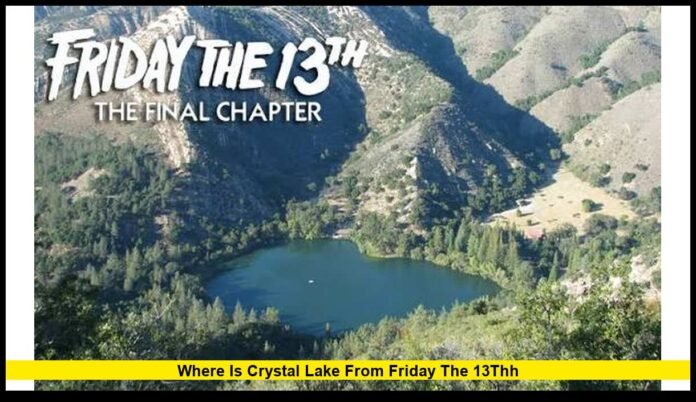

Where is crystal lake from friday the 13th? The answer leads to Camp No-Be-Bo-Sco, a real Scout camp in Hardwick Township, Warren County, New Jersey. The property became famous after serving as the primary camp location for the original 1980 horror film. Its wooded surroundings, lakeside scenery and cabins helped establish the atmosphere that made the movie a landmark in slasher cinema. Although the fictional camp has become a familiar destination in horror culture, the real property continues to operate as a Scout camp with controlled visitor access.
The location has gained fresh attention with the arrival of Crystal Lake, the 2026 prequel series that returns the franchise to New Jersey. However, the new production used a different campsite, making it important for fans to distinguish the original movie location from the setting featured in the television series.
The Real Camp Behind the Fictional Crystal Lake
Camp No-Be-Bo-Sco is located in northwestern New Jersey, close to Blairstown. Its full name differs from the fictional Camp Crystal Lake, but its connection to the original film is unmistakable.
The property opened in 1927 and has a long history of providing outdoor activities for Scouts. Its woodland environment, waterfront areas and camp facilities existed long before the horror movie arrived. The production team used these natural surroundings to create a convincing summer camp for the story.
The camp is part of Hardwick Township in Warren County. Blairstown is often mentioned alongside the property because the town is nearby and also appears in the film. Some location listings use a Blairstown mailing address, which can create confusion about the camp’s precise municipal location.
For geographical accuracy, Hardwick Township is the principal reference for the original camp. Blairstown is a separate but closely connected destination for people exploring the film’s New Jersey filming locations.
The property is not a theme park built around the movie. It is a real outdoor camp that acquired a place in horror history through its role in the production.
That distinction explains why visitors cannot simply arrive and wander around the grounds. The camp has its own operations, facilities and access requirements that remain separate from its popularity among film enthusiasts.
How the Original Movie Made the Camp Famous
The first Friday the 13th reached theaters in 1980 after filming in New Jersey during the fall of 1979. Director Sean S. Cunningham used Camp No-Be-Bo-Sco for many of the scenes involving the fictional summer camp.
The movie centers on counselors preparing a camp for reopening despite a history of tragedy. As the story progresses, the isolated setting becomes increasingly threatening. Familiar outdoor surroundings turn into an essential part of the suspense.
The production benefited from the property’s natural features. Instead of relying entirely on constructed sets, the filmmakers could use existing cabins, wooded paths and waterfront scenery. These elements gave the fictional camp a sense of authenticity.
The New Jersey landscape also helped the movie maintain a consistent atmosphere. Trees and dark outdoor spaces provided visual tension, while the lake offered a setting that could appear peaceful in one moment and ominous in another.
The story’s connection to Jason Voorhees strengthened the association between the lake and the franchise. Jason’s childhood drowning became a crucial part of the series’ mythology, establishing the tragic history behind the fictional camp.
The real Scout camp consequently became more than a background location. For fans, it represents the physical setting where the franchise’s original cinematic world took shape.
Is Crystal Lake a Real Lake?
Crystal Lake is a fictional name used within the horror franchise. The original movie’s camp setting was filmed at Camp No-Be-Bo-Sco, and the lakefront seen in the production is associated with the property’s actual waterfront.
The fictional name does not identify a separate, officially established movie attraction. Searching for a lake named Crystal Lake can produce results for unrelated places throughout the United States.
This difference matters when planning a trip. A map result carrying the name Crystal Lake does not automatically have a connection to Jason Voorhees or the 1980 film.
Fans seeking the original filming location should focus on Camp No-Be-Bo-Sco in Hardwick Township. The camp’s real name offers a more reliable starting point than searching for the fictional location alone.
The movie’s success has made its invented geography feel remarkably real. Viewers often remember Crystal Lake as though it were an established New Jersey destination, even though the name belongs to the film’s fictional world.
The real setting and the fictional name have become closely connected in popular culture, but they serve different purposes. One describes the story, while the other identifies the actual property used to film it.
What the Original Film Shot at Camp No-Be-Bo-Sco
Camp No-Be-Bo-Sco supplied much of the outdoor environment needed for the original movie. The camp’s cabins, lakefront and surrounding woods helped establish the setting where the counselors spend their time.
The property also provided a practical location for scenes requiring a remote summer camp. Its outdoor layout allowed the production to move between different areas while maintaining the impression that the characters remained within one isolated destination.
Several recognizable features contribute to the location’s enduring appeal.
- The lakefront: The water is closely associated with the story’s tragic background and the movie’s final moments.
- The cabins: Camp buildings helped establish the counselors’ living arrangements and served as settings for important scenes.
- The wooded paths: Trees and outdoor trails provided the isolation essential to the film’s atmosphere.
- The boathouse: The waterfront structure is connected to memorable imagery from the original production.
- The wider campgrounds: Open areas and surrounding woodland helped create a believable outdoor camp environment.
Not every scene in the movie was filmed on the Scout camp’s property. The production also used locations in Blairstown, Hope and other New Jersey communities.
This wider filming footprint explains why the region contains several places associated with the film. A visit to the camp offers the strongest connection to its central setting, while nearby communities provide additional context for the production.
The camp’s original buildings and landscape have also changed over time through normal use and maintenance. Visitors should not expect every structure to look exactly as it did on screen. The historical connection remains significant even where buildings have been updated.
Why Blairstown Is Important to Friday the 13th Fans
Blairstown is one of the most recognizable communities associated with the original film. Located in Warren County, the town supplied streets and local settings that helped establish the fictional world surrounding the camp.
The town is especially useful for visitors who want to explore publicly accessible locations connected to the production.
The Blairstown Diner is among the best-known stops. Located at 53 New Jersey Route 94, it appeared in the original movie and remains associated with the film’s history.
Downtown Blairstown also contains recognizable streets, a bridge and architectural features linked to scenes involving characters traveling toward the camp. These locations help viewers connect the fictional story with a real New Jersey community.
The town’s appearance in the movie provides a different experience from visiting the camp itself. Visitors can explore public streets and patronize local businesses without needing access to private Scout property.
However, people should remember that Blairstown is a functioning community rather than a movie set. Residents and businesses continue their ordinary activities, and film tourism should not interfere with daily life.
The diner and downtown area can be useful additions to a trip, but visitors should confirm current business hours before making specific plans.
Can You Visit the Original Camp Today?
Camp No-Be-Bo-Sco is private property, and public access is restricted. It remains an active Scout camp rather than an unrestricted tourist attraction.
The camp has offered officially organized experiences for horror fans, including guided tours of selected filming locations. These events provide opportunities to see portions of the grounds while respecting the needs of the organization that operates the property.
Access depends on the event schedule, availability and applicable admission requirements. Visitors should consult the camp’s current official information before traveling.
A few important points deserve attention before planning a visit:
- Check official access arrangements: Do not assume that the grounds are open to walk-in visitors.
- Confirm event availability: Tour dates and ticket availability may change.
- Review the itinerary: Different experiences may include different areas or activities.
- Consider outdoor conditions: Trails, uneven ground and walking distances can affect accessibility.
- Respect restricted areas: Do not enter cabins, buildings or other parts of the property without authorization.
These rules protect both the camp’s operations and the visitors who attend authorized events. They also help preserve the location for future generations.
Travelers who cannot secure a tour can still explore publicly accessible places in Blairstown and nearby communities. These locations provide an alternative way to experience the area’s connection to the original production.
It is also important to distinguish between seeing a location from a public road and entering the property. A recognizable building or stretch of woodland does not grant permission to cross private land.
The Address and Location of the Original Camp
Camp No-Be-Bo-Sco is associated with the following address:
Camp No-Be-Bo-Sco
11 Sand Pond Road
Hardwick, New Jersey 07825
The property lies in Warren County in the northwestern part of the state. Blairstown serves as a useful nearby reference point for travelers exploring the region.
Because address listings may vary between mailing information and municipal boundaries, visitors should rely on official camp details when arranging a visit. The property is generally identified with Hardwick Township, even though some film-location listings use Blairstown.
The address should not be interpreted as an invitation to enter the camp. People planning to visit should first establish whether a tour or other authorized activity is available.
It is also wise to plan the journey around the wider region rather than assuming that access to the camp will be possible on any given day.
Blairstown’s public filming locations can provide alternatives if a camp visit is unavailable. A carefully planned trip can therefore include the movie’s local history without relying on unauthorized access to the Scout property.
How the 2026 Crystal Lake Series Uses a Different Camp
The Crystal Lake prequel series premiered on Peacock on October 15, 2026. The eight-episode production revisits the franchise’s fictional New Jersey community and explores the story surrounding Pamela Voorhees and her son, Jason.
The series returns the franchise to the region where the original movie was filmed. However, the production team did not use Camp No-Be-Bo-Sco as the main campsite.
Instead, Camp Ocawasin in West Milford, New Jersey, served as the principal stand-in for the fictional camp in the 2026 series. The production also filmed in Blairstown and other communities across New Jersey.
The original Scout camp was considered during location scouting, but the production ultimately used another property. The decision means the two productions have different principal camp locations, despite sharing the same fictional setting.
The new series also recreated the original film’s boathouse, maintaining a visual connection to the 1980 movie. This recreation helped preserve a recognizable element of the franchise while allowing the production to work at a different site.
Camp Ocawasin is therefore relevant to people researching the newer series, while Camp No-Be-Bo-Sco remains the central real-world location associated with the original movie.
These differences are particularly important for visitors. Someone hoping to see the original filming grounds should not assume that a location used in the prequel will offer the same experience.
New Jersey remains a common thread linking both productions, but the specific camps should not be treated as interchangeable.
Why the Original Location Still Matters
Camp No-Be-Bo-Sco has a unique place in horror history because it became famous without abandoning its original purpose. Its association with the movie developed alongside its continued use as an outdoor Scout facility.
The location demonstrates how an ordinary real-world environment can become an enduring part of popular culture. The cabins, trees and lakefront did not need to be built as a permanent attraction to leave a lasting impression on viewers.
For longtime fans, seeing the actual setting offers a connection that a replica cannot fully reproduce. The landscape provides a physical link to the production, even when individual buildings have changed through maintenance or renovation.
The camp’s restricted access also highlights the difference between film history and public entertainment. A famous location can attract considerable interest while remaining private property with legitimate operational needs.
Official tours offer a way to balance those interests. They allow fans to explore designated areas while helping protect the camp’s regular activities.
The surrounding towns add another dimension to the experience. Blairstown and nearby communities preserve the regional context of the original production, showing that the film’s world extended beyond a single lakeside property.
Planning a Responsible Visit to the Filming Region
Anyone interested in visiting the original filming area should begin by deciding which part of the movie’s history matters most.
Camp No-Be-Bo-Sco is the priority for those who want to see the location associated with the central summer camp. Blairstown is a useful alternative for exploring publicly accessible streets and the diner featured in the film.
Before setting out, verify access arrangements and avoid relying on outdated tour announcements. Special events may sell out, change dates or operate under restrictions that do not apply to ordinary visitors.
Travelers should also remember that the original filming locations are spread across more than one community. A realistic itinerary accounts for driving distances, parking and the time needed to explore each stop.
Respecting local residents and property owners is just as important as identifying the correct address. Visitors should use public access points, follow posted rules and avoid entering restricted areas for photographs.
These simple steps help preserve the region’s connection to the film without disrupting the people who live and work there.
The most important fact remains straightforward: the original movie’s famous camp setting belongs to Camp No-Be-Bo-Sco in Hardwick Township, New Jersey. The fictional name, the real Scout camp and the newer series’ filming locations represent related but distinct parts of the franchise’s history.
Have you explored the New Jersey locations connected to Friday the 13th, or is the original camp on your horror travel wish list? Share your thoughts in the comments and follow confirmed updates about the franchise’s filming locations.