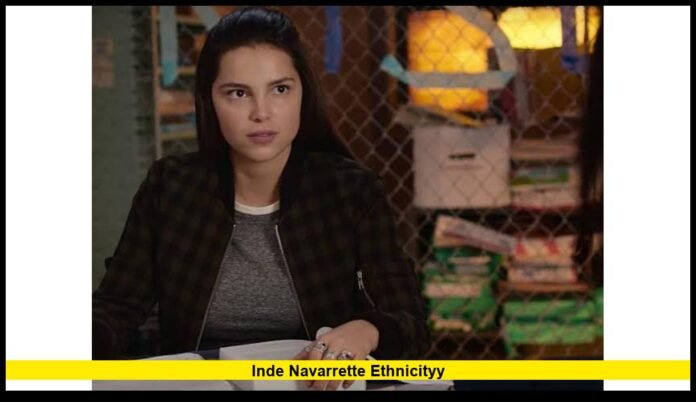

Inde Navarrette ethnicity is a topic of growing interest among fans who want to learn more about the actress’s family history and cultural roots. She has a Mexican American father and an Australian mother, and she has also spoken about Indigenous ancestry on her grandfather’s side. Her multicultural background has shaped her personal experiences and contributed to conversations about Latina identity and representation in Hollywood.
Born and raised in the United States, Navarrette has discussed what it means to embrace her heritage while navigating other people’s expectations. Her experiences highlight how ethnicity involves family history and personal identity rather than appearance or language alone.
What Is Inde Navarrette’s Ethnicity?
Navarrette has Mexican American roots through her father and Australian roots through her mother. She identifies as Latina and has expressed pride in her connection to Mexican American culture.
Her family background includes several cultural influences. Her father’s heritage connects her to the Mexican American community, while her mother’s Australian background adds another dimension to her family history. She has also mentioned Indigenous ancestry associated with her grandfather.
Although these connections provide insight into her background, they should not be used to assume a specific Indigenous tribal affiliation. Publicly available information does not establish such an affiliation.
Navarrette’s story demonstrates the diversity found within multicultural American families. People can maintain meaningful connections to their heritage even when they grow up speaking a different language or do not fit common expectations about how members of a particular ethnic group should look.
Meet Inde Navarrette’s Parents
Navarrette’s parents come from different cultural backgrounds, giving her a family history that spans the United States, Mexico-related heritage, and Australia.
Her father and Mexican American roots
Her father is Mexican American and served in the United States Marine Corps. His background is an important part of Navarrette’s connection to her Latina identity.
She has discussed how her father and grandfather did not speak Spanish, despite their Mexican American heritage. This detail has become relevant to conversations about her identity because some people assume that every Latina must speak Spanish fluently.
Her family’s experience illustrates why language should not serve as the sole measure of cultural belonging. Many Mexican American families primarily speak English, particularly when language transmission changes between generations.
Her mother and Australian background
Navarrette’s mother is Australian and works as a hairstylist. She also played an important role in supporting her daughter’s early interest in acting.
After her parents separated, Navarrette spent much of her childhood with her mother. Their relationship influenced her upbringing and helped shape the path that eventually led her toward a professional acting career.
Having parents with different backgrounds gave Navarrette a personal connection to multiple cultural traditions. Her identity reflects those family relationships rather than a single cultural experience.
Inde Navarrette’s Childhood and American Upbringing
Navarrette was born in Tucson, Arizona, on March 3, 2001. She spent her childhood in different communities, including parts of California and Texas.
Her father’s military service contributed to changes in the family’s living arrangements. Later, she moved to Southern California, where pursuing acting became a more practical goal.
These experiences exposed her to different communities and perspectives. They also influenced how she understood her cultural identity as she grew older.
Navarrette has explained that she felt comfortable identifying as Latina when she was younger. However, after moving to a different community, she began encountering people who questioned her heritage because of her lighter skin and limited Spanish proficiency.
Those reactions affected how she viewed other people’s perceptions of her identity. They also encouraged her to reflect on the difference between personal heritage and the assumptions people make about ethnicity.
Her American upbringing and multicultural family background are both important to understanding her story. Being born in the United States does not diminish her Mexican American heritage, just as her mother’s Australian background remains part of her family history.
Why Her Latina Identity Has Become a Topic of Discussion
Navarrette’s experiences reflect a broader issue affecting people with diverse Latino backgrounds. Some individuals face questions about their identity because they do not match familiar stereotypes.
In her case, people have questioned whether she is Latina because she has lighter skin and does not speak Spanish fluently. She has discussed these experiences publicly and explained that her family history remains an important part of who she is.
Her comments also touch on colorism, which involves unequal treatment or assumptions based on skin tone. Within discussions about Latino representation, colorism can influence who audiences perceive as belonging to a community.
Navarrette has acknowledged that lighter skin can come with certain advantages. At the same time, she has described the frustration of having others question an identity she has long recognized as part of her life.
Her experiences demonstrate that Latino communities include people with a wide range of physical features, family histories, and cultural practices. No single appearance represents everyone.
Does Inde Navarrette Speak Spanish?
Navarrette has discussed her family’s limited connection to spoken Spanish. She has said that her father and grandfather did not speak the language, which helps explain why she did not grow up with the same level of Spanish fluency expected by some people.
Spanish is widely used throughout Mexican American communities, but language practices differ significantly between families.
Some households pass Spanish down through multiple generations. Others shift toward English because of education, migration, work, or changes in family circumstances.
Navarrette’s experience illustrates how those changes can influence the way younger generations connect with their ancestry. A person can have Mexican American relatives and identify as Latina without speaking Spanish fluently.
Her background also challenges the idea that cultural authenticity can be measured through language alone. Family relationships, ancestry, personal experiences, and self-identification all contribute to a person’s understanding of heritage.
Her Indigenous Ancestry and Family History
Navarrette has mentioned Indigenous ancestry on her grandfather’s side of the family. This information adds another element to her multicultural background.
However, ancestry and tribal affiliation are not interchangeable. Without reliable public confirmation of a specific Indigenous nation or community, it would be inaccurate to assign one to her.
Indigenous family histories can involve complicated questions of genealogy, community connections, and cultural continuity. A general statement about ancestry does not automatically establish formal membership in a particular tribe.
For readers interested in her background, the most accurate approach is to recognize what Navarrette has shared while avoiding unsupported details.
Her Mexican American and Australian family connections remain the clearest publicly described elements of her heritage.
How Her Acting Career Has Increased Public Interest
Navarrette gained recognition through television roles, including her appearance in 13 Reasons Why. She later became familiar to viewers as Sarah Cushing in Superman & Lois.
Her work in the horror film Obsession brought additional attention to her acting and helped introduce her to a wider audience.
As her public profile has grown, fans have shown interest in both her professional achievements and her personal background. Questions about her ethnicity also connect to wider discussions about how Hollywood portrays Latina characters.
Navarrette has expressed concerns about stereotypes that reduce Latina women to predictable personalities or behaviors. Her perspective emphasizes the importance of portraying characters as individuals rather than relying on assumptions about ethnicity.
Her career provides an example of how actors can contribute to conversations about representation while building their own professional identities.
Frequently Asked Questions About Inde Navarrette
1. What is Inde Navarrette’s ethnicity?
She has Mexican American heritage through her father and Australian heritage through her mother. She has also discussed Indigenous ancestry on her grandfather’s side.
2. Is Inde Navarrette Mexican American?
Yes. Her father is Mexican American, and she identifies proudly as Latina.
3. Where was Inde Navarrette born?
She was born in Tucson, Arizona, on March 3, 2001.
4. Who is Inde Navarrette’s mother?
Her mother is Australian and works as a hairstylist.
5. Does Inde Navarrette speak Spanish?
She has described limited Spanish use within her immediate family and has discussed the expectations people sometimes place on Latina individuals to speak the language.
6. Does she have Indigenous ancestry?
Yes. She has mentioned Indigenous roots on her grandfather’s side, although a specific tribal affiliation has not been publicly established.
Understanding Inde Navarrette’s Cultural Background
Navarrette’s story illustrates the complexity of identity in a multicultural society. Her Mexican American heritage, Australian family background, and acknowledged Indigenous ancestry form different parts of her personal history.
Her experiences also challenge assumptions about who qualifies as Latina based on appearance or language. By discussing these issues, she has helped bring attention to the diversity of Latino identities and the importance of authentic representation.
What do you think about the way Hollywood represents multicultural identities? Share your thoughts in the comments.