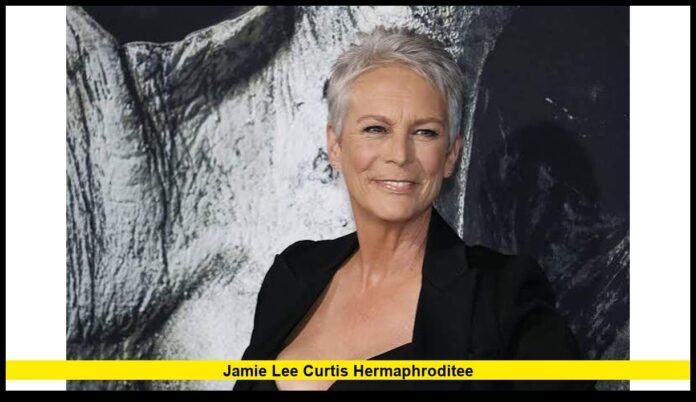

The jamie lee curtis hermaphrodite rumor remains a subject of online curiosity, but credible public evidence has not established that actress Jamie Lee Curtis was born with the sex characteristics described in the allegation. The story has circulated for decades, drawing attention through entertainment discussions, online speculation, and repeated references to a controversial newspaper article from the 1990s. However, the existence of a rumor does not establish the truth of its central claim.
As of November 1, 2026, no verified public disclosure establishes that Curtis has the alleged intersex variation or underwent the surgery described in some versions of the story. Her personal medical history remains private, and speculation cannot substitute for reliable evidence.
The continued interest in the allegation raises broader questions about celebrity misinformation, medical privacy, and the way unsupported stories become familiar through repetition. Examining the history of the claim helps clarify what is documented, what remains unverified, and why careful reporting matters.
What Is the Allegation About Jamie Lee Curtis?
The rumor claims that Curtis was born with atypical sex characteristics. Some versions allege that she had both male and female reproductive anatomy, while others suggest that she underwent surgery during infancy.
Additional accounts connect the allegation to androgen insensitivity syndrome, a genetic condition that affects the body’s response to androgens, including testosterone. These stories sometimes describe supposed details about Curtis’s birth, childhood, or medical treatment as if those details had been confirmed.
However, the versions of the rumor do not provide reliable evidence establishing the underlying allegation. No authenticated medical records or verified public disclosure confirm that Curtis has the condition described in these accounts.
The distinction between an online claim and a documented fact is particularly important when a story concerns someone’s anatomy. An allegation can spread across websites and social platforms without gaining any additional credibility.
Readers should therefore approach the story as an unverified celebrity rumor rather than a confirmed account of Curtis’s health.
How a Newspaper Controversy Brought the Story Attention
The history of the rumor includes a significant episode from 1996. That year, anthropologist William O. Beeman published an opinion article in The Baltimore Sun discussing variations in human sex characteristics. The article included a claim about Curtis that subsequently became a widely repeated element of the story.
The assertion attracted attention partly because it appeared in a newspaper and was associated with an academic author. For readers unfamiliar with the subject, that setting could make the statement appear more authoritative than an anonymous internet post.
Yet the claim lacked adequate verification. Accounts of the controversy report that Curtis’s name was removed after Beeman could not authenticate the information to his satisfaction. Attempts to trace the alleged medical details to the supposed professionals involved were unsuccessful.
This development is essential to understanding the rumor’s history. The newspaper episode does not provide confirmation of the allegation. Instead, it illustrates the risks of publishing personal claims without sufficient evidence.
Over time, many online discussions repeated the original assertion while giving less attention to the questions surrounding its reliability. That pattern helped the rumor remain visible long after its evidentiary weaknesses became apparent.
Why Repetition Does Not Make a Celebrity Rumor True
Online information often moves through a chain of repetition. One publication makes a claim, another site summarizes it, and later articles cite those summaries as evidence that the story has been widely reported.
This process can create an illusion of independent confirmation. In reality, multiple websites may all depend on the same original allegation.
Search engines can also make older material easy to find years after its publication. A result appearing prominently in a search does not necessarily mean that its claims have been independently verified or recently confirmed.
Social media adds another layer. Short posts and provocative headlines can strip away important qualifications, leaving readers with a simplified version that sounds definitive.
The result is a familiar problem in celebrity journalism: a story becomes recognizable because people keep encountering it, not because new evidence supports it.
A responsible assessment asks whether a report introduces authenticated information, identifies credible evidence, or merely repeats an existing claim. In this case, the longevity of the rumor does not establish the alleged medical history.
Understanding Intersex Variations
The term used in the search keyword has historically appeared in discussions of human sex characteristics. In contemporary medical and educational contexts, intersex is generally the preferred umbrella term for people born with variations in sex characteristics, although individual terminology preferences differ.
Intersex variations can involve several aspects of biology, including chromosomes, hormones, reproductive anatomy, and genital development. They do not all produce the same physical characteristics or medical needs.
Some variations become apparent at birth. Others may be identified during puberty or later in life. Certain variations have implications for medical care, while others may require little or no treatment.
It is inaccurate to assume that every intersex person has both complete male and female reproductive systems. Human sex development is complex, and different variations have different biological features.
Intersex status also does not determine a person’s gender identity. Sex characteristics and gender identity are distinct concepts, and one cannot reliably establish a person’s identity or medical history by examining appearance.
These distinctions matter when evaluating rumors about public figures. General medical knowledge can explain what an intersex variation means, but it cannot establish that a specific individual has one.
What Is Androgen Insensitivity Syndrome?
Androgen insensitivity syndrome, commonly called AIS, is a genetic condition involving reduced or absent cellular response to androgens. These hormones play important roles in sexual development.
AIS exists in different forms, including complete and partial androgen insensitivity. The effects depend on the individual’s biology and the degree to which the body responds to these hormones.
People with complete androgen insensitivity syndrome may develop certain external physical characteristics typically associated with female development despite having XY chromosomes. Other aspects of reproductive anatomy differ from those found in people without the condition.
Partial androgen insensitivity can produce a different range of characteristics. Diagnosis may involve clinical assessment, hormone testing, and genetic testing when medically appropriate.
AIS appears in online discussions about Curtis because some versions of the rumor associate her with the condition. However, the existence of AIS does not provide evidence that Curtis has it.
A diagnosis cannot responsibly be assigned to a celebrity through speculation about appearance, family decisions, or a name. Without credible confirmation, claims that Curtis has AIS remain unsupported.
Why Her Name Became Part of the Speculation
Some versions of the rumor focus on Curtis’s first and middle names. Jamie and Lee can both be used in different naming traditions, and online accounts have attempted to connect that fact to the allegation.
Curtis was born on November 22, 1958, in California. She is the daughter of actors Tony Curtis and Janet Leigh, and her name has been part of her public biography throughout her career.
The claim that her parents selected her name because of knowledge about her sex characteristics has not been established by credible evidence.
Parents choose names for many reasons. They may like a particular sound, honor a relative, or prefer a name that feels appropriate for their child. A name alone cannot establish someone’s chromosomes, reproductive anatomy, or medical diagnosis.
The same reasoning applies to childhood anecdotes about how a name was received by classmates or acquaintances. Such recollections may explain someone’s experiences with a name, but they do not establish a medical condition.
Using an ordinary biographical detail to support a sensational allegation turns an unrelated fact into supposed proof. That is not a reliable way to assess a person’s history.
Why Appearance Cannot Establish a Medical Diagnosis
The rumor has also been discussed alongside observations about Curtis’s appearance and physical fitness. These observations do not provide reliable evidence about her anatomy or chromosomes.
People naturally vary in height, body shape, muscle development, facial structure, and voice. Those differences occur across the population and cannot establish a particular sex characteristic or genetic condition.
Curtis’s work in physically demanding roles has sometimes attracted attention to her fitness. However, athletic ability and muscular development are not evidence of an intersex variation.
Clothing, hairstyles, facial features, and mannerisms are equally unreliable indicators. None can replace medical evaluation or an authenticated statement from the person concerned.
The same standard should apply to all public figures, regardless of gender or profession. Speculation based on appearance can reinforce stereotypes and turn normal human variation into a source of suspicion.
A responsible article should not use photographs or public appearances to imply that an individual has a condition that has not been verified.
Do Her Family Choices Provide Any Evidence?
Curtis and her husband, filmmaker Christopher Guest, have two adopted daughters, Annie and Ruby. Some versions of the rumor attempt to connect their family history to assumptions about Curtis’s reproductive health.
Those conclusions are unsupported. Adoption does not establish infertility, a particular reproductive anatomy, or an intersex variation.
Families adopt children for many personal reasons. The decision may reflect individual preferences, circumstances, or family plans. It cannot independently reveal the private medical histories of the parents.
Likewise, the absence of publicly discussed pregnancies does not establish a diagnosis. People may choose not to disclose intimate details of their lives, and outsiders cannot reliably infer medical facts from that silence.
Curtis’s family history is separate from the allegation about her birth. Connecting the two without evidence creates speculation rather than factual reporting.
The broader lesson is straightforward: family arrangements should not be treated as diagnostic clues.
Has Jamie Lee Curtis Confirmed or Denied the Claim?
No verified public disclosure establishes that Curtis confirmed the allegation. Claims that she supposedly acknowledged the condition in an interview should be supported by an authenticated recording, transcript, or reliable account before they are repeated as fact.
It is equally important not to invent a denial. If a verified statement is unavailable, reporting should not attribute words to Curtis that cannot be authenticated.
A person’s decision not to address a rumor does not make it true. Public figures are not required to answer every online allegation about their bodies or health.
Medical privacy also deserves consideration. Even when an individual is famous, their personal health information does not automatically become public information.
For that reason, the strongest evidence-based conclusion is limited but clear: the allegation has not been substantiated by credible public evidence. There is no responsible basis for presenting it as a confirmed diagnosis or medical history.
What Recent Public Coverage Tells Us
Recent public coverage of Curtis has focused on her acting career, producing work, views on aging, and continuing presence in entertainment. In 2025, she returned to the role of Tess Coleman in Freakier Friday. In 2026, she appeared in coverage surrounding the television adaptation of Scarpetta, in which she stars alongside Nicole Kidman.
Her professional accomplishments include an Academy Award for Best Supporting Actress for Everything Everywhere All at Once and an Emmy Award for her guest performance in The Bear.
These public milestones help establish the context of current reporting about Curtis. They do not confirm or disprove private medical allegations.
It is important not to mistake an increase in general media attention for a new development concerning the rumor. A celebrity may be in the news for a film, interview, or award without having made any disclosure related to an old personal allegation.
As of November 1, 2026, no credible, verified public information establishes the central claim discussed here. Any assertion that new evidence has confirmed it would require reliable substantiation.
How Readers Can Check Claims About Celebrities
Readers can use a few practical checks when they encounter sensational stories about a public figure’s health.
- Look for direct evidence. An authenticated public statement is more informative than a headline that merely attributes a claim to a celebrity.
- Check the original context. A quotation may be incomplete, misrepresented, or detached from the circumstances in which it appeared.
- Distinguish independent reporting from repetition. Multiple sites repeating the same allegation do not necessarily provide independent confirmation.
- Notice corrections. If an original claim was withdrawn or could not be verified, that history should not be ignored.
- Avoid assumptions based on appearance. Photographs and physical characteristics cannot establish a private medical diagnosis.
- Separate medical education from individual claims. Information about a real condition does not demonstrate that a named person has it.
These checks help readers make informed decisions about what to trust. They also encourage a healthier approach to entertainment coverage, where curiosity can otherwise overshadow evidence.
Why Accurate Language Matters in Celebrity Reporting
Words influence how readers understand both medical conditions and the people associated with them. Outdated terminology can sometimes create inaccurate impressions of human biology, particularly when used in sensational headlines.
The word intersex provides a more appropriate general term for discussing variations in sex characteristics. Even so, it should not be used to label someone whose status has not been confirmed.
Accurate language requires more than substituting one term for another. Writers must also distinguish between established medical information and an unverified claim about an individual.
This responsibility is particularly important when the subject has not publicly shared the information being discussed. An article can explain a medical concept without suggesting that a celebrity has the condition.
The goal should be to inform readers rather than exploit uncertainty. Clear wording, careful qualification, and respect for privacy all contribute to more trustworthy reporting.
The Final Assessment of the Longstanding Rumor
The story surrounding Jamie Lee Curtis demonstrates how a claim can survive through decades of public discussion without becoming an established fact. Its history includes a controversial newspaper article, repeated online references, and speculation about personal details that do not verify the central allegation.
The available public evidence does not establish that Curtis was born with the characteristics described in the rumor, has androgen insensitivity syndrome, or underwent the alleged surgery. Those claims should not be presented as confirmed medical information.
At the same time, responsible reporting should avoid pretending to know private facts that have not been publicly established. The appropriate conclusion is not to invent certainty in either direction, but to describe accurately what the evidence does and does not show.
Celebrity interest will continue to produce questions about public figures. Yet the quality of an answer depends on evidence, not the popularity of a search term or the number of times a story has been repeated.
Have you encountered this long-running Hollywood rumor online? Share your thoughts in the comments, and stay informed by looking for verified facts rather than speculation.