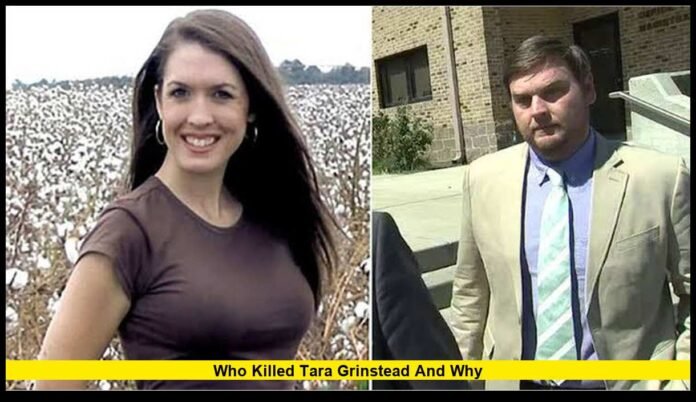

The question of who killed Tara Grinstead and why continues to draw attention to one of Georgia’s most closely followed cold cases. The 30-year-old high school teacher disappeared from Ocilla in October 2005, and investigators did not make major arrests until 2017. Ryan Alexander Duke was charged with her murder but acquitted by a jury in 2022. He was convicted of concealing her death, while Bo Dukes received a separate conviction for crimes connected to the cover-up. Despite those outcomes and years of investigation, no one has been convicted of killing Grinstead, leaving a crucial part of the case unresolved.
Who Was Tara Grinstead?
Tara Faye Grinstead was a high school history teacher in Ocilla, Georgia. At 30, she had established a career in education and remained connected to her community through her work and participation in beauty pageants.
Grinstead taught at Irwin County High School. Friends and acquaintances knew her as an active member of the local community, and her disappearance quickly alarmed people who expected to see her at school.
Her case became particularly troubling because she appeared to vanish without an obvious explanation. Investigators found no immediate answer that explained where she had gone or what had happened inside her home.
Grinstead was last known to have been at home during the weekend of October 22, 2005. When she failed to appear for her teaching responsibilities, concerns about her absence grew.
Authorities began investigating, but the case remained unsolved for more than a decade. The lack of a recovered body and the absence of a clear suspect made it difficult to establish the circumstances surrounding her disappearance.
The investigation eventually became a nationally discussed cold case, attracting renewed attention through media coverage and a popular true-crime podcast.
How Did Tara Grinstead Disappear?
Grinstead disappeared from Ocilla during the night of October 22, 2005. Investigators examined her home, interviewed people who knew her, and pursued information that might explain her sudden absence.
The circumstances raised serious questions. Grinstead had not made a known plan to disappear, and her failure to report to work increased concerns that something had happened to her.
Despite investigative efforts, authorities did not immediately identify a person responsible. The case remained open as investigators worked through leads and considered possible explanations.
For years, her family and community waited for a breakthrough. The absence of identifiable remains also complicated efforts to determine precisely what had occurred.
The investigation received renewed public attention through Up and Vanished, a podcast hosted by Payne Lindsey. Its examination of the disappearance helped bring the case to a wider audience and encouraged renewed interest in information that might assist investigators.
However, public attention alone could not establish what happened. Investigators still needed evidence that could support criminal charges and withstand scrutiny in court.
The major breakthrough arrived in February 2017, when authorities arrested Ryan Duke and charged him with murder.
Ryan Duke’s Initial Confession and the Alleged Motive
Ryan Alexander Duke initially told investigators that he entered Grinstead’s home intending to steal money. He described a burglary connected to his drug use and said the encounter turned violent when Grinstead appeared.
According to his original account, he struck Grinstead and killed her. He also described moving her body and involving Bo Dukes in its disposal.
The alleged motive was financial: Duke claimed he wanted money to support his drug habit. His account portrayed the death as the result of a burglary that escalated rather than a killing planned in advance.
This explanation gave investigators a potential sequence of events to examine. It also led them toward a pecan orchard in Ben Hill County, where they searched for evidence relating to the alleged disposal of Grinstead’s remains.
But the confession did not settle the case.
Duke later disputed his original account and presented a different version during his murder trial. Because a jury ultimately acquitted him of murder, the initial confession must be distinguished from a proven finding that he committed the killing.
The alleged financial motive remains an important part of the investigation’s history, but the precise reason Grinstead died has never been conclusively established through a murder conviction.
Why Did Ryan Duke Later Accuse Bo Dukes?
At his 2022 trial, Ryan Duke testified that he had not killed Grinstead. Instead, he claimed that Bo Dukes told him he had committed the killing.
Ryan Duke said Bo showed him Grinstead’s purse and wallet and that he became frightened. He described his involvement as helping conceal what had happened rather than committing the murder himself.
That testimony sharply contradicted his original confession. Investigators had initially received an account in which Ryan Duke accepted responsibility for the fatal attack. His later testimony shifted the blame to his former friend.
The conflicting statements became central to the trial. Jurors had to assess the credibility of Duke’s original confession, his later explanation, and the other evidence presented by prosecutors and defense attorneys.
The defense maintained that Bo Dukes was the killer. Prosecutors sought to establish Ryan Duke’s responsibility for Grinstead’s death.
Ultimately, the jury acquitted Ryan Duke of murder but found him guilty of concealing Grinstead’s death.
The verdict did not establish that Bo Dukes killed her. It showed that jurors did not find the prosecution’s murder case against Ryan Duke sufficient to support a conviction beyond a reasonable doubt.
What Was Bo Dukes’ Involvement?
Bo Dukes became a central figure after investigators connected him to the alleged concealment of Grinstead’s death.
Authorities alleged that he helped dispose of Grinstead’s body by burning it at a pecan orchard. His connection to Ryan Duke and the information provided during the investigation helped direct attention toward the orchard and the events following the disappearance.
Investigators searched the area and recovered bone fragments. The findings provided physical evidence for examination, although DNA testing did not conclusively identify the fragments as Grinstead’s remains.
Bo Dukes faced charges involving the concealment of the death and conduct intended to obstruct the investigation. His criminal proceedings focused on his role in those events, rather than establishing that he had committed murder.
In 2019, a jury convicted Bo Dukes of offenses that included making false statements, hindering the apprehension of a criminal, and concealing the death of another person. He received a 25-year prison sentence.
Those convictions established his responsibility for crimes related to the cover-up. They did not amount to a murder conviction.
The distinction is essential when describing the case. Ryan Duke accused Bo Dukes of killing Grinstead, but that accusation did not result in a court finding that Bo committed the murder.
What Evidence Did Investigators Find?
The investigation relied on statements, witness information, searches, and physical evidence to reconstruct the events surrounding Grinstead’s disappearance.
One of the most significant developments came after authorities received information directing them to a pecan orchard in Ben Hill County. Investigators searched the area and recovered bone fragments consistent with human remains.
The fragments offered a potential link to the alleged disposal site, but DNA testing was inconclusive. Investigators therefore could not use the results to conclusively identify the fragments as Grinstead’s remains.
The prosecution also relied on Ryan Duke’s original confession and evidence concerning the alleged concealment of the body. The defense challenged the confession and disputed the interpretation of the evidence.
The competing accounts created substantial difficulties for prosecutors. They had to prove that Ryan Duke committed murder, not simply that he had participated in concealing information about Grinstead’s death.
The jury’s verdict reflected that difference. It found Duke guilty of concealment but did not find him guilty of murder.
The evidence established important details about the investigation and the cover-up, yet it did not produce a murder conviction or resolve every question about the fatal encounter.
Why Did the Case Remain Unsolved for So Long?
Grinstead disappeared in 2005, but the arrests that transformed the investigation did not occur until February 2017.
The lack of a recovered body and the limited physical evidence made it difficult for investigators to reconstruct the events. Authorities pursued leads over the years, but they did not initially have enough evidence to identify a person who could be charged with the killing.
The case gained renewed attention as journalists, independent investigators, and podcast audiences revisited the disappearance. That attention helped bring the investigation back into public discussion.
Still, solving a disappearance and proving a murder charge are different tasks. Investigators can develop leads and identify possible participants, but prosecutors must establish criminal responsibility through admissible evidence.
When arrests finally occurred, authorities had to examine conflicting statements and determine which claims could be supported. The eventual trials demonstrated that evidence of concealment does not automatically prove murder.
The long delay also became relevant to later legal proceedings over the time limits for filing certain additional charges.
Ryan Duke’s 2022 Trial: Why the Jury Acquitted Him of Murder
Ryan Duke’s trial in 2022 focused on whether prosecutors had proved that he killed Grinstead.
The state presented his original confession and evidence linking him to the alleged disposal of her body. The defense challenged that account and emphasized his later testimony blaming Bo Dukes.
Jurors had to consider the inconsistencies between the two versions and determine whether the evidence met the legal standard required for a murder conviction.
On May 20, 2022, the jury found Ryan Duke not guilty of murder but guilty of concealing Grinstead’s death. He received a 10-year sentence for the concealment conviction.
The verdict was not a finding that Grinstead had not been murdered. Nor did it establish that Bo Dukes was responsible. It meant the prosecution had not proved Ryan Duke’s guilt on the murder charge beyond a reasonable doubt.
His conviction for concealment remained legally significant. It established criminal responsibility for concealing her death, even though the jury did not convict him of causing it.
The result left the case with convictions connected to the aftermath of Grinstead’s disappearance but no conviction for the murder itself.
What Did the 2025 and 2026 Court Rulings Change?
The case continued through the appellate courts after the trials.
On February 27, 2025, the Georgia Court of Appeals dismissed additional charges against Ryan Duke and Bo Dukes because the applicable statute of limitations had expired. The ruling concerned later charges connected to the alleged concealment and disposal of Grinstead’s body.
The court concluded that authorities had probable cause to arrest the men by late November 2005, making the filing of the additional charges outside the applicable four-year period.
That decision did not erase Ryan Duke’s 2022 concealment conviction or Bo Dukes’ 2019 convictions. It also did not decide who killed Grinstead.
A separate appellate development followed on March 12, 2026, when the Georgia Court of Appeals upheld Ryan Duke’s conviction for concealing her death.
The appeals court rejected challenges involving the sufficiency of the evidence, the statute of limitations, the replacement of a sleeping juror with an alternate, and the handling of evidence relating to Bo Dukes’ prior convictions.
The ruling preserved Duke’s concealment conviction and 10-year sentence. It did not overturn his murder acquittal or establish a different killer.
These legal outcomes define the current position of the case: convictions for concealment-related crimes remain in place, but the murder itself has not resulted in a conviction.
Was Tara Grinstead’s Body Ever Found?
Investigators never recovered Grinstead’s body intact.
The 2017 search of a pecan orchard produced bone fragments, but DNA testing did not conclusively establish that they belonged to her.
The discovery was an important investigative development because it gave authorities physical material to examine in connection with the alleged disposal of her remains.
However, the findings did not provide a complete identification or resolve the conflicting accounts about who killed her.
The absence of a confirmed recovery of her body remains one of the most significant limitations of the investigation. It also helps explain why some questions surrounding the circumstances of her death remain unanswered.
Who Killed Tara Grinstead and Why? The Unresolved Answer
The central question remains difficult because the investigation produced conflicting accounts and different legal outcomes. Ryan Duke initially described killing Grinstead during a burglary, then later testified that Bo Dukes was responsible. The jury acquitted Ryan Duke of murder while convicting him of concealing her death.
Bo Dukes was convicted of crimes related to the cover-up, but he was not convicted of murder. The appellate decisions in 2025 and 2026 addressed additional charges and Duke’s concealment conviction without determining who caused Grinstead’s death.
The alleged motive in Ryan Duke’s original confession was theft to support drug use. Because that account was later disputed and did not result in a murder conviction, it cannot be treated as a conclusively proven explanation.
The case illustrates the difference between evidence that someone helped conceal a crime and evidence sufficient to prove who committed the killing. Grinstead’s disappearance led to arrests, trials, and lasting convictions, but the central question about her killer remains unanswered in the criminal courts.
Frequently Asked Questions
Who was charged with killing Tara Grinstead?
Ryan Alexander Duke was charged with Grinstead’s murder in 2017. A jury acquitted him of murder in 2022 but convicted him of concealing her death.
Why did Ryan Duke initially say he killed her?
He initially described entering her home to steal money and killing her after she appeared. He later recanted that account and accused Bo Dukes.
Was Bo Dukes convicted of murder?
No. Bo Dukes was convicted of crimes connected to concealing Grinstead’s death and obstructing the investigation, not murder.
What was the motive for the killing?
The precise motive remains unproven. Ryan Duke’s original confession described a burglary motivated by a desire to obtain money to support drug use, but he later disputed that account.
What is the latest confirmed court update?
The Georgia Court of Appeals upheld Ryan Duke’s concealment conviction on March 12, 2026. His murder acquittal remained unchanged.
Was Tara Grinstead’s body recovered?
Her body was never recovered intact. Investigators found bone fragments during a search in 2017, but DNA testing did not conclusively identify them as her remains.
The Tara Grinstead case remains a reminder that even major investigative breakthroughs do not always answer every question. Share your thoughts on the unresolved evidence and follow verified developments as the case continues to draw public attention.