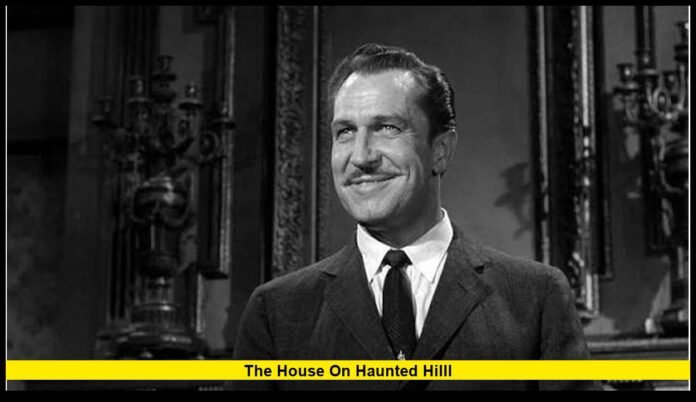

The House on Haunted Hill continues to stand out in American horror cinema thanks to its unsettling premise, memorable performances, and two distinct film adaptations released decades apart. The 1959 original introduced audiences to a wealthy host who challenges a group of guests to spend the night in a reportedly haunted mansion. The 1999 remake transformed that setup into a darker story set inside an abandoned psychiatric institution, combining supernatural terror with disturbing imagery and a much larger financial reward.
Both films explore greed, fear, suspicion, and the risks people accept when money becomes an incentive to enter a dangerous place. However, their approaches to horror differ considerably. The original uses mystery and psychological tension, while the later production emphasizes visual shocks and a more explicit supernatural threat.
For American viewers exploring classic horror or planning a seasonal movie night, the two versions offer different experiences. Their separate casts, settings, production styles, and stories make each worth considering on its own merits.
The Story Behind the Haunted-House Concept
At the center of the story is an unusual invitation. A wealthy individual promises a substantial cash reward to guests who remain inside a frightening building until morning. The participants accept for different reasons, but their confidence begins to disappear as the night becomes increasingly dangerous.
The setup creates immediate tension because the characters enter the house voluntarily. They know that the location has a disturbing reputation, yet the financial incentive encourages them to take the risk.
As strange incidents occur, the guests struggle to determine what is happening. Personal rivalries and hidden motives complicate their efforts to understand the threat. The house becomes a place where fear and mistrust influence almost every decision.
This simple premise supports two distinct interpretations of haunted-house horror. One version asks whether people are manipulating one another. The other places greater emphasis on a terrifying force connected to the building’s past.
The 1959 Original and Its Place in Horror Cinema
Director William Castle released the original film in 1959, during an era when horror filmmakers often relied on suspense, unusual settings, and theatrical presentation to capture audiences.
The production runs approximately 75 minutes and uses black-and-white cinematography. Its compact runtime allows the story to move efficiently between character interactions, mysterious incidents, and moments of escalating danger.
Vincent Price plays Frederick Loren, a wealthy man who organizes an overnight gathering at his mansion. His polished manners and theatrical personality make him an intriguing host, but his motives are not always easy to interpret.
Price’s performance gives the film much of its personality. He balances dry humor with an unsettling sense of control, making Frederick appear both entertaining and potentially dangerous.
Rather than immediately establishing that every frightening event comes from a ghost, the story leaves room for alternative explanations. The characters must consider the possibility that another person could be responsible for what they experience.
That uncertainty is central to the original film’s appeal. The audience is encouraged to question appearances and examine the relationships among the guests.
William Castle’s Direction and Theatrical Innovation
William Castle became known for turning horror screenings into memorable entertainment events. He frequently promoted his movies through special attractions that extended the experience beyond the screen.
For this production, Castle introduced a theatrical gimmick called Emergo. During the climax, a glowing skeleton was designed to travel above the theater audience, creating a physical spectacle that complemented the on-screen action.
The gimmick reflected Castle’s understanding of audience expectations. Horror could deliver suspense through storytelling while also giving moviegoers something unusual to discuss after the screening.
Although viewers watching at home will not experience Emergo in its original theatrical form, the technique remains an important part of the film’s history.
Castle’s approach also helps explain why the movie has remained recognizable among fans of vintage horror. Its appeal comes not only from the story but also from the creative way its director presented the experience.
The Original Cast and Their Roles
The 1959 production features an ensemble cast whose conflicting personalities help drive the mystery.
- Vincent Price as Frederick Loren: The wealthy host who offers money to guests willing to remain in the mansion overnight.
- Carol Ohmart as Annabelle Loren: Frederick’s wife, whose relationship with him introduces additional tension.
- Richard Long as Lance Schroeder: One of the invited guests drawn into the frightening events.
- Alan Marshal as Dr. David Trent: A physician whose involvement adds another layer to the mystery.
- Carolyn Craig as Nora Manning: A guest who becomes deeply affected by the incidents inside the house.
- Elisha Cook Jr. as Watson Pritchard: A character closely associated with the mansion’s disturbing reputation.
- Julie Mitchum as Ruth Bridges: Another participant in the gathering.
Each character contributes to the atmosphere of uncertainty. Their different motives create opportunities for suspicion, while the host’s financial offer gives everyone a reason to remain despite the growing danger.
The $10,000 Challenge
Frederick Loren offers each guest $10,000 for staying inside his mansion until morning. The amount creates a clear incentive, but the arrangement becomes increasingly difficult as unsettling incidents unfold.
The guests must decide whether the reward is worth the risk. Their reactions reveal different attitudes toward fear, money, and personal safety.
The story also examines the gap between what people believe they can control and what happens when circumstances become unpredictable. The mansion’s reputation encourages anxiety, while the guests’ suspicion of one another makes cooperation difficult.
This combination of financial temptation and psychological pressure gives the original film its distinctive character.
The 1999 Remake Takes a Darker Direction
Forty years after the original, director William Malone brought a new interpretation to theaters. The remake opened in U.S. theaters on October 29, 1999, and adopted a more graphic style of horror.
The film runs approximately 92 to 93 minutes, depending on the listing, and carries an R rating for intense horror content, including violence and disturbing images.
The screenplay, written by Dick Beebe, retains the basic idea of a wealthy host inviting people to survive a night in a frightening location. However, the setting and supernatural mythology differ substantially from those in the earlier production.
Instead of a traditional mansion, the remake uses the fictional Vannacutt Psychiatric Institute for the Criminally Insane. The institution’s disturbing history becomes an essential part of the plot.
The change allows the filmmakers to create a more oppressive environment. Dark corridors, decaying rooms, and remnants of the institution’s past contribute to the sense that the characters have entered a place they do not fully understand.
Geoffrey Rush Leads the Remake Cast
Geoffrey Rush stars as Stephen Price, an eccentric amusement park businessman who organizes a birthday celebration for his wife.
The principal cast also includes:
- Famke Janssen as Evelyn Stockard-Price: Stephen’s wife, whose relationship with him adds conflict to the gathering.
- Taye Diggs as Eddie Baker: A guest who becomes trapped inside the institution.
- Ali Larter as Sara Wolfe: A participant whose experiences become important to the group’s struggle.
- Peter Gallagher as Donald Blackburn: A doctor among the invited guests.
- Chris Kattan as Watson Pritchett: The institution’s owner, who knows about its unsettling past.
- Bridgette Wilson as Melissa Marr: Another guest involved in the increasingly dangerous night.
Rush gives Stephen a flamboyant personality that suits the remake’s exaggerated atmosphere. His character treats the gathering as an unusual entertainment event, but the situation becomes far more serious than expected.
Janssen adds tension through Evelyn’s relationship with Stephen, while the other performers represent different reactions to the building and its frightening events.
The ensemble helps maintain suspense as the characters attempt to understand the threat and find a way to survive.
The Vannacutt Psychiatric Institute
The former psychiatric institution provides the remake with its defining setting. Within the fictional story, the building has a history of cruel medical practices and deadly events.
The location’s past is more than background information. It shapes the supernatural threat and gives the characters reasons to fear the spaces around them.
Stephen Price selects the institution for the birthday challenge and offers each guest $1 million for surviving the night. The reward is considerably greater than the amount offered in the original movie.
Once the guests enter, the event becomes increasingly difficult to control. The building’s history, unexplained occurrences, and growing danger undermine their confidence.
The institution also changes the visual character of the story. A conventional mansion can suggest family secrets and old-fashioned ghost stories. A decaying medical facility introduces additional themes of institutional cruelty, human suffering, and the consequences of past wrongdoing.
The result is a more intense supernatural horror experience than the original production.
How the Two Films Compare
Although both productions share a central premise, their differences extend beyond the setting.
| Feature | 1959 original | 1999 remake |
|---|---|---|
| Director | William Castle | William Malone |
| Lead actor | Vincent Price | Geoffrey Rush |
| Setting | Haunted mansion | Abandoned psychiatric institution |
| Reward | $10,000 per guest | $1 million per guest |
| Approximate runtime | 75 minutes | 92–93 minutes |
| Visual style | Black-and-white | Color |
| Horror approach | Suspense and mystery | Graphic supernatural horror |
The original relies on ambiguity. Viewers must evaluate the characters’ motives and consider whether the apparent haunting could have a human explanation.
The remake provides a more explicit supernatural storyline. It also uses disturbing effects and a more elaborate setting to intensify the experience.
Neither approach is automatically better for every viewer. Fans of classic mystery may prefer Castle’s version, while audiences seeking late-1990s horror may enjoy Malone’s interpretation.
Watching both productions reveals how filmmakers can reinterpret the same basic idea for different audiences and filmmaking styles.
Is the Story Based on Real Events?
The central stories are fictional. The original film was written as a horror thriller, while the 1999 version reworked its premise for a later generation.
The Vannacutt Psychiatric Institute is a fictional facility created for the remake. Its history and supernatural events should not be treated as documented historical facts.
The films use familiar horror elements, including isolated buildings, disturbing secrets, suspicious characters, and locations associated with past suffering. These elements help create believable atmosphere without establishing that the depicted events actually happened.
Viewers researching the movies should distinguish the fictional narrative from real historical accounts of psychiatric institutions.
Where to Watch the Films in the United States
Streaming availability can change as licensing agreements shift between platforms. The original and remake may also appear under different subscription, rental, and purchase arrangements.
The 1959 film has appeared on services that carry classic horror movies, along with digital storefronts offering older titles. Its short runtime and black-and-white presentation can help viewers identify the correct version.
The 1999 remake has been listed through AMC+ and digital video stores. Depending on current availability, viewers may need a subscription or may be able to rent or purchase the film separately.
Before choosing a platform, check the release year and cast. A listing featuring Vincent Price identifies the original, while Geoffrey Rush appears in the remake.
Also verify the viewing terms before paying. A movie available to rent is not necessarily included with a streaming subscription, and digital purchase terms differ from temporary access.
Which Version Is Better for a Horror Movie Night?
The right choice depends on the kind of experience a viewer wants.
The 1959 film suits audiences who enjoy classic Hollywood horror, theatrical performances, and mysteries that develop through suspicion. Vincent Price’s presence gives the story a distinctive tone without requiring modern visual effects.
The 1999 remake is a stronger match for viewers who prefer graphic imagery, jump scares, supernatural threats, and an elaborate horror setting. Its abandoned institution creates an atmosphere that differs significantly from the original mansion.
Families should also consider the remake’s R rating and disturbing content before selecting it for a group viewing.
For horror enthusiasts, watching both films offers the most complete experience. The original demonstrates the power of a compact mystery, while the remake explores how a familiar premise can become a darker and more visually intense production.
Frequently Asked Questions
What year was the original movie released?
The original film premiered in 1959. William Castle directed the production, and Vincent Price starred as Frederick Loren.
Who stars in the 1999 remake?
Geoffrey Rush leads the cast as Stephen Price. Famke Janssen, Taye Diggs, Ali Larter, Peter Gallagher, Chris Kattan, and Bridgette Wilson also appear.
How much money is offered to the guests?
The original offers $10,000 to each guest who remains until morning. The remake increases the reward to $1 million per guest.
Is the 1999 movie a direct copy of the original?
No. It retains the central overnight challenge but changes the location, characters, tone, and supernatural storyline.
How long are the movies?
The original runs approximately 75 minutes. The remake runs around 92 to 93 minutes, depending on the listing.
Is the psychiatric institute a real place?
The Vannacutt Psychiatric Institute is fictional. Its history and the supernatural events depicted in the remake belong to the film’s story.
Which version is more frightening?
The 1999 remake generally offers more graphic violence and intense supernatural imagery. The 1959 original emphasizes suspense, uncertainty, and psychological tension.
Can viewers stream either film?
Both films have appeared through U.S. streaming and digital rental services. Current availability varies, so viewers should check the exact title and release year before watching.
Final Verdict
These two productions demonstrate why haunted-house stories continue to attract horror audiences. The original delivers a compact mystery supported by Vincent Price’s memorable performance, while the remake builds a darker experience around an abandoned institution and a more explicit supernatural threat.
Which version would you choose for your next horror movie night? Share your thoughts and keep following the latest updates on classic and modern horror films.