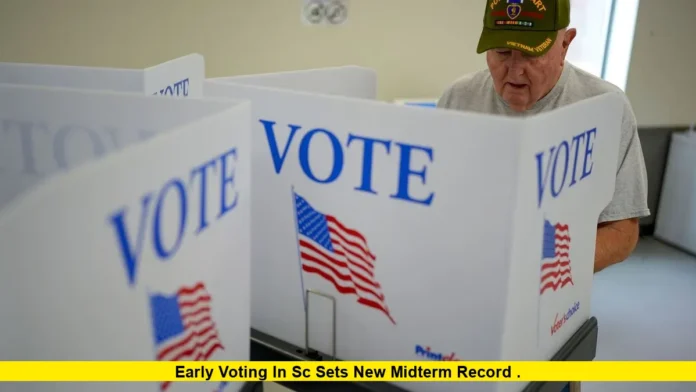

Early voting in SC sets new midterm record as South Carolina surpassed its previous early-voting benchmark for a gubernatorial election, with nearly 564,000 ballots cast by 3 p.m. on October 26, 2026. The milestone exceeds the 561,563 early ballots recorded during the 2022 general election and comes as voters prepare for the November 3 midterm elections.
The record marks a significant development in South Carolina’s election season. With early voting continuing through October 31, eligible voters still have several opportunities to cast their ballots before Election Day. The latest figures also highlight the growing importance of early in-person voting in the state’s statewide elections.
The South Carolina Election Commission confirmed the new record on October 26. Although the latest total establishes a new high for a gubernatorial election, it remains below the state’s all-time early-voting record from the 2024 presidential election.
South Carolina’s Early-Voting Record: The Latest Numbers
The latest confirmed figures show that South Carolina has already exceeded its previous record for early voting in a gubernatorial election.
Here are the key numbers:
- 2026 early voting: Nearly 564,000 ballots as of 3 p.m. on October 26.
- 2022 general election: 561,563 early ballots, the previous gubernatorial-election record.
- 2024 presidential election: 1,471,663 early ballots, the state’s all-time record.
- 2026 Election Day: Tuesday, November 3.
- Final day of early voting: Saturday, October 31.
The 2026 total surpassed the 2022 benchmark by more than 2,000 ballots. The margin demonstrates that early voting has already reached a historic level for a South Carolina gubernatorial election, even though the current voting period has not yet ended.
These numbers refer to early ballots cast, not the final statewide turnout. Election officials will continue to report participation as voting progresses, and the eventual total may rise before the November 3 election.
Why the 2026 Early-Voting Record Matters
The new record places South Carolina’s 2026 general election ahead of the previous gubernatorial-election benchmark before Election Day. It also reflects how early voting has become an important option for voters who want to complete their ballots without waiting until the final day.
South Carolina introduced a standardized early in-person voting system in 2022. The law gave registered voters an opportunity to vote early without needing to provide a specific reason for being unable to vote on Election Day.
The 2022 general election established the previous gubernatorial-election record, with 561,563 early ballots cast. Four years later, the state has exceeded that figure while early voting remains underway.
The distinction between an election-specific record and the all-time record is important. Presidential elections can draw different levels of participation because of the national contest and the candidates on the ballot. South Carolina’s 2024 presidential election produced 1,471,663 early ballots, substantially more than the current 2026 total.
The latest milestone therefore establishes a new high for early voting in a gubernatorial election, not an overall record across every type of election.
Early Voting Continues Through October 31
South Carolina’s early-voting period for the 2026 statewide general election began Monday, October 19, and ends Saturday, October 31.
The state has established the following schedule:
| Voting detail | Confirmed information |
|---|---|
| Early voting began | Monday, October 19, 2026 |
| Final early-voting day | Saturday, October 31, 2026 |
| Daily operating hours | 8:30 a.m. to 6 p.m. |
| Sunday schedule | Closed Sunday, October 25 |
| Election Day | Tuesday, November 3, 2026 |
Early-voting centers operate Monday through Saturday during the designated period. Voters should verify their county’s available locations and operating details before traveling.
The record does not mean early voting has ended. Eligible residents who have not voted still have an opportunity to participate during the remaining days of the early-voting period.
The final days may add to the statewide total. However, the ultimate number of early ballots will not be known until election officials publish the relevant final figures.
Where Early Voting Turnout Has Been Highest
County-level participation provides another perspective on South Carolina’s record-setting election.
Reporting published on October 26 identified Greenville, Charleston and Richland counties among the leading counties for early-voting participation. Each had recorded more than 40,000 ballots at the time of that reporting.
Other counties appearing among the leading participants included Horry, York, Spartanburg, Lexington, Berkeley, Beaufort and Aiken.
These figures reflect the early-voting period rather than final election turnout. County totals can change as additional voters cast ballots, so the rankings may shift before October 31.
Large population centers can generate substantial ballot totals, but the number of ballots alone does not establish the percentage of registered voters participating in each county. A complete comparison would also require the relevant county registration figures and consistent reporting dates.
State election officials publish county-level early-voting statistics so the public can follow participation across South Carolina. Those reports provide a clearer picture of how voting activity is distributed throughout the state.
How South Carolina’s Early-Voting System Works
South Carolina’s current system allows registered voters to cast ballots in person before Election Day without needing an excuse to vote early.
The process is designed to let voters complete the same election-day voting procedure at an authorized early-voting center. Voters must present an acceptable photo identification document when checking in.
An important feature of the system is county-based access. Voters may visit any designated early-voting center within their own county during the early-voting period. They cannot assume that a center in another county will accept their ballot.
Before leaving home, voters should check their registration information, review their sample ballot and confirm the location they intend to visit.
The state’s election information system provides details about early-voting centers, voter registration and election procedures. Checking those details can help residents avoid traveling to an incorrect location or arriving outside operating hours.
What Voters Need to Know Before Visiting a Center
Residents planning to vote early should prepare a few essential details before visiting a center.
- Bring an acceptable photo ID. Voters must present an approved form of identification when checking in.
- Confirm the correct county. Select an authorized early-voting center within the county where you are registered.
- Check the schedule. Centers are scheduled to operate from 8:30 a.m. to 6 p.m., Monday through Saturday, during the early-voting period.
- Review the sample ballot. Familiarizing yourself with the candidates and ballot questions can make the voting process easier.
- Allow enough time. Arriving before closing provides time to complete the check-in and voting procedures.
Early voting does not eliminate the need to follow standard election requirements. Voters should use official election information when checking identification rules, polling arrangements and registration details.
Those who have already cast a ballot should avoid attempting to vote a second time. Anyone uncertain about their voting status can consult their election office for guidance.
Early Voting and Election Day Are Different Opportunities
Early voting offers an alternative to casting a ballot on November 3. It does not change the date of the general election or replace Election Day voting.
South Carolina’s statewide general election is scheduled for Tuesday, November 3, 2026. Voters who do not participate during the early-voting period can use their designated Election Day polling place, subject to the state’s voting requirements.
The early-voting system also differs from absentee voting. Early voting takes place in person at an authorized center. Absentee voting follows separate eligibility and ballot-return rules.
The deadline for requesting an absentee ballot has passed for this election. Voters who have questions about an existing absentee ballot should contact their county election office to confirm the applicable procedures and deadlines.
Understanding these distinctions matters because a record number of early ballots does not mean every registered voter has participated. Some residents will vote on Election Day, while others may qualify to use a different authorized voting method.
Does the Record Predict the Election Results?
The record provides evidence of substantial early participation, but it does not establish which candidates will win.
Early-voting totals measure the number of ballots cast before Election Day. They do not, by themselves, show how voters selected candidates or which political party will receive the most votes.
South Carolina does not register voters by political party in the same way that some states do. As a result, the statewide early-voting count cannot be treated as a direct measure of support for a particular party.
The record also should not be interpreted as a final turnout percentage. That calculation would require a clearly defined total of ballots cast and the appropriate voter-registration denominator.
The final election outcome depends on the votes counted across the authorized voting methods. Election officials must complete the counting and reporting process before the results can be established.
For now, the clearest conclusion is that South Carolina has already surpassed its previous early-voting record for a gubernatorial election.
What Happens After Early Voting Ends?
Early voting ends on October 31, two days before the November 3 general election. The next major step is Election Day, when voters who have not already participated can cast their ballots at their assigned polling locations.
Election officials will continue publishing participation information as it becomes available. Final early-voting figures will help establish the complete scale of participation before Election Day, while certified election results will determine the outcome of the contests.
Residents should continue checking official election information for changes, updated statistics and voting instructions. County election offices can also answer questions about voting locations and individual circumstances.
The 2026 milestone already sets South Carolina apart from its previous gubernatorial-election voting cycles. The remaining days will show how much further the early-voting total rises before the state turns to Election Day.
Early voting in SC sets new midterm record, and the final turnout figures will reveal just how historic this election becomes. Share your thoughts in the comments and stay tuned for the latest verified updates.