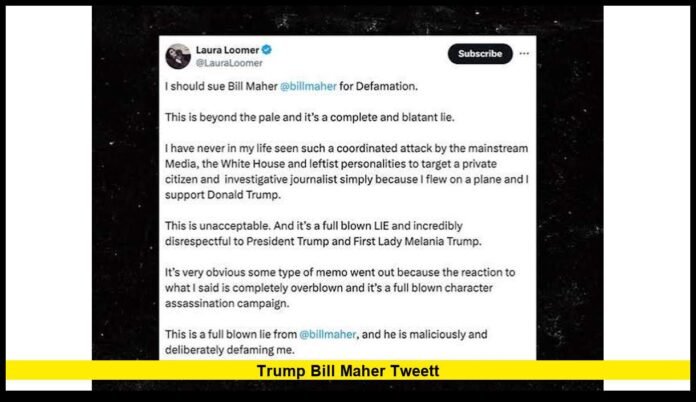

President Donald Trump reignited his public dispute with comedian Bill Maher on October 25, 2026, with a lengthy Truth Social post attacking the HBO host’s television ratings, political commentary, and professional reputation. The trump bill maher tweet controversy emerged just ten days after Trump hosted Maher for another White House dinner, underscoring the sharp contrast between their private conversations and public disagreements.
Trump described Maher as a loser, criticized HBO’s standing in television entertainment, and insisted he would not appear on Real Time with Bill Maher. The president also revisited their relationship, discussing the people who helped arrange their meetings and challenging the comedian’s criticism of his administration.
The post renewed attention to an unusual relationship between a president and a television personality who regularly challenges him. Although Maher has acknowledged positive aspects of their private interactions, he has continued using his program to question Trump’s decisions, policies, and public statements.
What Did Donald Trump Say About Bill Maher?
Trump’s October 25 post began with an insult directed at Maher, whom he called a “COMPLETE AND TOTAL LOSER.” He then turned his attention to HBO, describing the network as a diminished version of the entertainment brand it once was.
The president questioned the performance of Maher’s program and argued that the comedian no longer commanded the influence he once enjoyed. Trump also suggested that Maher desperately wanted him to appear on Real Time, a possibility the president explicitly rejected.
The message went beyond television ratings. Trump discussed Chuck LaBella, a friend and business associate of Maher who also had connections to Trump. He recalled LaBella’s involvement in The Apprentice, the reality television series that helped establish Trump’s reputation as a television personality before his political career.
Trump used that history to explain how the relationships surrounding Maher eventually led to their White House meetings.
He maintained that agreeing to dinner did not mean he had promised to participate in Maher’s television program. The president also criticized the comedian’s political positions and challenged his interpretation of the administration’s record.
The post concluded with further personal criticism, including a sarcastic reference to the laughter on Maher’s show. Trump suggested that the program relied on artificial audience reactions to make its jokes seem more successful.
Taken together, the remarks communicated two main points: Trump was unhappy with Maher’s public commentary, and he did not intend to reward the comedian with a presidential appearance on HBO.
Why Trump’s Latest Attack Followed a White House Dinner
The timing of the post made the dispute particularly notable. On October 15, Trump hosted Maher for a second White House dinner, bringing together the comedian, sports commentator Stephen A. Smith, and musician Kid Rock.
The gathering followed their first widely discussed dinner in April 2025. Kid Rock helped facilitate that earlier meeting, which attracted attention because Maher had spent years criticizing Trump on television.
Trump described the October gathering positively when he spoke with reporters the next day. He said the dinner had gone well and suggested that Maher liked him more than viewers might realize.
Maher subsequently discussed the experience on his October 23 episode of Real Time. Rather than apologizing for attending, he defended his decision and made jokes about the reaction from people who disagreed with his choice.
The dinner reportedly lasted approximately four hours. Maher used the length of the gathering as material for his monologue, joking about the experience of being announced at the White House and the unusual nature of his relationship with the president.
He also explained that he had raised difficult subjects during the conversation. These included the Supreme Court, immigration enforcement, Afghanistan, military leadership, and the 2020 presidential election.
Maher’s account suggested that he viewed the dinner as an opportunity to speak directly to Trump about matters he regularly discusses on television.
Trump’s subsequent attack demonstrated that the cordial atmosphere of a private dinner had not eliminated their disagreements. Their relationship remains defined by alternating moments of personal engagement and public criticism.
Bill Maher Defends His Decision to Meet Trump Again
Maher faced criticism from some viewers who questioned why a comedian critical of Trump would accept another invitation to the White House.
During his October 23 monologue, Maher responded forcefully to those objections. He made clear that he enjoyed the dinners and did not consider attending them a betrayal of his political views.
His argument centered on the value of direct conversation. Maher suggested that people who criticize the president from a distance should not automatically condemn someone who has an opportunity to express those criticisms face-to-face.
He also joked about the prestige associated with entering the White House, turning the experience into a comic routine about how Trump might receive a guest he regularly insults.
The comedian described Trump as composed during their dinner. He said the president did not lose his temper, yell at him, or interrupt him, despite the challenging subjects they discussed.
That description echoed Maher’s account of their first meeting in 2025. After that dinner, Maher said Trump had been more gracious and measured in person than he had expected.
However, Maher did not suggest that these interactions had resolved their political differences. He continued criticizing Trump on his program, reinforcing his position that respectful personal contact does not require public agreement.
His decision to attend another dinner therefore reflects a distinction between engaging with a political opponent and endorsing that opponent’s policies.
Trump’s Dispute With Maher Over Television Ratings
Television ratings have become a recurring part of Trump’s criticism of Maher.
In the October 25 post, Trump attacked both the comedian’s program and HBO’s reputation. He presented the show as unsuccessful and argued that Maher’s influence had declined.
The president had raised similar objections in a September 28 Truth Social post, when he questioned the program’s audience performance and criticized Maher’s political commentary.
For Trump, ratings provide a way to challenge the credibility and influence of television personalities who criticize him. His argument suggests that a comedian with a smaller audience has less authority to question the president’s decisions.
However, ratings claims require context. Audience measurements differ depending on whether they include live broadcasts, delayed viewing, streaming audiences, or particular demographic groups.
A program’s performance can also vary between episodes and across television seasons. An insult or an unsupported percentage does not independently establish the overall commercial health of a television show.
Maher has responded to Trump’s attacks by turning them into comedy. His program frequently uses the president’s statements as material for monologues, creating another opportunity for the dispute to reach audiences.
This dynamic benefits the visibility of the disagreement, but it does not establish that either man’s claims about audience performance are accurate.
The Political Issues Behind Their Disagreement
The dispute extends beyond entertainment and personal insults. Trump’s latest post also challenged Maher’s political commentary, including his views on Iran and the administration’s approach to national security.
Trump argued that Maher failed to appreciate the importance of preventing Iran from obtaining a nuclear weapon. The president presented his administration’s approach as necessary for protecting American interests.
Maher’s program, meanwhile, has continued examining the administration’s policies and decisions through interviews, jokes, and political commentary.
Their disagreements reflect different approaches to evaluating presidential leadership. Trump emphasizes his own record and frequently attacks commentators whom he believes misrepresent his actions. Maher uses satire to challenge political leaders and question their explanations.
During his October 23 monologue, Maher also discussed immigration enforcement, Afghanistan, military leadership, and the Supreme Court. His comments showed that their dinner involved subjects extending well beyond their personal relationship.
Nevertheless, a private conversation does not establish that either man accepted the other’s position. Neither the dinner nor the subsequent social media exchange demonstrated a political agreement between them.
Readers should also distinguish Trump’s descriptions of Maher’s views from independently established facts. The president’s characterization of a comedian’s position does not necessarily represent the full context of the comedian’s remarks.
How Their Relationship Developed From 2025 to 2026
The first White House dinner in April 2025 marked an unexpected moment in the relationship between Trump and Maher.
Maher had frequently criticized Trump before the meeting. His willingness to attend the dinner therefore prompted questions about whether the encounter would change his public commentary.
Afterward, Maher said the president had behaved more graciously and thoughtfully than he anticipated. He acknowledged the positive personal interaction while continuing to criticize Trump on his HBO program.
The cordiality did not last without interruption. Trump later complained about Maher’s commentary and attacked his professional standing. Maher, in turn, continued making jokes about the president.
By September 2026, Trump was again criticizing the comedian’s ratings. The second dinner on October 15 briefly brought the two men together once more, despite their ongoing disagreements.
Maher discussed that meeting on October 23, and Trump responded with his lengthy post two days later.
This sequence shows that their relationship has not followed a straightforward path toward reconciliation. Instead, the men have maintained contact while continuing to disagree publicly.
Their interactions also illustrate the difference between personal impressions and political judgments. Maher can acknowledge that Trump treated him well during a dinner without approving of the president’s policies. Trump can invite Maher to the White House while objecting to the comedian’s television commentary.
Will Trump Appear on Real Time With Bill Maher?
Trump’s latest statement makes his current position clear: he says he will not appear on Real Time with Bill Maher.
Although their White House dinners have generated speculation about a possible television conversation, neither the meetings nor their public comments establish that an appearance is scheduled.
Trump has specifically distinguished accepting an invitation to dinner from agreeing to participate in Maher’s program. His October 25 post reinforced that distinction.
A future appearance would require a new decision and a confirmed announcement. Until that happens, claims that the president is preparing to join Maher on HBO remain unverified.
Maher’s willingness to meet Trump privately does not guarantee that the president will agree to face questions from him on television.
The format would also differ substantially from a private dinner. A television appearance would place their disagreements before a national audience and could give Maher an opportunity to challenge the president in a more structured interview.
For now, Trump has publicly rejected that possibility, and no confirmed appearance has emerged from the latest exchange.
What Happens Next in the Trump–Maher Feud?
The October 25 post has placed the relationship back in the public spotlight. Trump has attacked Maher’s ratings, questioned his political commentary, and rejected the possibility of appearing on his program.
Maher has defended the dinners and maintained his right to criticize the president. His approach suggests that he sees direct engagement as compatible with his role as a comedian and political commentator.
The next development could come through another Truth Social post, a new monologue on Real Time, or a statement about whether the two men intend to meet again. No further reconciliation or television appearance has been confirmed.
The dispute also highlights a broader feature of American political culture: personal contact between opponents does not necessarily end public conflict. In this case, private dinners have provided opportunities for conversation without resolving fundamental disagreements.
For readers following the latest Trump–Maher developments, the central takeaway is straightforward. The president and the comedian remain willing to engage with each other, but their public relationship continues to be marked by criticism, humor, and competing interpretations of their interactions.
Do you think Trump and Bill Maher can maintain a cordial personal relationship despite their political differences? Share your thoughts in the comments and follow the latest developments.