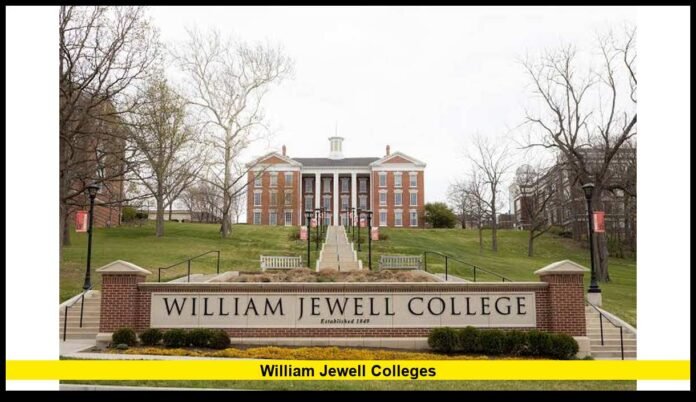

William Jewell College is entering a new chapter in Missouri higher education after completing a major financial restructuring and reporting increased enrollment for the 2026–2027 academic year. The private institution in Liberty has reorganized its academic model, introduced new career-oriented pathways, and shifted greater attention toward graduate education as it works to build a sustainable future.
The changes follow a period of financial pressure that prompted difficult decisions about spending, staffing, and academic programs. College leaders announced in August 2026 that the institution had exited financial exigency, marking a significant milestone in its recovery efforts.
Financial Restructuring Marks a Turning Point
The college’s financial challenges became public in December 2024, when its board declared financial exigency to address persistent operating deficits. The designation gave administrators greater flexibility to restructure academic offerings, reallocate resources, and reduce expenses.
The subsequent 18-month transformation involved changes to the institution’s operations and educational priorities. Rather than relying exclusively on its traditional undergraduate model, the college moved toward a broader approach designed to attract graduate students, working adults, and students pursuing specialized career training.
On August 13, 2026, the institution announced that it had formally exited financial exigency. The milestone indicates progress in stabilizing operations, although continued financial discipline and enrollment growth remain important to its long-term outlook.
The announcement is particularly significant for a college founded in 1849. Its leadership now faces the challenge of balancing its historic liberal arts mission with the practical demands of a changing higher education market.
Enrollment Reaches a New Milestone
One of the clearest signs of the institution’s changing direction is its reported student population. For the 2026–2027 academic year, enrollment stands at approximately 1,800 learners, including about 700 traditional undergraduates and 1,100 graduate students.
The college says this is its largest student population in more than a decade. Graduate education has played a particularly important role in that increase, broadening the institution’s reach beyond recent high school graduates.
This shift reflects a growing emphasis on serving people at different stages of their education and careers. Graduate degrees, professional certificates, and programs aimed at high school students provide additional routes into the institution.
Maintaining this momentum will be important as administrators seek to align revenue with operating expenses. Enrollment numbers alone do not establish long-term financial health, but consistent demand can help support academic investment and institutional planning.
Two Academic Divisions Define the New Approach
The reorganization separates the institution’s academic mission into two complementary areas.
The College of Arts and Sciences concentrates on undergraduate education, retaining the liberal arts foundation while developing more flexible pathways in business, science, nursing, and health-related fields.
The College of Graduate and Innovative Programs focuses on graduate degrees, professional certificates, adult learners, and educational partnerships. The structure is intended to help the institution serve students whose schedules and career goals differ from those of traditional undergraduates.
The strategy also emphasizes connections between education and employment. Programs for high school students include a Collegiate Nursing Academy, a certified nursing assistant pathway, and a cybersecurity certificate initiative.
For the region, these offerings could create more direct routes from education into professional training. Their success will depend on student interest, program quality, and the availability of relevant career opportunities.
New Degree Options Aim to Reduce Barriers
Affordability and time to graduation have become important elements of the institution’s academic planning.
William Jewell College is developing reduced-credit bachelor’s degree pathways, beginning with business-related programs. The proposed 90-credit-hour structure is designed to give eligible students a route to graduation with fewer credits than a conventional 120-credit bachelor’s degree.
Such a model could reduce the time and tuition required to complete a degree, depending on the student’s circumstances and applicable program requirements. Students should verify which programs have received approval and are available for enrollment before making plans.
The college is also developing partnerships that can provide pathways toward advanced professional study, including law and healthcare-related fields.
For students, these arrangements may offer a more structured academic journey. However, admission to a partner institution is not necessarily automatic, and students may still need to meet separate academic and application standards.
What Students Will Pay in 2026–2027
Tuition remains a key consideration for families assessing the college’s new direction.
Published undergraduate tuition for the 2026–2027 academic year is $22,160. The college estimates an additional $13,332 for food and housing and $1,490 in mandatory fees, bringing the listed annual total to $36,982.
Actual expenses can differ based on housing arrangements, meal plans, transportation, books, and personal costs. Financial aid may also reduce the amount a student ultimately pays.
Professional and graduate programs have separate pricing structures. The accelerated nursing program, for example, is listed at $40,500 in program tuition, while online business coursework costs $400 per credit hour.
Students should request a detailed financial aid offer and calculate their expected net cost before accepting admission. They should also confirm whether scholarships are renewable and whether eligibility depends on maintaining particular academic standards.
Student Support and Campus Priorities
The financial transformation has not been limited to cutting costs. Student retention and academic support are also part of the institution’s plans.
A federal school improvement grant of approximately $1.99 million is intended to support tutoring, mentoring, advising, and retention efforts, particularly for first-generation and underrepresented students.
These services can be important to students navigating demanding coursework, adjusting to college life, or balancing school with family and employment responsibilities.
The institution has also identified campus life, athletics, and student organizations as areas requiring sustainable planning. The challenge is to maintain a worthwhile student experience while operating within a more disciplined budget.
For prospective students, conversations with academic advisers and current students can help clarify how these services work in practice.
What Comes Next for the Missouri College?
The next phase will test whether the institution can turn its restructuring into lasting stability. Its reported enrollment gains, revised academic organization, and fundraising efforts provide reasons for cautious optimism.
The college’s Reimagine Jewell campaign has raised $9 million toward a $25 million goal during its first six months, according to institutional figures. Continued support from alumni and donors could help strengthen the resources available for future initiatives.
Still, the financial exigency exit should be understood as a milestone rather than a guarantee that future risks have disappeared. Higher education institutions must continually respond to changes in student demand, operating costs, and workforce needs.
For applicants, the most useful approach is to assess current program availability, tuition, financial aid, graduation requirements, and career preparation together. Those factors provide a clearer picture of whether the institution fits an individual student’s goals.
The college’s direction is now more explicitly focused on flexible education, professional relevance, and a sustainable operating model. Its progress over the coming academic years will show whether that combination can support both institutional resilience and student success.