
Judge Rebecca Rankin Freyre has built a distinguished legal career through decades of public defense work, service on Colorado’s appellate bench, and leadership roles in public institutions. Appointed to the Colorado Court of Appeals in 2015, she brought extensive experience in criminal law and appellate practice to the judiciary. Her professional background and 2026 judicial performance evaluation are particularly relevant as Colorado voters prepare to decide whether she should continue serving on the court.
Freyre’s career includes work in criminal trial offices, appellate legal practice, judicial administration, and retirement-system governance. She also previously served as Deputy Chief Judge of the Colorado Court of Appeals and later became chair of the Colorado Public Employees’ Retirement Association Board of Trustees.
Her upcoming retention election provides an opportunity to examine her qualifications, judicial responsibilities, and contributions to Colorado’s legal system.
Who Is Rebecca Rankin Freyre?
Rebecca Rankin Freyre, also known professionally as Rebecca R. Freyre, is a Colorado appellate judge. She joined the Colorado Court of Appeals in November 2015 after receiving an appointment from Governor John Hickenlooper.
The appointment followed a vacancy created when Judge Richard L. Gabriel moved to the Colorado Supreme Court. Freyre’s appointment date was September 18, 2015, and she began serving on the appellate court on November 16 of that year.
Before becoming a judge, Freyre spent approximately 25 years working in Colorado’s public defense system. Her experience included representing defendants in criminal cases and handling appeals involving legal questions arising from earlier proceedings.
That background gave her experience with both trial-level litigation and the appellate process. The two areas require different skills, from presenting arguments in court to examining whether lower courts properly interpreted and applied the law.
As an appellate judge, Freyre now participates in reviewing cases rather than representing individual clients. Her work requires consideration of the legal arguments, applicable statutes, judicial precedents, and records presented in each appeal.
Education and Professional Beginnings
Freyre graduated from Topeka West High School in Topeka, Kansas, in 1978. She continued her education at Smith College in Northampton, Massachusetts, where she earned a bachelor’s degree in economics in 1982.
Her early professional experience was in business and finance rather than courtroom practice. From 1982 to 1985, she worked in bank management consulting at Penquite & Associates in Dallas, Texas.
She subsequently held a management position at Oppenheimer Funds in Denver, Colorado, from 1985 to 1988. These positions provided experience in organizational operations and financial services before she moved toward a legal career.
Between 1988 and 1991, Freyre worked as a law clerk at Larry Pozner & Associates, a Denver law firm. She earned her Juris Doctor from the University of Denver College of Law in 1990.
Freyre was admitted to practice law in Colorado in 1990. Her later professional admissions included the U.S. District Court for the District of Colorado in 1998 and the U.S. Supreme Court in 2011.
Her progression from economics and finance into law represents an important part of her professional history. She ultimately developed a career centered on criminal defense, appellate advocacy, and judicial service.
A Quarter-Century in Colorado Public Defense
Before her judicial appointment, Freyre spent approximately 25 years as a deputy state public defender. This period formed the foundation of her experience in criminal law.
From 1991 through 2005, she worked in the Arapahoe County Trial Office in Centennial, Colorado. Her work in the trial division involved the legal procedures and courtroom responsibilities associated with criminal cases.
Trial lawyers prepare cases, examine evidence, develop legal arguments, and represent clients during court proceedings. Public defenders perform these duties for eligible individuals who need legal representation.
In 2005, Freyre transferred to the Appellate Division of the Colorado State Public Defender’s Office in Denver. She remained in that role until 2015, when she joined the Court of Appeals.
Appellate defense involves a different set of responsibilities from trial practice. Attorneys review the proceedings in a lower court and identify potential legal errors. They may examine whether a judge applied the correct legal standard, followed required procedures, or properly interpreted a statute.
The work also involves preparing written briefs, studying previous decisions, and presenting oral arguments when required.
Freyre’s experience in both divisions gave her familiarity with criminal cases at different stages of the judicial process. This experience is a central feature of her legal background, although her previous work as a defense attorney does not establish how she will decide any particular case as a judge.
Responsibilities on the Colorado Court of Appeals
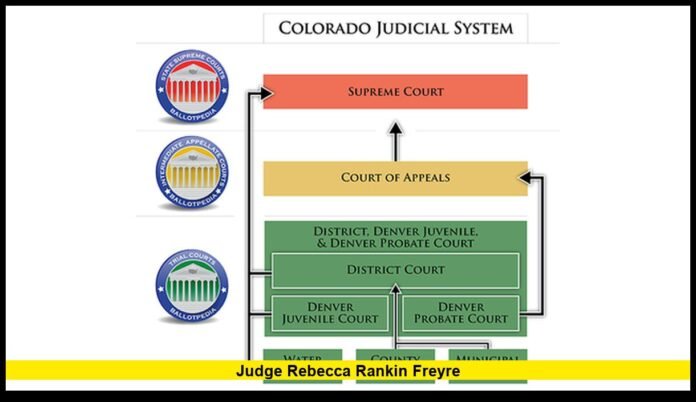
The Colorado Court of Appeals serves as the state’s intermediate appellate court. It reviews eligible appeals from lower courts and determines whether the challenged decisions comply with applicable law.
Unlike a trial court, an appellate court generally does not hear a case from the beginning or conduct a new trial. Instead, judges review the existing record and assess the legal questions raised by the parties.
An appellate decision may uphold a lower court’s ruling, reverse it, or send the matter back for additional proceedings. The appropriate outcome depends on the legal issues and circumstances of the case.
The court’s decisions can influence the parties involved and clarify how Colorado law should apply in future disputes. Its work therefore plays an important role in maintaining consistency in the state’s legal system.
Freyre participates in this appellate review process as a member of the court. Her responsibilities require careful analysis of legal arguments and consideration of the rules governing each matter.
Her career before joining the bench included extensive exposure to criminal litigation. However, the appellate court handles legal questions according to the applicable law and the record of each case, not simply according to a judge’s previous professional role.
Judicial Leadership and Committee Service
Freyre’s work has extended beyond her responsibilities as an appellate judge. She became Deputy Chief Judge of the Colorado Court of Appeals in January 2022 and held that position until January 2026.
The role involved additional responsibilities connected with court leadership and administration. It was separate from her regular participation in appellate decisions.
Her professional history also includes committee work involving Colorado’s rules and procedures for criminal cases. These activities included the Colorado Rules of Evidence Committee, the Criminal Jury Instructions Committee, and the Criminal Bench Book Update Committee.
Evidence rules determine what information courts may consider in legal proceedings and under what conditions. Criminal jury instructions explain the legal standards jurors must apply when deciding cases.
The Criminal Bench Book provides guidance relevant to judicial work in criminal proceedings. Committee involvement in these areas connects with the practical rules that shape courtroom operations.
Freyre has also participated in the Minoru Yasui Inn of Court and Colorado’s judicial peer-to-peer coaching program.
These activities form part of her professional service within the legal community. They provide additional context for understanding her career beyond the individual cases she reviews on the appellate bench.
2026 Judicial Performance Evaluation
Judicial performance evaluations are an important part of Colorado’s retention election system. They give voters information about judges’ work and whether those judges meet established performance standards.
The evaluation process can incorporate information from surveys, interviews, judicial opinions, and observations of courtroom proceedings. The assessment provides a structured way to examine a judge’s performance before voters make a retention decision.
The available 2026 evaluation information for Freyre reports that the State Commission on Judicial Performance found she meets performance standards. The reported vote was 9 to 0.
This finding is relevant to voters considering her continued service on the Court of Appeals. It provides an official assessment of her performance under the state’s evaluation framework.
However, a positive evaluation does not mean every litigant, attorney, or member of the public will agree with all her decisions. Judicial cases frequently involve competing interpretations of the law, and reasonable disagreements can arise over particular rulings.
The commission’s conclusion should be understood as a performance assessment rather than a prediction of how voters will decide the retention question.
People evaluating Freyre’s record can consider the finding alongside her professional experience, judicial responsibilities, and other available information.
Leadership at Colorado PERA
In addition to her judicial career, Freyre has served on the board of the Colorado Public Employees’ Retirement Association, commonly called Colorado PERA.
The organization administers retirement benefits for eligible public employees and retirees in Colorado. Its Board of Trustees oversees the organization’s governance and responsibilities.
Freyre joined the board in 2019 as the representative for the judicial division. She became vice chair in January 2025 and chair in July 2025.
Available board information lists her chair term as continuing through June 30, 2027.
Her work at Colorado PERA is distinct from her responsibilities on the Court of Appeals. The retirement board focuses on the administration and oversight of the public retirement system, while the appellate court reviews legal disputes.
Both positions involve public service, but they operate under different responsibilities and institutional rules.
Her role as PERA chair adds another dimension to her professional record. It also illustrates her participation in public governance outside the courtroom.
Judge Rebecca Rankin Freyre’s 2026 Retention Election
Freyre’s next retention question is scheduled for Colorado’s November 3, 2026, general election.
Colorado’s judicial selection system allows voters to decide whether certain appointed judges should continue serving after their initial terms. Rather than choosing between competing candidates, voters generally answer a retention question about the incumbent judge.
Freyre previously appeared on the retention ballot in 2018, when voters chose to retain her. The 2026 election gives Colorado voters another opportunity to consider whether she should remain on the appellate court.
As of October 24, 2026, the election has not yet taken place. Consequently, no final outcome can be reported for her upcoming retention question.
The retention process allows voters to consider a judge’s qualifications and performance after gaining experience on the bench. It differs from the process through which a governor initially appoints a judge to fill a vacancy.
For Freyre, the upcoming election represents an important point in her continuing judicial career.
What Does a Yes or No Vote Mean?
Voters considering Freyre’s retention question should understand the effect of each choice.
- Yes: Indicates support for retaining Rebecca Rankin Freyre as a judge on the Colorado Court of Appeals.
- No: Indicates opposition to her continued service in that position.
The question concerns whether she should remain on the court. It does not involve a legislative seat or an executive office.
Voters may review her professional history, examine the available judicial performance evaluation, and learn about the appellate court’s responsibilities before making their decision.
The commission’s evaluation provides information, but it does not dictate an individual voter’s choice. Each voter can weigh the available information according to their own assessment of judicial performance.
Because the election remains pending as of October 24, 2026, any discussion of its outcome must wait until official results become available.
Why Her Professional Record Matters
Freyre’s career provides several relevant points for people researching her judicial service.
Her approximately 25 years in public defense gave her substantial experience with criminal trial proceedings and appellate legal arguments. She later brought that experience to the Colorado Court of Appeals, where she has served since 2015.
Her leadership history includes her tenure as Deputy Chief Judge and her participation in committees concerned with evidence, jury instructions, and criminal court procedures.
Her position as chair of Colorado PERA also demonstrates involvement in public institutional governance outside her judicial duties.
Finally, the 2026 performance evaluation offers a formal assessment of her work on the bench. These details help voters understand her qualifications and professional responsibilities without assuming how she will decide future cases or predicting the result of the retention election.
Latest Update on Judge Rebecca Rankin Freyre
As of October 24, 2026, Freyre remains associated with the Colorado Court of Appeals and serves as chair of the Colorado PERA Board of Trustees.
Her reported 2026 judicial performance evaluation found that she meets performance standards, with a commission vote of 9 to 0.
Her retention question is scheduled for November 3, 2026. Since the election is still pending, the final decision about her continued service remains with Colorado voters.
The most relevant aspects of her current public profile are her appellate court service, extensive legal background, leadership responsibilities, and upcoming retention vote.
Conclusion
Judge Rebecca Rankin Freyre’s career spans public defense, appellate judging, judicial administration, and retirement-system governance. Her experience before joining the bench and her subsequent judicial responsibilities provide important context for understanding her professional record. Colorado’s 2026 retention election will give voters an opportunity to decide whether she should continue serving on the Court of Appeals.
What are your thoughts on Judge Rebecca Rankin Freyre’s career and judicial service? Share your perspective and stay informed as the Colorado retention election develops.