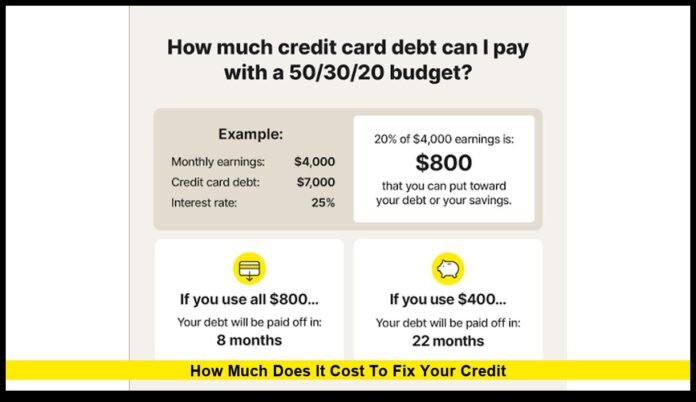

How much does it cost to fix your credit? In the United States, credit repair can cost nothing if you correct reporting errors yourself, while professional credit repair companies commonly charge around $50 to $150 per month. Some providers also collect an initial fee, increasing the total expense. The amount you spend depends on your credit history, the problems you need to address, and whether you choose professional assistance or a do-it-yourself approach.
A damaged credit score can make borrowing more expensive and limit access to certain financial products. Consumers may face challenges when applying for credit cards, auto loans, mortgages, or other forms of financing. However, paying a credit repair company is not always necessary.
You can take several steps to improve your credit without paying for a subscription. Understanding the available options, typical fees, and federal consumer protections can help you decide which approach makes the most sense for your financial situation.
How Much Does Credit Repair Cost in the United States?
Credit repair costs vary considerably depending on the type of assistance you need. Correcting inaccurate information on your credit report can be free, while professional services generally charge recurring fees.
The following table outlines common expenses associated with credit repair.
| Credit repair service | Typical cost |
|---|---|
| Obtaining credit reports | Free |
| Disputing inaccurate information | Free |
| DIY credit repair | $0 in service fees |
| Professional credit repair | $50–$150 per month |
| Initial setup fee | $70–$200, when applicable |
| Initial nonprofit credit counseling | Often free |
| Debt management program | Fees vary |
| Repaying outstanding debts | Depends on your balances |
These amounts are general estimates rather than guaranteed prices. Actual charges depend on the provider, service agreement, and additional features included in the package.
Professional companies may review credit reports, identify potential inaccuracies, prepare disputes, and help consumers track the process. Some also provide credit monitoring or financial education.
Before choosing a paid service, identify the specific problem you want to solve. If your credit report contains incorrect information, you may be able to correct it without professional assistance. If your score suffers from high balances or missed payments, a broader financial improvement plan may be more useful.
How Much Do Credit Repair Companies Charge Per Month?
Many credit repair companies use monthly subscriptions. Others combine recurring payments with an initial enrollment or setup fee.
A service charging $80 per month costs $480 over six months. A provider charging $120 per month costs $720 over the same period, excluding any additional fees.
Consider this example of a company charging a $100 setup fee and $100 per month.
| Length of service | Monthly charges | Setup fee | Total expense |
|---|---|---|---|
| 1 month | $100 | $100 | $200 |
| 3 months | $300 | $100 | $400 |
| 6 months | $600 | $100 | $700 |
| 12 months | $1,200 | $100 | $1,300 |
These figures illustrate how quickly subscription costs can accumulate. They are hypothetical calculations, not prices from a specific provider.
When comparing services, look beyond the monthly payment. Find out whether the company charges for enrollment, offers optional upgrades, or automatically renews your membership.
You should also understand what the company will do during each billing period. A clear agreement should explain the services, expected timeframe, cancellation policy, and total charges.
Can You Fix Your Credit for Free?
Yes. You can address credit report errors yourself without paying a credit repair company.
Federal law gives consumers the right to dispute inaccurate or incomplete information on their credit reports. You can request your reports, review account details, and contact the credit bureaus directly when something appears incorrect.
Begin by reviewing reports from Equifax, Experian, and TransUnion. Look for mistakes that could affect how lenders assess your credit history.
Common errors include:
- Accounts that belong to another person.
- Payments incorrectly marked as late.
- Incorrect credit card balances.
- Duplicate debts or accounts.
- Payments that have not been properly recorded.
- Accounts incorrectly shown as unpaid.
- Outdated negative information.
- Incorrect personal or account details.
If you identify an error, submit a dispute to the credit bureau reporting it. You can also contact the business that provided the information.
Include relevant documentation, such as payment receipts, account statements, or letters confirming that a balance was resolved. Keep copies of your records and dispute correspondence.
Credit bureaus generally have 30 days to investigate a dispute, although certain circumstances allow additional time. If an investigation establishes that information is inaccurate or cannot be verified, the bureau must correct or remove it as required by law.
Consumers can obtain free online credit reports through AnnualCreditReport.com. Eligible consumers currently have access to free online reports each week.
The important distinction is that free credit repair can correct genuine reporting problems, but it cannot erase accurate negative information simply because you want a better score.
What Determines the Cost of Fixing Your Credit?
Several factors influence the amount you may spend on credit repair.
The number of reporting errors
A credit report with several inaccuracies may require more time to review and organize than one with a single mistake. Professional providers may offer different packages based on the services involved.
However, you can dispute multiple errors yourself without paying a separate fee for every dispute.
The type of credit problem
Incorrect account information may qualify for a dispute. Legitimate late payments, outstanding balances, and valid collection accounts require different solutions.
Credit repair companies cannot legally guarantee the removal of accurate negative information simply because you purchase a service.
The length of professional assistance
Recurring fees can make credit repair expensive. A $90 monthly plan costs $540 over six months and $1,080 over a year, before any setup charges.
Ask whether the provider offers a fixed-term agreement or continues billing until you cancel.
Additional services
Some companies bundle credit monitoring, identity theft protection, educational resources, and financial coaching with their repair packages.
These features may increase the total price. Check whether you already receive similar services through a bank, credit card issuer, or another existing account.
Your outstanding debt
If high credit card balances are affecting your score, reducing those balances may be more beneficial than paying a company to submit disputes that have no factual basis.
Your actual repayment costs depend on the amount owed, your available income, and the terms of your accounts.
How Much Does It Cost to Improve Your Credit Score Yourself?
Improving your credit yourself can eliminate professional service fees. However, some actions require money because they involve paying down debt or meeting existing financial obligations.
Several useful steps cost little or nothing.
| Action | Potential cost |
|---|---|
| Reviewing credit reports | Free |
| Disputing inaccurate information | Free |
| Setting payment reminders | Free |
| Making payments on time | No special service fee |
| Reducing credit card balances | Depends on debt |
| Avoiding unnecessary applications | Free |
| Using free financial education resources | Often free |
Payment history is an important factor in many credit scoring models. Consistently paying bills on time can help establish a stronger credit record.
Credit utilization also affects many widely used scoring models. It measures revolving balances relative to available credit limits.
For example, a credit card with a $2,000 limit and a $1,000 balance has a 50% utilization rate. If the balance falls to $400, utilization drops to 20%.
A lower utilization rate may help your credit score, although the actual result depends on your overall credit profile and the scoring model.
There is no guaranteed payment amount that produces a particular score increase. Focus on a repayment strategy that fits your budget rather than taking on additional debt to improve your credit quickly.
Is Hiring a Credit Repair Company Worth the Money?
A professional credit repair company may offer convenience if you need help reviewing reports, preparing documentation, or organizing disputes. However, the value depends on the specific services provided.
You do not need to hire a company to exercise your legal right to dispute inaccurate information. Credit bureaus and information providers must handle legitimate disputes under applicable law.
A paid service may be worth considering if your reports contain complicated errors or you need help understanding the dispute process. Nevertheless, compare several companies before committing to recurring payments.
DIY credit repair may be the better option if you can identify the errors yourself or if your main concern involves high credit card balances.
Before paying a provider, ask:
- What specific work will the company perform?
- How much will the complete service cost?
- Are setup fees or additional charges involved?
- Can you cancel the agreement?
- How will the company explain the results?
- Does the provider guarantee a particular credit score?
Be cautious about guarantees of dramatic or immediate score increases. Credit scores depend on multiple factors, and no legitimate company can promise a specific result for every consumer.
How Much Does Credit Counseling Cost?
Credit counseling can help consumers who need assistance managing debt, organizing payments, or creating a realistic budget.
Many nonprofit credit counseling agencies offer an initial consultation at no cost. During the consultation, a counselor may review your finances and discuss possible debt repayment strategies.
A debt management plan may involve additional fees. These can include an enrollment charge and recurring monthly administration fees. The amount depends on the organization and the consumer’s circumstances.
Debt management plans can help organize payments on eligible unsecured debts, including certain credit card balances. Depending on the arrangement, a counselor may also request reduced interest rates or other repayment concessions from creditors.
Credit counseling is different from credit repair. Its primary purpose is to help you manage your financial obligations, not to remove negative entries from your credit report.
Before enrolling in a program, request a complete explanation of the costs. Ask whether the organization offers reduced fees if you have limited income.
For someone struggling with multiple credit card payments, counseling may provide more useful long-term support than paying a company solely to dispute credit report information.
What Laws Protect Consumers Who Pay for Credit Repair?
The Credit Repair Organizations Act, or CROA, provides federal protections for consumers purchasing credit repair services.
Credit repair organizations generally must provide a written contract that explains the services, total cost, expected timeframe, and relevant consumer rights.
Consumers generally have three business days to cancel a credit repair contract without charge.
Federal law also prohibits credit repair organizations from collecting payment before completing the services they agreed to provide. Additional restrictions apply to services sold through telemarketing.
These rules help protect consumers from companies that collect money while making misleading promises.
Watch for providers that:
- Demand advance payment before completing the promised services.
- Guarantee the removal of accurate negative information.
- Tell you to dispute accounts you know are legitimate.
- Encourage false identity theft claims.
- Offer a new credit identity using different identifying information.
- Pressure you into purchasing an expensive package immediately.
Such practices can indicate deceptive or unlawful conduct.
If you believe a provider has violated your rights, you can consider contacting the Federal Trade Commission, your state attorney general, or your state’s consumer protection office.
Reviewing the contract and understanding your legal rights can help you avoid unnecessary expenses.
How Long Does It Take to Fix Your Credit?
Credit repair timelines depend on the nature of the problem.
Correcting an inaccurate entry may take several weeks. Credit bureaus generally have 30 days to investigate disputes, although exceptions can extend the timeframe.
Improving a credit score through repayment habits often takes longer. Reducing credit card balances may influence your score after creditors report updated information. Building a stronger payment history requires consistent financial behavior.
Accurate negative information follows applicable credit reporting periods. Many negative items can remain on credit reports for seven years, while bankruptcy information can generally remain for up to 10 years, depending on the type of bankruptcy and relevant reporting rules.
Paying a credit repair company does not allow you to bypass these periods or force the removal of accurate information.
Your score may also change differently depending on the scoring model and your complete credit history. Removing one incorrect account does not guarantee a particular increase.
Avoid companies that promise to fix every credit problem within a few days. A legitimate provider should explain what it can do, what it cannot do, and how long the process may take.
How to Choose an Affordable Credit Repair Service
If you decide to hire a credit repair company, compare its services and fees with those of other providers.
Start by calculating the expected total expense. A low monthly payment may become costly if the company bills you for many months.
Next, read the contract carefully. Make sure it describes the services, payment terms, cancellation rights, and any additional charges.
Ask how the provider identifies potential reporting errors and communicates with credit bureaus. You should understand what work the company will perform and how it will keep you informed.
Review the company’s business history and complaints. Do not rely exclusively on testimonials, advertisements, or promises of quick results.
Most importantly, avoid providers that claim they can erase legitimate debts or accurate late payments. These promises should not form the basis of your purchasing decision.
Choose a service only if the assistance justifies the cost and fits your financial situation.
What Is the Cheapest Way to Fix Your Credit?
For many Americans, the cheapest approach is to review credit reports, dispute genuine errors, make payments on time, and work toward reducing high credit card balances.
These steps eliminate the need for a credit repair subscription when professional assistance is unnecessary. They also help you understand your financial position and take control of the improvement process.
If you need help managing debt, consider a nonprofit credit counseling consultation. If you have complicated reporting errors, compare professional services and understand their full costs before signing a contract.
Ultimately, fixing your credit does not have to be expensive. Correcting reporting errors can be free, while professional assistance may cost hundreds of dollars over several months. The best option depends on your circumstances, the accuracy of your credit reports, and the financial habits you can maintain.
Have you improved your credit score without paying for professional help, or have you used a credit repair service? Share your experience in the comments and join the conversation about affordable credit repair.