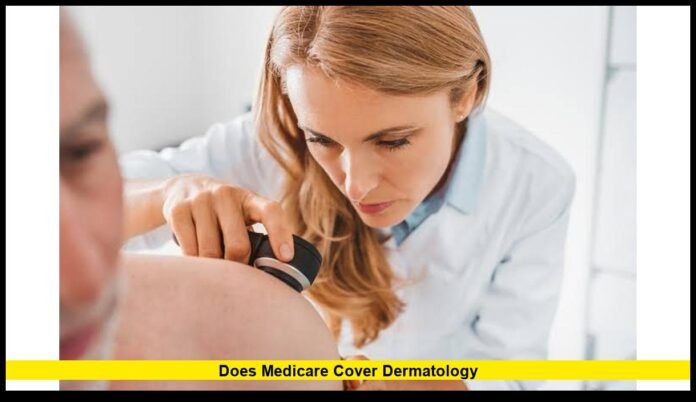

Does Medicare cover dermatology? Yes, Medicare generally covers medically necessary dermatology services when a doctor needs them to diagnose, evaluate, or treat a skin condition. Original Medicare, which includes Part A and Part B, can help pay for services such as examining suspicious moles, performing skin biopsies, and treating skin cancer. However, Medicare usually does not pay for cosmetic procedures or routine services that fall outside its coverage rules.
Understanding the difference between medical and cosmetic dermatology can help Medicare beneficiaries avoid unexpected bills. Coverage also depends on the specific service, the reason for treatment, the provider’s Medicare participation, and the beneficiary’s insurance plan.
For 2026, the standard Medicare Part B monthly premium is $202.90, and the annual Part B deductible is $283. These amounts affect the cost of covered outpatient dermatology services. After meeting the deductible, beneficiaries generally pay 20% of the Medicare-approved amount for covered Part B services when the provider accepts Medicare assignment.
Does Medicare Cover Dermatology Services?
Yes. Original Medicare may cover dermatology when a qualified healthcare professional determines that the service is medically necessary. Medicare Part B generally handles outpatient dermatologist visits, diagnostic examinations, and many treatments performed in a doctor’s office.
Dermatologists diagnose and treat conditions affecting the skin, hair, and nails. Their services range from examining unusual growths to treating chronic inflammatory conditions and removing potentially cancerous lesions.
Medicare does not automatically cover every appointment with a dermatologist. The reason for the visit matters. An examination to investigate a changing mole may qualify for coverage, while an appointment solely to discuss wrinkles may not.
The provider must also follow Medicare’s coverage and billing requirements. Certain services may require documentation showing why the examination, test, or procedure was necessary.
Beneficiaries should therefore ask the dermatologist whether the planned service qualifies for Medicare coverage before scheduling treatment. This step can clarify potential charges and help prevent misunderstandings about insurance benefits.
What Medicare Part Covers Dermatology?
Original Medicare has two main parts, but Part B provides most coverage for outpatient dermatology services.
Medicare Part B: Outpatient Dermatology
Medicare Part B covers medically necessary doctor services and many outpatient medical procedures. This includes qualifying dermatologist visits and treatments that address an illness, injury, or suspected medical problem.
Depending on the circumstances, covered services may include:
- Evaluating a suspicious mole or changing skin lesion.
- Examining a persistent rash or unexplained skin irritation.
- Diagnosing and treating eczema or psoriasis.
- Investigating a sore that does not heal.
- Performing a medically necessary skin biopsy.
- Treating certain precancerous skin lesions.
- Diagnosing or treating skin cancer.
- Providing medically necessary treatment for certain skin infections.
- Removing a growth when medical evidence supports the procedure.
Coverage depends on the individual circumstances and applicable Medicare rules. A condition appearing on this list does not guarantee payment for every treatment associated with it.
For example, a dermatologist may recommend removing a mole because it has changed in appearance. Medicare may cover the medically necessary evaluation and removal when the circumstances meet its requirements.
By contrast, removing a harmless mole solely because the patient dislikes its appearance generally does not qualify.
Medicare Part A: Dermatology During Hospital Care
Medicare Part A primarily covers qualifying inpatient hospital services. It may help pay for dermatology-related care when that care forms part of a covered inpatient hospital stay.
For instance, a hospitalized patient may need treatment for a serious skin infection or another skin condition. Coverage depends on the inpatient services provided and the applicable Medicare rules.
Part A is not the usual source of coverage for a standard dermatologist appointment in an outpatient office. Part B generally handles those visits.
Which Skin Conditions Does Medicare Cover?
Medicare may cover the diagnosis and treatment of several skin conditions when the services meet its medical-necessity requirements.
Skin Cancer and Suspicious Growths
Skin cancer is an important reason to seek dermatological care. A dermatologist may examine a growth that has changed in size, shape, or color, or investigate a lesion that looks unusual.
When medically necessary, Medicare Part B may cover the examination, biopsy, and subsequent treatment of a suspicious lesion. Coverage for surgery, pathology testing, and other related services depends on the specific procedure and Medicare’s applicable rules.
Treatment may include removing cancerous tissue or managing a confirmed diagnosis. The precise benefits depend on the patient’s condition and recommended treatment.
People should not delay an evaluation because they are uncertain about insurance coverage. They can contact their provider and Medicare plan to clarify expected costs while arranging appropriate medical care.
Eczema and Psoriasis
Eczema and psoriasis can cause persistent itching, redness, scaling, inflammation, and discomfort. Dermatologists may recommend prescription treatments, follow-up appointments, or additional testing when necessary.
Medicare may cover medically necessary consultations and qualifying treatments for these conditions. Coverage for individual medications depends on how the drug is administered and which insurance benefits apply.
For example, a prescription filled at a pharmacy may fall under Medicare Part D or a Medicare Advantage plan’s drug coverage. A medication administered in a doctor’s office may qualify under Part B when Medicare’s requirements are met.
Patients should check medication coverage separately from the cost of the dermatologist visit.
Skin Infections and Persistent Rashes
Some skin infections require prescription medication, laboratory testing, or specialized treatment. A dermatologist may also investigate a persistent rash when its cause remains unclear.
Medicare may cover medically necessary evaluation and treatment for these problems. The specific benefit depends on the service, the provider, and the circumstances of care.
Not every rash requires a specialist. A primary care doctor may be able to diagnose and treat straightforward cases, while persistent or complicated symptoms may warrant a dermatology referral.
Actinic Keratosis and Precancerous Lesions
Actinic keratosis is a skin condition associated with long-term ultraviolet exposure. These rough, scaly patches can sometimes progress to squamous cell carcinoma.
A dermatologist may recommend treatment to address medically significant lesions. Medicare may cover qualifying treatment when the service meets its medical-necessity requirements.
Beneficiaries should ask whether the proposed procedure and any associated laboratory or pathology services are covered.
Skin Ulcers and Wound-Related Problems
Some wounds and ulcers require specialized care because of infection, poor healing, or underlying medical conditions. Dermatologists may assist with diagnosis or treatment when skin problems become medically complicated.
Medicare may cover eligible wound-related services when the care meets the relevant coverage criteria. The provider should explain which services will be billed to Medicare and whether other coverage rules apply.
Does Medicare Cover Full-Body Skin Cancer Screenings?
Medicare does not provide a universal guarantee of coverage for routine, preventive full-body skin examinations for every beneficiary.
A full-body examination may involve checking the skin for suspicious spots, unusual growths, or signs of skin cancer. However, Original Medicare generally distinguishes between routine screening without symptoms and a diagnostic examination prompted by a medical concern.
If a patient notices a new or changing mole, an unusual lesion, or a sore that does not heal, a dermatologist may evaluate the problem as a diagnostic service. Medicare may cover that visit when it meets the applicable medical-necessity and billing requirements.
An appointment requested solely for a routine skin check may receive different treatment under Medicare’s coverage rules.
This distinction does not mean that routine skin examinations lack medical value. It means beneficiaries should not assume Medicare will pay for every preventive dermatology visit.
Before booking an appointment, explain whether you have a specific skin concern, a history of skin cancer, or another medical reason for the examination. Ask the office to confirm how it plans to bill the visit and whether Medicare coverage applies.
A provider’s explanation can help you understand potential costs, although the final payment decision depends on the applicable coverage rules and claim review.
Does Medicare Cover Mole Removal?
Medicare may cover mole removal when a dermatologist determines that the procedure is medically necessary. It generally does not cover removal performed solely for cosmetic reasons.
The medical reason for removal plays a central role in determining coverage.
A mole may require evaluation or removal if it changes in appearance, bleeds, causes symptoms, or raises concern about cancer. A dermatologist may also recommend a biopsy to determine whether the growth contains abnormal cells.
When the procedure meets Medicare’s requirements, Part B may cover the eligible professional service and related medically necessary care.
However, Medicare generally will not pay for removing a harmless mole simply because a patient dislikes its size, color, or location.
Ask the dermatologist to explain the medical reason for removal and whether the proposed procedure qualifies for Medicare coverage. If the office expects Medicare to deny payment, request a written estimate of the amount you may owe.
Does Medicare Cover Skin Tag Removal?
Skin tag removal usually falls outside Medicare coverage when the purpose is purely cosmetic. Many skin tags are harmless, so removing them simply to improve appearance generally does not qualify for payment.
A skin tag may present a different situation when it causes a medical problem. For example, a growth that repeatedly bleeds or causes other symptoms may require clinical evaluation.
Even then, coverage is not automatic. The provider must determine whether the service meets Medicare’s medical-necessity requirements and document the reason for treatment.
Before proceeding, ask whether Medicare is expected to cover the removal and whether the office will charge separately for examination, removal, or laboratory testing.
Does Medicare Cover Cosmetic Dermatology?
Original Medicare generally excludes dermatology procedures performed solely to improve appearance rather than treat a medical condition.
Common examples of cosmetic services that Medicare generally does not cover include:
- Botox injections for wrinkles.
- Cosmetic treatment of fine lines.
- Laser resurfacing for aesthetic purposes.
- Removal of harmless moles for appearance alone.
- Skin tag removal for cosmetic reasons.
- Scar revision performed solely to improve appearance.
- Cosmetic treatments intended to reduce age spots.
The purpose of a procedure matters more than its name alone. A treatment that resembles a cosmetic procedure may receive different consideration if it addresses a documented medical problem.
For example, removing a lesion because a dermatologist suspects cancer differs from removing a harmless growth for aesthetic reasons.
Ask the provider to separate medically necessary services from elective cosmetic treatments on the estimate. This helps clarify which charges may qualify for insurance payment and which you may need to pay yourself.
How Much Does Medicare Pay for a Dermatologist?
The cost of dermatology care depends on the type of visit, the services provided, the provider’s billing practices, and the patient’s insurance.
For 2026, Original Medicare has the following standard Part B costs:
| Medicare Part B cost | 2026 amount |
|---|---|
| Standard monthly premium | $202.90 |
| Annual deductible | $283 |
| Typical coinsurance for covered services after the deductible | 20% of the Medicare-approved amount |
The standard premium may be higher for beneficiaries subject to income-related adjustments. Other insurance arrangements may also change the amount a patient ultimately pays.
How the Part B Deductible Works
The annual Part B deductible is the amount a beneficiary generally pays for covered Part B services before Medicare begins paying its share.
Suppose a covered dermatologist service has a Medicare-approved amount of $200 and the beneficiary has already met the deductible. If the standard 20% coinsurance applies, the beneficiary’s share would be $40.
This is an illustration, not a quoted price for a dermatologist appointment. Actual charges depend on the approved amount and the services included in the claim.
If the deductible has not been met, the beneficiary may owe some or all of the applicable amount until the deductible is satisfied.
What Happens If the Dermatologist Does Not Accept Assignment?
A provider who accepts Medicare assignment agrees to accept the Medicare-approved amount as full payment for covered services, subject to applicable deductibles and coinsurance.
If a doctor does not accept assignment, different payment rules may apply. In certain circumstances, a nonparticipating provider can charge more than the Medicare-approved amount, within applicable limits.
Ask the dermatologist’s office whether the provider accepts Medicare assignment. Confirm the expected charge before receiving care, especially if the appointment includes a biopsy or procedure.
Can Medigap Help Pay Dermatology Costs?
Medicare Supplement Insurance, commonly called Medigap, may help pay certain out-of-pocket expenses associated with Original Medicare, depending on the policy.
Depending on the plan, Medigap may help with eligible Part B coinsurance or other covered cost-sharing amounts. It does not generally transform an excluded cosmetic procedure into a covered Medicare service.
Beneficiaries should review their policy’s benefits and exclusions before assuming that a dermatologist’s bill will be fully covered.
Does Medicare Advantage Cover Dermatology?
Medicare Advantage, also called Part C, offers an alternative way to receive Medicare Part A and Part B benefits through private health plans approved by Medicare.
These plans must cover medically necessary services that Original Medicare covers, but they may use different cost-sharing arrangements and provider networks. Some plans may also offer additional benefits.
For dermatology appointments, a Medicare Advantage plan may require patients to use in-network providers. Some plans may also require referrals or prior authorization for particular services.
These requirements vary by plan. A dermatologist who accepts Original Medicare may not participate in every Medicare Advantage network.
Before scheduling treatment, check the plan’s provider directory and ask whether the specific procedure requires approval. Confirm the expected copayment, coinsurance, and deductible.
Do not assume that every Medicare Advantage plan covers routine skin examinations or cosmetic procedures. Additional benefits and exclusions depend on the plan’s written terms.
How to Find a Dermatologist Who Accepts Medicare
Finding a dermatologist who accepts your coverage can help reduce billing problems and make it easier to understand your expected costs.
Follow these steps before scheduling an appointment:
- Check your Medicare coverage. Determine whether you have Original Medicare or a Medicare Advantage plan.
- Search for a dermatologist. Use Medicare’s provider-finding resources or contact your plan for participating specialists.
- Explain your skin concern. Tell the office whether you need an examination for a suspicious lesion, treatment for a skin condition, or another service.
- Confirm participation. Ask whether the provider accepts Medicare assignment or participates in your Medicare Advantage network.
- Ask about referrals. Find out whether your plan requires a primary care referral or prior authorization.
- Request a cost estimate. Ask whether the visit, biopsy, procedure, pathology services, and prescribed medications have separate charges.
- Verify coverage before treatment. Confirm that the planned service meets your plan’s requirements and ask about any potential noncovered costs.
These steps are especially useful when the appointment involves several services. An initial consultation, a biopsy, and a later treatment may generate separate claims.
What to Do If Medicare Denies Dermatology Coverage
A denied claim does not always mean that a service can never qualify for coverage. The reason for denial determines the next steps.
Start by reviewing the Medicare Summary Notice or the explanation of benefits from your Medicare Advantage plan. These documents explain how the claim was processed and identify amounts that Medicare or the plan did not pay.
Contact the dermatologist’s billing department if the claim appears incorrect. The office may need to correct coding information, submit supporting documentation, or clarify the medical reason for treatment.
If you disagree with a coverage decision, review the appeal instructions included with the notice. Original Medicare and Medicare Advantage plans have formal processes for challenging certain denials.
Keep copies of bills, clinical records, claim notices, and correspondence. Ask the provider to explain the diagnosis and medical necessity supporting the service.
Beneficiaries who need help understanding Medicare coverage can also contact their State Health Insurance Assistance Program, known as SHIP. These programs provide free, personalized Medicare counseling.
Questions and Answers About Medicare Dermatology Coverage
Does Medicare cover a dermatologist visit?
Yes, Medicare Part B generally covers medically necessary outpatient dermatologist visits. The visit must meet applicable coverage requirements, and the beneficiary may owe the deductible and coinsurance.
Does Medicare cover annual skin checks?
Original Medicare does not guarantee coverage for routine full-body skin cancer screenings for every beneficiary. An examination to investigate a specific suspicious spot may qualify as a diagnostic service when medical-necessity requirements are met.
Does Medicare pay for skin cancer treatment?
Medicare may cover medically necessary skin cancer diagnosis and treatment, including qualifying biopsies and procedures. Coverage and cost-sharing depend on the treatment, provider, and applicable Medicare rules.
Does Medicare cover biopsies of suspicious moles?
A biopsy may qualify for Medicare coverage when a dermatologist needs it to evaluate a suspicious lesion. The provider must meet the applicable requirements, and standard cost-sharing may apply.
Does Medicare cover acne treatment?
Medicare may cover medically necessary evaluation and certain treatments for acne, depending on the service and circumstances. Coverage for prescription drugs depends on the applicable drug benefit and plan rules.
Does Medicare cover Botox at a dermatologist’s office?
Medicare generally does not cover Botox used solely for cosmetic purposes, such as reducing wrinkles. Certain medically necessary uses may qualify under specific coverage rules, so the intended treatment and billing details matter.
Does Medicare cover treatment for psoriasis?
Medicare may cover medically necessary psoriasis consultations and treatments. Prescription drugs, office-administered medications, and other therapies can fall under different benefits, so beneficiaries should check each treatment separately.
Does Medicare cover dermatology without a referral?
Original Medicare generally does not require a referral for a specialist visit, although coverage and provider rules still apply. Medicare Advantage plans may require referrals or prior authorization, depending on the plan.
Will Medicare pay for removing a skin tag that bleeds?
Medicare may cover removal when a skin tag causes a medical problem and the procedure meets applicable requirements. The provider must document the medical reason, and coverage is not guaranteed solely because the growth bleeds.
How can I check whether my dermatologist accepts Medicare?
Ask the dermatologist’s office directly whether the provider accepts Original Medicare and Medicare assignment. If you have Medicare Advantage, verify that the dermatologist participates in your specific plan’s network.
Final Thoughts on Medicare Dermatology Coverage
Medicare can help pay for dermatology when a patient needs medical evaluation or treatment for a skin condition. Part B generally covers qualifying outpatient visits, while Part A may apply to eligible dermatology care during a covered inpatient hospital stay. Cosmetic procedures and routine skin checks without a qualifying medical indication may not receive coverage.
For 2026, beneficiaries should account for the $283 Part B deductible and the usual 20% coinsurance for covered services after meeting that deductible. Medicare Advantage and Medigap may affect out-of-pocket expenses, but their rules differ.
The most reliable way to avoid unexpected costs is to confirm the provider’s participation, explain the medical reason for the appointment, and verify coverage for every planned procedure before treatment.
Have you used Medicare for a dermatologist visit, or are you checking coverage before making an appointment? Share your experience or questions in the comments, and stay updated on Medicare coverage changes.