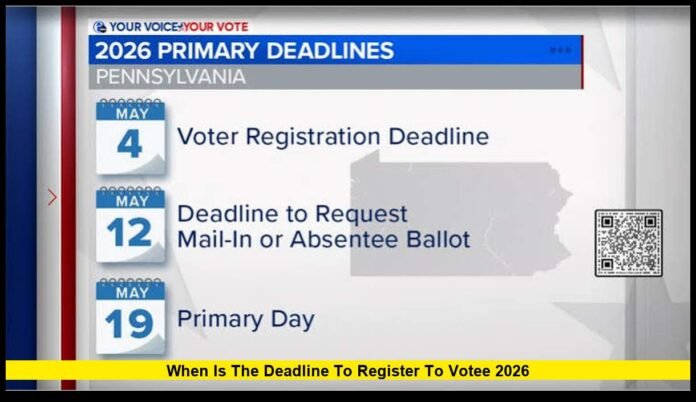

As the 2026 midterm elections approach, eligible voters across the United States are checking when is the deadline to register to vote 2026 to ensure they can participate in the upcoming election. Election Day is scheduled for Tuesday, November 3, 2026, but the final registration date varies by state, registration method, and local election procedures. While some states require voters to register several weeks in advance, others allow eligible residents to register during early voting or on Election Day itself.
Voter registration is an essential step for anyone who wants to cast a ballot in federal, state, or local elections. With Election Day approaching, voters who have not registered should check their eligibility and registration status as soon as possible. Those who have recently moved, changed their names, or are voting for the first time should pay particular attention to their state’s requirements.
When Is the Deadline to Register to Vote for the 2026 Midterm Elections?
There is no single voter registration deadline that applies to every American. Each state establishes its own procedures, including the final date for online applications, the rules for mail-in forms, and the availability of in-person registration.
Many states require registration approximately 15 to 30 days before an election. Others allow eligible voters to complete registration closer to Election Day. A number of states also provide same-day registration, although voters may need to visit a designated location and present documents establishing their eligibility and residence.
For the November 3 general election, voters should distinguish between three important deadlines:
- Registration deadline: The final date to submit a valid voter registration application under the applicable state rules.
- Ballot request deadline: The last day to request an absentee or mail-in ballot, where a separate request is required.
- Ballot return deadline: The deadline for election officials to receive or otherwise accept a completed ballot under state law.
Meeting one deadline does not automatically satisfy the others. For example, registering to vote does not necessarily mean that an absentee ballot has been requested.
Because many advance registration deadlines fall in October, some voters may already have missed the standard application date. However, the availability of same-day registration and other procedures means that voters should confirm their individual options rather than assume they can no longer participate.
2026 Voter Registration Deadlines: Understanding State-by-State Rules
State election laws determine how early voters must register and whether late registration is permitted. The following overview explains the major types of registration systems used across the country.
States With Advance Registration Deadlines
Many states require voters to complete registration before a specified date ahead of Election Day. Depending on the jurisdiction, the deadline may fall approximately three or four weeks before the election.
States with advance registration requirements include Alabama, Alaska, Arizona, Florida, Georgia, Indiana, Kentucky, Louisiana, Mississippi, Missouri, New Mexico, Ohio, Oklahoma, Pennsylvania, South Carolina, Tennessee, Texas, and several others.
The exact deadline depends on state law and the registration method. Some states require applications to arrive by the deadline, while others apply different rules to mailed applications.
Voters in these states should not assume that an application submitted after the standard deadline will be accepted for the November election. They should contact election officials to determine whether an alternative procedure is available.
States That Allow Same-Day or Election Day Registration
Some states allow eligible residents to register and vote during the same visit. This system can help people who missed the traditional registration deadline or discovered that their registration information needs correction.
States with same-day or Election Day registration options include California, Colorado, Connecticut, Hawaii, Idaho, Illinois, Iowa, Maine, Maryland, Michigan, Minnesota, Nevada, New Hampshire, Utah, Vermont, Virginia, Washington, Wisconsin, and Wyoming. Washington, D.C., also provides same-day registration under applicable rules.
The process differs among jurisdictions. Some states allow registration during an early voting period, while others provide an Election Day option at designated locations. Identification, proof of residency, and other documentation may be required.
For example, Washington permits eligible residents to register in person through 8 p.m. on Election Day. Its registration deadlines for online and mail applications are earlier than its in-person deadline.
California provides conditional voter registration during the period leading up to Election Day and on Election Day. Eligible voters must complete the required registration process and follow the state’s instructions for casting a ballot.
These examples illustrate why checking the rules for your specific state is important. Same-day registration does not mean that every registration method remains available until Election Day.
What About North Dakota?
North Dakota does not require voter registration. Eligible residents can vote if they satisfy the state’s identification, residency, and other voting requirements.
Although registration is not required, voters should still review the rules before Election Day to ensure they bring the necessary identification and understand where and how they can vote.
How to Check Your Voter Registration Status
Checking your registration status is one of the most useful steps you can take before the midterm elections. Even people who registered in previous years should verify that their records remain accurate.
Follow these steps to review your status:
- Confirm your state of residence. Voter registration is administered under state and local election laws.
- Check your registration record. Use your state’s official election services or contact the relevant election office.
- Review your personal information. Make sure your name, residential address, and other required details are correct.
- Check your registration status. Determine whether your record is active and whether any additional action is needed.
- Follow up if your record is missing. Ask election officials whether you must submit a new application or provide additional information.
Registration records can be affected by moving, name changes, administrative updates, or other circumstances. Checking early gives voters more time to resolve potential problems.
If you have moved to another state, you generally need to register according to the new state’s requirements. If you moved within the same state, you may need to update your existing registration rather than submit a completely new application.
Can You Register to Vote Online in 2026?
Online voter registration is available in many states and can make the application process more convenient. Instead of completing a paper form, eligible residents can enter their information through a state-operated registration system.
However, online registration is not available under identical conditions nationwide. States may impose different eligibility rules, identity verification requirements, and submission deadlines.
Before applying online, confirm the following:
- Whether your state offers online voter registration.
- Whether you need a state driver’s license or identification card.
- Whether your application must be submitted by a particular time on the deadline date.
- Whether your information can be verified electronically.
- Whether you will receive confirmation that your application was accepted.
Submitting an online form does not necessarily mean that your registration is complete. Follow the system’s instructions and check your registration record afterward.
If the online deadline has passed, check whether your state permits in-person registration or offers another lawful way to register before the election.
Registering by Mail or In Person
Voters who cannot use online registration may have other options, depending on their state.
Mail Registration
Paper applications remain an option in many states. However, the rules for determining whether an application is timely differ by jurisdiction.
Some states require election officials to receive the application by the deadline. Others recognize the postmark date under specified conditions.
When registering by mail, allow enough time for delivery and processing. Keep a copy of your application if possible, and verify that it has been received and processed.
In-Person Registration
In-person registration may be available at designated election offices or other authorized government locations. In certain states, this method provides a later deadline than online or mail registration.
Ask election officials which locations accept applications, what identification is required, and whether you can register and vote during the same visit.
If you are close to the deadline, avoid relying on general information about registration services. Confirm the hours and requirements of the specific office you intend to visit.
Who Can Register to Vote in the 2026 Elections?
Eligibility rules vary by state, but several requirements commonly apply to federal elections.
U.S. citizenship: Eligible voters generally must be U.S. citizens to register for federal elections.
Age: Voters generally must be at least 18 years old by Election Day. Some states allow eligible 17-year-olds to register or participate in certain primaries if they will be 18 by the general election.
Residency: Applicants must satisfy the residency requirements established by their state.
Personal information: Registration applications generally request information such as a legal name, residential address, date of birth, and other details required by state law.
Identification: Depending on the state and registration method, applicants may need a driver’s license number, state identification number, or other identifying information.
Additional rules may apply to people with certain criminal convictions, individuals whose voting rights have been restored, and voters living temporarily outside their usual state of residence. People with questions about their eligibility should seek guidance from their election office.
What Happens If You Miss the Registration Deadline?
Missing the standard registration deadline does not necessarily eliminate every opportunity to vote.
Your options depend on your state and the circumstances involved. If you discover that the deadline has passed, consider the following steps.
Check for Same-Day Registration
Determine whether your state permits registration during early voting or on Election Day. If it does, confirm the locations, operating hours, documentation requirements, and procedures for casting a ballot.
Contact Local Election Officials
Your local election office can explain whether an alternative registration procedure is available. Officials can also help determine whether your existing registration is active or whether an application remains incomplete.
Verify Your Existing Record
You may already be registered, even if you do not remember submitting an application. Check your status before assuming that a new registration is necessary.
Ask About Special Voting Procedures
Military personnel, eligible overseas citizens, and some other voters may have additional registration or voting procedures. These rules can differ from those applicable to residents voting in person.
Avoid relying on unofficial advice when the deadline is close. Election officials are best positioned to explain the procedures that apply to your circumstances.
Why the 2026 Midterm Elections Matter
The November 3, 2026, midterm elections will determine the membership of the U.S. House of Representatives and influence the balance of power in the Senate. Voters will also participate in numerous gubernatorial, state legislative, local, and ballot-measure contests.
Midterm elections can influence federal legislation, government spending, public policy, and the direction of state and local governments. The candidates and issues appearing on the ballot vary by location, making it important to understand the contests taking place in your community.
Registration is only the first part of election preparation. Voters should also confirm their polling location, review early voting opportunities, understand absentee ballot rules, and determine what identification may be required.
People voting by mail should pay particular attention to ballot request and return deadlines. These are separate from voter registration deadlines in many states, and missing one can affect the ability to cast a ballot using a particular method.
Frequently Asked Questions
When is the deadline to register to vote 2026?
The deadline depends on your state and registration method. Some states require registration several weeks before November 3, 2026, while others allow eligible residents to register during early voting or on Election Day.
Can I register to vote on November 3, 2026?
Possibly. Eligible voters in states offering Election Day registration may register and vote on November 3, provided they follow the applicable procedures and meet all requirements.
Can I register online if the deadline is approaching?
Yes, if your state still accepts online applications. Check the applicable deadline immediately and confirm whether another registration method is available if the online deadline has passed.
Do I need to register again if I voted in a previous election?
Not necessarily. If your registration is active and your information remains correct, you generally do not need to register again. Moving or changing your name may require an update.
What is the difference between voter registration and absentee voting?
Voter registration establishes your eligibility to participate in an election under the applicable rules. Absentee or mail-in voting concerns how you receive and return your ballot. Separate deadlines may apply.
Where can I find accurate registration information?
Consult your state or local election office for the latest requirements. Confirm that the information applies to the November 3, 2026, general election and your preferred registration method.
Final Thoughts
Voter registration deadlines are not uniform across the United States, and waiting until the final days can make the process more difficult. Eligible residents should check their registration records, review state requirements, and address any missing information before Election Day.
If the standard deadline has passed, investigate whether same-day registration or another permitted option is available. Taking a few minutes to verify your status can help you prepare for the 2026 midterm elections with greater confidence.
Have you checked your voter registration for the 2026 elections? Share your questions in the comments and stay informed about important voting deadlines and election updates.