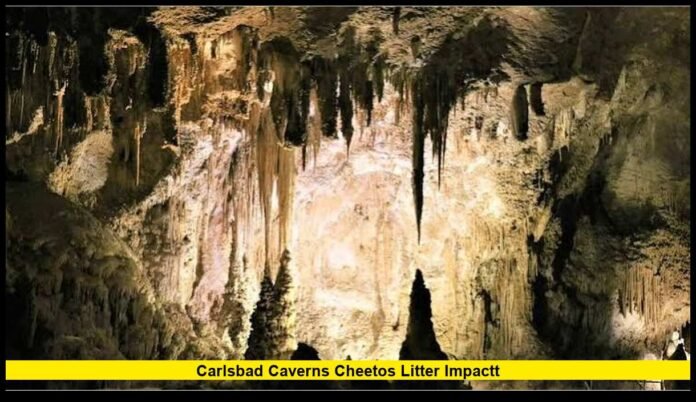

The carlsbad caverns cheetos litter impact story highlights an unexpected environmental problem inside one of America’s most remarkable underground landscapes. A discarded bag of Cheetos left in Carlsbad Caverns National Park in New Mexico became a source of nutrients for microorganisms and small cave-dwelling animals, demonstrating how even a seemingly harmless piece of litter can disturb a delicate natural environment. The incident occurred in the summer of 2023 and received widespread attention after the National Park Service discussed its ecological consequences in September 2024. Renewed interest in the story has continued to draw attention to cave conservation, responsible tourism, and the importance of preventing food waste from entering protected natural habitats.
The incident was notable because the snack did not simply remain on the ground as an unsightly piece of trash. Moisture softened the processed corn product, encouraging microbial and fungal growth. Small organisms gathered around the food and the developing biological material, creating a temporary food web that would not naturally have formed in the same way. Although park personnel removed the discarded material and addressed the affected area, the event illustrated how human activity can introduce unexpected changes into an ecosystem that has developed under very different conditions from the world above ground.
What Happened in the Carlsbad Caverns Cheetos Incident?
The incident took place inside the Big Room, a vast underground chamber at Carlsbad Caverns National Park. Known for its impressive limestone formations, extensive passages, and distinctive underground environment, the Big Room attracts visitors who want to experience one of the country’s most remarkable cave systems.
During the incident, a visitor left a bag of Cheetos inside the cavern. The discarded snack introduced processed food into an environment where naturally available nutrients can be limited. Under the cavern’s humid conditions, the chips softened and began breaking down, providing an opportunity for microorganisms and fungi to grow.
As the material changed, small organisms, including cave crickets, mites, spiders, and flies, were attracted to the new food source and associated microbial growth. These organisms became part of a temporary food web centered on the discarded snack.
The National Park Service explained that park personnel spent approximately 20 minutes removing the foreign material and addressing the mold that had developed around it. The cleanup required care because cave surfaces and geological formations can be vulnerable to inappropriate handling.
The event quickly became a widely discussed example of why visitors must follow conservation rules, even when the material they leave behind appears insignificant.
Why the Big Room at Carlsbad Caverns Is an Environment Worth Protecting
Carlsbad Caverns National Park, located in southeastern New Mexico, protects an extraordinary underground landscape shaped by geological processes over millions of years. Its caves contain extensive limestone formations, chambers, and passages that provide valuable opportunities for scientific study and public education.
The Big Room is especially well known for its enormous scale and remarkable geological features. Visitors can encounter stalactites, stalagmites, columns, and other formations created through slow mineral deposition.
However, the cavern is more than a geological attraction. It is also an environment where microorganisms and small animals interact with available nutrients and moisture.
Many cave habitats receive little or no direct sunlight, meaning that their food webs function differently from those in forests, grasslands, and other surface environments. Organic material entering a cave can become an important resource for organisms that encounter it.
This makes the introduction of foreign food particularly significant. A snack that might quickly disappear into the soil or be consumed by animals in an outdoor setting can create a concentrated source of nutrients in a place where such material is not normally available in the same form.
Protecting Carlsbad Caverns therefore requires attention to both its visible geological features and its less noticeable biological processes.
How Moisture and Mold Contributed to the Environmental Disturbance
Moisture played an important role in the Cheetos incident. Under humid conditions, the processed corn snack softened, allowing its organic material to become more accessible to microorganisms.
Fungi and other microorganisms are natural components of many ecosystems. They help break down organic material and recycle nutrients. However, their activity depends on environmental conditions, including moisture and the availability of suitable food.
When visitors introduce food into a cave, they can create an artificial concentration of nutrients that encourages microbial activity in an otherwise different environment.
In the Carlsbad Caverns incident, the discarded snack became a resource for biological growth. Mold developed around the material and spread onto nearby surfaces, increasing the area that required attention during cleanup.
This illustrates an important conservation principle: removing a piece of litter is not always as simple as picking up a wrapper. Organic material may soften, fragment, or adhere to uneven surfaces, while the microorganisms associated with it can extend beyond the original object.
The incident does not establish that the entire cavern experienced permanent damage. Instead, it demonstrates how a localized introduction of food can create a biological disturbance that requires careful management.
How the Discarded Snack Attracted Cave-Dwelling Organisms
The appearance of small animals around the Cheetos was one of the most important aspects of the incident.
In a cave environment, food resources can be distributed unevenly. Some organisms depend on organic material carried into the cave by water, animals, or other natural processes. A discarded snack can create an unusual concentration of nutrients that attracts organisms to a specific location.
Cave Crickets
Cave crickets are important components of many cave ecosystems. Depending on the species and available resources, they may feed on organic material and other small organisms. They can also serve as prey for predators, linking different parts of the food web.
Mites
Mites occupy diverse ecological roles. Some feed on fungi or decaying organic material, while others prey on smaller organisms. A new food source can influence where certain mites gather and how they interact with their surroundings.
Spiders
Spiders are predators that feed on other small animals. When additional insects congregate around a food source, predators may also benefit from the increased availability of prey.
Flies and Other Small Insects
Some flies and other insects are attracted to decomposing organic matter or microbial growth. Their activity can contribute to the movement of nutrients between locations.
The presence of these organisms is not itself a problem. They are part of natural ecosystems. The concern is that human food can change where organisms gather and introduce nutrients that would not otherwise be available in the same concentration.
This is why food litter inside caves can have consequences that extend beyond the object itself.
How Serious Was the Carlsbad Caverns Cheetos Litter Impact?
The carlsbad caverns cheetos litter impact is best understood as a documented, localized ecological disturbance rather than evidence that an entire cave system was permanently damaged.
The incident involved microbial and fungal growth, the attraction of small organisms, and the creation of a temporary food web around an artificial food source. Park personnel removed the discarded material and addressed the affected surfaces.
However, publicly available information does not establish the precise long-term effects on individual organisms, nor does it demonstrate a permanent decline in wildlife populations because of the incident.
Distinguishing documented effects from speculation is essential when discussing environmental news. The known consequences are sufficient to explain why the event attracted attention without suggesting that the cavern was destroyed or that widespread ecological damage occurred.
The broader concern is that similar incidents could happen repeatedly if visitors ignore park rules. Multiple introductions of food, organic waste, or other foreign materials could create additional disturbances and increase the burden on conservation staff.
Prevention remains the most effective response because it avoids introducing the material in the first place.
Why Food and Drinks Are Restricted Inside Carlsbad Caverns
Food restrictions inside caves are designed to protect natural resources rather than simply maintain a clean appearance for visitors.
Food scraps can supply nutrients to microorganisms and attract animals to locations where the material would not naturally occur. Spilled drinks may leave residues, while wrappers and containers can become trapped in cracks or inaccessible areas.
Even biodegradable food waste can create problems. Although some materials eventually decompose, their presence may alter local biological activity before they disappear.
Visitors to Carlsbad Caverns should follow the park’s current rules regarding food and beverages. Food is generally restricted inside the cavern, with designated eating areas and applicable exceptions. Plain, unflavored water is permitted.
Visitors should also secure their belongings, avoid leaving crumbs behind, and follow ranger instructions throughout their visit.
These requirements help reduce unnecessary disturbances and allow park personnel to concentrate on protecting the natural environment.
What Visitors Can Do to Prevent Similar Incidents
The Cheetos incident offers practical lessons for anyone exploring national parks, caves, or other sensitive natural areas.
Keep food in permitted areas. Finish snacks before entering restricted sections and follow posted rules about eating and drinking.
Secure wrappers and personal belongings. Small items can fall from pockets or bags without visitors noticing. Check equipment before entering the cavern.
Never leave food scraps behind. Crumbs and other organic material can attract organisms and introduce nutrients into fragile habitats.
Stay on designated trails. Walking outside established routes can disturb natural surfaces and increase the risk of accidental damage.
Report litter to park staff. If you find discarded food inside a cave, notify a ranger rather than attempting a cleanup that could damage formations or spread material.
Respect wildlife. Feeding animals can alter their behavior and create unnatural concentrations of organisms around visitor areas.
Teach children responsible habits. Families can help protect caves by explaining why food restrictions exist and why even small pieces of litter matter.
These precautions are straightforward, but they help prevent avoidable environmental problems.
What the Incident Reveals About National Park Conservation
The Cheetos incident is part of a broader conversation about how tourism affects protected environments. National parks welcome visitors to experience natural landscapes, but increased access also creates responsibilities.
Human activities can introduce litter, noise, contaminants, and other disturbances into places where wildlife and natural processes require protection. The effects are not always immediately visible, particularly in underground habitats.
Caves present special conservation challenges because their geological formations develop slowly, their biological communities can be highly specialized, and some locations are difficult to access for cleanup.
The incident also demonstrates why conservation education matters. Many visitors may understand that plastic wrappers should not be left behind but may underestimate the consequences of food waste. The Cheetos story makes those consequences easier to understand by showing how an ordinary snack became part of a temporary biological disturbance.
Responsible tourism means recognizing that visitors are entering an existing natural system, not an environment that exists solely for recreation.
Frequently Asked Questions
When did the Carlsbad Caverns Cheetos incident occur?
The incident occurred in the summer of 2023. The National Park Service publicly discussed its ecological significance in September 2024, helping bring widespread attention to the consequences of food litter inside caves.
Why were the Cheetos harmful to the cavern?
Moisture softened the processed snack, supporting microbial and fungal growth. Small cave-dwelling organisms were attracted to the resulting food source, creating a temporary food web.
Did park rangers clean up the discarded snack?
Yes. Park personnel removed the material and addressed the affected area. The cleanup required care because cave surfaces and formations can be damaged by inappropriate handling.
Did the incident permanently damage Carlsbad Caverns?
There is no verified evidence establishing permanent damage to the entire cavern. The documented concern involved a localized disturbance and the potential consequences of introducing food into a sensitive environment.
Why is food waste a problem in caves?
Food waste can introduce nutrients, encourage microbial growth, attract animals, and alter the movement of organic material. These effects can occur even when the original amount of litter is small.
Can visitors bring snacks inside Carlsbad Caverns?
Food is generally restricted inside the cavern, except in designated areas and under applicable exceptions. Plain, unflavored water is permitted. Visitors should check current park guidance before entering.
What is the main lesson from the incident?
The event demonstrates that small acts of littering can create biological disturbances in sensitive habitats. Preventing waste from entering caves is more effective than attempting to reverse its effects afterward.
Conclusion: A Small Piece of Litter, a Lasting Conservation Lesson
The Cheetos incident at Carlsbad Caverns shows how easily human activity can introduce unexpected changes into a delicate underground environment. Moisture, microbial growth, mold, and the arrival of small organisms transformed a discarded snack into more than an ordinary piece of litter.
Although park personnel addressed the affected area, the event remains a useful reminder that natural environments require careful treatment. Following food restrictions, securing belongings, and removing all waste from permitted areas can help prevent similar disturbances.
Carlsbad Caverns is an extraordinary natural resource, and protecting it requires cooperation between park staff and visitors. Every responsible decision helps preserve its geological formations and biological communities for future generations.
What are your thoughts on the environmental consequences of food litter in national parks? Share your opinion in the comments and stay updated on important conservation and wildlife stories.