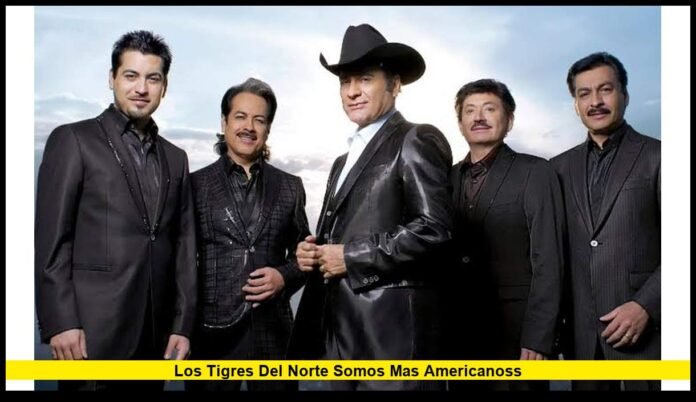

Los Tigres del Norte Somos Mas Americanos is drawing renewed attention after the legendary Mexican norteño group delivered an emotionally charged performance of its immigration anthem during NPR Music’s Tiny Desk concert series on October 15, 2026. The appearance placed Mexican American identity, border history, and the experiences of immigrant families at the center of a musical moment that reached audiences across the United States. By opening with one of its most socially significant recordings, the band demonstrated how music can preserve cultural history while speaking directly to contemporary debates about immigration and belonging.
Los Tigres del Norte Bring Their Immigration Message to Tiny Desk
Los Tigres del Norte made their Tiny Desk debut with a performance that combined traditional norteño music with stories reflecting the experiences of Latino communities. The concert was recorded at NPR Music’s offices in Washington, D.C., and released during Hispanic Heritage Month celebrations.
The group opened with Somos Más Americanos, a song recognized for challenging assumptions about who belongs in the United States. Its message immediately established the tone for a performance that connected musical storytelling with questions of identity, history, and human dignity.
Before the musicians began playing, NPR’s Felix Contreras introduced the band with an emotional tribute to its longstanding commitment to Latino communities. His remarks highlighted the importance of artists who give visibility to people whose experiences often receive limited representation in mainstream public conversations.
The introduction created an atmosphere of appreciation before the first notes sounded. As the performance began, the familiar accordion-led sound and direct storytelling style of Los Tigres del Norte brought the song’s message into an intimate setting.
The Tiny Desk format differs from a traditional concert because it places musicians in a compact office environment rather than a large auditorium. That setting encouraged viewers to focus on the lyrics, musicianship, and emotional weight of the material.
For longtime fans, the performance offered a fresh opportunity to hear a familiar song in a different environment. For new listeners, it provided an introduction to a band whose influence extends well beyond regional Mexican music.
Why “Somos Más Americanos” Remains an Important Song
Released in 2001 on the album Uniendo Fronteras, Somos Más Americanos explores the relationship between Mexican identity, American history, and the modern border separating the United States and Mexico.
The song tells the story of someone who faces rejection and is told to return to another country. Its central argument challenges the assumption that people of Mexican heritage are automatically outsiders in territories where Mexican communities have deep historical roots.
Rather than relying on abstract political language, the song uses a personal perspective to communicate its message. The narrator responds to accusations of not belonging by pointing toward the history of the land itself.
That approach gives the recording its emotional force. The song transforms a complicated historical subject into a story about dignity, cultural identity, and the experience of being treated as a foreigner.
Its message also reaches beyond first-generation immigrants. Mexican Americans whose families have lived in the Southwest for generations may recognize the tension between their cultural heritage and the assumptions other people make about their nationality.
The recording remains relevant because the questions it raises have not disappeared. Discussions about immigration enforcement, citizenship, border security, and cultural belonging continue to shape American public life.
The song does not attempt to resolve every disagreement surrounding immigration policy. Instead, it asks listeners to consider the people and histories behind those debates.
The History Behind the Song’s Border Message
Understanding the song requires examining how the modern U.S.-Mexico border developed.
Before the Mexican-American War began in 1846, Mexico controlled extensive territory across what is now the American Southwest. The war ended with the Treaty of Guadalupe Hidalgo in 1848, under which Mexico ceded a substantial portion of its northern territory to the United States.
The United States later acquired additional land through the Gadsden Purchase of 1853–1854.
These changes transformed the political boundaries of the region and affected communities whose homes and cultural connections existed long before the modern border took shape.
For families living in the transferred territories, national jurisdiction changed even when their communities remained in place. The resulting history continues to influence conversations about identity, language, land, and belonging.
The song draws on these events to challenge the idea that Mexican ancestry automatically makes someone foreign to the United States. Its perspective emphasizes the longstanding presence of Mexican and Indigenous communities throughout the region.
However, the song presents a cultural and historical argument rather than a legal definition of citizenship. Modern immigration status depends on applicable law, not simply on historical territorial changes.
Its enduring power comes from connecting these broader events to the experiences of individuals who face questions about whether they belong.
A Five-Song Performance Spanning Multiple Musical Traditions
The Tiny Desk concert also demonstrated the breadth of Los Tigres del Norte’s musical catalog.
The group performed five songs, balancing its socially conscious material with romantic ballads and enduring regional Mexican favorites.
The setlist included:
- “Somos Más Americanos” — The immigration anthem that opened the performance and established its central message.
- “Golpes en el Corazón” — A popular song that explores emotional pain and the difficulties of love.
- “Quiero Volar Contigo” — A romantic selection that highlighted the band’s softer, melodic side.
- “Ni Parientes Somos” — A well-known heartbreak song that invited listeners to connect with the group’s storytelling.
- “La Puerta Negra” — A recognizable classic that brought a celebratory atmosphere to the performance.
The sequence illustrated why the band has maintained such a broad audience over several decades. Its music can address serious social questions while also capturing the humor, heartbreak, romance, and everyday experiences of ordinary people.
That variety matters because the group’s identity cannot be reduced to a single political message. Its larger catalog reflects the many dimensions of family and community life.
The performance also showed how familiar songs can take on new significance when artists present them in a different setting. A track associated with large concerts and longtime fans can reach a new audience when it appears in an intimate digital performance.
Los Tigres del Norte’s Longstanding Commitment to Social Storytelling
Los Tigres del Norte have built their reputation around narrative-driven regional Mexican music. Their songs frequently explore migration, economic hardship, family responsibilities, social inequality, and the challenges faced by working-class communities.
This storytelling tradition distinguishes the band from artists whose repertoires focus primarily on romance or celebration. Los Tigres del Norte often place individual experiences within broader social and historical circumstances.
Migration has remained an especially important subject throughout their career. Many Latino families have experienced separation, uncertainty, and difficult decisions about employment and residence. The band’s music gives emotional expression to these experiences without reducing them to statistics.
The group has also developed an audience that extends beyond Mexico and the United States. Its listeners include people from different Latin American backgrounds who recognize similar experiences in the band’s stories.
That connection helps explain why the group’s music can resonate with communities whose national origins differ. Themes such as family separation, the search for opportunity, discrimination, and cultural pride are not limited to one country.
The Tiny Desk performance continued this tradition by bringing a socially significant recording into a format that encourages close listening.
How the 2011 Zack de la Rocha Collaboration Expanded the Song’s Reach
Another important moment in the song’s history came in 2011, when Los Tigres del Norte collaborated with Zack de la Rocha on a version of Somos Más Americanos for the group’s MTV Unplugged project.
De la Rocha, the Mexican American vocalist best known for Rage Against the Machine, brought a different musical background to the collaboration.
The pairing connected regional Mexican music with the politically charged rock tradition associated with his band. Although the artists came from different musical environments, both had worked with themes involving power, inequality, and social identity.
The collaboration introduced the song to audiences who might not otherwise listen regularly to norteño music. It also demonstrated that the track’s central message could travel across genres without losing its cultural foundation.
The recording remains an important part of the song’s history because it shows how artists can use different musical approaches to explore related concerns.
The 2026 Tiny Desk performance created another opportunity for the song to reach listeners who may know the group primarily through its classic romantic recordings or who are discovering its socially conscious material for the first time.
Why the Tiny Desk Appearance Matters in 2026
The release arrived during Hispanic Heritage Month, a period when communities across the United States celebrate Latino history, culture, and contributions to American society.
Its timing gave the performance additional cultural significance. Immigration and border policy remain subjects of intense public debate, while Latino communities continue to navigate questions about representation, discrimination, and belonging.
By opening with Somos Más Americanos, the band placed these experiences at the center of its appearance rather than treating them as background context.
The intimate format also helped emphasize the human dimensions of the song. Without the scale of a large concert production, viewers could concentrate on the lyrics and the musicians’ delivery.
The performance demonstrated that established recordings can remain culturally relevant long after their original release. A song first introduced in 2001 can still prompt new conversations when audiences encounter it during a different historical moment.
It also highlighted the role of digital music platforms in bringing regional Mexican artists to broader audiences. Viewers who might never attend a Los Tigres del Norte concert can experience the group’s performance through a widely accessible online format.
For the band, the appearance reinforced a legacy built on preserving stories that connect generations of listeners.
What Makes the Song Resonant for Mexican American Audiences?
For many Mexican Americans, the song addresses the complicated experience of belonging to more than one cultural tradition.
People who grow up in bilingual households, maintain close relationships with relatives in Mexico, or participate in traditions shared across the border may see their identities reflected in its message.
The song also speaks to people who have faced assumptions about their nationality because of their names, accents, appearance, or family backgrounds.
Its historical perspective challenges the idea that identity can be determined entirely by birthplace or by another person’s expectations. It encourages listeners to consider the generations of communities that helped shape the region.
At the same time, the song’s message can introduce other audiences to aspects of U.S.-Mexico history that receive limited attention in everyday discussions about immigration.
Its emotional storytelling creates an accessible starting point for conversations about the past and its influence on the present.
That does not mean every listener will interpret the song in the same way. Some may focus on its historical argument, while others may connect more strongly with its message of cultural pride or resistance to discrimination.
The ability to support these different interpretations helps explain the recording’s continued relevance.
Frequently Asked Questions
When did Los Tigres del Norte perform at Tiny Desk?
Los Tigres del Norte’s Tiny Desk concert was released by NPR Music on October 15, 2026. The performance was recorded at NPR Music’s offices in Washington, D.C.
When was “Somos Más Americanos” released?
The song appeared on Los Tigres del Norte’s 2001 album Uniendo Fronteras.
What is the main message of the song?
The song challenges the assumption that people of Mexican heritage are outsiders in the United States. It draws on the history of territorial changes along the U.S.-Mexico border and emphasizes cultural identity, dignity, and belonging.
Which songs did the band perform at Tiny Desk?
The five-song setlist included Somos Más Americanos, Golpes en el Corazón, Quiero Volar Contigo, Ni Parientes Somos, and La Puerta Negra.
Who is Zack de la Rocha?
Zack de la Rocha is the Mexican American vocalist best known for Rage Against the Machine. He collaborated with Los Tigres del Norte on a version of Somos Más Americanos featured in the group’s 2011 MTV Unplugged project.
Why is the song relevant today?
Its themes of immigration, discrimination, cultural identity, and historical memory continue to resonate amid public debates about border policy and the experiences of Latino communities in the United States.
The Lasting Legacy of Los Tigres del Norte
Los Tigres del Norte continue to demonstrate that regional Mexican music can serve as both entertainment and a powerful form of cultural storytelling. Their Tiny Desk appearance brought a familiar song into a new setting, allowing audiences to revisit its historical message while appreciating the musicianship that has defined the group for decades.
The performance also highlighted the enduring relationship between music and community. Songs can preserve memories, challenge assumptions, and provide recognition to people whose experiences are frequently misunderstood.
More than two decades after its original release, los tigres del norte somos mas americanos remains an important example of how music can connect historical events with present-day questions about identity and belonging.