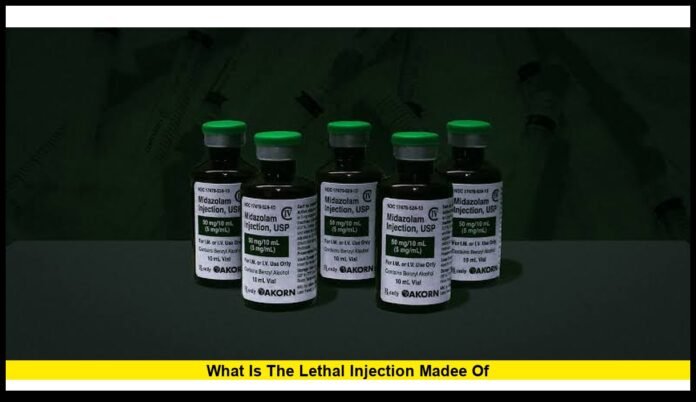

What is the lethal injection made of? In the United States, the answer depends on the jurisdiction, but pentobarbital has become the central drug in many current execution protocols.
The subject has drawn renewed attention after Tennessee’s September 30, 2026, execution attempt involving Christa Pike. Tennessee officials administered two doses of pentobarbital, but Pike survived and was transported to a hospital. As of October 7, she remains hospitalized, while her attorneys are seeking preservation of evidence from the procedure. Tennessee has also halted its remaining scheduled executions for 2026 while the state reviews what happened.
The case has put a spotlight on an important fact that is sometimes missed in discussions about capital punishment: lethal injection does not have one universal formula across the United States.
Some states rely on a single drug. Others authorize combinations involving a sedative or anesthetic, a paralytic drug and a chemical intended to cause cardiac arrest. The federal government currently uses a single-drug pentobarbital protocol.
There Is No Single National Lethal-Injection Formula
Lethal injection protocols are established by individual states or, for federal prisoners, by the federal government. Consequently, the drugs authorized in one jurisdiction can differ significantly from those used somewhere else.
Current protocols include several different pharmaceutical substances. Pentobarbital is the most prominent, but it is not the only drug authorized for lethal injection in the country.
Other drugs appearing in state protocols include:
- Midazolam
- Etomidate
- Sodium thiopental
- Fentanyl
- Hydromorphone
- Ketamine
- Diazepam
- Rocuronium bromide
- Vecuronium bromide
- Pancuronium bromide
- Cisatracurium besylate
- Potassium chloride
- Potassium acetate
Not every state uses these drugs in the same combination, and some jurisdictions authorize alternatives.
The difference matters because descriptions of lethal injection often refer to the traditional three-drug procedure. That approach remains authorized in several states, but single-drug protocols have become increasingly prominent.
Pentobarbital Has Become the Key Drug
Pentobarbital is a barbiturate that depresses activity in the central nervous system. It has medical applications involving sedation and anesthesia, although its availability and use have changed significantly over time.
For executions, some states use pentobarbital as the sole drug in their lethal-injection protocol.
This approach is currently authorized in a number of states, including Texas, Tennessee, Georgia, Idaho, Indiana, Louisiana, Missouri, North Carolina, South Carolina and Utah. Other states also authorize pentobarbital as one of several possible methods or drug choices.
The federal government likewise uses pentobarbital as its lethal agent.
In April 2026, the U.S. Department of Justice directed the Federal Bureau of Prisons to reinstate the lethal-injection protocol used during the first Trump administration. That protocol relies on pentobarbital.
This development makes pentobarbital particularly important when examining the current federal and state execution landscape.
How a Single-Drug Protocol Differs
A single-drug protocol is designed around one pharmaceutical agent rather than a sequence of different drugs.
Pentobarbital is administered intravenously under the state’s execution procedure. The intended effect is profound central nervous system depression followed by death.
This differs from the traditional three-drug model, which separates the intended effects among multiple medications.
Single-drug protocols have become attractive to states partly because pharmaceutical supply problems have made older combinations difficult to maintain.
They also avoid the need to obtain separate paralytic and potassium-based drugs.
However, the use of one drug has not eliminated controversy. Questions about the sourcing, quality, storage and administration of execution drugs continue to generate litigation and public scrutiny.
The Traditional Three-Drug Approach
For decades, lethal injection in the United States was commonly associated with a three-drug sequence.
The first drug was intended to cause unconsciousness. The second was a neuromuscular blocker. The third was intended to cause cardiac arrest.
Older protocols frequently used sodium thiopental as the first drug, pancuronium bromide as the second and potassium chloride as the final drug.
That combination is no longer the dominant model nationwide.
The availability of sodium thiopental declined sharply after its U.S. manufacturer stopped producing it. States subsequently turned to other drugs, including pentobarbital and midazolam.
Some jurisdictions still retain three-drug protocols, while others have moved entirely to single-drug procedures.
The Role of Midazolam
Midazolam is a benzodiazepine that produces sedation. It became increasingly prominent in execution protocols after states experienced difficulty obtaining traditional barbiturates.
Several states authorize midazolam in lethal-injection combinations.
A midazolam-based protocol can pair the sedative with a neuromuscular-blocking drug and potassium chloride.
Alabama, for example, uses a protocol involving midazolam, rocuronium bromide and potassium chloride.
The role of midazolam has been heavily debated in court because questions have been raised about whether it reliably produces the depth of unconsciousness required during a multi-drug execution.
Its continued presence in state protocols demonstrates how different jurisdictions have responded to shortages and pharmaceutical restrictions.
Why Paralytic Drugs Appear in Some Protocols
Neuromuscular blockers are another category of drugs found in some execution protocols.
Rocuronium bromide, vecuronium bromide and pancuronium bromide are examples.
These drugs interfere with communication between nerves and muscles. Their effects can cause paralysis, including paralysis of the muscles required for normal breathing.
They serve a different purpose from a sedative or anesthetic.
A state using a three-drug protocol may administer a sedative first, a neuromuscular blocker second and a potassium-based drug afterward.
Single-drug pentobarbital protocols do not require a separate paralytic.
That distinction is important because the phrase “lethal injection” does not automatically mean that three separate drugs are involved.
Why Potassium Chloride Is Used
Potassium chloride has been used as the final component of numerous three-drug lethal-injection protocols.
Potassium is essential to normal electrical activity throughout the body. A large intravenous exposure can severely disrupt the electrical function of the heart.
Potassium chloride can therefore be used as the final drug in protocols designed to produce cardiac arrest.
Some jurisdictions instead authorize potassium acetate.
Florida’s current protocol, for example, uses etomidate, rocuronium bromide and potassium acetate.
Again, this is not universal. A person executed under a single-drug pentobarbital protocol does not receive a separate potassium injection as part of that protocol.
Etomidate Is Another Modern Component
Etomidate is an anesthetic drug used in some state execution protocols.
Florida’s lethal-injection procedure uses etomidate as the first component, followed by rocuronium bromide and potassium acetate.
The use of etomidate illustrates how significantly execution protocols have evolved.
States have had to develop alternatives as manufacturers have restricted access to drugs associated with executions. The result is a patchwork of different formulas rather than one standardized national procedure.
Why Execution Drugs Became Difficult to Obtain
Pharmaceutical companies generally do not manufacture drugs specifically for executions. Many companies have also adopted policies preventing their products from being supplied for that purpose.
These restrictions have affected the availability of drugs traditionally used in lethal injection.
States have responded in several ways. Some have adopted alternative drugs. Others have relied on compounding pharmacies or attempted to obtain supplies through confidential channels.
The issue has generated repeated court disputes over the identity and reliability of execution drugs.
State secrecy laws can make the situation even more complicated. Some jurisdictions shield information about suppliers, pharmacists and other participants in the procurement process.
The Tennessee Pentobarbital Case
The September 30, 2026, execution attempt involving Christa Pike has brought the issue of pentobarbital into particularly sharp focus.
Pike was scheduled to be executed at Riverbend Maximum Security Institution in Nashville. Tennessee’s protocol relies on pentobarbital.
Officials administered two doses during the attempt.
The execution did not result in her death. Pike was eventually taken to a hospital for medical treatment.
By October 7, her attorneys said she was conscious and speaking, although she remained hospitalized and faced a long recovery.
The Tennessee Department of Correction stated that officials followed the state’s established protocol. The department also said its protocol did not permit additional procedures beyond those carried out during the execution attempt.
Governor Bill Lee subsequently halted the state’s remaining executions for 2026 and ordered an independent review.
The incident has created new scrutiny of Tennessee’s execution procedures, particularly because the state uses a single-drug pentobarbital protocol.
The Federal Government Uses Pentobarbital
The federal government also currently relies on pentobarbital for lethal injection.
In April 2026, the Justice Department announced that the Federal Bureau of Prisons would reinstate the lethal-injection protocol used during the first Trump administration.
The department’s announcement specifically identified pentobarbital as the lethal agent.
The federal policy is significant because it confirms that pentobarbital remains a central component of the U.S. government’s current execution strategy.
The federal government has also expanded the available execution methods to include alternatives such as firing squads, but lethal injection remains an authorized method.
Texas Faces New Questions About Pentobarbital
Texas is another major jurisdiction using pentobarbital.
The state has historically carried out more executions than any other U.S. jurisdiction, making its drug protocol especially significant.
On October 7, 2026, Texas was preparing for the scheduled execution of Jamaal Howard. His attorneys asked officials to delay the execution while seeking information about the state’s pentobarbital supply.
The request followed Pike’s failed execution in Tennessee, which also involved pentobarbital.
Texas uses compounded pentobarbital because pharmaceutical manufacturers generally refuse to sell drugs for executions. The state’s handling of its supply has previously faced legal challenges involving questions about drug testing and expiration dates.
The controversy demonstrates how the composition of an execution is only one part of a larger issue. The source, storage and testing of the drug can also become central to legal challenges.
Why Protocols Continue to Change
Lethal-injection procedures have changed for several reasons.
Drug manufacturers have restricted the use of their products in executions. Courts have considered challenges to particular drug combinations. States have also faced difficulty maintaining reliable supplies.
As a result, execution protocols have evolved from older three-drug formulas toward a mixture of single-drug and alternative multi-drug approaches.
The changes are not uniform.
One state may use pentobarbital alone, while another uses three separate drugs. A third jurisdiction may authorize several different combinations.
That is why identifying the exact state is essential when answering questions about what drugs are used during a lethal injection.
What Is the Lethal Injection Made Of Today?
So, what is the lethal injection made of under current U.S. practices?
There is no single answer for every jurisdiction.
Pentobarbital is the most important single-drug lethal-injection agent currently used by multiple states and the federal government. Other jurisdictions authorize combinations involving drugs such as midazolam or etomidate, neuromuscular blockers such as rocuronium or vecuronium, and potassium-based chemicals.
The current landscape reflects decades of changes in drug availability, state policies and litigation.
The failed Tennessee execution of Christa Pike has now added a significant new chapter to that history. Her survival after two doses of pentobarbital has prompted renewed scrutiny of execution protocols at a time when another Texas execution is facing questions about the state’s pentobarbital supply.
For U.S. readers trying to understand lethal injection today, the most important point is simple: there is no universal national recipe. The drugs depend on the protocol adopted by the jurisdiction carrying out the execution.
The continuing debate over lethal-injection drugs will remain closely watched as states and courts respond to the latest developments.