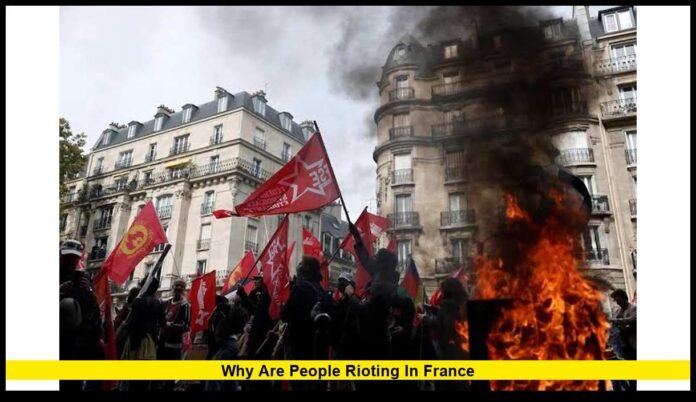

France is facing a rapidly escalating wave of demonstrations, school blockades and clashes with police, leaving many people asking why are people rioting in France as the country confronts one of its most serious youth-led protest movements in years. The immediate dispute centers on education, but the unrest is also tied to public spending, deteriorating services, economic pressure and growing political tension.
The demonstrations have spread from schools around Paris to cities across the country. While many rallies have remained peaceful, some confrontations have involved fires, damaged property, projectiles and police use of tear gas and other crowd-control measures.
Education Has Become the Main Flashpoint
At the center of the movement is a long list of complaints about French schools.
Students say classrooms are overcrowded, teachers are frequently unavailable and aging school buildings are increasingly difficult to maintain. Some schools have reported problems involving leaks, poor ventilation and inadequate facilities.
Teacher shortages have become one of the most frequently cited grievances.
When an educator is absent, students say replacement staff are not always available. That can mean canceled lessons or classes being combined, adding pressure to students who are already dealing with demanding academic schedules.
Young demonstrators have also criticized long school days and the overall pressure placed on teenagers preparing for university and competitive examinations.
For many participants, the protests are therefore about the basic quality of education rather than a single government announcement.
Austerity Has Turned a School Dispute Into a Bigger Political Issue
Education concerns are colliding with France’s difficult financial situation.
The government is preparing a 2027 budget designed to make tens of billions of euros in fiscal adjustments. Officials argue that France needs to bring down its large deficit and reassure financial markets as debt costs rise.
That objective has created a direct conflict with demands for greater spending on public services.
Students and teachers want additional resources for schools, while unions and other public-sector workers are objecting to measures intended to restrain government spending.
The dispute has consequently moved beyond school gates.
For protesters, education is increasingly viewed as evidence of a wider problem involving public investment and the availability of government services.
Why the Demonstrations Have Become Violent
The vast majority of people attending marches are not necessarily participating in violent acts.
However, several demonstrations have developed into clashes between groups of protesters and security forces.
In some cities, objects have been thrown at police, fires have been started and public infrastructure has been damaged. Officers have responded with tear gas and other riot-control methods.
The violence has generated a second major controversy: the conduct of police during demonstrations involving teenagers.
Several young people have suffered serious injuries during confrontations. The government has also reported hundreds of injuries among police officers.
French authorities have opened investigations into allegations of inappropriate police conduct, while officials insist that officers must respond when demonstrations become dangerous.
That disagreement has intensified emotions on both sides.
Thousands Have Been Arrested
The scale of the law-enforcement response has been striking.
French authorities said more than 6,100 people had been arrested since the unrest began, with minors making up the overwhelming majority. More than 1,800 people were facing prosecution, including more than 1,400 minors.
The figures have prompted debate over whether the response is proportionate, particularly because many of those involved are teenagers.
Authorities say the judicial system is responding to acts of violence, attacks on public workers and destruction of property rather than peaceful political expression.
The distinction between lawful protest and criminal behavior has consequently become a central issue in the national debate.
The Movement Has Spread Far Beyond Students
The demonstrations have attracted support from teachers, parents and trade unions.
Parents have joined marches because school closures and poor conditions directly affect their children. Teachers have participated because many of the problems raised by students are also longstanding workplace concerns.
Trade unions have added another dimension by linking the education protests to broader objections to the government’s economic policies.
That combination has increased the movement’s potential reach.
A protest involving students alone might remain concentrated around individual schools. Once teachers, parents and public-sector workers join, the dispute can become a nationwide political confrontation.
Heat and Aging Buildings Added to Frustration
Conditions inside schools became particularly controversial after France experienced severe heat during the summer.
Many school buildings are old and were not designed to handle prolonged periods of extreme temperatures.
Students say poor ventilation and inadequate cooling made already difficult conditions worse.
The issue has helped turn infrastructure into a prominent part of the demonstrations.
Government officials have acknowledged that some school buildings require repairs and that improvements cannot be postponed indefinitely.
Prime Minister Sébastien Lecornu has instructed ministers to examine demands involving school maintenance, teacher replacements, school hours and lunch breaks.
A Government Under Financial Pressure
The government faces a difficult balancing act.
Improving schools requires money, but France is simultaneously attempting to reduce its deficit.
The 2027 budget debate has therefore become closely connected to the demonstrations.
Government officials argue that financial discipline is necessary because France’s debt burden and borrowing costs have become increasingly important economic concerns.
Opponents argue that cutting or restraining public spending could worsen problems that are already visible in schools and other public services.
The competing arguments have made the education dispute part of a much larger debate about what France should prioritize financially.
Political Tensions Are Rising
The unrest is also unfolding as France moves toward its next presidential election.
Political parties on both the left and right have attempted to respond to the demonstrations, while the government has accused some opposition figures of encouraging unrest.
Those accusations have been disputed.
Some opposition politicians have publicly supported students while calling for peaceful demonstrations. Government officials have emphasized the need to prevent protests from turning into violence.
The political significance of the movement is difficult to separate from the timing.
France is entering a period of heightened political competition, meaning demonstrations involving tens of thousands of people can quickly become part of the national electoral debate.
Schools Are at the Center of a Wider Social Crisis
The current unrest reflects more than dissatisfaction with classrooms.
Young people are confronting concerns about education, university admission, future employment and the cost of living. Teachers are dealing with staffing pressures, while parents are worried about the quality of their children’s education.
At the same time, France is trying to address its public finances without triggering greater social resistance.
That combination helps explain why a movement that began around school blockades has grown so quickly.
When people search why are people rioting in France, the answer cannot be reduced to one policy or one incident. The immediate trigger is dissatisfaction with education, but the intensity of the demonstrations reflects a broader accumulation of social and economic grievances.
What Happens Next
The government’s next steps could determine whether the protests begin to lose momentum or develop into a larger national confrontation.
Lecornu has directed ministers to develop proposals addressing some of the students’ demands, including teacher replacements, school schedules and deteriorating buildings.
Whether those measures are considered sufficient remains uncertain.
Protesters have repeatedly demanded tangible improvements rather than promises. Meanwhile, authorities face pressure to maintain public order and protect students, teachers, police and public property.
The coming weeks will show whether negotiations can reduce tensions or whether additional strikes and demonstrations will follow.
For now, France is dealing with a rare combination of student activism, public-sector dissatisfaction, budget pressure and political uncertainty. The immediate battle is taking place around schools, but the underlying debate concerns a much larger question: how much France is prepared to spend on public services and how those services should be funded.