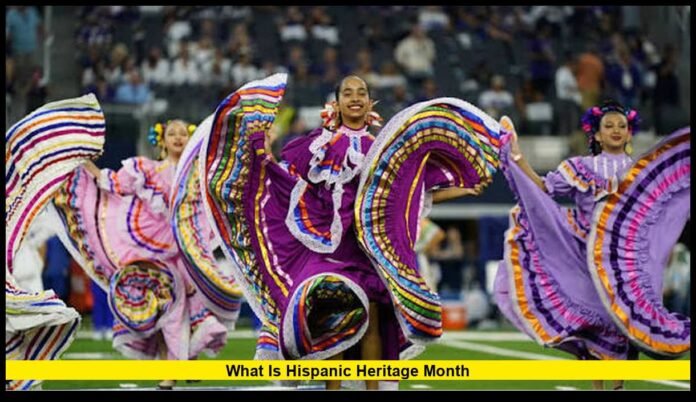

What is Hispanic Heritage Month? It is the annual U.S. observance from September 15 through October 15 that recognizes the histories, cultures, and contributions of Americans with roots in Spain, Mexico, the Caribbean, and Central and South America. In 2026, the observance is underway across the country, with federal institutions continuing to host programs, exhibitions, educational activities, and cultural events. The White House also issued a presidential message on September 17 recognizing the contributions of Hispanic Americans.
The observance has a long history in the United States. What began as Hispanic Heritage Week in 1968 became a month-long national observance in 1988 after Congress approved legislation expanding the period of recognition. Today, September 15 through October 15 provides an opportunity to learn about Hispanic American history and recognize contributions across American society.
The timing is also significant because several Latin American countries celebrate their independence during this period. September 15 marks the independence anniversaries of Costa Rica, El Salvador, Guatemala, Honduras, and Nicaragua. Mexico celebrates its independence on September 16, while Chile observes its independence on September 18.
What Is Hispanic Heritage Month?
Hispanic Heritage Month is a national observance that highlights Hispanic American history, culture, achievements, and contributions to the United States.
The official federal observance runs from September 15 through October 15 every year. Federal agencies, museums, schools, libraries, cultural organizations, and communities use the period to recognize the experiences and accomplishments of Hispanic Americans.
The observance is not limited to one country, tradition, language, or cultural practice. Hispanic communities in the United States have connections to Spain, Mexico, the Caribbean, Central America, and South America.
The National Hispanic Heritage Month government website describes the period as a time to celebrate the histories, cultures, and contributions of American citizens whose ancestors came from Spain, Mexico, the Caribbean, and Central and South America.
That broad background helps explain why Hispanic Heritage Month includes such a wide range of traditions. Events can involve history, literature, music, food, art, education, public service, military service, business, science, sports, and other areas of American life.
When Is Hispanic Heritage Month in 2026?
In 2026, Hispanic Heritage Month began on September 15 and continues through October 15.
The dates remain the same each year. September 15 serves as the starting point because of the independence anniversaries observed by Costa Rica, El Salvador, Guatemala, Honduras, and Nicaragua.
Mexico’s independence is celebrated on September 16, and Chile’s independence celebration falls on September 18. October 12, commonly associated with Columbus Day and Día de la Raza in various countries and communities, also falls within the observance.
The federal observance therefore spans an important series of historical and cultural dates connected to Spanish-speaking countries and communities throughout the Americas.
For Americans looking for the dates in a simple format:
- Start date: September 15
- End date: October 15
- Length: 31 calendar days when both dates are included
- Occurs: Every year
- 2026 status: Currently being observed
The Library of Congress confirms that the law establishing the month-long observance describes it as the 31-day period beginning September 15 and ending October 15.
Why Does Hispanic Heritage Month Start on September 15?
September 15 has historical importance because it marks the independence anniversaries of five Central American countries.
Costa Rica, El Salvador, Guatemala, Honduras, and Nicaragua celebrate their independence on September 15. Mexico follows with its independence celebration on September 16, while Chile’s independence day is September 18.
Congress specifically connected the original observance to these dates when it created Hispanic Heritage Week in 1968. The legislation requested a presidential proclamation for the week that included September 15 and 16.
This history explains why the federal observance does not begin on September 1 or another conventional calendar date. Its starting point comes from important independence anniversaries in Latin American history.
How Did Hispanic Heritage Month Begin?
The history of the observance goes back to 1968.
Congress passed Public Law 90-498 in 1968. The legislation authorized and requested that the president issue an annual proclamation designating the week that included September 15 and 16 as National Hispanic Heritage Week.
President Lyndon B. Johnson issued the first presidential proclamation on September 17, 1968. The original observance lasted one week rather than an entire month.
For the next two decades, presidents continued issuing annual proclamations recognizing Hispanic Heritage Week.
Presidents Richard Nixon, Gerald Ford, Jimmy Carter, and Ronald Reagan issued proclamations during the period when the observance remained a week-long event.
The change came in 1988.
Congress passed Public Law 100-402, which amended the earlier law and established National Hispanic Heritage Month. President Ronald Reagan signed the legislation on August 17, 1988.
The new law established the annual period from September 15 through October 15.
President George H.W. Bush subsequently issued the first presidential proclamation specifically recognizing National Hispanic Heritage Month in September 1989.
Since then, the month-long observance has remained an annual part of the U.S. commemorative calendar.
What Does Hispanic Heritage Month Celebrate?
Hispanic Heritage Month recognizes the many ways Hispanic Americans have contributed to the United States.
Those contributions extend across generations and fields. Federal institutions describe the observance as an opportunity to recognize history, culture, accomplishments, and community contributions.
The celebration can include:
- Hispanic American history
- Literature and writing
- Music and dance
- Visual arts
- Food and culinary traditions
- Science and technology
- Business and entrepreneurship
- Military service
- Public service
- Education
- Sports
- Community leadership
- Family and cultural traditions
The observance also creates opportunities to explore historical experiences that may not receive the same attention throughout the rest of the year.
The Smithsonian’s National Museum of American History describes the 2026 observance as a time to celebrate and reflect on the histories, cultures, and contributions of people with ancestry from Spain, Mexico, the Caribbean, and Central and South America.
Is Hispanic Heritage Month Only About Mexico?
No. Hispanic Heritage Month recognizes communities with connections to many parts of the Spanish-speaking world.
Mexico plays an important role because Mexican independence falls on September 16 and Mexican American history represents a major part of the broader story of Hispanic America. However, the federal definition encompasses ancestry connected to Spain, Mexico, the Caribbean, Central America, and South America.
That means the observance can include histories and traditions associated with many different countries and communities.
The diversity within Hispanic America is one reason the month includes such a broad range of cultural programs. Different communities have distinct histories, traditions, foods, music, languages, and experiences.
At the same time, the term “Hispanic” does not describe every Latino or Latin American identity. The categories used by government agencies can differ depending on the purpose and context.
For Hispanic Heritage Month, the official federal observance specifically emphasizes people whose ancestors came from Spain, Mexico, the Caribbean, and Central and South America.
How Is Hispanic Heritage Month Observed in the United States?
Hispanic Heritage Month is observed through programs organized by government institutions, museums, schools, universities, libraries, community organizations, and other groups.
Activities can range from historical presentations and museum exhibitions to concerts, cultural festivals, educational programs, film screenings, lectures, and family activities.
Federal cultural institutions maintain dedicated resources throughout the month.
The Smithsonian, for example, offers Hispanic Heritage Month programs, resources, exhibitions, and podcasts. Its official Hispanic Heritage Month page lists the observance as September 15 through October 15.
The Library of Congress also maintains Hispanic Heritage Month resources and programs. Its materials include historical documents, cultural resources, educational content, and information about Hispanic American contributions.
The National Archives maintains historical records related to the observance, including presidential proclamations from different periods.
What Is Happening for Hispanic Heritage Month in 2026?
The 2026 observance includes active programming at the Smithsonian and other federal cultural institutions.
As of October 2, the Smithsonian’s National Museum of the American Latino lists several Hispanic Heritage Month events taking place during October.
Among the scheduled activities are guided tours focused on salsa and its musical history. The museum lists tours on October 2, October 3, October 4, October 8, October 9, October 10, October 11, and October 15, with some dates offering multiple sessions.
The museum also lists an Hispanic Heritage Month Educator Open House for October 3, 2026.
Another scheduled event is the Latino Heritage Festival: Quinceañera Traditions & Coming of Age in America, listed for October 11 at Glen Echo Park in Glen Echo, Maryland.
These programs demonstrate that the 2026 observance continues beyond September and remains active during the first half of October.
The Smithsonian also continues to provide online resources for people who cannot attend events in person.
What Did the White House Say About Hispanic Heritage Month in 2026?
The White House issued a presidential message for National Hispanic Heritage Month on September 17, 2026.
The message recognized the achievements and contributions of Hispanic Americans and highlighted their participation in areas including the military, law enforcement, health care, religious leadership, and government.
The message forms part of the federal government’s 2026 recognition of Hispanic Heritage Month.
The White House message is particularly relevant to the current observance because it was issued during the 2026 celebration rather than referring only to the historical origins of the month.
Why Is Hispanic Heritage Month Important in the United States?
Hispanic Heritage Month provides a dedicated period for learning about a major part of American history and culture.
Hispanic American history reaches across centuries and includes communities with roots in different regions of the Americas and Spain. Their experiences include immigration, settlement, military service, political participation, cultural development, education, entrepreneurship, and community building.
The observance also provides an opportunity to recognize contributions that extend beyond a single field.
Museums such as the Smithsonian use the month to connect historical collections with contemporary communities. The National Museum of American History notes that its curators, researchers, and educators continue documenting and sharing Latino histories throughout the year, even though the official observance lasts from September 15 to October 15.
That distinction matters. Hispanic Heritage Month is a designated period of recognition, but Hispanic American history and culture are part of the broader American story throughout the year.
What Is the Difference Between Hispanic Heritage Month and Hispanic Heritage Week?
The primary difference is the length of the official observance.
Hispanic Heritage Week began in 1968 following congressional action and a presidential proclamation during the Johnson administration.
National Hispanic Heritage Month was established in 1988 after Congress amended the original law.
The modern observance runs from September 15 through October 15.
The change reflected an expansion from a single week to a longer period for recognizing Hispanic American history, culture, and contributions.
The legal foundation remains part of federal law. The Library of Congress notes that the relevant provisions are codified at 36 U.S.C. § 126.
How Can People Learn About Hispanic Heritage Month?
People can learn about the observance through museums, libraries, government archives, educational programs, historical collections, and cultural events.
The Smithsonian offers exhibitions and educational resources related to Latino history. The Library of Congress provides historical documents and research materials. The National Archives preserves presidential proclamations and other records connected with the observance.
For families and students, museums can provide an accessible way to explore history through objects, photographs, music, art, and storytelling.
For researchers, federal archives offer primary historical documents that show how the observance developed over time.
For communities, cultural events provide opportunities to experience music, dance, food, art, and traditions connected with Hispanic American heritage.
Frequently Asked Questions
When does Hispanic Heritage Month start?
National Hispanic Heritage Month starts on September 15 every year and continues through October 15.
When does Hispanic Heritage Month end?
The observance ends on October 15. In 2026, the final day will be October 15.
Why does Hispanic Heritage Month start on September 15?
September 15 marks the independence anniversaries of Costa Rica, El Salvador, Guatemala, Honduras, and Nicaragua. Mexico celebrates its independence on September 16.
Who started Hispanic Heritage Month?
The observance began as Hispanic Heritage Week in 1968 after Congress passed legislation and President Lyndon B. Johnson issued the first proclamation. Congress established the month-long observance in 1988.
How long has Hispanic Heritage Month existed?
The month-long version has existed since 1988. Its predecessor, Hispanic Heritage Week, dates back to 1968.
Does Hispanic Heritage Month celebrate only one country?
No. The federal observance recognizes people whose ancestry comes from Spain, Mexico, the Caribbean, and Central and South America.
Is Hispanic Heritage Month a federal holiday?
No. It is a national commemorative observance rather than a federal public holiday. The period recognizes Hispanic American history, culture, and contributions from September 15 through October 15.
What is happening during Hispanic Heritage Month in October 2026?
The Smithsonian’s National Museum of the American Latino has multiple October programs scheduled, including guided tours, an educator open house, and a Latino Heritage Festival.
Does Hispanic Heritage Month happen every year?
Yes. The annual observance takes place from September 15 through October 15.
Why is October 15 significant?
October 15 marks the final day of the annual 31-day observance established by Congress in 1988.
Hispanic Heritage Month remains a yearly opportunity to explore the histories, cultures, achievements, and experiences that have become part of the American story. In 2026, federal museums and institutions continue offering programs and resources through October 15, giving Americans additional opportunities to learn and participate.
As the 2026 observance continues through October 15, explore its history, discover the stories behind the celebration, and share what Hispanic Heritage Month means to you.