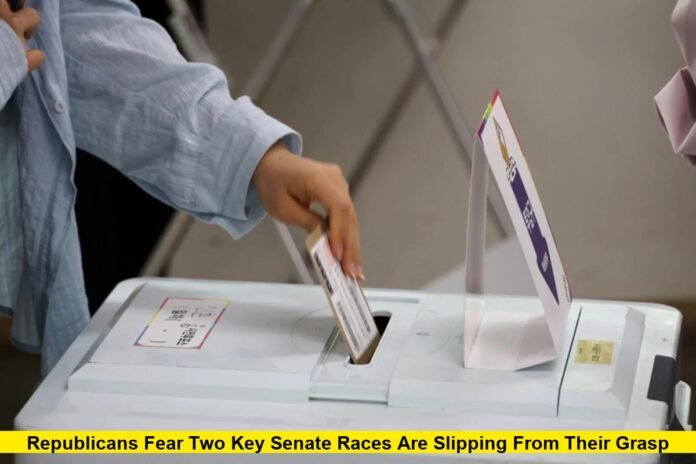

Republicans fear two key Senate races are slipping from their grasp as the 2026 midterm election battle intensifies, with several competitive contests creating new challenges for the party’s efforts to maintain its Senate advantage. The races have drawn national attention because shifting voter concerns, candidate strategies, and broader political conditions are influencing the direction of campaigns.
Why These Senate Races Have Become Major Battlegrounds
The 2026 Senate elections are shaping up around a closely watched group of competitive contests. Republicans entered the cycle with a Senate majority, but several races have become more difficult as candidates navigate changing voter priorities, economic concerns, and debates over national issues.
Two Republican-held Senate contests in particular have received increased attention because party strategists and political observers are monitoring whether recent developments could weaken Republican candidates’ positions. The concerns are not based on a single factor but on a combination of campaign dynamics, voter sentiment, fundraising activity, and the national political environment.
Senate races are often influenced by local issues, candidate quality, and state-level political trends rather than only national approval ratings. For Republicans, protecting vulnerable seats remains a central goal as Democrats look for opportunities to gain seats.
Michigan Senate Race Draws National Attention
Michigan has emerged as one of the most closely watched Senate contests. The state has become increasingly competitive in recent election cycles, with both parties investing significant resources to appeal to independent voters and traditional supporters.
Republican candidate Mike Rogers is campaigning in a state where economic issues, working-class concerns, and voter attitudes toward national leadership are expected to play important roles. His campaign has focused on reaching beyond the Republican base, including efforts aimed at independent voters and some Democratic constituencies.
The race has attracted attention because Michigan represents a broader challenge for Republicans: maintaining support among conservative voters while also appealing to voters in suburban areas and communities that have historically moved between parties.
Republican strategists have highlighted the importance of Michigan because the outcome could influence the overall Senate balance. Democrats, meanwhile, view the race as an opportunity to defend their position and compete in a state where statewide elections have frequently been decided by narrow margins.
Economic Concerns Shape Campaign Messages
Economic issues have become a major theme in several 2026 Senate races. Voters continue to focus on inflation, energy costs, household expenses, wages, and the overall direction of the economy.
Republican candidates have attempted to emphasize issues such as government spending, energy policy, and economic management. Democratic candidates have focused on issues including affordability, healthcare costs, and concerns about policies supported by Republican lawmakers.
In competitive states, candidates from both parties are adjusting their messaging to address voters who may not strongly identify with either political party. Independent voters are expected to play an important role in several Senate contests.
The challenge for Republicans is balancing national party priorities with the concerns of voters in individual states. Candidates must often make decisions about which issues to emphasize based on local political conditions.
Iowa Senate Race Becomes Another Republican Concern
Iowa is another race receiving significant attention as Republicans work to protect a seat that has become a major target for Democrats.
The contest gained additional importance after Republican Senator Joni Ernst decided not to seek another term, creating an open-seat race. Open seats often attract more competition because there is no incumbent running with the advantages that come from holding office.
Republicans have focused on maintaining support in Iowa, a state that has moved toward the GOP in federal elections in recent years. However, Democrats see opportunities to compete by focusing on issues that may appeal to voters beyond traditional Democratic supporters.
The Republican nominee will face the challenge of maintaining the party’s statewide strength while responding to concerns about national issues and voter priorities.
Candidate Strategy Becomes Critical
The 2026 Senate contests are not only about party strength. Individual candidates, campaign organization, fundraising, and voter outreach efforts are also major factors.
Republican candidates in competitive states are working to define themselves based on local concerns rather than relying only on national party identity. Some are emphasizing experience, economic issues, and bipartisan appeals.
Democratic campaigns are also working to build coalitions among younger voters, suburban voters, working-class communities, and independent voters.
Because Senate elections are conducted separately in each state, national trends do not always determine the outcome. A strong candidate can sometimes outperform their party’s national position, while campaign problems can create challenges even in states that usually favor one party.
Internal Republican Challenges Add Pressure
Republicans are also dealing with internal debates over strategy, messaging, and the role of former President Donald Trump’s influence on the party.
Some Republican candidates have attempted to maintain strong support among conservative voters while also creating distance on certain issues that may be unpopular with broader electorates. These choices reflect the difficulty of appealing to both the Republican base and swing voters.
Recent political developments have highlighted differences within the party over foreign policy, economic issues, and campaign priorities. These divisions have become part of the larger discussion surrounding the 2026 elections.
For candidates in competitive states, managing these issues carefully has become a central part of their campaigns.
Democrats See Opportunities in Competitive Seats
Democrats are targeting several Republican-held Senate seats as part of their effort to improve their position in the chamber. Their strategy involves focusing on states where demographic changes, previous election results, or voter concerns create potential openings.
The party’s campaigns are expected to emphasize issues such as healthcare, cost of living, and government accountability. Democratic candidates are also attempting to connect Republican opponents to unpopular national policies while presenting themselves as alternatives focused on state-specific concerns.
However, Senate races remain highly competitive, and campaign conditions can change significantly before Election Day.
Fundraising and Advertising Intensify
Money and advertising are playing a major role in the Senate contests. Competitive races typically attract large investments from candidates, political parties, and outside groups seeking to influence voters.
Campaign advertising has increased as candidates attempt to introduce themselves to voters, define opponents, and shape public perceptions before voting begins.
Republicans have maintained strong fundraising networks, while Democrats have also focused heavily on digital fundraising and voter outreach operations.
The final months of campaigning are expected to bring increased advertising activity, more candidate appearances, and continued debate over major national and state issues.
What Voters Will Watch Before Election Day
As the 2026 Senate races continue, voters are likely to focus on several major issues:
- The economy and household affordability
- Energy and fuel costs
- Healthcare policy
- National security issues
- Candidate experience and leadership style
- The relationship between state priorities and national party agendas
The outcome of closely contested Senate races will depend on how candidates respond to these concerns and how effectively they communicate with voters.
Latest Outlook for the Senate Battle
The concerns surrounding these races reflect the competitive nature of the 2026 Senate elections rather than a guaranteed outcome. Republicans remain focused on defending their seats, while Democrats are seeking opportunities to expand their influence.
The Michigan and Iowa contests demonstrate how quickly Senate races can become national priorities. Candidate decisions, voter concerns, and campaign developments will continue shaping the political landscape as Election Day approaches.
The final results will depend on voter turnout, campaign effectiveness, and the issues that matter most to voters when they cast their ballots.
Stay informed and share your thoughts in the comments about the latest Senate race developments and election updates.