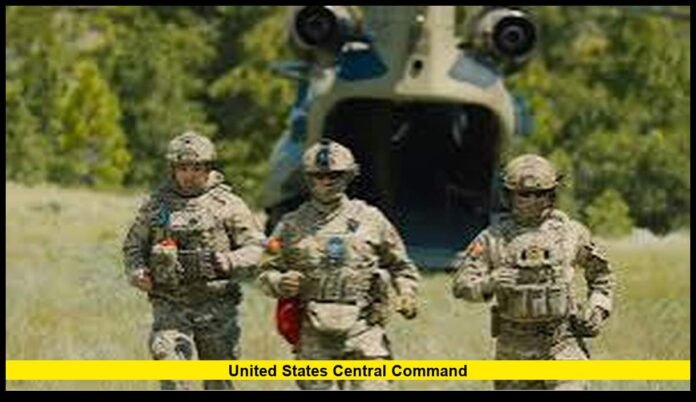

The United States Central Command is handling an increasingly active military environment across the Middle East, with recent operations involving Iran, U.S. Navy ships, maritime security and American forces deployed throughout the region.
The latest developments have placed particular attention on the waters surrounding the Strait of Hormuz and Gulf of Oman. U.S. forces have carried out strikes against Iranian military targets and Iranian-linked oil carriers following attacks directed at American warships. CENTCOM has also reported an incident involving two Iranian boats that attempted to take possession of a U.S. unmanned surface vessel.
More than 50,000 U.S. service members were operating across the Middle East in August, highlighting the scale of the military presence overseen by the command.
What the United States Central Command Does
CENTCOM is one of the U.S. military’s geographic combatant commands. Its headquarters is located at MacDill Air Force Base in Tampa, Florida.
The command coordinates U.S. military activities across its assigned region. Its responsibilities include military operations, force protection, regional security cooperation, maritime security and coordination with partner nations.
CENTCOM brings together capabilities from multiple branches of the armed forces. Those capabilities can include aircraft, ships, ground forces, special operations units, intelligence resources and unmanned systems.
The command’s role becomes especially important during periods of conflict because military units from different services must operate as part of a coordinated structure.
Recent activity has demonstrated that requirement clearly. Aircraft, naval forces and other military assets have been involved in operations connected to Iran and regional maritime security.
Adm. Brad Cooper Leads the Command
Adm. Brad Cooper is the current commander of CENTCOM.
Cooper has maintained an active schedule with American troops and military leaders across the region. His recent travel also included meetings with senior officials from several U.S. partner countries.
During a 10-day Middle East trip completed in August, Cooper visited Bahrain, Iraq, Israel, Jordan, Saudi Arabia and the United Arab Emirates. He also visited the USS Abraham Lincoln while the aircraft carrier operated in the Arabian Sea.
The trip provided Cooper with direct contact with U.S. service members involved in ongoing missions.
The commander’s regional travel also demonstrated the importance of military relationships throughout the Middle East. CENTCOM works closely with partner nations as it manages security challenges affecting the region.
Recent Strikes Against Iranian Military Targets
One of the most important recent developments came September 1.
CENTCOM announced that American forces had completed a wave of strikes against Iranian military targets. The targets included air-defense positions, radar systems, maritime assets, mine-laying capabilities and communications facilities.
The operation followed attempted attacks involving Iranian forces and commercial shipping in the Strait of Hormuz, as well as attacks involving American service members.
The variety of targets illustrates the range of capabilities that CENTCOM considers relevant to regional military operations.
Air-defense systems can protect military facilities from aircraft and missiles. Radar installations can provide detection and tracking capabilities. Maritime assets can support naval operations, while communications infrastructure can connect military units.
Strikes against multiple categories of targets therefore affect several parts of a military network rather than focusing on one type of facility.
U.S. Warships Remain a Major Focus
U.S. Navy forces have played a central role in the latest CENTCOM operations.
On September 5, American forces struck three Iranian crude-oil carriers after the Islamic Revolutionary Guard Corps launched ballistic missiles toward two U.S. Navy warships.
CENTCOM said an American aircraft carrier and a guided-missile destroyer successfully evaded the attacks. No American personnel were harmed in the incidents.
The maritime confrontation continued several days later.
On September 8, CENTCOM announced that U.S. forces had destroyed five additional Iranian crude-oil carriers after the IRGC targeted another American warship with ballistic missiles twice over two days.
The American warship avoided both attacks and continued its patrol.
CENTCOM identified the five vessels as M/T Kaviz, M/T Charminar, M/T Horizon 1, M/T Riesco and M/T Derya. Four were struck in the Gulf of Oman, while the fifth was targeted near Kharg Island.
These operations have made maritime activity one of the most visible elements of CENTCOM’s current mission.
The Strait of Hormuz Remains Critical
The Strait of Hormuz is a narrow waterway connecting the Persian Gulf with the Gulf of Oman.
Its location gives it major strategic importance for maritime traffic.
Military activity around the waterway can therefore affect both military operations and commercial shipping.
CENTCOM has been conducting operations connected to maritime security throughout the region. The command’s recent public statements have repeatedly highlighted Iranian activity involving shipping and U.S. Navy forces.
The latest incidents also show why unmanned vessels and other maritime technologies have become increasingly relevant.
The United States is using unmanned systems in the region while Iranian forces have attempted to interfere with some of those assets.
Latest Unmanned Vessel Incident
The newest publicly reported confrontation involving CENTCOM occurred in September.
The U.S. military said two small Iranian boats attempted to take possession of a U.S. unmanned surface vessel operating in waters off Iran.
CENTCOM spokesman Capt. Tim Hawkins said the Iranian boats attempted to seize the unmanned vessel and that U.S. forces responded by destroying the boats.
Iranian state media presented a different account, describing the boats as fishing vessels and reporting that fishermen were missing after the incident.
The conflicting descriptions underscore the difficulty of establishing every detail during rapidly developing military encounters.
The incident nevertheless highlights the expanding role of unmanned maritime technology in the region.
Task Force Falcon Strike
CENTCOM has been preparing for a larger role for unmanned systems.
In August, the command announced the creation of Task Force Falcon Strike, described as its first multinational attack-drone task force.
The planned task force will use one-way attack drones and involve unmanned systems operating above, on and below the sea.
U.S. personnel and military support staff from regional partners are expected to participate in the multinational structure.
The initiative reflects the growing importance of unmanned technology in modern military operations.
Drones can operate without placing a pilot directly inside a contested area. Maritime unmanned systems can also provide surveillance or other capabilities in waters where sending a crewed vessel could carry greater risk.
For CENTCOM, the technology provides another tool for operating across a complex regional environment.
Operation Epic Fury
A major portion of CENTCOM’s current activity is connected with Operation Epic Fury.
CENTCOM’s official description states that the operation began at the direction of the president and involves strikes against targets associated with Iran’s security apparatus. The command says it prioritizes locations that pose an imminent threat.
The operation has involved military activity across multiple domains.
Aircraft have conducted combat missions. Naval forces have operated in regional waters. Other military units have supported the broader campaign.
CENTCOM’s public releases throughout 2026 have documented successive waves of strikes against Iranian military targets.
The campaign has therefore become a major part of the command’s operational responsibilities.
A Large U.S. Military Presence
The scale of American forces operating under the command remains significant.
CENTCOM reported in September that more than 50,000 U.S. service members were operating across the Middle East.
Those troops support different missions rather than performing one single task.
Their responsibilities can include combat operations, maritime security, force protection, regional cooperation and other military activities.
The size of the deployment also requires substantial logistical coordination.
Military personnel need aircraft, ships, equipment, ammunition, communications systems, transportation and other support capabilities.
CENTCOM’s headquarters coordinates those requirements across a geographically large area.
The USS Abraham Lincoln and CENTCOM Operations
The USS Abraham Lincoln has been an important part of recent U.S. military activity.
Cooper visited the carrier during his August regional trip.
The carrier had been operating in the Middle East since arriving in the region earlier in the year. CENTCOM said the carrier strike group had conducted thousands of combat flights in support of Operation Epic Fury, regional security missions and the naval blockade involving Iran.
Aircraft carriers provide a mobile base for combat aircraft.
Their presence allows the United States to maintain airpower without depending entirely on land bases.
A carrier strike group also includes other naval vessels that provide air defense, missile defense and additional combat capabilities.
That combination makes carrier groups an important component of U.S. military operations under CENTCOM.
Regional Partnerships Remain Important
CENTCOM’s mission does not depend only on American forces.
The command maintains military relationships with countries throughout the Middle East.
Cooper’s August trip included six countries, while a July regional security dialogue brought together senior military officials from a broader group of nations.
The July meeting included representatives from Bahrain, Egypt, Jordan, Kuwait, Lebanon, Oman, Qatar, Saudi Arabia, Syria, the United Arab Emirates and Yemen.
These relationships provide opportunities for military coordination and communication.
They can also support joint exercises, intelligence cooperation, defense planning and responses to regional security problems.
Maintaining those partnerships is especially important during periods of heightened military activity.
Counterterrorism Operations Continue
CENTCOM’s responsibilities extend beyond the conflict involving Iran.
The command also oversees missions related to counterterrorism and regional security.
One example is Combined Joint Task Force–Operation Inherent Resolve.
During Cooper’s August regional trip, he presided over a leadership transition involving the task force.
Maj. Gen. Kevin Lambert transferred command to Rear Adm. Liam Hulin during a ceremony in Jordan on August 11.
The transition illustrates that CENTCOM continues to manage multiple missions simultaneously.
While the Iran conflict has dominated recent headlines, counterterrorism operations and security cooperation remain part of the command’s broader responsibilities.
Artificial Intelligence and Future Military Operations
CENTCOM is also developing new technology partnerships.
In July, the command announced plans for its first bilateral artificial-intelligence task force with the United Arab Emirates.
The initiative represents another effort to integrate advanced technology into regional military cooperation.
Artificial intelligence can assist military organizations with processing information and supporting decision-making.
Its development is part of a broader shift toward systems that can analyze large volumes of information quickly.
For a command operating across a vast geographic area, technology can help connect information from aircraft, ships, sensors and other sources.
The AI initiative therefore fits within CENTCOM’s broader modernization efforts.
Why Current CENTCOM Operations Matter
The latest developments show how broad the command’s responsibilities have become.
CENTCOM is simultaneously dealing with direct military confrontation involving Iran, maritime security, protection of U.S. service members, counterterrorism missions, regional partnerships and emerging technology.
The recent sequence of events also shows how quickly the operational environment can change.
The September 1 strikes involved Iranian military infrastructure.
The September 5 and September 8 operations involved Iranian oil carriers following attacks on U.S. Navy ships.
The latest unmanned-vessel confrontation added another maritime incident to the growing list of encounters involving American and Iranian forces.
Each event requires coordination across multiple military capabilities.
What to Watch From CENTCOM
The most important developments to follow involve U.S. military operations around Iran and the Strait of Hormuz.
Maritime encounters are particularly significant because CENTCOM is responsible for protecting American forces while maintaining security in strategically important waters.
Future public announcements may also provide additional information about the multinational drone task force, regional military partnerships and technology initiatives.
The command’s leadership will continue coordinating American forces while working with regional partners.
For U.S. service members and their families, CENTCOM’s operations remain closely connected to deployments, military missions and force-protection measures throughout the Middle East.
The command’s public updates also provide Americans with information about major military actions involving U.S. forces.
The Current CENTCOM Mission
As of September 16, 2026, CENTCOM remains deeply engaged in military operations across the Middle East.
Iran-related operations currently represent a major part of its activity, with recent strikes involving Iranian military targets and oil carriers. U.S. Navy ships have also faced attempted Iranian missile attacks, while a separate incident involved Iranian boats attempting to take control of an American unmanned surface vessel.
At the same time, the command continues supporting other regional missions.
More than 50,000 American service members remain deployed across the region, while CENTCOM works with partner nations and develops new capabilities involving unmanned systems and artificial intelligence.
The command’s current operations reflect the changing nature of U.S. military activity in the Middle East.
Follow the latest developments surrounding U.S. forces and CENTCOM as operations across the Middle East continue to unfold.