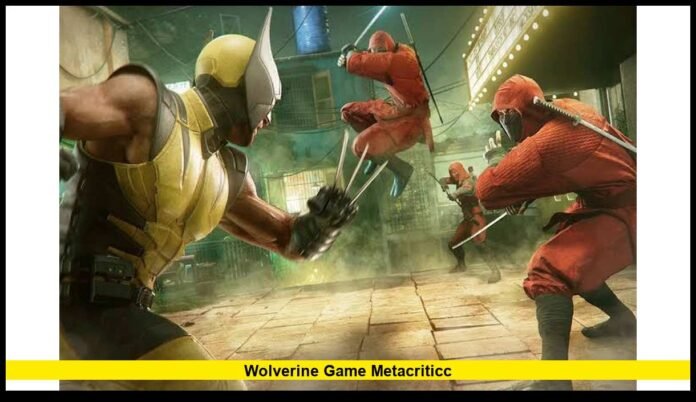

The wolverine game metacritic score is now becoming a major talking point as reviews for Insomniac Games’ highly anticipated Marvel’s Wolverine arrive ahead of its PlayStation 5 launch. Early critical reception places the game in positive territory, with reviewers praising its intense presentation, Wolverine’s characterization, cinematic action and brutally satisfying combat while raising concerns about repetition, limited exploration and the overall depth of its gameplay systems.
Marvel’s Wolverine represents one of the most important Marvel video game releases of 2026. Developed by Insomniac Games, the studio behind the Marvel’s Spider-Man franchise, the title takes a very different approach to superhero gaming. Instead of placing players in a huge open-world city, it delivers a focused, single-player action adventure built around Logan’s violent fighting style and complicated history.
The game launches exclusively on PlayStation 5 on September 15, 2026. With reviews now available, players have a much clearer idea of what to expect from Insomniac’s interpretation of one of Marvel’s most recognizable characters.
Current Critical Reception for Marvel’s Wolverine
The early review picture is generally favorable, although it is not completely unanimous.
The game’s reported Metacritic score has settled around the high-70s as reviews begin to populate the aggregator, while other review aggregators are placing the overall critical average somewhat higher. This difference demonstrates why players should look beyond a single number when evaluating a major release.
Individual reviews vary substantially. Some critics consider Marvel’s Wolverine a focused and entertaining blockbuster that benefits from its shorter campaign and relentless action. Others believe Insomniac has created a technically impressive game that does not fully realize the potential of its protagonist.
That divide is particularly noticeable in discussions about combat.
Wolverine’s abilities are designed around aggression, close-range attacks, healing and rage. The system can feel powerful and satisfying, especially when Logan enters his most destructive state. However, some critics argue that enemy encounters do not always provide enough variety to make those mechanics remain interesting throughout the entire campaign.
This gives the game a distinctive critical identity: highly polished, visually impressive and entertaining, but not necessarily as mechanically ambitious as some players expected.
A Different Direction From Marvel’s Spider-Man
Insomniac has deliberately built a more linear experience.
The Spider-Man games are heavily associated with open-world traversal, side activities, exploration and the fantasy of freely moving around New York City. Wolverine does not attempt to replicate that structure.
Instead, Logan travels through several locations as the story develops. Players visit environments connected to his history and the wider mutant conflict, including Canada, Japan and Madripoor.
The result is a game that prioritizes momentum over freedom.
This design decision has become one of the most debated aspects of the release. For some players, the focused structure is welcome because it keeps the story moving and avoids the fatigue that can accompany extremely large open-world games. For others, the lack of freedom makes the environments feel less interactive than the worlds created for Spider-Man.
The contrast is particularly striking because the game features visually detailed locations that sometimes appear much larger than the areas players can actually explore.
Wolverine’s Combat Is Built Around Brutality
Combat is the defining feature of Marvel’s Wolverine.
Logan is not a superhero who needs elaborate gadgets or long-range attacks to dominate an encounter. His identity is based on his claws, healing factor and willingness to fight at extremely close range.
Insomniac has built the gameplay around those characteristics.
Players can attack with Wolverine’s claws, dodge incoming attacks, parry opponents and launch enemies through combinations of strikes. As players progress, additional techniques and abilities become available, providing more options during encounters.
The game also uses a progression system involving techniques and adaptations. These upgrades allow players to develop Logan according to different combat preferences while improving attributes such as health, abilities and cooldowns.
The rage mechanic is particularly important.
As Logan deals damage and successfully responds to enemy attacks, his rage builds. Higher rage levels increase his effectiveness and eventually allow him to become an exceptionally powerful force on the battlefield.
This mechanic works especially well from a character-design perspective because Wolverine is supposed to become more dangerous when pushed to his limits.
The sensation of fighting through a group of enemies while sustaining damage, healing and continuing to attack captures an important part of the Wolverine fantasy.
The Biggest Gameplay Criticism Is Repetition
Despite the strength of the combat concept, repetition is one of the most common criticisms appearing in early reviews.
The basic fighting system is responsive and violent, but some critics believe the game does not provide enough enemy variety or tactical complexity to consistently challenge players.
Once players understand the fundamentals, many encounters can be approached using familiar patterns of attacking, parrying, dodging and activating special abilities.
That simplicity can be appealing during shorter sessions. It also fits Wolverine’s identity as a direct and aggressive fighter.
However, over a full campaign, repetition becomes more noticeable.
Games such as Devil May Cry and Bayonetta have demonstrated how melee-focused combat can remain deep through increasingly complex enemy behavior, combinations and encounters. Marvel’s Wolverine takes a more accessible approach, prioritizing spectacle and character fantasy over highly technical combat mastery.
That distinction is likely to influence how individual players respond to the game.
Someone looking for a cinematic Marvel adventure may consider the combat exactly what is needed. Players searching for an extremely deep action system may want more variety.
The Story Gives Logan More Emotional Depth
The narrative is another area where the game receives significant attention.
Marvel’s Wolverine explores Logan as a damaged and conflicted character rather than simply presenting him as an unstoppable superhero.
The story takes place before the formation of the X-Men as audiences traditionally know them and involves a mutant crisis connected to Bolivar Trask.
Logan becomes involved with other mutants while confronting unresolved elements of his past.
Characters including Sabretooth, Mystique and Jean Grey play important roles in the broader narrative, giving Insomniac opportunities to explore Wolverine’s relationships and personality.
The rivalry between Logan and Sabretooth is particularly important because their history provides a natural source of conflict.
At the same time, the story examines Logan’s trauma and his struggle to understand his identity.
This gives the game a more serious emotional foundation than a straightforward superhero action title might otherwise have.
Liam McIntyre’s Wolverine Performance Stands Out
The performance behind Logan has emerged as one of the game’s notable strengths.
Liam McIntyre voices Wolverine and brings a different interpretation to the character than previous actors associated with the role.
His performance needs to balance several sides of Logan’s personality.
Wolverine is aggressive, sarcastic and intimidating, but he is also vulnerable and deeply affected by his past. The game attempts to show both sides rather than reducing him to an angry fighter.
The character animation also contributes significantly to the portrayal.
Logan’s body language, facial expressions and reactions during combat help reinforce the contrast between his brutal abilities and his emotional struggles.
For fans of Wolverine, this characterization may ultimately be more important than the final review aggregate.
The Game Embraces a Mature Tone
Insomniac has also taken advantage of the character’s darker nature.
Unlike Spider-Man, Wolverine is naturally suited to a more violent game. His claws can cause enormous damage, his enemies can be brutally defeated and his healing factor allows the developers to create situations that would be difficult to use with a more conventional superhero.
The result is a noticeably more mature experience.
Blood, injuries and violent finishing attacks are integrated into the game’s presentation rather than treated as occasional surprises.
This is important because Wolverine has historically been one of Marvel’s more violent characters. A sanitized interpretation could have weakened the fantasy.
Instead, Insomniac appears committed to making Logan feel dangerous.
That approach also gives the game its own identity within Sony’s superhero lineup.
Cinematic Set Pieces Are Another Major Strength
Large-scale action sequences are among the moments where Marvel’s Wolverine demonstrates the advantages of Insomniac’s production expertise.
The campaign includes sequences involving vehicles, collapsing environments, large groups of enemies and dramatic confrontations.
These scenes are designed to maintain momentum and create the feeling of playing through a major Marvel action movie.
The cinematic presentation is particularly effective when combined with Wolverine’s movement and combat abilities.
Instead of simply watching Logan perform spectacular actions, players are generally placed directly inside those sequences.
This contributes to the game’s strongest moments and helps compensate for some of the simpler combat encounters.
Exploration Is More Limited
Exploration represents one of the clearest differences between this game and Marvel’s Spider-Man.
There is no massive open world designed to encourage players to spend dozens of hours wandering around.
Instead, the environments primarily exist to support the campaign.
That allows Insomniac to control pacing and deliver carefully designed encounters. It also means that players who enjoy discovering hidden activities may find less to do.
The decision is not necessarily a weakness.
Modern blockbuster games frequently struggle with oversized maps filled with repetitive activities. A more concentrated campaign can be refreshing, particularly for players who prefer a story that reaches its conclusion without requiring dozens of hours.
The trade-off is freedom.
Players cannot expect to approach Marvel’s Wolverine as a large-scale sandbox.
How Long Is Marvel’s Wolverine?
Early reviews indicate that the main campaign takes roughly 13 hours for many players, with completion time varying according to difficulty and optional activities.
That makes the game significantly more compact than many open-world releases.
A shorter campaign could become one of its biggest advantages.
The focused structure means the story can move quickly from one major sequence to another without requiring players to spend hours completing unrelated missions.
For players with limited gaming time, a 10-to-15-hour premium action game can be more appealing than a 50-hour adventure.
Completionists can also spend additional time collecting items, unlocking upgrades and pursuing optional challenges.
The game includes progression elements and additional content that can extend the experience beyond the central story.
Visual Quality Makes a Strong Impression
From a technical perspective, Marvel’s Wolverine demonstrates the capabilities of the PlayStation 5.
Character models are highly detailed, environments feature substantial visual detail and major cinematic moments showcase extensive animation and effects work.
Wolverine’s healing factor is particularly useful for demonstrating the game’s visual technology.
Damage sustained during combat can be represented through Logan’s appearance before his body regenerates, reinforcing the connection between gameplay and character abilities.
The environments also provide considerable variety.
The Canadian wilderness, Japanese streets and Madripoor offer very different visual identities, preventing the campaign from becoming visually monotonous.
These locations are among the elements that make the game feel like a global Wolverine adventure rather than a conventional superhero brawler.
What the Metacritic Score Really Means
For players searching for the wolverine game metacritic rating, the most important takeaway is that the score should be viewed as a snapshot of critical opinion rather than a definitive measurement of quality.
The current reception indicates a game that succeeds strongly in presentation, characterization and action but has limitations in combat variety and exploration.
A player who values story, Marvel lore and cinematic spectacle may enjoy the game considerably more than someone who prioritizes deep mechanics and open-world freedom.
Review averages also cannot capture the appeal of playing as a character as iconic as Wolverine.
The game’s greatest achievement may be giving Logan a dedicated modern single-player adventure that does not force him into the same structure as Spider-Man.
Is Marvel’s Wolverine Worth Playing?
For Marvel fans, the answer is likely yes.
The game provides a major new interpretation of Wolverine, combines his comic-book mythology with an original story and delivers the kind of mature action that suits the character.
The strongest reasons to play include:
- Wolverine’s aggressive combat style
- A darker tone than Insomniac’s Spider-Man games
- A focused single-player campaign
- Detailed PS5 visuals
- Major Marvel characters and references
- Cinematic action sequences
- Logan’s emotional character arc
- A relatively compact campaign
The main reasons for hesitation are equally clear:
- Combat can become repetitive
- Exploration is restricted
- The story can be predictable
- Some secondary gameplay systems are relatively simple
- The experience may feel less ambitious than Spider-Man
Ultimately, Marvel’s Wolverine appears designed around a simple objective: make players feel like Logan.
Final Verdict
Marvel’s Wolverine arrives with enormous expectations because of Insomniac Games’ reputation and the popularity of its protagonist.
The early critical response suggests that the game does many things well without completely redefining the superhero action genre.
Its greatest strengths are Wolverine himself, the mature presentation, impressive technical quality and fast-paced combat. Its weaknesses center mainly on repetition, limited exploration and a story that does not always take the dramatic risks players might expect.
The result is a focused PS5 adventure rather than another enormous open-world blockbuster.
That distinction could ultimately work in the game’s favor.
Not every superhero needs a massive city to explore. Wolverine is a character built around conflict, rage, survival and personal trauma, and a concentrated action adventure can arguably suit him better than a sprawling sandbox.
With its September 15 release approaching, the critical conversation will likely continue as more reviews arrive and aggregate scores stabilize. For PlayStation 5 owners and longtime Marvel fans, the final question may be less about whether the game matches Insomniac’s Spider-Man titles and more about whether it successfully delivers the Wolverine experience they have been waiting for.
For many players, the answer will come down to one thing: whether tearing through enemies with adamantium claws, surviving impossible battles and stepping into Logan’s complicated world is enough to make the journey worthwhile.
Key Points Summary
╔════════════════════════════════════════════════════════════════════╗
║ – Marvel’s Wolverine is receiving generally positive early reviews ahead of its September 15, 2026 PS5 launch. ║
║ – The current Metacritic reception is around the high-70s, although aggregate scores can change as more reviews are added. ║
║ – Insomniac Games has created a linear, single-player action adventure rather than another open-world superhero game. ║
║ – Critics have praised Wolverine’s characterization, visuals, cinematic sequences and aggressive combat mechanics. ║
║ – Repetitive encounters, restricted exploration and some predictable story elements are among the main criticisms. ║
╚════════════════════════════════════════════════════════════════════╝