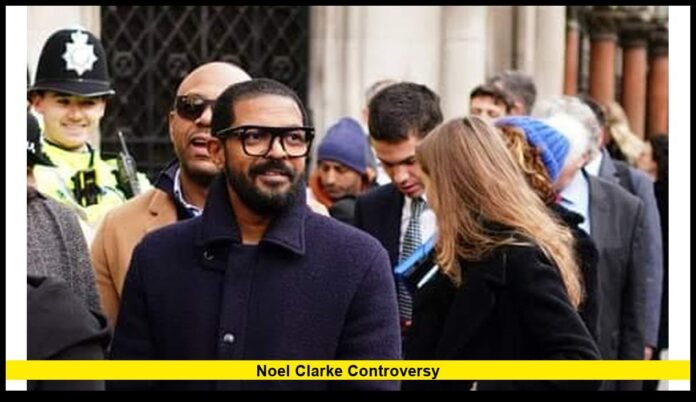

The Noel Clarke controversy has entered a new legal stage after British actor and filmmaker Noel Clarke was charged with six sexual offences involving five women. The charges were announced on September 9, 2026, following a Metropolitan Police investigation that began in September 2025.
Clarke, 50, faces two counts of sexual assault, three counts of voyeurism and one count of exposure. Police say the alleged offences took place between 2007 and 2016.
The actor is scheduled to appear at Westminster Magistrates’ Court in London on October 21, 2026. The case remains active, and the allegations have not been proven in court.
The latest development marks a significant change in a controversy that has surrounded Clarke since allegations of sexual misconduct became public in 2021. The current criminal proceedings are separate from the civil legal battle that Clarke previously brought against the publisher of The Guardian.
Noel Clarke faces six criminal charges
The Crown Prosecution Service has authorized prosecutors to proceed with six charges against Clarke.
The charges are:
- Two counts of sexual assault
- Three counts of voyeurism
- One count of exposure
The allegations involve five women and concern conduct allegedly occurring over a period stretching from 2007 through 2016.
Police began investigating the matter in September 2025. Clarke was first arrested on September 25 that year while detectives investigated allegations connected with the case.
After gathering evidence, detectives submitted a file to the Crown Prosecution Service. Prosecutors then considered whether there was sufficient evidence to bring charges and whether a prosecution was in the public interest.
The CPS has now decided that the case should proceed.
That decision does not determine Clarke’s guilt. The charges must still go through the court process, where the evidence will be examined under the criminal justice system in England and Wales.
Court appearance scheduled for October
Clarke’s next major legal milestone is his appearance at Westminster Magistrates’ Court.
He is due to appear on October 21, 2026, at 10 a.m.
The hearing will be closely watched because it represents the formal start of the court proceedings arising from the current charges.
The Crown Prosecution Service has stressed that the proceedings are active and that Clarke has the right to a fair trial.
That means claims about the eventual outcome should not be treated as established facts. Clarke has been charged, but he has not been convicted of the offences announced on September 9.
The distinction is especially important because the allegations have already generated extensive public discussion over several years.
What led to the latest investigation
The current prosecution follows a much longer period of public controversy.
Allegations concerning Clarke became widely known in 2021 after reporting detailed claims made by women who had worked with him. The allegations included claims of sexual misconduct and other inappropriate behavior.
Clarke denied wrongdoing.
The allegations had a major impact on his professional career. Organizations and companies distanced themselves from him, while projects involving the actor faced significant scrutiny.
The controversy also resulted in a legal battle involving Clarke and The Guardian.
That case eventually reached the High Court in London.
The current criminal case, however, should not be confused with the earlier civil proceedings. The six charges announced in September 2026 are part of a police investigation that began in 2025.
Why the 2021 allegations remain relevant
The public controversy surrounding Clarke began years before the current criminal charges.
In 2021, allegations from multiple women received widespread attention. The claims concerned Clarke’s behavior during his career in the British entertainment industry.
Clarke rejected the allegations.
The reports nevertheless resulted in serious professional consequences. BAFTA suspended his membership and suspended an award connected with his career.
The developments also raised broader questions about workplace conduct in the entertainment industry and how organizations respond when allegations involve high-profile performers.
For Clarke, the controversy represented a sharp change from the professional recognition he had built during the previous two decades.
The 2026 criminal case now gives the story a different legal dimension.
Clarke’s career before the controversy
Clarke became known to a broad British audience through acting, writing and directing.
He played Mickey Smith in Doctor Who, appearing during the show’s modern revival. The role helped establish him as a recognizable television actor.
He also became closely associated with the Hood series of films.
Clarke wrote and starred in Kidulthood, released in 2006. He later directed Adulthood and Brotherhood, completing the trilogy.
His work across acting and filmmaking helped establish him as a prominent figure in British entertainment.
That background is important to understanding why the allegations generated such significant attention. Clarke was not simply an actor with a single television credit. He had built a career across film, television, writing and directing.
The allegations therefore had consequences across several areas of the entertainment business.
The Guardian legal battle
Another major part of the story involved Clarke’s libel action against Guardian News & Media.
Clarke challenged reporting published by The Guardian concerning allegations against him.
The dispute eventually went before the High Court in London. In August 2025, the court rejected Clarke’s libel claim.
The judgment became a major legal development because it occurred shortly before the current criminal investigation reached its latest stage.
The civil proceedings and criminal charges involve different legal questions.
A libel case concerns whether published material was legally defamatory and whether the publisher established an applicable defense.
A criminal case concerns whether prosecutors can prove specific criminal allegations against a defendant.
Therefore, the 2025 civil judgment should not be described as a criminal conviction, just as the 2026 charges should not be described as proof of guilt.
Police investigation began in 2025
The Metropolitan Police began its investigation into the allegations in September 2025.
Clarke was arrested on September 25, 2025.
Investigators continued examining the allegations before submitting an evidence file to prosecutors.
The investigation eventually resulted in the six charges announced in September 2026.
The time between the beginning of the investigation and the charging decision highlights the separate nature of the criminal process.
Police must gather evidence, assess allegations and prepare material for prosecutors. The Crown Prosecution Service then reviews the evidence before deciding whether criminal charges should proceed.
That process has now reached the charging stage.
Five women are connected to the charges
The six charges relate to allegations made by five women.
Police have said that the women connected to the case continue to receive support from specially trained officers.
Authorities have also encouraged anyone who believes they have experienced sexual assault to contact police.
The current case therefore involves allegations from five women rather than a single incident or isolated accusation.
The alleged conduct covers a lengthy period between 2007 and 2016.
However, details about individual allegations should not be presented beyond what authorities have formally confirmed. The court process will determine what evidence can be considered and how the charges proceed.
Understanding the six charges
The charges fall into three categories.
Sexual assault
Clarke faces two counts of sexual assault.
These charges concern allegations that prosecutors believe meet the relevant criminal definition of sexual assault.
The court will ultimately determine whether the prosecution can establish the allegations to the required legal standard.
Voyeurism
Three of the charges involve voyeurism.
Voyeurism is a criminal offence involving certain forms of observing or recording another person in circumstances covered by law.
The three charges are part of the allegations involving five women and the period between 2007 and 2016.
Exposure
Clarke also faces one charge of exposure.
This allegation is separate from the sexual assault and voyeurism counts but forms part of the same prosecution announced by authorities.
Together, the six charges create the criminal case that Clarke will now face in court.
The charges are allegations, not convictions
The legal status of the case is an important point for readers following the story.
Clarke has been charged with six offences.
He has not been convicted of those offences.
A criminal charge means prosecutors have decided that the case should proceed based on the evidence available to them. A court must still hear the case and determine the outcome.
This distinction matters even more in a high-profile case that has already generated years of media coverage.
Public discussion surrounding the allegations began long before the current charges. The criminal proceedings now require the court process to be respected.
The Crown Prosecution Service has specifically reminded the public that Clarke is entitled to a fair trial.
Why the September 2026 announcement is significant
The latest announcement represents a major change in the status of the case.
For years, the story centered largely on allegations, professional consequences and civil litigation.
The September 2026 announcement moves the matter into formal criminal proceedings.
The CPS has confirmed that prosecutors believe there is sufficient evidence to bring the case to court and that prosecution is in the public interest.
That does not settle the allegations. Instead, it means the legal system will now determine how the charges progress.
The October court appearance will be the next confirmed step.
What happens next for Noel Clarke
Clarke is expected to appear before Westminster Magistrates’ Court on October 21.
The court process will determine the next stage of the proceedings.
As the case moves forward, prosecutors and the defense will deal with the charges through the appropriate legal procedures.
Because proceedings are active, authorities have warned against public commentary or online material that could prejudice the case.
For readers in the United States, the legal terminology can also be unfamiliar because this is a case being handled through the criminal justice system in England and Wales.
The proceedings are taking place in London, and the first scheduled court appearance will occur at Westminster Magistrates’ Court.
A major new chapter in the controversy
The latest charges give the long-running story a new focus.
The public controversy began with allegations that emerged in 2021. Clarke denied wrongdoing, while professional organizations responded to the claims and his career faced major disruption.
His subsequent legal action against The Guardian became another major chapter. The High Court rejected his libel claim in 2025.
Meanwhile, police launched a separate investigation in September 2025.
One year later, prosecutors have authorized six criminal charges involving five women. The alleged offences cover the period from 2007 to 2016.
The immediate focus is now on the criminal court process.
Clarke’s October 21 appearance will provide the next significant update in a case that has already developed across several years and multiple legal proceedings.
For now, the confirmed position is that Clarke faces two sexual assault charges, three voyeurism charges and one exposure charge. The allegations remain matters for the courts to determine.
As the case moves toward its next court hearing, readers can share their thoughts and stay informed about confirmed developments in the ongoing proceedings.