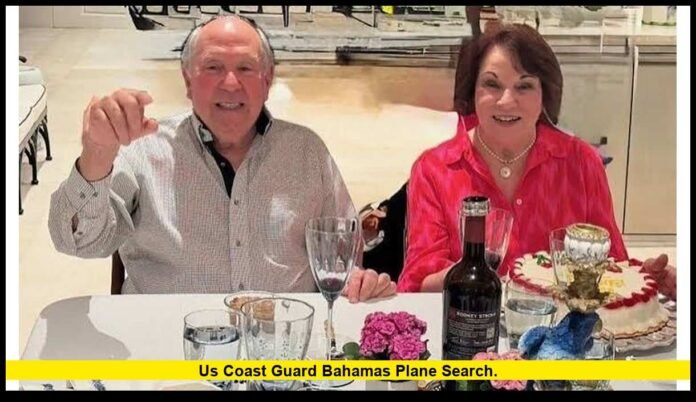

The us coast guard bahamas plane search has ended after all four people aboard a small aircraft were found dead following its disappearance near Andros Island in the Bahamas. The victims were identified as 80-year-old pilot Mario Lamar, his 79-year-old wife Lili Lamar, and their grandchildren, 28-year-old Sofi Sosa and 22-year-old Christian Sosa.
The Piper PA-34 aircraft disappeared during a flight from Great Harbour Cay toward Miami Executive Airport in South Florida. Air traffic control lost contact with the aircraft west of Andros Island on September 7. A joint response followed, involving Bahamian authorities, the U.S. Coast Guard and civilian family members who traveled by boat to assist with the search.
By September 8, the search had turned into a recovery operation. Relatives located the four victims, with family members bringing the bodies aboard their own vessels. The family later confirmed the deaths and said it was working with the Coast Guard to return their loved ones home.
Plane Disappears During Flight Toward South Florida
The aircraft left Great Harbour Cay in the Berry Islands on the morning of September 7. The family was returning to the Miami area after spending the Labor Day weekend at their home in the Bahamas.
The aircraft was a five-seat Piper PA-34 carrying four people. Its tail number was N212ML.
The flight was scheduled to continue toward Miami Executive Airport in Miami-Dade County. The trip was familiar to the family, as Mario Lamar had reportedly made flights between South Florida and the Bahamas many times.
Air traffic control eventually lost contact with the aircraft while it was west of Andros Island. Bahamian authorities later received a report that the plane may have gone down in waters near Red Bays, a settlement on the northwestern part of North Andros.
The reported location placed the aircraft roughly 13 miles west of Andros Island.
That information quickly triggered a major search effort over the surrounding waters.
Four Family Members Were Aboard
The aircraft carried one couple and their two grandchildren.
The victims were identified as:
- Mario Lamar, 80, the pilot
- Lili Lamar, 79, his wife
- Sofi Sosa, 28, their granddaughter
- Christian Sosa, 22, their grandson
Family members described Mario Lamar as an experienced pilot with more than four decades of flying experience.
Relatives also said he was highly cautious about aviation and regularly spent time maintaining and checking his aircraft.
The family had no reason to expect an emergency when the flight began. Relatives knew the expected arrival time because Lamar had filed a flight plan for the trip to South Florida.
Concern grew when family members realized that messages were not being delivered and the expected arrival did not occur.
Authorities were then alerted.
Bahamian Authorities Begin the Emergency Response
The first official response came from Bahamian authorities after reports indicated that an aircraft could have gone down near Andros Island.
Police on Andros began coordinating efforts to determine the aircraft’s location. The Bahamas Air Sea Rescue Association also became involved.
The Royal Bahamas Defence Force requested assistance from the U.S. Coast Guard.
That request brought American search resources into the operation.
The Coast Guard’s Southeast District command center coordinated the deployment of an HC-144 Ocean Sentry aircraft. The aircraft was used to help search the waters where the Piper was believed to have disappeared.
The operation involved cooperation between American and Bahamian authorities.
Because the suspected crash site was in Bahamian waters, local agencies remained central to the response. The Coast Guard provided additional search capability from the air.
Bad Weather Complicated the Search
Weather conditions created an immediate challenge for search crews.
Poor weather affected efforts to locate the aircraft during the early response. Authorities had to account for conditions over the water while attempting to conduct an aerial search.
The aircraft disappeared in an area where weather conditions were changing. Reports also indicated thunderstorms in the region around the time the aircraft disappeared.
However, the available information does not establish weather as the cause of the crash.
That distinction remains important.
A storm or poor visibility may have complicated the search, but investigators have not publicly determined what caused the aircraft to lose contact or go down.
Search crews therefore focused first on finding the missing aircraft and its occupants rather than drawing conclusions about the accident.
Family Members Join the Search
As official agencies searched the area, members of the Lamar and Sosa families organized their own effort.
Civilian boats traveled toward the area where the aircraft was believed to have gone down. Family members wanted to help locate their relatives as quickly as possible.
The family’s involvement became particularly significant after one relative found a body while searching by boat.
The discovery confirmed the worst fears of those waiting for news.
Relatives continued searching for the other three occupants.
All four victims were eventually located.
The family later said relatives who participated in the search found the victims and brought them aboard their own vessels. The Coast Guard continued working with the family during the recovery process.
All Four Victims Are Confirmed Dead
The search ended with the recovery of all four people aboard the aircraft.
Family members confirmed the deaths of Mario Lamar, Lili Lamar, Sofi Sosa and Christian Sosa.
The family released a statement expressing gratitude to people who participated in the search and supported them during the emergency.
Relatives also requested privacy as they mourned.
The recovery brought an end to the uncertainty that had surrounded the family since the aircraft disappeared.
The Coast Guard and Bahamian authorities had initially treated the incident as a search-and-rescue mission. Once the bodies were found, the operation shifted toward recovery and the next stages of the investigation.
What Happened During the Flight
Several important details about the flight have been confirmed.
The Piper PA-34 departed Great Harbour Cay during the morning of September 7. The aircraft was traveling toward Miami Executive Airport.
Its last known contact occurred near the western side of Andros Island.
Authorities received a report of a possible crash later that afternoon.
The aircraft was approximately 13 miles west of Andros Island when contact was lost, according to Bahamian authorities.
Flight tracking information also showed the aircraft’s movement before it disappeared.
Some reports have described a rapid loss of altitude before the aircraft vanished from tracking data. Those tracking details help establish the final portion of the flight, but they do not by themselves explain why the aircraft descended.
No official cause has been announced.
The Pilot Had Decades of Flying Experience
Mario Lamar’s aviation background has become an important part of the family’s account of the tragedy.
Relatives said he had more than 40 years of flying experience. He was also familiar with the route between Florida and the Bahamas.
The family said Lamar regularly flew to Great Harbour Cay and had a second home there.
His niece described him as cautious and attentive to aircraft maintenance. She also said he spent significant time around his plane when he was not traveling.
Those details provide context about the pilot but do not determine what happened during the final flight.
Investigators will need to examine the available evidence before identifying a cause.
The Aircraft and Its Last Known Location
The aircraft was identified as a Piper PA-34 five-seat aircraft.
Its registration number was N212ML.
The aircraft’s route began at Great Harbour Cay and continued toward South Florida. The plane disappeared west of Andros Island, with authorities identifying waters near Red Bays as the suspected crash area.
Andros is the largest island in the Bahamas and sits southeast of Florida.
The location created challenges for rescuers because the incident occurred over water rather than on land.
Finding a small aircraft in open water can require coordinated aerial and marine searches. Weather can further complicate those efforts by reducing visibility and making boat operations more difficult.
The Coast Guard’s HC-144 provided an important aerial search capability during the operation.
Why the Coast Guard Was Involved
The Coast Guard’s participation followed a formal request from Bahamian authorities.
The incident occurred in the Bahamas, so Bahamian agencies led the local response. The American agency provided additional resources because the missing aircraft was carrying people traveling toward Florida.
The HC-144 Ocean Sentry is designed for maritime surveillance and search missions. Its involvement allowed rescuers to cover a broad area from the air.
The operation demonstrated the cross-border nature of aviation and maritime emergencies between Florida and the Bahamas.
The victims were from South Florida, while the aircraft disappeared near the Bahamian island of Andros.
That required coordination between agencies on both sides of the water.
Recovery Efforts Continue After the Bodies Are Found
Finding the victims did not immediately answer every question surrounding the crash.
The Royal Bahamas Defence Force indicated that recovery and follow-up work would continue in the area.
Officials need to establish the circumstances that led to the aircraft’s disappearance.
That can involve examining the aircraft, reviewing flight information and assessing weather conditions around the time of the incident.
The recovery location may also provide investigators with important evidence.
At this stage, there is no confirmed explanation for why the plane went down.
Claims about mechanical problems, weather or other possible causes remain unconfirmed unless investigators establish them through evidence.
The family has also emphasized that Lamar was experienced and that the aircraft was carefully maintained. Those statements provide background but do not replace an official accident finding.
A Difficult Search Became a Family-Led Recovery
The response developed rapidly after the aircraft disappeared.
Authorities launched a search while relatives appealed to people in the area for assistance. Civilian boat operators also became part of the effort.
Weather slowed the official response during the early stages.
Family members eventually took matters into their own hands and traveled into the search area.
Their efforts resulted in the discovery of the victims.
That outcome has shaped the story of the accident. The Coast Guard and Bahamian authorities provided organized search resources, while relatives and civilian participants continued looking across the surrounding waters.
For the family, finding the four victims brought painful confirmation but also ended the uncertainty over their whereabouts.
Latest Confirmed Status
As of September 9, the four people aboard the Piper PA-34 have been confirmed dead.
The victims are Mario Lamar, Lili Lamar, Sofi Sosa and Christian Sosa.
The aircraft disappeared after leaving Great Harbour Cay for a flight to the Miami area. Contact was lost west of Andros Island, and authorities later received reports that the plane had likely gone down near Red Bays.
The U.S. Coast Guard assisted Bahamian authorities with the search.
The family also participated directly in the search and located the victims.
The remains were being handled for return to the United States, while authorities continued work connected to the accident.
No official explanation for the crash has been established.
That means the most important unanswered question remains what caused the aircraft to disappear during what had been a routine trip between the Bahamas and South Florida.
What Comes Next
The focus now moves away from searching for survivors and toward recovery, investigation and helping the family bring their relatives home.
The circumstances of the crash will require careful examination. Investigators will need to separate confirmed evidence from assumptions about what may have happened during the final stage of the flight.
For the Lamar and Sosa families, the investigation is only one part of a much larger tragedy.
The family has expressed appreciation for the people who searched, offered assistance and supported them during the crisis. Relatives have also asked for privacy as they deal with the loss of four members of their family.
The incident has left a South Florida family grieving after a routine trip to the Bahamas ended in a fatal crash over water.
The search has ended, but the questions surrounding the final moments of the flight remain, and readers can share their thoughts or stay updated as verified developments emerge.