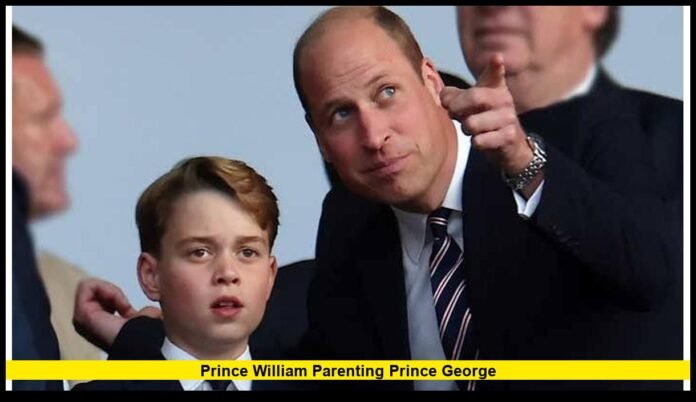

Prince William parenting Prince George has come under fresh attention as the 13-year-old begins one of the biggest transitions of his young life: starting at Eton College.
George’s move to the famous boarding school marks a significant moment for both father and son. William attended Eton himself, beginning there in 1995, and now his eldest child is following the same educational path more than three decades later.
Yet the similarities between their journeys only tell part of the story. William appears determined to give George the benefit of his own experience without simply repeating the way he was raised.
That approach has become increasingly visible as George has grown older. His parents, William and Catherine, Princess of Wales, have gradually introduced him to public life while continuing to protect his private childhood.
The result is a careful balance between preparation and normality.
A Major New Chapter for Prince George
George begins at Eton during an important stage of his life.
At 13, he is no longer a young child being introduced to occasional royal appearances. He is now a teenager who understands that his future will be very different from that of most people his age.
Eton provides an important step toward independence. George will experience boarding life, a demanding academic environment and a new level of personal responsibility.
The school is also close to the Wales family’s home in Windsor. That proximity gives the family an advantage that William did not necessarily have in the same way during his own school years.
George can experience boarding while remaining relatively close to his parents and siblings.
That arrangement fits closely with the family-centered approach William and Catherine have established over the years.
William’s Own Experience at Eton Matters
William knows exactly what George is about to experience.
He attended Eton for five years and has personal memories of the school, its traditions and its boarding environment. His brother, Prince Harry, later attended the same school.
That shared experience could give William a particularly useful role as George settles into his new surroundings.
William can explain the practical realities of boarding, help his son understand the school’s traditions and offer reassurance when the adjustment becomes difficult.
At the same time, George will have his own experience.
William is unlikely to expect his son to recreate his teenage years. George is growing up in a different era, under different circumstances and with an entirely different level of public attention.
His parents therefore appear to be using William’s experience as guidance rather than a strict blueprint.
George Has Already Had Experience With Boarding
One interesting part of George’s preparation is that boarding is not completely unfamiliar to him.
Reports have indicated that George had already spent time boarding at Lambrook School before leaving for Eton. The arrangement reportedly helped him become comfortable with spending nights away from home.
That preparation is important because starting boarding school can be a major emotional adjustment for any teenager.
For George, the transition comes with additional attention because of his position in the royal family.
Having previous boarding experience means the change may feel less sudden.
It also suggests that William and Catherine have been thinking about the transition well before George officially arrived at Eton.
Rather than waiting until the final moment, they appear to have allowed him to become familiar with the idea gradually.
The Focus Is Not Only on George’s Future Role
George’s position is impossible to ignore.
He is second in line to the throne and expected eventually to become king. That reality naturally influences how his parents prepare him.
However, William and Catherine have repeatedly emphasized family life and normality.
The goal appears to be giving George an understanding of his future without making every part of his childhood about becoming king.
That distinction is important.
A child who is constantly reminded of a future constitutional role could easily feel that personal interests and ordinary teenage experiences are secondary.
William appears keen to avoid that situation.
Instead, George is being allowed to grow into the role gradually.
Public Duties Are Being Introduced Step by Step
George’s appearances have increased as he has become older.
His parents have not placed him at every royal event. Instead, they have selected occasions where his participation makes sense and where he can learn from watching experienced members of the family.
That measured strategy gives George opportunities to become comfortable around crowds, cameras and formal events.
It also allows him to understand how members of the royal family interact with the public.
In May, George appeared with his parents at a Buckingham Palace event marking the 80th anniversary of the end of the Second World War in Europe. The occasion gave him an opportunity to meet veterans and participate in an important national event.
His presence was notable because his younger siblings were not involved in the same way.
That does not mean George is suddenly being given a full schedule of royal duties.
Instead, it demonstrates the gradual approach his parents appear to be taking.
William Is Trying to Avoid Overwhelming His Son
The pace of George’s preparation appears to be one of the most important aspects of his upbringing.
Royal experts have increasingly described the approach as gradual. George is being introduced to public responsibilities while still being allowed to maintain a private family life.
This matters because royal life can bring enormous pressure.
Every appearance can generate photographs, commentary and public judgment. For a teenager, that attention could become difficult to manage.
William understands those pressures from personal experience.
He also knows how intense media attention affected his own childhood.
Those experiences appear to have influenced the boundaries he now maintains around his children.
Privacy Has Become a Major Part of Family Life
Protecting George’s privacy has become increasingly important as technology and social media have changed the environment around the royal family.
William and Catherine have generally limited how much information about their children’s private lives is made public.
They do share selected photographs and family moments, particularly around birthdays and major occasions. But they do not provide a constant window into their children’s daily lives.
That balance gives George room to develop away from the public eye.
Eton has also taken additional steps to protect students from unwanted photography as George begins his studies.
For the future king, such measures can be particularly important.
The objective is not to hide George from public life completely. Instead, it is to prevent every ordinary moment from becoming a public spectacle.
William’s Childhood Has Shaped His Parenting
William’s approach cannot be separated entirely from his own upbringing.
His childhood was highly public. His parents’ relationship attracted enormous attention, and his family life was repeatedly examined by the media.
The experience left William with a strong awareness of how intrusive public interest can become.
In a previous interview, he spoke about the effect excessive media attention can have on families. He also discussed his determination to prevent similar pressures from overwhelming his own children.
That perspective helps explain why George’s childhood has been carefully protected.
William knows that royal children cannot live completely outside the public eye.
But he also understands that they need a private space where they can simply be children.
Family Stability Remains Central
William has spoken about family as one of his most important priorities.
His approach with George reflects that philosophy.
The Wales family moved to Windsor partly to provide their children with a quieter environment and greater privacy. Their home is also relatively close to the children’s schools and other family routines.
The arrangement allows William and Catherine to remain closely involved in their children’s everyday lives.
For George, that support could become particularly valuable as boarding school introduces a new level of independence.
He may spend significant periods at Eton, but his family remains nearby.
That combination of independence and support appears to be a deliberate part of his upbringing.
George Is Being Encouraged to Develop His Own Personality
Preparing someone to become king involves more than teaching constitutional responsibilities.
George also needs to develop confidence, judgment and the ability to communicate with different people.
Those qualities are difficult to learn entirely through formal lessons.
They develop through experience.
That is why George’s parents have allowed him to participate in carefully chosen public events.
Meeting veterans, attending major sporting occasions and appearing alongside senior members of the royal family can help him become comfortable in environments he will encounter throughout his life.
At the same time, he remains involved in activities associated with an ordinary teenager.
That balance may ultimately prove more valuable than an overly formal education in royal protocol.
The Relationship Between William and George Is Changing
As George enters his teenage years, William’s role as a father will naturally evolve.
Young children depend heavily on their parents for everyday decisions.
Teenagers begin making more choices independently.
For William, that means moving from being the parent who manages daily routines to becoming the parent who provides guidance, perspective and reassurance.
That transition is already beginning.
George’s move to Eton gives him more independence, but William remains an important source of experience.
The father and son now share something particularly unusual: both have attended the same famous school while occupying prominent positions in the royal succession.
That shared connection could become increasingly meaningful as George grows older.
Catherine’s Role Complements William’s Approach
George’s preparation is not solely William’s responsibility.
Catherine plays a different but equally important role in helping him navigate adolescence and his future position.
While William can draw on his own experience as heir to the throne and former Eton student, Catherine provides the perspective of a mother focused on George’s emotional wellbeing.
The two approaches can work together.
William can help George understand responsibility and public expectations.
Catherine can provide reassurance and the emotional support that comes with family life.
Their partnership gives George two complementary forms of guidance.
The objective is not simply to create a capable future king. It is to raise a well-rounded young person who can eventually handle that responsibility.
George’s Education Is Part of a Bigger Preparation
Eton is only one element of George’s preparation.
His education will expose him to academic challenges, social responsibilities and opportunities outside the immediate royal environment.
The school also provides a setting where George can develop friendships and interests away from formal royal duties.
That matters because becoming king eventually requires an understanding of society beyond palace life.
A future monarch must understand how ordinary people live and what concerns them.
George’s education and experiences during his teenage years can help develop that perspective.
William appears to understand that preparation cannot happen entirely inside royal residences or through formal briefings.
It has to happen through life itself.
William Wants George to Understand Responsibility
One of the most important lessons George will eventually need is that his position comes with responsibility rather than simply privilege.
William has demonstrated through his own public work that service is central to his understanding of royal life.
That lesson can be passed to George through everyday examples.
Public appearances can teach him how to speak with people.
Charitable work can teach him about communities facing difficulties.
Sporting and cultural events can introduce him to different interests.
School can teach him independence and accountability.
Together, these experiences can build the foundation George will eventually need.
The Future King Is Still a Teenager
Despite all the attention surrounding George, it is important to remember his age.
He is 13.
He is still at the beginning of his teenage years and has many stages of growing up ahead of him.
William’s parenting approach appears to recognize that reality.
George does not need to become a fully formed future monarch overnight.
He needs time to learn, make mistakes, develop confidence and discover who he is.
The royal role can be introduced gradually while ordinary teenage experiences continue alongside it.
That may be the most significant difference between George’s upbringing and the traditional image of royal preparation.
What Comes Next for William and George
George’s arrival at Eton is likely to mark the beginning of a new phase in his public development.
As he grows older, his appearances may become more frequent and his understanding of royal responsibilities may deepen.
William will remain central to that process.
His own experience gives him a unique ability to understand what George faces, while his memories of childhood give him another reason to approach fatherhood differently.
The challenge will be maintaining the balance.
George must eventually be ready for the enormous responsibility of the crown.
But before that happens, he needs to have the chance to grow into adulthood with the support of his family.
William’s approach suggests that both goals can exist together.
Rather than rushing George toward the throne, he appears to be giving his son time to develop the confidence, independence and emotional foundation needed for the future.
The Eton chapter is therefore not simply about education.
It is another carefully chosen step in a much longer journey.
The bigger picture is becoming clearer: William is giving George room to grow while gradually introducing him to the responsibilities that await him, and this balance could shape the future king for years to come.
What do you think of William’s approach to raising George as he enters this important new stage? Share your thoughts and stay connected for the latest updates.