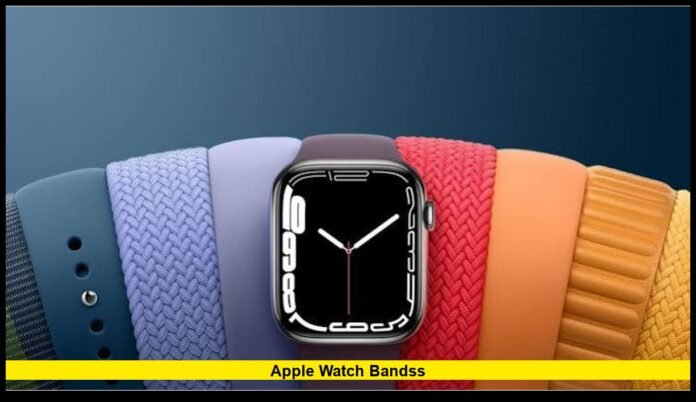

Apple Watch bands have become much more than simple replacement accessories. They can change the appearance of the watch, affect comfort during workouts, and make the same device suitable for everything from running and swimming to office meetings and formal events. In 2026, Apple’s accessory lineup continues to cover sporty, woven, magnetic, metal and premium options, while special-edition releases give owners additional ways to personalize their watches.
The Apple Watch accessory market is also evolving beyond Apple’s own catalog. Third-party manufacturers continue to produce alternatives in silicone, nylon, leather, titanium, stainless steel and hybrid materials. That gives shoppers a huge range of choices, but it also makes compatibility, sizing and material selection increasingly important.
Key Points Summary
╔════════════════════════════════════════════════════════════════════╗
║ – Apple continues to offer multiple watch-band designs for fitness, everyday wear and formal occasions. ║
║ – Case size remains the most important factor when checking band compatibility. ║
║ – Apple has continued releasing special-edition bands, including the Unity Connection Braided Solo Loop in 2026. ║
║ – Sport, Sport Loop, Solo Loop, Braided Solo Loop, Trail Loop, Alpine Loop, Milanese and Link Bracelet designs target different users. ║
║ – Band material can affect comfort, durability, cleaning and suitability for exercise or water exposure. ║
║ – A correctly fitted band can help keep the watch securely positioned for comfortable everyday use and sensor contact. ║
║ – Reports about a possible future redesign and new attachment system remain unconfirmed and should not be treated as current compatibility changes. ║
╚════════════════════════════════════════════════════════════════════╝
Why Watch Bands Matter More in 2026
The Apple Watch has gradually become both a technology product and a personal accessory. A watch worn for a morning workout does not necessarily need the same band as one worn with business clothing later in the day.
That flexibility is one reason replacement bands remain popular. Instead of purchasing another smartwatch for a different occasion, owners can simply change the strap.
A lightweight woven band may be ideal for sleeping or everyday use, while a durable sport-focused option can be better for running. A metal bracelet can provide a more traditional appearance for an evening event.
This has also created a large aftermarket, with manufacturers competing on materials, colors, closures, pricing and specialized designs.
Apple’s Latest Band Developments
Apple’s 2026 accessory activity has included special-edition designs as well as continued availability of established band families.
One of the most notable releases is the Unity Connection Braided Solo Loop, introduced in January 2026. The special-edition band was created to honor Black History Month and focuses on the theme of connection.
The design uses recycled polyester yarn filaments woven around ultrathin silicone threads. Its appearance incorporates multiple shades associated with the Pan-African flag, while the construction is designed to provide a soft, textured feel.
The band launched at $99 in the United States and was offered in 42mm and 46mm case sizes with band sizes ranging from 0 through 12. Compatibility covers Apple Watch Series 4 and later, Apple Watch SE and Apple Watch Ultra models, with the 46mm version specified for Ultra models.
The release demonstrates how Apple increasingly treats bands as part of its broader product storytelling rather than simply as replacement hardware.
Apple Watch Band Compatibility Explained
Compatibility can be confusing because Apple has changed case sizes over different generations.
The basic rule is to identify the case size of the Apple Watch before purchasing a band. Apple has historically maintained compatibility across groups of similarly sized cases rather than requiring a unique band for every individual watch generation.
For example, the smaller 38mm, 40mm and 41mm families are designed around the same general band size. The larger traditional families have included 42mm, 44mm and 45mm sizes, while Apple’s newer 46mm case and the 49mm Apple Watch Ultra family introduce additional considerations.
This means shoppers should not rely solely on the model generation. The case measurement printed on the watch or shown in the device information is a better starting point.
Compatibility Checklist
Before ordering a band:
- Identify the Apple Watch model.
- Confirm the case size.
- Check the manufacturer’s compatibility listing.
- Verify the required band size.
- If buying a Solo Loop or Braided Solo Loop, pay particular attention to wrist sizing.
- Check whether the band is specifically designed for the larger Ultra-compatible case family.
The safest approach is always to confirm the exact specifications for the band being purchased rather than assuming every Apple Watch accessory fits every Apple Watch.
Sport Bands Remain a Popular Everyday Choice
The classic Sport Band remains one of the simplest choices for Apple Watch owners.
Its flexible construction and conventional fastening system make it easy to put on and remove. It can also be adjusted without the sizing process associated with some continuous-loop designs.
For people who exercise regularly, the simplicity of a smooth, flexible band can be useful. It is also easier to wipe clean than many fabric or leather alternatives.
The main drawback is that some users may prefer a more breathable woven design, especially during long periods of wear or in warm conditions.
Still, for someone looking for one band that can work across commuting, casual clothing and exercise, a traditional sport design remains a sensible starting point.
Sport Loop for Comfort and Adjustability
The Sport Loop takes a different approach.
Instead of using a traditional pin closure, it uses a hook-and-loop fastening system. This allows the wearer to make small adjustments around the wrist.
That can be particularly helpful during exercise because wrist size can change slightly during activity. A band that can be loosened or tightened easily can provide a more comfortable fit throughout the day.
The woven construction also gives the Sport Loop a different feel from smooth rubber-like sport bands.
For users who prioritize comfort and adjustability over a conventional watch appearance, this remains one of the more versatile choices.
Solo Loop and Braided Solo Loop
Solo Loop designs eliminate the traditional buckle entirely.
The band forms one continuous loop that stretches over the hand and sits around the wrist. This creates a clean appearance and reduces the number of mechanical components involved.
However, sizing is especially important. Because there is no traditional buckle for making major adjustments, choosing the correct size is essential.
The Braided Solo Loop adds a woven texture and a more distinctive appearance. It can look less overtly sporty than a standard rubber-style band while still maintaining the simplicity of a continuous loop.
These designs are particularly attractive to people who want a minimalist Apple Watch appearance.
Trail and Alpine Styles for Outdoor Use
Apple’s more rugged band families are aimed at users who spend significant time outdoors.
The Trail Loop emphasizes adjustability and a lightweight feel, making it suitable for activities where the watch needs to remain secure without becoming cumbersome.
The Alpine Loop takes a more structured approach, with a design intended to provide a secure connection around the wrist.
These styles are closely associated with Apple’s Ultra-oriented positioning, but compatibility and case-size requirements should still be checked before purchasing.
For hikers, runners, cyclists and outdoor enthusiasts, the closure mechanism can be just as important as the material. A band that stays secure during movement can be preferable to one selected purely for appearance.
Metal Bands for a More Traditional Look
Apple Watch owners who want their device to resemble a conventional wristwatch have several metal-oriented options.
The Milanese Loop offers a woven-metal appearance and magnetic adjustment, giving it a distinctive look that works particularly well with professional or formal clothing.
The Link Bracelet takes a more traditional watch-bracelet approach. It has a structured appearance rather than the flexible feel of a fabric or sport band.
Titanium designs can offer another premium option, particularly for owners who prefer the appearance and feel of metal while trying to keep the watch relatively lightweight.
Metal bands are generally better suited to fashion and formal use than intense workouts. Sweat, moisture and repeated movement can make a metal bracelet less comfortable than a purpose-built sport band.
Choosing the Right Material
Material selection should be based on how the watch is actually used.
Silicone and Fluoroelastomer
These materials are commonly associated with sport-focused bands. They are flexible, relatively easy to clean and practical for active users.
Nylon and Woven Fabric
Fabric bands can provide a softer feel and may offer greater breathability than solid rubber-style designs.
Stainless Steel
Stainless steel creates a premium appearance and works well for professional or formal occasions.
Titanium
Titanium combines a premium metal appearance with a reputation for being lighter than many traditional metals, making it particularly attractive for performance-oriented watches.
Leather and Specialty Materials
Leather can deliver a classic appearance but requires more care and may not be suitable for situations involving heavy moisture or intense workouts.
The best material is therefore not necessarily the most expensive one. It is the material that matches the user’s daily routine.
Best Band Characteristics for Workouts
For exercise, shoppers should prioritize security, comfort, sweat handling and ease of cleaning.
A workout band should not slide excessively around the wrist. It also should not be so tight that it becomes uncomfortable during extended activity.
Fabric bands can feel comfortable, while smooth sport materials may be easier to clean after heavy sweating.
The closure also matters. A band that is difficult to adjust can become frustrating during long workouts.
Importantly, Apple Watch water resistance does not mean every band material should be treated as waterproof. Some materials require greater protection from water, sweat and cleaning products.
Anyone who regularly swims or showers while wearing an Apple Watch should check the specific care recommendations for the band.
How to Get the Right Fit
A correctly fitted band should keep the Apple Watch comfortably positioned without creating excessive pressure.
If the watch is too loose, it can move around the wrist. If it is too tight, prolonged wear may become uncomfortable.
Fit is particularly important for health and fitness features that rely on sensors located on the back of the watch.
During exercise, the watch should remain secure enough to maintain consistent contact while still allowing comfortable movement.
Solo Loop and Braided Solo Loop buyers need to pay special attention to sizing because those bands do not provide the same adjustment mechanism as traditional buckle bands.
How to Change an Apple Watch Band
Apple designed the band replacement process to be relatively simple.
Place the watch face down on a soft surface. Locate the band-release button on the back of the case and press it while sliding the band sideways.
To install a new band, slide it into the appropriate slot until it is seated securely.
Never force a band into place. If it does not slide smoothly, remove it and check the orientation before trying again.
After installation, gently test the connection before putting the watch on your wrist.
This takes only a short time, which is one reason interchangeable bands have become such a useful part of the Apple Watch experience.
Are Third-Party Bands Worth Considering?
Apple is not the only source for compatible watch bands.
Third-party manufacturers offer thousands of designs, ranging from inexpensive replacement straps to premium titanium and stainless-steel accessories.
The biggest advantage is variety. Shoppers can find colors, materials and closure systems that may not be available directly from Apple.
Price can also be significantly lower.
However, quality varies widely. A poorly manufactured connector can fit incorrectly or fail to hold the watch securely. Buyers should therefore pay attention to compatibility information, customer feedback, construction quality and return policies.
A low price is not necessarily a bargain if the band becomes uncomfortable or the connector fails after a short period.
Could Future Apple Watch Models Change Band Compatibility?
Another issue attracting attention in 2026 is speculation about a future Apple Watch redesign.
Reports have suggested that Apple could eventually introduce a different band attachment mechanism with a future generation. If such a change happens, existing band collections could potentially be affected.
However, this remains unconfirmed speculation rather than an announced product change.
For current Apple Watch owners, there is no reason to treat those reports as an immediate compatibility change. Existing bands should be selected based on the compatibility specifications for the watch and band being purchased today.
The possibility nevertheless highlights why shoppers may want to avoid buying a large collection of expensive bands solely on the assumption that they will remain compatible with every future Apple Watch generation.
How Many Bands Should an Apple Watch Owner Have?
There is no universal number, but three categories can cover most situations.
A sport-oriented band can handle workouts and active days.
A comfortable everyday band can be used for commuting, work and sleeping.
A dressier metal or premium band can handle formal events and occasions when appearance matters more.
Some owners will naturally want more colors and styles, but a small rotation can provide most of the practical benefits without creating an unnecessarily large collection.
What to Look for When Buying in 2026
Before buying any replacement band, consider these questions:
- Does it fit the exact Apple Watch case size?
- Is the connector designed for the correct generation?
- Is the material suitable for exercise?
- Can it be cleaned easily?
- Does the closure feel secure?
- Is the sizing appropriate for your wrist?
- Will you wear it primarily at work, during workouts or outdoors?
- Does the price make sense for the expected durability?
- Is the seller offering a reasonable return policy?
These questions can prevent many of the most common purchasing mistakes.
Final Outlook
The Apple Watch accessory market continues to mature in 2026. Owners now have an extensive choice of sport, fabric, loop, magnetic, metal and outdoor-focused designs, allowing a single watch to adapt to very different lifestyles.
The most important buying decision is not necessarily choosing the newest or most expensive design. Compatibility, fit, comfort and material should come first.
Apple’s continued introduction of special-edition designs also shows that watch bands have become an important part of the company’s wearable ecosystem. At the same time, the large third-party market gives shoppers additional choices across nearly every price range.
For current owners, replacing a band remains one of the easiest ways to give an Apple Watch a fresh appearance without replacing the watch itself.
What type of Apple Watch band do you prefer for everyday wear or workouts? Share your favorite style and keep checking back for the latest Apple Watch accessory news.