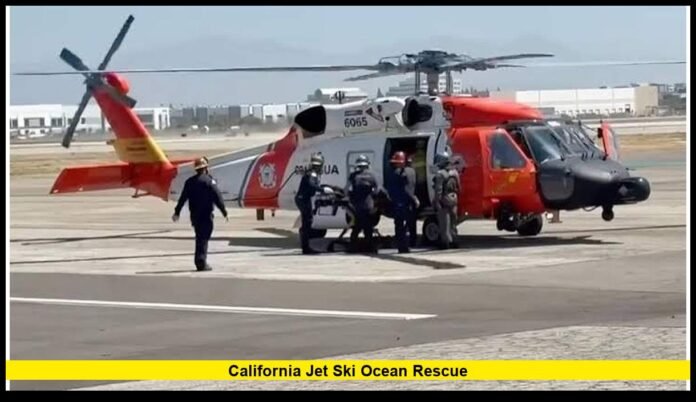

The California jet ski ocean rescue that unfolded near Long Beach became a remarkable survival story after a missing rider was found alive following a lengthy search in the Pacific Ocean. Paul Anthony Carbullido Jr., 53, survived hours in the water after being separated from his jet ski during a nighttime accident before rescue crews located him offshore and brought him to safety.
The incident began during a recreational ride near the Long Beach coastline when two people on personal watercraft ended up in the water. The emergency quickly developed into a major search operation involving the Long Beach Fire Department, the U.S. Coast Guard, and other rescue personnel.
Carbullido was eventually spotted from a Coast Guard helicopter and rescued by a swimmer deployed from the aircraft. He was taken for medical evaluation after showing signs of exposure but was reported to be in stable condition.
The rescue drew attention because of the difficult conditions faced by both the missing rider and the emergency teams searching through the night. The case also highlighted how preparation, quick emergency calls, and professional response efforts can make a major difference during ocean emergencies.
Nighttime Jet Ski Accident Leads to Large Search Operation
The emergency began when a group of jet ski riders were enjoying time on the water near Long Beach. The situation changed after riders were separated from their personal watercraft in the ocean.
Carbullido and another rider fell into the water after encountering trouble while operating their jet skis. The pair became separated, creating an urgent rescue situation as darkness approached.
The Long Beach Fire Department received reports of two missing jet ski riders around 10 p.m. Emergency teams immediately began coordinating a search effort along the coastline and surrounding waters.
The first challenge for rescuers was determining exactly where the missing riders had drifted. Ocean currents can quickly move people away from their last known location, making every minute important during a marine search.
Rescue crews searched areas around the Long Beach breakwater and nearby ocean channels while working to locate both people and their watercraft.
Woman Rescued After Reaching Long Beach Breakwater
Before Carbullido was found, another rider involved in the incident managed to reach a safer area near the Long Beach breakwater.
The woman called for help after reaching the rocks and attracting attention from a nearby boat. A person aboard the vessel heard her cries and contacted emergency services.
Long Beach lifeguards responded and rescued her from the breakwater area. She was taken to shore, evaluated by medical crews, and transported for additional care in stable condition.
Her rescue helped provide important information to emergency crews about what happened and where the search needed to continue.
However, Carbullido remained missing, leading authorities to continue searching through the overnight hours.
Coast Guard Helicopter Finds Missing Rider Offshore
The search continued after crews located the abandoned jet skis but could not immediately find Carbullido.
Emergency teams expanded their efforts using multiple resources, including boats and aerial support. Searching for a person floating in open ocean presents major challenges because waves, wind, and currents can make visibility extremely limited.
The breakthrough came when a Coast Guard helicopter spotted Carbullido in the water offshore near the Seal Beach area. A rescue swimmer was lowered from the helicopter and successfully brought him aboard.
Carbullido was alive and conscious when rescuers reached him. He was transported back to shore, where emergency medical personnel checked his condition.
The successful outcome ended a tense overnight search and provided relief to family members and responders who had been waiting for news.
Surviving Hours in the Pacific Ocean
Spending extended time in the Pacific Ocean can create serious risks, especially when someone is separated from a boat or personal watercraft.
Carbullido’s survival was helped by his ability to remain afloat while waiting for rescuers. He was wearing a life jacket when crews found him, which played an important role in keeping him above the water.
Ocean rescue situations often depend on several factors, including:
- Having flotation equipment available
- Staying visible to search crews
- Remaining calm during an emergency
- Reporting missing persons quickly
- Using professional rescue resources
Even strong swimmers can face extreme difficulties in open water because ocean conditions are very different from swimming pools or protected areas.
The incident demonstrated how quickly a normal recreational activity can become dangerous when riders are separated from their equipment.
Role of Rescue Teams in Coastal Emergencies
The successful outcome was the result of cooperation between several emergency organizations.
The Long Beach Fire Department handled local response efforts while working with federal maritime resources from the U.S. Coast Guard. Search crews used boats and aircraft to cover a wide area.
Marine rescue operations require specialized training because conditions can change rapidly. Responders must consider water movement, visibility, weather conditions, and the physical condition of people missing in the ocean.
Helicopters are especially valuable during offshore searches because they can scan large areas faster than boats alone. They also allow rescue swimmers to reach people who may be difficult to access from the water.
The rescue near Long Beach showed how important coordination is during emergencies involving missing boaters or jet ski riders.
Safety Lessons From the Long Beach Rescue
The incident has renewed attention on personal watercraft safety along California’s coastline.
Jet skis are popular among recreational riders, but they require careful handling and awareness of ocean conditions. Riders must understand that coastal waters can become dangerous quickly, especially when visibility decreases.
Important safety steps include:
- Wearing a Coast Guard-approved life jacket
- Checking marine conditions before riding
- Staying aware of other vessels
- Riding with communication plans in place
- Avoiding risky maneuvers in crowded waters
Many emergencies happen when riders underestimate how difficult it can be to recover after falling into the ocean.
A personal watercraft can move away quickly after a rider falls off, leaving someone stranded in the water.
Why Fast Reporting Matters During Ocean Rescues
The timing of an emergency call can directly affect the success of a rescue mission.
In this case, authorities received reports of missing riders and quickly began searching. That early response allowed teams to begin looking before the missing individuals drifted farther from their original location.
Search crews rely on information from witnesses, other boaters, and people involved in the accident. Details about the last known position, clothing, equipment, and water conditions help rescuers make decisions.
Every piece of information can improve the chances of finding someone in a large ocean environment.
California Coast Remains Focus of Marine Safety Efforts
California’s coastline attracts millions of visitors who participate in boating, surfing, swimming, and personal watercraft activities.
With heavy recreational use, emergency agencies regularly prepare for situations involving people in distress. Coastal rescue teams train for a variety of scenarios, from missing swimmers to offshore accidents.
The Long Beach incident became another reminder that the ocean requires respect and preparation. Even experienced recreational users can face unexpected challenges when conditions change.
The successful rescue of Carbullido showed the importance of emergency response systems and the dedication of crews who continue searching when someone’s life is at risk.
A Rescue Story That Highlights Ocean Awareness
The Long Beach incident ended with a positive outcome after hours of uncertainty. A missing rider survived a dangerous situation, and rescue teams successfully completed a difficult operation.
The event also reinforced a simple message for anyone enjoying California’s waters: safety equipment, awareness, and quick action can save lives.
As more people take part in ocean recreation, understanding basic safety practices remains essential. Preparation before entering the water can make the difference between a frightening experience and a tragedy.
Share your thoughts on this dramatic rescue and stay connected for more updates about important coastal safety stories.