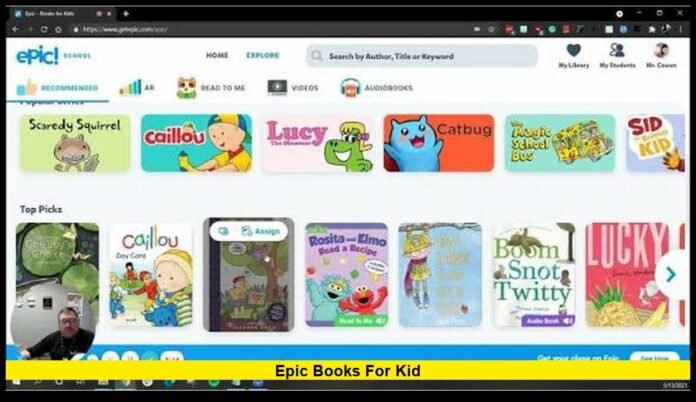

Finding enjoyable reading material for children can be challenging when every young reader has different interests, abilities, and attention spans. epic books for kids have become a popular digital reading option because the platform combines thousands of children’s books with audiobooks, read-to-me stories, educational videos, and tools designed to encourage independent reading.
What Is Epic for Kids?
Epic is a digital reading and learning platform created specifically for children. Its library is aimed primarily at kids aged 12 and under and includes fiction, nonfiction, picture books, early readers, chapter books, graphic novels, audiobooks, and educational videos.
The platform currently promotes access to more than 40,000 books and learning resources from hundreds of publishing partners. The catalog is organized around different ages, subjects, formats, and reading levels, making it easier for children and adults to find suitable material.
Rather than functioning like a conventional ebook store where families purchase individual titles, Epic is designed around access to a large digital collection. This gives children the opportunity to browse multiple subjects and genres without needing a separate physical book for every new interest.
Why Digital Reading Is Becoming Important for Children
Children today encounter reading in many different formats. Traditional printed books remain important, but digital reading can provide additional flexibility for families and schools.
A tablet or compatible device can hold thousands of titles, making it possible for children to switch between books without carrying a physical library. Digital platforms can also provide features that are difficult to reproduce with a standard printed book, including narration, audio, interactive elements, vocabulary support, reading progress tools, and educational videos.
For parents, this means a child who becomes interested in a particular topic can immediately explore more books about it.
For example, a child fascinated by dinosaurs might begin with a picture book, move to a nonfiction dinosaur title, listen to an audiobook, and then explore a science-related learning video.
Major Types of Books Available
The strength of Epic’s library comes from the range of reading material available.
Picture Books
Picture books are particularly useful for younger children who are developing basic vocabulary and story comprehension.
Illustrations provide visual clues that can help children understand unfamiliar words and events. Parents can also use picture books as an opportunity to ask questions about characters, settings, colors, emotions, and story sequences.
Early Readers
Early-reader books are intended for children beginning to read independently.
These titles typically use shorter sentences and accessible vocabulary. They can help children practice recognizing words and understanding simple narratives without becoming overwhelmed by long chapters.
Chapter Books
As children become stronger readers, chapter books offer longer stories and more developed characters.
Chapter books can encourage children to read for longer periods and follow a story across multiple sessions. They are also useful for developing comprehension because readers must remember characters, events, and details from earlier chapters.
Nonfiction Books
Nonfiction is another major part of a children’s digital library.
Kids can explore subjects such as:
- Animals
- Space
- Science
- History
- Geography
- Nature
- Sports
- Technology
- Famous people
- Art
- Everyday life
Nonfiction can be especially valuable for children who are not immediately interested in fictional stories. A child who dislikes fantasy may still become an enthusiastic reader after discovering books about sharks, volcanoes, planets, machines, or historical events.
Graphic Novels and Comics
Graphic novels offer a visual approach to storytelling.
For some children, illustrations, speech bubbles, and shorter sections make longer narratives easier to follow. Graphic storytelling can also help reluctant readers discover that reading does not have to mean working through pages of uninterrupted text.
Read-to-Me Books and Audiobooks
One of Epic’s most useful features is its selection of narrated content.
Read-to-me books allow children to hear a story while following along with the text. This can be helpful for younger readers, children who are still developing fluency, or families looking for an alternative to traditional independent reading.
Audiobooks offer another option. Children can listen to stories while relaxing, traveling, or participating in quiet activities.
Narrated books can also expose children to pronunciation, expression, rhythm, and vocabulary. Hearing an experienced narrator can demonstrate how dialogue and emotions work within a story.
For parents who do not always have time for a long reading session, audio content can provide another way for children to experience stories.
Educational Videos Add Another Dimension
Epic is not limited to books.
Its library also includes educational videos covering topics such as mathematics, science, do-it-yourself activities, physical activity, and other learning subjects.
This combination can be useful when a child wants to learn about something rather than simply read a fictional story.
For example, a student studying the solar system could use a nonfiction book to learn basic facts and then watch an educational video to reinforce those concepts.
Used appropriately, these different formats can complement each other rather than competing with traditional reading.
Reading by Age and Interest
A major challenge with a large digital library is deciding where to start.
Epic’s exploration tools allow families to browse books by age, subject, reading level, and format.
A younger child may benefit from picture books and read-to-me titles, while an elementary-age reader may prefer chapter books, nonfiction, or graphic novels.
Parents do not necessarily need to choose books based only on a child’s age. Interest and reading confidence are equally important.
A seven-year-old who loves science might enjoy nonfiction written for slightly older readers when the subject is highly engaging. Likewise, an older child who is still developing reading confidence may prefer shorter books.
The goal should be to find material that is challenging enough to encourage growth without becoming frustrating.
Multilingual Reading Options
Digital children’s libraries can also help families introduce multiple languages.
Epic offers books and educational content in languages including Spanish, French, Chinese, and Gaelic, alongside its predominantly English collection.
Multilingual material can be useful for children who are learning another language, growing up in multilingual households, or simply interested in reading stories from different linguistic backgrounds.
Parents can use these titles for vocabulary practice or shared reading sessions.
Reading Tools That Can Encourage Children
A large collection is useful, but additional tools can make digital reading more engaging.
Epic includes features such as reading progress tracking, badges, Reading Buddies, and other elements intended to encourage continued participation.
These features can provide children with a sense of progress. Completing books and seeing reading activity accumulate may make reading feel more rewarding.
Some titles can also include comprehension activities, while vocabulary-related features can help children investigate unfamiliar words.
The purpose of these tools is not to turn every reading session into a test. Instead, they can provide additional support when children need motivation or help understanding new material.
How Parents Can Make the Most of Epic
Parents can improve the experience by creating a simple reading routine.
Let Children Choose
Children are often more enthusiastic when they have some control over what they read.
Instead of assigning every title, parents can offer several choices and allow the child to select one.
Follow Their Interests
Interests change quickly during childhood.
One month a child might be fascinated by dinosaurs, while the next month they may become interested in oceans or outer space.
Using those interests as a starting point can make reading feel more natural.
Mix Fiction and Nonfiction
A balanced reading routine can include both imaginative stories and factual books.
Fiction can encourage imagination and storytelling, while nonfiction can build knowledge and introduce subject-specific vocabulary.
Use Audiobooks Strategically
Audiobooks can be useful during car journeys, quiet time, or periods when a child does not want to read independently.
They can also be paired with printed or digital text for children who benefit from hearing and seeing words together.
Discuss Books
A short conversation after reading can make a significant difference.
Parents might ask:
- What was your favorite part?
- Which character did you like most?
- What surprised you?
- What would you have done differently?
- What did you learn?
These questions encourage children to think beyond simply finishing a book.
Epic for Teachers and Schools
Epic also has a significant classroom focus.
Teachers can use digital books to supplement classroom libraries and provide students with additional reading opportunities. The platform offers fiction, nonfiction, STEM resources, graphic novels, audiobooks, educational videos, and reading materials at different levels.
Epic School provides free access for educators and students during designated school hours, while Epic’s newer School Plus offering is designed to provide broader access beyond the traditional school-day window.
This can help teachers connect classroom reading with independent reading at home.
Digital access can also be useful when a classroom needs multiple students to explore the same topic without requiring enough physical copies of a book for every student.
Is Epic Suitable for Reluctant Readers?
It can be a useful option for children who have difficulty finding books they enjoy.
A reluctant reader may not dislike reading itself. The problem may simply be that the available books do not match their interests or confidence level.
A large catalog gives children more opportunities to experiment.
A child who rejects chapter books might enjoy graphic novels. Another child may prefer nonfiction. Someone else may become interested through audiobooks.
The ability to quickly move between formats can reduce the pressure associated with choosing a single book.
Digital Books vs. Physical Books
Digital reading should not necessarily be viewed as a replacement for printed books.
Both formats have advantages.
Physical books provide a screen-free experience and can become familiar parts of a child’s home environment. Digital libraries, meanwhile, provide portability and access to a much larger collection.
Families can combine the two.
For example, parents might read physical picture books at bedtime while allowing children to explore digital books independently during the day.
The ideal approach depends on the child’s age, preferences, reading habits, and family routine.
Device Access and Offline Reading
Epic is available through supported devices and platforms, including Apple devices, and its current app information also promotes offline reading capabilities.
Offline access can be particularly useful for travel.
Families can prepare books before a flight or road trip, allowing children to continue reading without relying on a constant internet connection.
As with any children’s digital platform, parents should also consider device settings, screen-time routines, and the child’s overall balance between digital activities and offline play.
What Parents Should Consider Before Choosing a Plan
Families should check the latest plan details before subscribing because pricing, access arrangements, and promotional offers can change.
Epic provides different experiences for families and educators, so the best option depends on how the service will be used.
Parents should consider:
- How often their child reads digitally
- Which devices the child uses
- Whether audiobooks are important
- Whether multilingual books are needed
- Whether offline reading matters
- Whether several children will use the service
- Whether the school already provides access
Checking the current terms directly before purchasing is the safest way to understand the available features and costs.
Why the Library Size Matters
Having access to tens of thousands of titles does not automatically make every book appropriate for every child. However, a large library increases the chance that a child can find something that matches a specific interest.
This matters because reading habits are often built through repeated positive experiences.
A child who discovers an exciting mystery, funny graphic novel, fascinating science book, or favorite audiobook may become more willing to try something new afterward.
That discovery process is one of the strongest reasons digital children’s libraries remain appealing.
Final Takeaway
For families searching for epic books for kids, the biggest advantage is variety. Children can explore picture books, early readers, chapter books, nonfiction, graphic novels, audiobooks, narrated stories, and educational videos in one digital environment.
The service can be especially useful when parents want to encourage children to explore their interests while gradually developing stronger reading habits. Teachers can also use digital access to supplement classroom instruction and provide students with additional choices.
Ultimately, technology works best when it supports rather than replaces meaningful reading experiences. Combining digital books with physical books, family conversations, independent reading, and age-appropriate routines can help children develop both confidence and curiosity.
What books or reading topics keep your child interested? Share your favorites in the comments and check back for more children’s reading updates and recommendations.