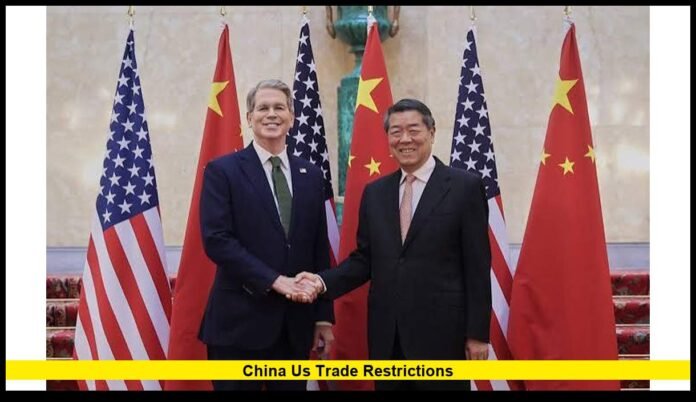

China US trade restrictions continue to shape global commerce in 2026 as both Washington and Beijing introduce new measures affecting technology, manufacturing, exports, and international supply chains. The latest confirmed actions include additional Chinese export controls on certain drone-related products and new restrictions involving selected U.S. organizations after recent U.S. actions targeting Chinese technology companies. These developments highlight how the trade relationship between the world’s two largest economies remains centered on national security, advanced technology, and strategic industries rather than tariffs alone.
For American businesses, manufacturers, importers, and consumers, the evolving trade environment remains important because every new policy has the potential to influence production costs, product availability, and long-term investment decisions. While many companies have adjusted their supply chains over the past several years, fresh trade measures continue to create new challenges and opportunities across multiple industries.
Trade Relations Continue to Evolve in 2026
The trade relationship between the United States and China has undergone significant changes during the past several years. What originally focused largely on tariffs has expanded into a broader economic competition involving advanced technologies, export controls, foreign investment, cybersecurity, and supply chain security.
Recent developments show that both countries continue using targeted restrictions instead of broad trade bans. Rather than limiting all imports or exports, policymakers increasingly focus on specific products, companies, and technologies considered strategically important.
This approach allows each government to respond to policy decisions without completely disrupting the overall trade relationship, which remains one of the largest bilateral trading partnerships in the world.
Latest Developments in China US Trade Restrictions
Several new trade actions have emerged during the latest round of policy announcements.
China introduced tighter export controls covering certain drone-related technologies and products intended for the U.S. market. Officials also announced restrictions affecting several American organizations and additional oversight involving selected imported technologies.
These measures followed recent U.S. actions that expanded restrictions on Chinese technology companies and organizations over national security concerns.
Although each country describes its decisions differently, the overall trend remains consistent. Both governments continue responding to one another through carefully targeted trade measures instead of across-the-board restrictions.
Why the United States Continues Expanding Trade Controls
The United States has repeatedly stated that many of its recent trade actions are designed to strengthen national security, protect critical technologies, and reduce dependence on foreign suppliers in strategically important industries.
Federal policymakers have increasingly focused on technologies considered essential for future economic competitiveness.
Current priorities include:
- Artificial intelligence
- Semiconductor manufacturing
- Advanced computing
- Telecommunications infrastructure
- Aerospace technology
- Quantum computing
- Critical mineral supply chains
- High-performance electronics
Rather than relying exclusively on tariffs, regulators now use export licensing rules, investment reviews, entity listings, and technology controls to manage economic risks.
China’s Response Focuses on Strategic Industries
China has responded by introducing measures affecting selected industries rather than imposing sweeping trade restrictions across every sector.
Recent announcements have included:
- Export controls covering drone-related products
- Restrictions involving selected American organizations
- Reviews of imported technology products
- Additional oversight related to commercial certification activities
Chinese officials continue describing these actions as responses to recent U.S. policy decisions involving technology exports and trade regulation.
The result is an ongoing cycle in which each country’s new policy often prompts another response from the other side.
Technology Remains the Core Issue
Technology now sits at the center of the economic relationship between Washington and Beijing.
Instead of concentrating primarily on traditional manufacturing goods, policymakers increasingly focus on products that could influence future technological leadership.
Industries receiving the greatest attention include:
- Artificial intelligence
- Semiconductor production
- Cloud computing
- Telecommunications equipment
- Advanced manufacturing
- Aerospace systems
- Robotics
- Drone technology
Many of these industries have both commercial and national security applications, making regulatory decisions increasingly complex.
Semiconductors Continue Leading Trade Discussions
Computer chips remain among the most closely watched products in global trade.
Semiconductors power nearly every modern industry, including automobiles, smartphones, medical devices, industrial machinery, defense equipment, and consumer electronics.
Because advanced chips are essential to future innovation, governments continue introducing policies aimed at protecting domestic manufacturing capabilities while limiting access to certain technologies.
Manufacturers operating globally now evaluate suppliers more carefully than ever before as export regulations continue evolving.
Export Controls Have Become More Important Than Tariffs
Tariffs still influence international trade, but export controls now receive far greater attention from policymakers and multinational corporations.
Unlike tariffs, which generally increase the cost of imported goods, export controls determine whether certain products, technologies, or software can be sold internationally at all.
Export restrictions may apply to:
- Manufacturing equipment
- Software
- Research partnerships
- Industrial machinery
- Sensitive electronic components
- Technical expertise
For companies operating internationally, understanding export compliance has become just as important as calculating tariff costs.
American Businesses Continue Adjusting Supply Chains
Businesses across the United States have spent several years preparing for continued trade uncertainty.
Many companies have adopted strategies designed to reduce risk while maintaining stable operations.
Common approaches include:
- Diversifying suppliers
- Expanding manufacturing outside China
- Increasing domestic production
- Building larger inventories
- Signing contracts with multiple suppliers
- Improving compliance programs
These adjustments help businesses remain flexible when new trade rules take effect.
Large multinational corporations often have dedicated trade compliance teams, while smaller companies increasingly rely on specialized advisors to navigate changing regulations.
Read More – Trump Senate Republican Relationship Tension Grows as GOP Senators Push Back on Key Agenda Items
Manufacturing Strategies Continue Changing
Manufacturers have become increasingly cautious when making long-term investment decisions.
Before building new facilities or purchasing expensive equipment, executives now evaluate:
- Regulatory stability
- Trade policy
- Export licensing requirements
- Supply chain resilience
- Labor availability
- Transportation costs
- Political risk
These factors influence where companies decide to manufacture products and source critical components.
What the Restrictions Mean for U.S. Importers
American companies importing products from China continue facing an environment that requires careful planning.
Potential challenges include:
- Additional regulatory reviews
- Compliance documentation
- Longer approval timelines
- Supply chain adjustments
- Higher administrative expenses
Importers also monitor policy announcements closely because changes can affect purchasing decisions with little notice.
Many companies now negotiate more flexible supplier agreements to accommodate future regulatory changes.
Impact on U.S. Exporters
American exporters selling products into China also continue adapting to evolving regulations.
Companies involved in advanced technology, aerospace equipment, electronics, and specialized manufacturing often face additional licensing or compliance requirements.
Businesses that operate successfully in both markets increasingly prioritize regulatory expertise alongside traditional sales strategies.
Consumers May Notice Indirect Effects
Most consumers do not experience immediate changes after new trade measures are announced.
However, restrictions can gradually influence prices, product availability, and manufacturing costs over time.
Industries that may experience indirect effects include:
- Consumer electronics
- Home appliances
- Computer hardware
- Smart home devices
- Industrial equipment
- Automotive technology
Actual price changes depend on multiple factors, including inventory levels, transportation costs, supplier diversification, and overall market demand.
Supply Chain Diversification Continues Worldwide
One of the biggest long-term effects of recent trade policies has been supply chain diversification.
Many global manufacturers have expanded operations into countries including:
- Vietnam
- India
- Malaysia
- Thailand
- Mexico
These investments aim to reduce dependence on any single production location while improving resilience against future disruptions.
Despite these changes, China remains one of the world’s largest manufacturing centers and continues playing a major role in global production.
Critical Minerals Remain Strategically Important
Trade discussions increasingly include critical minerals used throughout modern manufacturing.
These materials support production of:
- Electric vehicles
- Wind turbines
- Defense systems
- Smartphones
- Medical devices
- Advanced batteries
- Semiconductor manufacturing
Because these resources support numerous industries, governments continue monitoring supply chains carefully.
Investment Decisions Reflect Growing Trade Uncertainty
Businesses making major investment decisions now consider geopolitical developments alongside financial performance.
Executives frequently evaluate:
- Regulatory risks
- Market access
- Technology restrictions
- Manufacturing flexibility
- Export requirements
- Long-term supply security
These considerations influence decisions involving factory construction, research investments, and international expansion.
Trade Policy Now Extends Beyond Traditional Commerce
Today’s trade relationship includes far more than import and export taxes.
Current policy tools include:
- Export controls
- Entity listings
- Investment screening
- Technology restrictions
- Supply chain security reviews
- Product certification oversight
- Licensing requirements
Together, these measures create a much broader framework governing commercial activity between the United States and China.
Businesses Continue Monitoring Policy Changes
Corporate leaders understand that trade policies can evolve quickly.
Companies therefore monitor regulatory announcements regularly to ensure compliance with changing requirements.
Legal teams, compliance officers, logistics providers, and supply chain managers increasingly work together to reduce operational risk.
This coordinated approach allows organizations to respond more efficiently whenever new trade measures are introduced.
Looking Ahead
Trade relations between the United States and China remain one of the most influential factors affecting the global economy. While tariffs continue to play an important role, recent developments demonstrate that export controls, technology regulations, investment oversight, and national security policies now have an even greater influence on international commerce.
American businesses continue adapting through supplier diversification, stronger compliance programs, and long-term planning designed to reduce uncertainty. At the same time, manufacturers, exporters, and importers remain focused on maintaining stable operations despite evolving regulations.
The latest China US trade restrictions illustrate how trade policy has become increasingly connected to technology, industrial competitiveness, and economic security. As both governments continue updating their regulatory frameworks, businesses operating across international markets will need to remain informed and flexible to navigate future changes successfully.
What are your thoughts on the latest China-U.S. trade developments? Share your perspective in the comments and check back for future updates as the trade landscape continues to evolve.