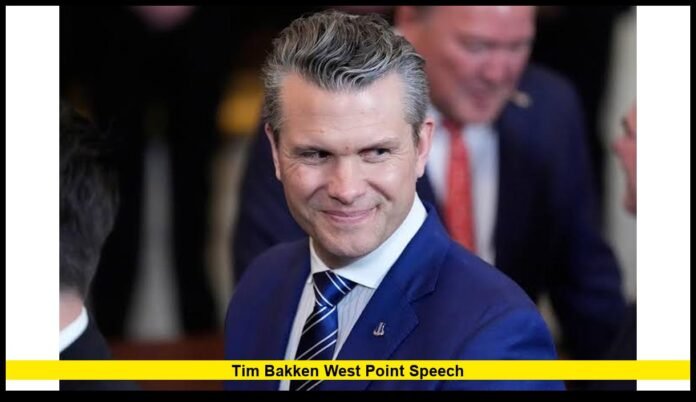

Tim Bakken West Point speech continues to draw nationwide attention as the ongoing legal dispute over free speech and academic freedom at the United States Military Academy remains unresolved. As of July 27, 2026, the longtime civilian law professor is still pursuing his constitutional challenge against West Point’s speech restrictions, while a federal court order temporarily blocks enforcement of key portions of the academy’s policy. The case has become one of the most closely followed legal battles involving civilian faculty rights at a U.S. military institution.
Why the Tim Bakken West Point Speech Is Making Headlines
The controversy surrounding Tim Bakken began after he publicly challenged a policy governing how civilian professors at West Point could communicate outside the classroom. His objections sparked a broader conversation about the balance between military discipline and the constitutional rights of civilian educators.
Unlike uniformed officers, civilian professors at West Point are federal employees who teach future Army leaders but are not part of the military chain of command. That distinction has become one of the central issues in the legal dispute.
The case has attracted attention from legal experts, educators, military professionals, and supporters of free speech because it could influence how civilian faculty members are treated at military academies in the future.
Who Is Tim Bakken?
Tim Bakken has served as a civilian professor at the United States Military Academy for more than two decades. During his career, he has taught constitutional law, military law, and leadership-related subjects to thousands of cadets preparing for military service.
He is widely recognized as West Point’s longest-serving civilian law professor. Over the years, he has also written books and articles examining military leadership, organizational decision-making, and constitutional issues affecting the armed forces.
His work often focuses on the importance of accountability, open discussion, and strong leadership within military organizations.
Those longstanding interests made him a prominent voice when questions about faculty speech policies emerged.
What Led to the Dispute?
The controversy began after West Point introduced an Academic Engagement Policy during 2025.
The policy required civilian faculty members to obtain approval before participating in a variety of public activities connected to their professional expertise.
Those activities included:
- Public speeches
- Academic conferences
- Media interviews
- Opinion essays
- Podcasts
- Television appearances
- Social media activity
- Professional publications
West Point officials maintained that the policy helped ensure consistency in public communications involving the academy.
Bakken disagreed.
He argued that requiring advance approval before speaking publicly placed unconstitutional restrictions on civilian professors.
His concerns became public during a faculty meeting where he openly challenged the policy and questioned whether it complied with First Amendment protections.
That meeting marked the beginning of a legal battle that continues today.
The Faculty Meeting That Drew National Attention
During the faculty discussion, Bakken criticized the speech policy and argued that civilian educators should not need permission before discussing academic subjects in public.
His comments reportedly led to a tense exchange with academy leadership.
The disagreement became widely known after details of the meeting emerged through later court filings and national reporting.
Although faculty meetings at military academies rarely become public topics of discussion, this exchange quickly attracted widespread interest because it involved constitutional questions rather than ordinary workplace disagreements.
The incident also became an important part of Bakken’s legal challenge.
The Constitutional Questions at the Center of the Case
The legal dispute focuses on whether West Point’s policy improperly limited the constitutional rights of civilian professors.
Bakken argues that civilian faculty members should enjoy First Amendment protections similar to professors employed by other public universities.
His lawsuit raises several important constitutional issues, including:
- Freedom of speech
- Academic freedom
- Prior approval requirements
- Government employee speech rights
- Classroom expression
The lawsuit does not challenge the military’s authority over active-duty personnel.
Instead, it focuses on civilian educators working at a federal educational institution.
That distinction has become one of the most important aspects of the case.
Federal Lawsuit Against West Point
Following the faculty meeting, Bakken filed a federal lawsuit challenging the academy’s speech policy.
The complaint argues that requiring civilian professors to obtain approval before speaking publicly violates constitutional protections guaranteed under the First Amendment.
The lawsuit also challenges restrictions affecting classroom discussions, asserting that professors should have the freedom to express academic opinions while teaching subjects within their expertise.
Rather than seeking changes only for himself, Bakken’s legal action also addresses policies affecting other civilian faculty members employed by West Point.
The case has remained active throughout 2026.
Read More – Trump Speech at Correspondents’ Dinner Marks Emotional Return to Waldorf Astoria Stage
Federal Court Blocks Parts of the Policy
One of the biggest developments came in May 2026.
A federal judge issued a preliminary injunction preventing West Point from enforcing several key portions of the challenged speech policy while the lawsuit continues.
The ruling temporarily stopped the academy from requiring prior approval for many forms of speech involving civilian professors.
It also prevented enforcement of restrictions affecting Bakken’s classroom discussions during the ongoing litigation.
The court’s decision did not permanently settle the dispute.
Instead, it preserved the current situation until the legal issues receive a final ruling.
For Bakken, however, the decision represented an important early victory.
Why the Preliminary Injunction Matters
Although preliminary injunctions are temporary, they often play an important role in constitutional cases.
The judge concluded that Bakken demonstrated a sufficient likelihood of success on several First Amendment claims to justify temporarily blocking enforcement of the policy.
That decision allows civilian professors covered by the ruling to continue certain activities without following the challenged approval process while the lawsuit proceeds.
The broader constitutional questions will still require additional court proceedings before a final judgment is issued.
Understanding Academic Freedom
Academic freedom allows educators to research, teach, write, and speak without unnecessary government interference.
Supporters of academic freedom argue that universities function best when professors can present competing ideas and encourage open discussion.
At military academies, however, the issue becomes more complicated.
West Point has a unique mission.
Its purpose is not only to educate students but also to prepare future Army officers for military leadership.
That mission creates institutional responsibilities different from those at traditional public universities.
The current lawsuit asks whether those differences justify broader restrictions on civilian professors.
The Difference Between Civilian Faculty and Military Officers
One of the central legal questions involves the different roles performed by civilian professors and military officers.
Military officers operate within a strict chain of command and follow regulations governing official communications.
Civilian faculty members occupy a different position.
Although they teach at a military institution, they are not commissioned officers serving under military command.
Because of that distinction, Bakken argues that civilian educators deserve stronger constitutional protections when speaking on academic matters.
The final outcome of the lawsuit could clarify how those differences should be treated under federal law.
National Interest in the Case
The dispute has generated significant discussion across legal, educational, and military communities.
Many observers believe the case extends far beyond one professor or one academy.
It raises broader questions about how government employers may regulate speech by civilian employees working in specialized institutions.
The case has also prompted discussions about:
- Constitutional rights in federal workplaces
- Faculty independence
- Government oversight
- Academic governance
- Public employee protections
Each of these issues carries implications beyond West Point.
Tim Bakken’s Views on Leadership
Long before the current lawsuit, Bakken wrote extensively about military leadership and organizational performance.
His published work argues that organizations improve when leaders encourage constructive criticism rather than discourage disagreement.
He has frequently emphasized that honest discussion strengthens institutions by identifying problems before they become larger challenges.
Those ideas align closely with the concerns he later raised about restrictions on faculty speech.
For many observers, the lawsuit reflects principles that Bakken has consistently discussed throughout his academic career.
Arguments Supporting the Policy
West Point’s policy has also received support from those who believe military institutions require greater oversight than civilian universities.
Supporters point to several factors.
These include maintaining institutional discipline, protecting the academy’s public reputation, ensuring consistent messaging, and supporting the military mission.
Because West Point educates future Army officers, some believe the academy should exercise greater control over official communications connected to its faculty.
The legal process will ultimately determine whether those interests justify the challenged restrictions placed on civilian professors.
How the Case Could Affect Military Education
Although the lawsuit focuses on West Point, its outcome could influence policies at other military educational institutions.
Federal courts rarely examine constitutional questions involving civilian faculty at military academies.
As a result, the final decision may provide important guidance for administrators and educators across similar institutions.
Future policies concerning public speeches, interviews, academic publications, and classroom discussions could all be shaped by the court’s interpretation of the First Amendment in this context.
That is one reason the litigation continues to receive national attention.
Timeline of Key Events
| Date | Major Development |
|---|---|
| Early 2025 | West Point introduces an Academic Engagement Policy affecting civilian faculty communications. |
| 2025 | Tim Bakken publicly objects to the policy during a faculty meeting. |
| 2025 | Bakken files a federal lawsuit challenging the speech restrictions. |
| May 2026 | A federal judge issues a preliminary injunction blocking enforcement of major portions of the policy while the case continues. |
| July 2026 | The lawsuit remains active and continues to receive nationwide attention. |
Current Status as of July 27, 2026
The legal proceedings remain ongoing.
The preliminary injunction continues to prevent enforcement of important portions of the challenged speech policy while the federal courts consider the constitutional issues presented in the case.
No final judgment has yet been issued.
That means the central questions involving First Amendment protections, academic freedom, and civilian faculty rights at West Point remain unresolved.
The case continues to be watched closely because it may establish important legal guidance for military academies and other federal educational institutions employing civilian professors.
Why Americans Are Following This Story
The Tim Bakken West Point speech has become more than a disagreement over workplace policy.
It now represents a significant constitutional case involving free speech, academic independence, and the role of civilian educators within military institutions.
Americans across political and legal perspectives continue to follow the litigation because it addresses questions that reach beyond a single campus.
The final outcome could shape future policies affecting civilian faculty, public universities, government workplaces, and military educational institutions for years to come.
While the lawsuit is still moving through the courts, the debate has already become one of the most important recent discussions involving the First Amendment and higher education in the United States.
What do you think about the ongoing legal battle surrounding the Tim Bakken West Point speech? Share your thoughts and check back for the latest verified developments as the case moves forward.