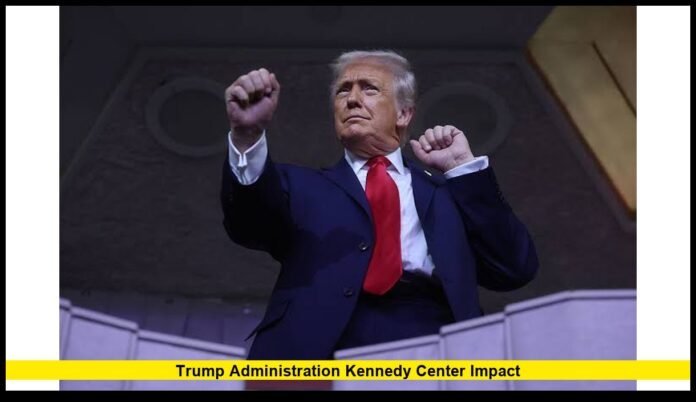

The trump administration kennedy center impact continues to influence the direction of the John F. Kennedy Center for the Performing Arts as of July 2026. Leadership restructuring, programming adjustments, financial challenges, and ongoing legal developments have transformed one of the nation’s best-known cultural institutions. These changes have drawn attention from artists, audiences, lawmakers, and arts organizations across the United States, making the Kennedy Center one of the most closely watched cultural venues in the country.
For decades, the Kennedy Center has represented artistic excellence and served as a national gathering place for theater, music, dance, opera, and educational programs. Recent developments have shifted public attention beyond performances, placing governance and cultural policy at the center of national discussion.
Why the Kennedy Center Holds National Importance
The John F. Kennedy Center for the Performing Arts occupies a unique place in American culture. Located in Washington, D.C., it serves as the country’s official national cultural center while honoring the legacy of President John F. Kennedy.
Every year, millions of visitors attend performances, educational events, family programs, and tours. The center is also home to several resident organizations, including the National Symphony Orchestra and the Washington National Opera.
Unlike many performing arts venues, the Kennedy Center receives federal support while also relying heavily on ticket sales, private donations, sponsorships, and fundraising campaigns. That combination gives the institution both cultural significance and public visibility.
Because of its national role, changes in leadership or programming often receive far greater attention than similar decisions at regional arts organizations.
Leadership Changes Marked a New Direction
One of the biggest developments involved changes to the Kennedy Center’s governing board and executive leadership.
The Trump administration appointed new members to the board and introduced leadership committed to reshaping the institution’s priorities. Officials described the effort as an opportunity to broaden public engagement and strengthen the center’s connection with American history and culture.
The restructuring represented one of the most significant governance changes in the institution’s history.
The new leadership immediately began reviewing administrative operations, future programming, financial planning, and long-term facility improvements.
These decisions generated widespread public interest because they affected an institution that has long been viewed as a national symbol of the performing arts.
Programming Became a Major Focus
Programming decisions quickly became one of the most discussed aspects of the new leadership.
Several planned performances did not move forward, while other productions underwent scheduling changes. Some artists decided not to appear at the Kennedy Center, and certain organizations shifted performances to different venues.
At the same time, administrators emphasized productions celebrating American history, patriotic themes, classical works, and family-friendly entertainment.
Supporters viewed these changes as an effort to attract broader audiences.
Others believed the adjustments altered the artistic balance that had defined the Kennedy Center for many years.
Regardless of viewpoint, programming became one of the clearest examples of how leadership decisions affected daily operations.
Reaction From the Arts Community
The response from performers and arts organizations varied.
Some artists publicly announced they would postpone or cancel appearances.
Others continued to perform while expressing hopes that the Kennedy Center would remain open to diverse artistic viewpoints.
Several arts organizations emphasized the importance of preserving creative independence regardless of political leadership.
Although opinions differed, the changes sparked widespread discussion throughout the performing arts community.
The debate extended well beyond Washington, with theaters, orchestras, universities, and cultural organizations across the country following developments closely.
How Audiences Responded
Audience reactions reflected the broader national conversation.
Some visitors welcomed the administration’s efforts to introduce new programming and operational priorities.
Others expressed concern about the changing direction of the institution.
Attendance became an important measure of public engagement.
Observers closely watched ticket demand, visitor numbers, and participation in educational activities throughout 2026.
While attendance varied by event, overall visitor trends remained an important indicator of how the public viewed the ongoing changes.
Financial Challenges Received Increased Attention
Like many major performing arts organizations, the Kennedy Center continues balancing multiple sources of revenue.
Its operating budget depends on several areas, including:
- Ticket sales
- Individual donations
- Corporate sponsorships
- Membership programs
- Federal appropriations
- Special fundraising events
Leadership changes prompted additional attention to donor activity.
Some longtime supporters reconsidered contributions, while administrators continued efforts to secure financial stability through new fundraising initiatives.
Maintaining financial strength remains essential because the Kennedy Center operates one of the largest performing arts campuses in the United States.
Facility maintenance, educational programming, artist support, and production costs require substantial annual funding.
Plans for Major Renovations
Another major issue involved proposals to renovate portions of the Kennedy Center.
Officials argued that modernization would improve the visitor experience and address long-term infrastructure needs.
The proposal included extensive construction work that could significantly affect daily operations.
Questions quickly emerged regarding how performances, rehearsals, educational activities, and public access would continue during any renovation period.
The proposal generated strong public interest because of the Kennedy Center’s role as a year-round performing arts destination.
Court Decisions Affected Future Plans
Legal proceedings soon became part of the story.
A federal court reviewed plans related to operational changes and determined that the proposed full closure could not move forward under the circumstances presented.
Following the ruling, the Kennedy Center continued operating while officials evaluated future options.
The decision allowed performances, visitor access, educational programs, and administrative functions to continue while broader legal questions remained under review.
The court’s involvement highlighted the complex relationship between federal oversight, institutional governance, and public access.
Read More – Trump KennedyCenter.org: A Clear Look at the Facts Behind the Cultural and Political Connection
Debate Over the Building’s Identity
Another issue centered on the Kennedy Center’s public identity.
Changes involving exterior signage and naming generated additional legal review.
The matter raised broader questions regarding the authority to modify elements of a federally established national memorial.
Subsequent legal decisions restored the institution’s official identity as the John F. Kennedy Center for the Performing Arts.
The discussion demonstrated how even symbolic decisions surrounding national landmarks can become significant public issues.
Educational Programs Continue Serving Communities
Despite leadership changes and legal disputes, educational initiatives have continued throughout the institution.
Programs remain available for students, teachers, families, and emerging performers.
These initiatives include:
- School partnerships
- Youth orchestra programs
- Music education
- Theater workshops
- Community outreach
- Family performances
- Professional artist development
Educational activities remain one of the Kennedy Center’s most important public services.
Each year, these programs introduce thousands of young people to music, theater, dance, and other performing arts.
Resident Organizations Remain Central
The Kennedy Center continues serving as home to several nationally recognized performing arts organizations.
These resident companies play an essential role in maintaining year-round programming.
They contribute concerts, opera productions, theatrical performances, and educational events that attract audiences from across the country.
Their continued presence helps ensure that the Kennedy Center remains an active cultural destination even during periods of administrative transition.
The Kennedy Center’s Broader Role in American Culture
Few arts institutions occupy the same position as the Kennedy Center.
Its responsibilities extend beyond presenting performances.
The institution also:
- Preserves artistic traditions.
- Encourages new creative work.
- Hosts international cultural exchanges.
- Supports arts education.
- Celebrates outstanding artistic achievement.
The annual Kennedy Center Honors remain one of the country’s most respected recognitions for lifetime artistic achievement.
That national visibility explains why leadership decisions often receive extensive public attention.
Public Opinion Remains Divided
Americans continue expressing different opinions regarding the Kennedy Center’s recent direction.
Supporters point to efforts aimed at operational reform, facility improvements, and programming changes designed to reach wider audiences.
Critics believe the institution should maintain greater independence from political influence.
The debate reflects broader discussions about the relationship between government, public funding, and cultural institutions.
While opinions differ, many agree that preserving the Kennedy Center’s mission as a national performing arts institution remains important.
Key Developments as of July 2026
Several important facts define the current situation.
| Area | Current Status |
|---|---|
| Leadership | Board and executive leadership remain under the current administration’s appointments. |
| Operations | The Kennedy Center remains open to the public. |
| Performances | Events continue, although programming has evolved under new leadership. |
| Educational Programs | Student and community initiatives continue. |
| Renovation Plans | Future construction proposals remain under review. |
| Legal Matters | Court decisions have influenced operational planning and governance issues. |
How the Changes Could Influence Future Operations
The Kennedy Center’s future will depend on several factors.
Leadership will continue balancing artistic programming, financial stability, public engagement, educational responsibilities, and facility improvements.
Maintaining strong relationships with artists, donors, audiences, and resident organizations will remain essential.
Administrators also face the ongoing challenge of preserving the institution’s national reputation while responding to changing expectations from the public.
The Kennedy Center has successfully adapted through many decades of cultural change, and its long history demonstrates the importance of flexibility and public service.
What the Trump Administration Kennedy Center Impact Means Today
The trump administration kennedy center impact extends far beyond administrative changes. It has influenced discussions about governance, artistic programming, public funding, national cultural institutions, and the role of leadership in shaping one of America’s most recognizable performing arts centers.
As of July 2026, the Kennedy Center continues welcoming audiences, presenting performances, supporting arts education, and operating as an important national landmark. While debates surrounding leadership and policy continue, the institution remains a central part of the American cultural landscape, serving visitors from every state and many countries around the world.
Its ongoing story illustrates how major cultural institutions can evolve while continuing to fulfill their public mission. Future developments will continue attracting national attention as the Kennedy Center balances tradition, innovation, and public responsibility in the years ahead.
What are your thoughts on the Trump administration Kennedy Center impact? Share your opinion in the comments and check back for the latest developments.