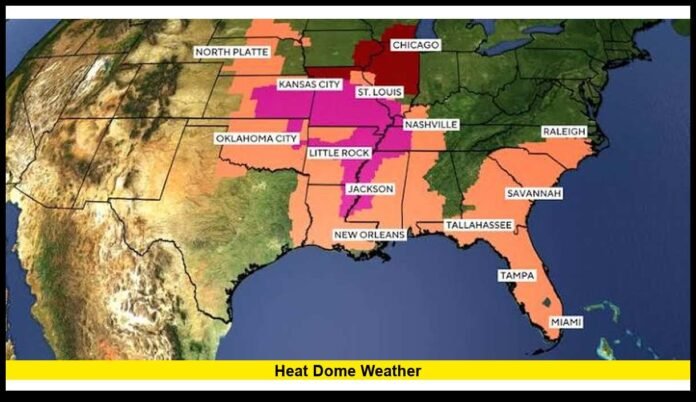

Heat dome weather continues to impact millions of Americans as an intense area of high pressure keeps dangerous temperatures locked over large parts of the United States. As of late July 2026, widespread heat alerts remain in effect across portions of the Plains, Midwest, South, and Gulf Coast, where many communities are experiencing triple-digit temperatures and oppressive humidity. The prolonged stretch of hot weather has increased health concerns, placed added pressure on power systems, and prompted officials to encourage residents to take precautions throughout the hottest parts of the day.
What Is a Heat Dome?
A heat dome is a large weather pattern that forms when a strong area of high pressure settles over a region and remains nearly stationary. Air beneath the high-pressure system sinks toward the ground. As it descends, it compresses and becomes warmer.
Because the air is sinking rather than rising, cloud development becomes limited and rainfall becomes less likely. With clear skies and abundant sunshine, the ground continues to heat up day after day, allowing temperatures to climb even higher.
Unlike a typical summer heat wave that may last only a couple of days, a heat dome can remain in place for an extended period. The longer it stays over one area, the greater the risk of dangerous heat conditions.
Current Conditions Across the United States
The latest weather pattern has placed a broad section of the country under excessive heat alerts. Many cities across the central United States are reporting temperatures above 100 degrees, while humidity is pushing heat index values well beyond the actual air temperature.
Several regions continue to experience:
- Afternoon temperatures above 100°F
- Heat index values exceeding 105°F
- Very warm overnight temperatures
- Limited rainfall
- High humidity levels
The combination of extreme daytime heat and little nighttime cooling creates one of the most hazardous situations during the summer season.
Why Overnight Temperatures Matter
Many people focus only on afternoon highs, but nighttime temperatures play an equally important role.
Normally, cooler nights allow homes, roads, buildings, and the human body to recover from daytime heat. During a heat dome, overnight temperatures often remain unusually warm, sometimes staying above 80°F in many locations.
Without sufficient cooling overnight, the effects of heat build over several consecutive days. This increases stress on the body and raises the risk of heat-related illness, particularly for people without access to air conditioning.
Health experts consider warm nights one of the defining characteristics of prolonged extreme heat events.
States Experiencing the Strongest Heat
The current weather pattern has brought the highest temperatures to large portions of the central and southern United States.
Areas seeing the greatest impacts include:
- Texas
- Oklahoma
- Kansas
- Nebraska
- Missouri
- Iowa
- Arkansas
- Louisiana
- Mississippi
- Parts of the Midwest
Some western and southeastern locations are also experiencing above-average temperatures, although conditions vary from one region to another.
Local forecasts continue to change daily, making it important for residents to monitor weather alerts issued for their own communities.
Texas Remains Under Intense Heat
Texas continues to experience some of the hottest conditions in the country.
Several cities are seeing afternoon temperatures climb well above 100°F, while humidity makes it feel even hotter. Dry weather in many parts of the state has allowed temperatures to rise quickly during the day.
The combination of intense sunshine, limited cloud cover, and persistent high pressure has created ideal conditions for prolonged heat.
Residents are being encouraged to stay hydrated, reduce strenuous outdoor activity, and check on elderly family members and neighbors.
Humidity Makes the Situation More Dangerous
Air temperature tells only part of the story.
Humidity affects how efficiently the human body cools itself through sweating. When moisture levels in the air are high, sweat evaporates more slowly, making it harder to regulate body temperature.
For example, an air temperature of 98°F can feel much hotter when humidity increases.
This is why weather forecasts frequently include the heat index, sometimes called the “feels-like” temperature.
Higher humidity can turn an already hot afternoon into a dangerous situation, especially for anyone spending extended periods outdoors.
Understanding the Heat Index
The heat index combines two factors:
- Air temperature
- Relative humidity
Together, these measurements provide a better picture of how hot conditions actually feel.
Examples include:
| Air Temperature | Humidity | Approximate Heat Index |
|---|---|---|
| 95°F | Moderate | Around 100°F |
| 98°F | High | Above 105°F |
| 100°F | Very High | Near or above 110°F |
This is why weather officials often emphasize heat index values instead of temperature alone.
Who Faces the Highest Risk?
Extreme heat can affect anyone, but some groups face greater danger.
Higher-risk populations include:
- Older adults
- Infants and young children
- Outdoor workers
- Construction crews
- Farmers
- Delivery drivers
- Athletes
- Individuals with heart or lung conditions
- People without reliable cooling
Pets are also vulnerable during prolonged hot weather and should always have access to shade and fresh water.
Read More – Extreme Heat Watch Issued Across Parts of the U.S. as Dangerous Temperatures Raise Health Concerns
Signs of Heat-Related Illness
Knowing the warning signs can help prevent serious medical emergencies.
Heat Cramps
Symptoms include:
- Muscle pain
- Heavy sweating
- Fatigue
Heat Exhaustion
Common symptoms include:
- Dizziness
- Weakness
- Headache
- Nausea
- Heavy sweating
- Rapid heartbeat
Immediate cooling and hydration are important.
Heat Stroke
Heat stroke is a life-threatening emergency.
Warning signs include:
- Confusion
- Loss of consciousness
- Body temperature above 103°F
- Hot skin
- Rapid breathing
Anyone experiencing these symptoms requires immediate emergency medical care.
How Communities Are Responding
Cities across affected states are taking additional measures to protect residents.
Common responses include:
- Opening cooling centers
- Extending public pool hours
- Providing water distribution sites
- Increasing public safety messaging
- Encouraging employers to adjust outdoor work schedules
Local governments continue to remind residents to remain aware of changing weather conditions throughout the week.
Impact on Daily Life
Extreme heat affects much more than outdoor comfort.
During prolonged periods of high temperatures, communities often experience:
- Increased electricity demand
- Higher air conditioning use
- Greater stress on power infrastructure
- Increased water consumption
- Delays for outdoor construction projects
- Changes to youth sports schedules
- Reduced outdoor recreation
Businesses that rely on outdoor labor frequently adjust working hours to reduce employee exposure during the hottest part of the afternoon.
Agriculture and Livestock Concerns
Farmers also monitor prolonged heat closely.
Extended periods of high temperatures can place stress on crops, particularly when rainfall remains limited.
Livestock producers often increase water supplies and provide additional shade to reduce heat stress among animals.
Although farming practices vary across the country, sustained extreme heat remains one of the most closely watched weather threats during the growing season.
Why Heat Domes Can Last for Days
The atmosphere does not always change quickly.
When a strong ridge of high pressure becomes established, it can remain nearly stationary for several days before another weather system pushes it away.
As long as the high-pressure system remains in place:
- Sunshine continues
- Clouds remain limited
- Rainfall becomes less common
- Temperatures continue rising
This persistent pattern explains why heat dome events often last much longer than ordinary hot days.
How Climate Influences Extreme Heat
Weather experts continue studying long-term trends involving extreme heat.
Individual heat domes develop because of atmospheric conditions, but scientists have observed that rising global temperatures increase the likelihood of more frequent and more intense periods of extreme heat in many parts of the world.
Research in this area continues as meteorologists analyze new weather data from each season.
Simple Ways to Stay Safe
During prolonged hot weather, small precautions can make a significant difference.
Helpful safety tips include:
- Drink water regularly throughout the day.
- Wear lightweight, light-colored clothing.
- Stay indoors during the hottest afternoon hours whenever possible.
- Use air conditioning if available.
- Visit cooling centers if your home becomes excessively hot.
- Wear sunscreen when outdoors.
- Take frequent breaks if working outside.
- Never leave children or pets inside parked vehicles.
- Check on elderly relatives and neighbors.
Planning outdoor activities during the early morning or evening can also reduce heat exposure.
Protecting Children and Pets
Children become overheated more quickly than adults.
Parents should ensure children:
- Drink water frequently.
- Take breaks in shaded areas.
- Wear lightweight clothing.
- Avoid strenuous activity during peak afternoon heat.
Pets require similar care.
Always provide:
- Fresh drinking water
- Shade
- Cool resting areas
Hot pavement can quickly burn an animal’s paws, making early morning or evening walks a safer option.
Power Demand Increases During Extreme Heat
Air conditioning use rises sharply during heat dome events.
This increased electricity demand places additional pressure on regional power grids, especially during late afternoon when temperatures reach their highest levels.
Energy providers often encourage customers to conserve electricity during peak demand periods by:
- Raising thermostats slightly
- Running major appliances later in the evening
- Closing blinds to reduce indoor heat
- Turning off unnecessary lights
These small adjustments can help reduce strain on the electrical system while lowering household energy use.
What to Expect Over the Coming Days
Forecasts indicate that dangerous heat will continue across large sections of the central United States before temperatures gradually begin to moderate in some areas. Even where daytime highs decrease slightly, humidity is expected to keep conditions uncomfortable across many communities.
Residents should continue monitoring local weather alerts, especially if excessive heat warnings remain in effect. Staying informed and following heat safety recommendations remains the best way to reduce health risks during prolonged periods of extreme temperatures.
Heat remains one of the deadliest weather hazards in the United States each year because prolonged exposure can quickly become dangerous. Preparing ahead, recognizing warning signs of heat-related illness, and limiting outdoor activity during peak afternoon hours can make a significant difference for individuals and families across affected regions.
As hot weather continues across much of the country, share how conditions are affecting your area and stay informed as forecasts and heat alerts are updated throughout the week.