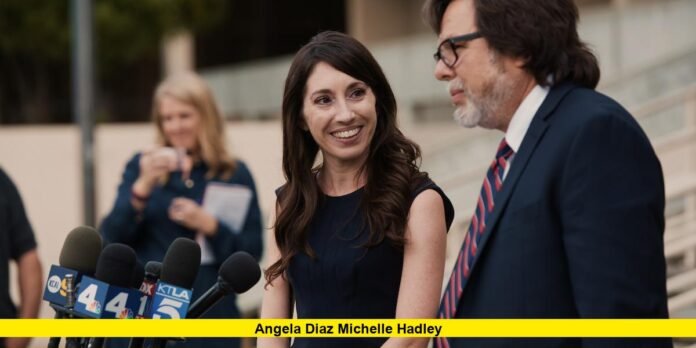

The case involving angela diaz michelle Hadley remains one of the most remarkable examples of how digital evidence transformed a criminal investigation. What initially appeared to be a straightforward cyberstalking case eventually evolved into a complex conspiracy involving fabricated online identities, false accusations, and years of legal proceedings. The story has attracted renewed public attention following the release of Netflix’s 2026 true crime documentary A Toxic Love Story, which revisits the events in detail and explores how investigators uncovered the truth.
Unlike many true crime cases that rely on eyewitness testimony alone, this investigation was shaped largely by electronic records, forensic analysis, and careful examination of digital communications. The result was a dramatic reversal that ultimately cleared an innocent woman while exposing a much broader scheme.
The Background of the Case
The events began after Michelle Hadley ended her relationship with Ian Diaz, a Deputy U.S. Marshal in Southern California. Following the breakup, Diaz married Angela Diaz (also known in court records as Angela Connell).
Soon after their marriage, Angela reported receiving a series of disturbing emails and online messages from someone using anonymous identities. The communications included threats, harassment, and increasingly alarming claims.
Investigators initially believed Michelle Hadley was responsible for the messages. The accusations escalated when authorities connected additional online activity—including fake advertisements posted on Craigslist—to the alleged harassment campaign.
Based on the evidence available at the time, Michelle Hadley was arrested and charged with multiple felony offenses.
Michelle Hadley’s Arrest
Michelle Hadley’s arrest shocked both her family and those who knew her personally.
Prosecutors initially alleged that she had engaged in:
- Cyberstalking
- Identity-related offenses
- Sending threatening communications
- Online harassment
- Creating fraudulent internet accounts
The allegations were serious enough that Hadley remained in custody for approximately 88 days while awaiting further legal proceedings.
During this period, she consistently maintained her innocence.
The arrest received media attention because prosecutors believed they had substantial electronic evidence linking her to the threatening messages.
However, the investigation was far from over.
Digital Evidence Changed Everything
As investigators conducted a deeper forensic review of the electronic evidence, significant inconsistencies began to emerge.
Rather than confirming the original accusations, specialists discovered that many of the emails and online activities appeared to originate from sources that did not match the prosecution’s initial theory.
Investigators reviewed:
- IP address records
- Email account activity
- Computer logs
- Internet service information
- Digital communication timelines
The forensic findings gradually revealed that the evidence did not support the conclusion that Michelle Hadley had orchestrated the harassment campaign.
Instead, investigators determined that someone else appeared to have created an elaborate scheme designed to frame her.
This marked the turning point in one of California’s most unusual criminal investigations.
Angela Diaz Became the Focus of the Investigation
As additional digital evidence was analyzed, investigators shifted their attention toward Angela Diaz.
Prosecutors ultimately alleged that she had created multiple fake online identities and sent threatening messages to herself while attempting to make it appear that Michelle Hadley was responsible.
According to court records, investigators believed the harassment campaign had been carefully planned over an extended period.
The fabricated communications allegedly included:
- Threatening emails
- False online identities
- Fraudulent social media activity
- Fake Craigslist advertisements
- Messages intended to support the false allegations
Authorities concluded that the digital evidence overwhelmingly contradicted the original accusations against Michelle Hadley.
The Legal Outcome
The legal proceedings that followed dramatically changed the direction of the case.
Charges Against Michelle Hadley Were Dismissed
After investigators determined that the available evidence no longer supported the prosecution’s allegations, all criminal charges against Michelle Hadley were dismissed.
Her release marked the end of nearly three months spent in jail for crimes she did not commit.
Although legally exonerated, the experience had lasting personal and professional consequences.
Angela Diaz’s Conviction
Angela Diaz later pleaded guilty to multiple criminal offenses connected to the conspiracy.
She admitted responsibility for conduct involving fabricated evidence and false reports that led investigators to wrongly accuse Michelle Hadley.
Following her guilty plea, she received a prison sentence before eventually completing her incarceration.
The case became widely discussed as an example of how fabricated digital evidence can mislead even experienced investigators.
Ian Diaz’s Criminal Case
The investigation eventually expanded beyond Angela Diaz.
Federal prosecutors later brought criminal charges against Ian Diaz.
Following legal proceedings, he was convicted on multiple federal counts that included conspiracy, cyberstalking, obstruction-related offenses, and perjury.
He received a prison sentence exceeding ten years.
His conviction further highlighted the broader scope of the conspiracy uncovered during the investigation.
Why the Case Drew National Attention
The story became nationally recognized because it involved several unusual elements rarely seen together in a single criminal investigation.
Among the most notable aspects were:
- A wrongful arrest based largely on digital evidence that was later disproven.
- An active federal law enforcement officer becoming the subject of a criminal investigation.
- A sophisticated online deception involving fake identities.
- Extensive use of electronic forensic analysis.
- A dramatic reversal after prosecutors reevaluated the evidence.
These factors transformed the case into one frequently discussed by legal experts, cybersecurity professionals, and true crime audiences.
How Digital Forensics Played a Critical Role
One of the lasting lessons from the Angela Diaz Michelle Hadley case is the growing importance of digital forensic investigations.
Unlike traditional criminal cases that depend heavily on eyewitness accounts, this investigation relied on technological analysis.
Investigators reconstructed online activity using:
- Email metadata
- Login histories
- IP tracing
- Internet provider records
- Device usage information
- Timeline reconstruction
The detailed forensic work ultimately exposed inconsistencies that traditional investigative methods alone may not have detected.
Today, the case is often referenced when discussing the importance of verifying digital evidence before drawing conclusions.
Public Interest Increased After the Netflix Documentary
Interest in the case surged again following Netflix’s release of A Toxic Love Story in July 2026.
The documentary introduced the story to a broader international audience by presenting interviews, investigative records, courtroom developments, and firsthand accounts from those involved.
Rather than focusing only on the crimes themselves, the documentary explores themes including:
- Trust
- Manipulation
- Online deception
- Wrongful prosecution
- Psychological control
- Digital investigations
Many viewers praised the documentary for explaining how assumptions changed as investigators uncovered new evidence.
The film has become one of Netflix’s most discussed true crime releases of 2026.
The Lasting Impact on Michelle Hadley
Although Michelle Hadley was cleared of all criminal charges, the effects of the case extended well beyond the courtroom.
Being publicly accused of serious crimes affected numerous aspects of her life, including her reputation, finances, career opportunities, and emotional well-being.
The case also sparked conversations about the challenges individuals face after being wrongfully accused, even when they are later fully exonerated.
Her experience serves as a reminder that legal vindication does not always erase the consequences of public suspicion.
Broader Lessons From the Case
The Angela Diaz Michelle Hadley case continues to be studied because it illustrates several important issues relevant in today’s digital world.
Online Evidence Requires Careful Verification
Electronic communications can provide valuable investigative information, but they must be carefully authenticated.
False Accusations Can Have Lasting Consequences
Even temporary wrongful arrests may permanently affect an individual’s personal and professional life.
Digital Investigations Continue to Evolve
Modern forensic tools have become increasingly capable of reconstructing online activity and identifying fabricated evidence.
Critical Thinking Remains Essential
The investigation demonstrates why investigators, prosecutors, and the public should avoid reaching conclusions before all available evidence has been fully analyzed.
Latest Updates
As of July 2026, public interest in the Angela Diaz Michelle Hadley case has been renewed because of Netflix’s documentary A Toxic Love Story. The documentary revisits the completed investigation and the legal outcomes involving Michelle Hadley, Angela Diaz, and Ian Diaz.
The major criminal proceedings connected to the case have concluded, and there have been no official announcements regarding new legal actions or additional criminal investigations related to the original conspiracy. Likewise, there has been no official confirmation from Netflix of a sequel or follow-up documentary at this time.
Final Thoughts
The Angela Diaz Michelle Hadley case remains one of the most extraordinary examples of how digital evidence can completely reshape a criminal investigation. What began as an apparent cyberstalking case ultimately revealed a far-reaching conspiracy that resulted in wrongful accusations, multiple convictions, and years of legal proceedings.
Its renewed visibility through Netflix’s A Toxic Love Story has introduced a new generation of viewers to a case that underscores the importance of thorough investigations, objective analysis, and reliable digital forensic evidence. Beyond its true crime appeal, the story continues to serve as an important reminder of the lasting human impact that false allegations and manipulated evidence can have.
Have thoughts on the Angela Diaz Michelle Hadley case or Netflix’s documentary? Share your perspective in the comments and stay updated with more true crime coverage.